
 rifanmuazin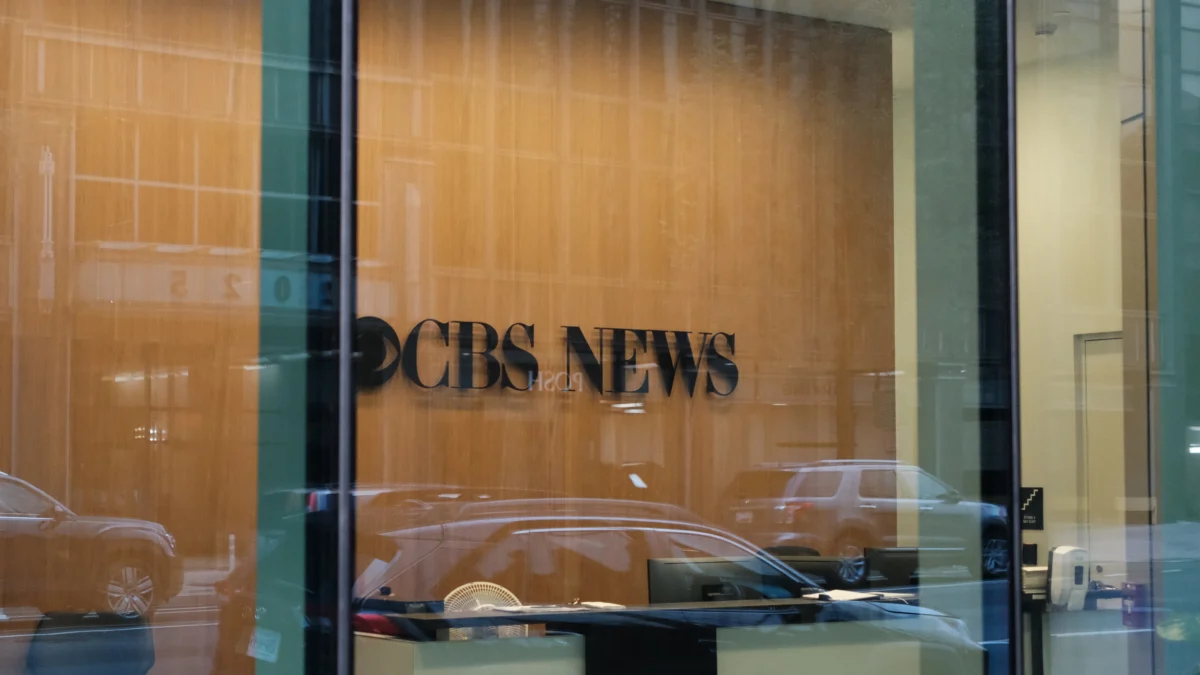
The storied newsroom of 60 Minutes, long considered the gold standard of American investigative journalism, is currently embroiled in an internal conflict characterized by acrimonious leaks, high-profile terminations, and a fundamental clash over the program’s editorial direction. The situation, which has escalated following the appointment of a new executive producer, represents a significant turning point for the CBS News flagship as it navigates a shifting political landscape and a mandate for institutional reform led by controversial leadership.
The unrest began to solidify following the arrival of Bari Weiss, the former New York Times columnist and founder of The Free Press, who was brought into CBS News leadership with a specific directive to modernize the network’s approach to reporting. Sources within the newsroom indicate that Weiss arrived with a plan to challenge what she perceived as an ideological monoculture, aiming to broaden the program’s appeal to a more diverse audience—specifically those who have grown distrustful of traditional legacy media. However, veteran staff members have characterized this shift as an attempt to apply a right-ward slant to the show’s reporting, leading to immediate friction between the new leadership and the existing editorial staff.
The Catalyst: Editorial Interference and Leadership Changes
Tensions first reached a boiling point prior to the current crisis when Weiss was accused of meddling in a high-stakes investigative piece regarding a Salvadoran prison. Reporting staff alleged that Weiss insisted on securing additional commentary from the Trump administration before the segment could air, a move that some journalists viewed as an unnecessary concession to political pressure. This incident created a baseline of distrust that set the stage for the explosive events surrounding the appointment of Nick Bilton as the new executive producer of 60 Minutes.
Bilton, a veteran tech journalist known for his work at The New York Times and Vanity Fair, as well as his bestselling book Hatching Twitter, arrived at CBS with a formidable reputation in print and digital media but with no previous experience in television production. His appointment was seen by Weiss as a move toward a more “tech-forward” and “disruptive” style of storytelling, but it was met with immediate hostility from the show’s traditionalist core.
The conflict became public following Bilton’s inaugural meeting with the 60 Minutes staff. During this session, Scott Pelley, one of the network’s most respected correspondents and a former anchor of the CBS Evening News, openly challenged Bilton’s qualifications. According to a leaked recording of the meeting, the atmosphere was described as “toxic” and “unprecedented” for a newsroom of such stature.
The Fateful Meeting and the Pelley Termination
The leaked recording reveals that Pelley did not mince words when addressing the new executive producer. He reportedly disparaged Bilton’s lack of television experience and told him directly that he would “never be welcome” in the newsroom. Pelley went further by accusing Bari Weiss of “murdering” the show, citing the recent firings of the former executive producer and several key correspondents as evidence of a systematic dismantling of the program’s legacy.
The fallout was swift. Within twenty-four hours of the meeting, Scott Pelley was terminated from his position at CBS News. In a move that further fueled the “war of leaks,” Pelley’s termination letter was leaked in its entirety to the press. The letter, signed by Bilton, claimed that Pelley had declined multiple attempts at outreach and collaboration both before and after the contentious staff meeting.
The termination letter stated that Pelley’s conduct “demonstrated that you have no interest in contributing to the future success of the show, or approaching my new tenure with a mind open to collaboration and progress.” This phrasing highlights the central tension: management’s view of “progress” versus the staff’s view of “institutional integrity.”
In a statement to the New York Times, Pelley defended his actions, suggesting that the leadership’s approach “betrays a complete misunderstanding of what we work for and what we live for at 60 Minutes.” The public nature of this spat has sent shockwaves through the industry, as it is rare for the internal mechanics of such a prestigious institution to be aired so transparently.
Chronology of the 60 Minutes Crisis
- Early 2025: Bari Weiss is appointed to a senior leadership role at CBS News with a mandate to diversify the network’s editorial perspective.
- March 2025: Internal disputes arise over a segment on the Salvadoran prison system; staff accuse Weiss of editorial interference.
- May 2025: The previous executive producer and several veteran correspondents are let go in a “house cleaning” effort.
- June 1, 2025: Nick Bilton is officially named Executive Producer of 60 Minutes.
- June 3, 2025: The first staff meeting with Bilton takes place. Scott Pelley’s vocal opposition is recorded and subsequently leaked.
- June 4, 2025: Scott Pelley is fired. His termination letter is leaked to media outlets within hours.
- June 5, 2025: Public statements from Pelley and anonymous CBS staff indicate a deep-seated divide that threatens the stability of the upcoming season.
Analysis of the Public Relations and Institutional Impact
The ongoing turmoil at 60 Minutes presents a complex public relations challenge for CBS. On one hand, the program’s core audience is composed of viewers who value the familiarity and perceived objectivity of long-standing figures like Pelley. The departure of such a prominent “face” of the brand could lead to a temporary decline in viewership and a loss of institutional memory.
On the other hand, Bari Weiss’s strategy appears to be a calculated gamble on the future of media. By leaning into a “clean slate” approach, she is attempting to capture an audience that has abandoned legacy news organizations in favor of independent platforms. From this perspective, the “war of leaks” and the public clashing with the “old guard” may actually serve to validate the new leadership’s credentials to their target demographic—those who believe that legacy newsrooms are in need of radical disruption.
The ultimate question for the network is whether they can rebuild a cohesive team and a loyal audience quickly enough to offset the damage caused by the current instability. The loss of veteran staff members who understand the unique logistical and ethical requirements of 60 Minutes’ long-form reporting could lead to a dip in the quality of the journalism, which has historically been the show’s primary selling point.
Broader Media Trends: Corporate Pride and AI Costs
The internal strife at CBS News is occurring against a backdrop of significant shifts in the broader corporate and media landscape. Two major trends—the recalibration of corporate social responsibility and the rising costs of artificial intelligence—are also impacting how brands and media companies operate in 2025.
Corporate Retraction from Pride Events
As Pride Month begins, there has been a documented decline in the level of corporate support for LGBTQ+ events. Following a period of intense political polarization and a crackdown on LGBTQ+ rights during the second Trump administration, many corporations have opted for a more subdued presence.
According to reports from the Wall Street Journal, companies that once provided massive financial sponsorships are now engaging in “stripped-down” capacities. For instance, Mastercard has shifted from high-profile branding to sponsoring employee participation in parades, while Starbucks has focused on localized efforts like providing coffee to marchers. This trend suggests a move toward “risk-mitigation” in corporate PR, where brands seek to maintain visibility with core constituencies without becoming lightning rods for political controversy.
Uber and the Financial Realities of AI
In the technology sector, companies like Uber are beginning to place stricter limits on the use of artificial intelligence due to escalating operational costs. While generative AI was initially hailed as a tool for infinite efficiency, the “compute” costs associated with running large language models (LLMs) at scale have become a significant burden on corporate balance sheets.
Uber’s decision to throttle AI use highlights a growing trend of “AI realism,” where companies are moving away from the experimental phase of implementation and into a phase of strict ROI analysis. This shift is expected to influence how media companies, including CBS, integrate AI into their newsrooms, as the high cost of the technology may limit its use to only the most essential functions.
T-Mobile’s Lifestyle Pivot
Simultaneously, T-Mobile is attempting to transcend its identity as a mere telecommunications provider to become a “lifestyle brand.” By integrating services that go beyond wireless connectivity—such as entertainment bundles, travel perks, and exclusive event access—T-Mobile is attempting to build deeper consumer loyalty in a saturated market. This move mirrors the broader trend seen in the media industry, where institutions are no longer content with being “providers” of a service but are striving to be integral parts of their customers’ identities.
The Road Ahead for 60 Minutes
The future of 60 Minutes remains uncertain as the program prepares for a new season under Nick Bilton’s leadership. The success of the “Weiss-Bilton” era will depend on their ability to produce high-quality, high-impact journalism that justifies the radical changes they have implemented. If the program can attract a new, younger, and more ideologically diverse audience without completely alienating its traditional base, it may survive this period of “creative destruction.”
However, the “war of leaks” suggests that the internal wounds are deep. For an organization that relies on the trust and cooperation of its staff to produce complex, months-long investigations, the current state of hostility is a significant obstacle. As the media world watches, 60 Minutes stands as a test case for whether a legacy institution can be forcibly modernized, or if the very act of “shaking things up” will result in the collapse of the institution itself.










