rifanmuazin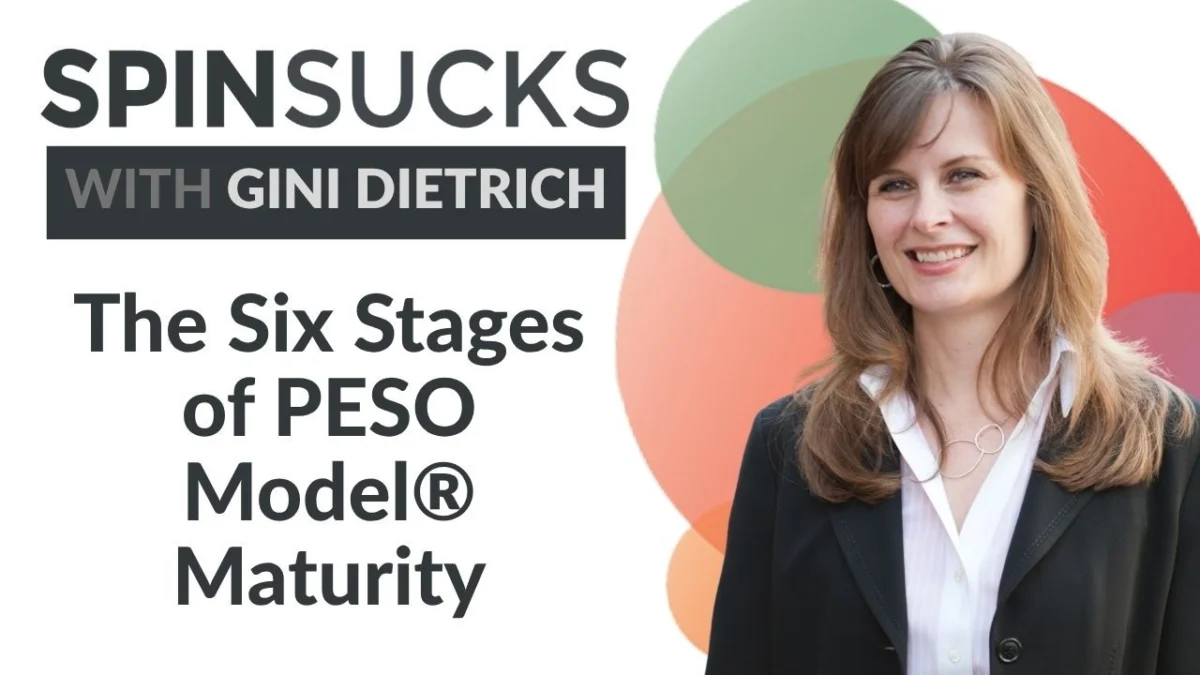
Recent industry data derived from the newly launched PESO Model Diagnostic has revealed a significant discrepancy between how marketing teams perceive their integration efforts and their actual operational maturity. According to the findings, 91% of marketing and communications teams are currently operating within the bottom half of the PESO maturity ladder, classified as either the Foundation or Pilot stages. This occurs despite nearly half of these organizations describing their operations as fully integrated across Paid, Earned, Shared, and Owned media. This “integration gap”—the distance between professional self-perception and functional reality—has emerged as a critical benchmark for the industry as it navigates the complexities of the AI-driven media landscape.
The PESO Model, originally developed by Gini Dietrich and popularized through the Spin Sucks platform, has evolved over the last decade from a conceptual framework into a comprehensive operating system for modern communications. However, the transition from understanding the model to executing it as a unified system remains a formidable challenge for global brands, mid-market firms, and agencies alike.
The Six Stages of PESO Maturity
To provide a structured path for organizational growth, the PESO Model Diagnostic categorizes teams into six distinct stages of maturity. These stages are not merely aspirational but serve as a functional description of how data, content, and strategy flow through an organization.
Stage 0: Foundation
At the Foundation level, the four channels of the PESO Model exist as separate entities. Organizations at this stage typically suffer from “execution-led” strategies where departments operate in silos. Marketing teams might be running paid advertisements, while PR teams handle earned media and social media teams manage shared channels, but there is no shared calendar or unified narrative.
A primary example of a Foundation-level operation is Oracle. Despite having significant market share in enterprise AI infrastructure and high-profile cloud deals with entities like OpenAI, Oracle’s communication channels often operate independently. Paid media follows its own trajectory, earned media reacts to corporate leadership announcements, and owned media focuses on technical documentation. While each channel is active and well-funded, they do not amplify one another, resulting in fragmented visibility that fails to leverage the brand’s full authority.
Stage 1: Pilot
The Pilot stage represents the first step toward true integration. At this level, a team may successfully execute a single integrated campaign where all four PESO components work in harmony. However, this coordination is treated as a special event rather than a standard operating procedure.
McDonald’s serves as a quintessential case study for the Pilot stage. The brand is renowned for high-impact integrated moments, such as the Travis Scott Meal or the Grimace Shake campaign. During these windows, paid, earned, shared, and owned media are perfectly synchronized to drive cultural conversation. However, once the campaign concludes, the organization reverts to siloed operations for its standard value menus and regional promotions, which are often managed by disparate agencies and internal teams with conflicting KPIs.
Stage 2: Scale
At the Scale level, integration becomes a repeatable behavior rather than a one-off experiment. Teams at this stage run multiple integrated campaigns annually and have established shared KPIs between marketing and communications departments.
Dove has maintained this level of maturity for two decades through its “Real Beauty” platform. Campaigns like “Real Beauty Sketches” and “Reverse Selfie” demonstrate a mastery of cross-channel coordination. Yet, between these major launches, the brand often returns to standard consumer packaged goods (CPG) marketing tactics where product pushes and performance media run on separate tracks. For these organizations, the campaigns are integrated, but the function itself has not yet been fully operationalized as a permanent system.
Stage 3: Systemize
Systemization occurs when integration moves from a campaign discipline to a core organizational function. Organizations at this stage employ a dedicated PESO integrator—a role specifically designed to ensure all channels are aligned. They utilize shared dashboards that track performance across all four media types in a single view, allowing cross-channel attribution to influence budget allocation.
Sephora is a leader in this category, utilizing its “Beauty Insider” loyalty program as a data spine that connects digital efforts, in-store experiences, and creator partnerships. Every channel feeds into a central data layer. However, the limitation at this stage is often speed. While the system is robust for planned initiatives, it may lack the agility to pivot instantly in response to real-time cultural trends or creator-led shifts on platforms like TikTok.
Stage 4: Real-Time
The Real-Time stage is characterized by extreme agility. At this level, the PESO system functions as a live instrument. Decisions regarding budget reallocation or content pivots are made in days or hours based on integrated performance data.
Netflix operates at the Real-Time level, particularly when a series becomes a viral sensation. When a show like “Squid Game” or “Wednesday” breaks out, the entire PESO apparatus pivots. Paid media is reallocated within the week, earned media teams secure talent for immediate press cycles, and the owned homepage algorithm reorganizes to capitalize on the momentum. The system does not just run; it adapts to the pulse of the audience in real-time.
Stage 5: Leadership
The pinnacle of the ladder is the Leadership stage, where the PESO operating system itself becomes a competitive moat. At this level, the mastery of integrated communications is so advanced that it shapes product development, hiring, and enterprise strategy.
Liquid Death is frequently cited as the premier example of PESO Leadership. The company has built a billion-dollar brand by treating its marketing operation as the primary product, with the water itself being incidental. Every channel feeds the others: paid media exists to provoke earned media coverage, and owned content is indistinguishable from entertainment. The integrated operation is so distinctive that it is studied by competitors, yet it remains difficult to replicate because it is woven into the brand’s DNA.
Analyzing the Data: The Integration Gap
The data from the PESO Model Diagnostic highlights a stark reality for the communications industry. While 68% of respondents claimed to run PESO as a system, the diagnostic scoring placed the vast majority of these individuals in the Foundation or Pilot stages. Furthermore, 31% of participants rated themselves at the very top of the integration scale, yet only two individuals out of the entire data set actually scored above the Scale level.
This discrepancy suggests that many professionals confuse “multi-channel marketing” with “integrated marketing.” Multi-channel marketing involves being present on several platforms, whereas integrated marketing requires those platforms to function as a single, cohesive ecosystem where the whole is greater than the sum of its parts.
Industry analysts suggest that several factors contribute to this stagnation:
- Siloed Budgeting: Traditional corporate structures often allocate budgets to specific departments (PR, Advertising, Social), making it difficult to fund cross-functional initiatives.
- Conflicting KPIs: If the PR team is measured on media mentions while the marketing team is measured on lead generation, their incentives to integrate are diminished.
- The “Heroic Act” Fallacy: Many teams rely on individual “heroic acts” to pull off a successful campaign rather than building structural systems that make integration inevitable.
Chronology of the PESO Evolution
The journey of the PESO Model from a graphic to an operating system has followed a clear timeline:
- 2014: The PESO Model is introduced in the book Spin Sucks, providing a visual framework for the evolving media landscape.
- 2014-2019: The model gains widespread adoption in PR and marketing education, becoming a standard for holistic communications planning.
- 2020-2023: The rise of AI and the fragmentation of traditional media force a shift from “framework” to “operating system,” as teams realize that manual integration is no longer sustainable.
- 2024: The PESO Model Diagnostic is launched to provide quantitative data on industry maturity, revealing the significant gap between perception and practice.
Strategic Recommendations for Advancement
For organizations seeking to move up the maturity ladder, experts recommend a focus on structural changes rather than tactical intensity. The transition from Stage 0 to Stage 5 is a sequence of small, deliberate moves.
The first step for most teams is to appoint or designate a PESO Integrator—a person whose primary responsibility is to bridge the gaps between paid, earned, shared, and owned media. This role ensures that a single narrative is being told across all channels and that data from one channel informs the strategy of the others.
Additionally, the implementation of a unified dashboard is essential. Without a single view of performance, teams remain trapped in their respective silos, unable to see how an earned media hit might be driving shared media engagement or how owned content is lowering the cost of paid acquisition.
Broader Impact and Industry Implications
The implications of the 91% “stuck” rate are profound. In an era where AI-generated content is flooding the market, the ability to run a sophisticated, integrated operating system is becoming one of the few durable competitive advantages left for brands. Organizations that remain at the Foundation or Pilot levels will likely see their message diluted by the sheer volume of noise in the digital space.
Conversely, brands that successfully reach the Systemize or Real-Time stages will find that their efforts compound over time. By treating PESO as an operating system rather than a series of disconnected tactics, these organizations can build a “moat” around their brand that is resistant to market volatility and technological shifts.
As the industry moves toward 2026, the focus will likely shift from “doing PESO” to “mastering PESO.” The diagnostic data serves as a wake-up call for senior leaders and agency principals: integration is not a destination, but a continuous process of operational refinement. The brands that acknowledge their current position on the ladder with honesty and rigor will be the ones best positioned to lead in the next era of communication.