rifanmuazin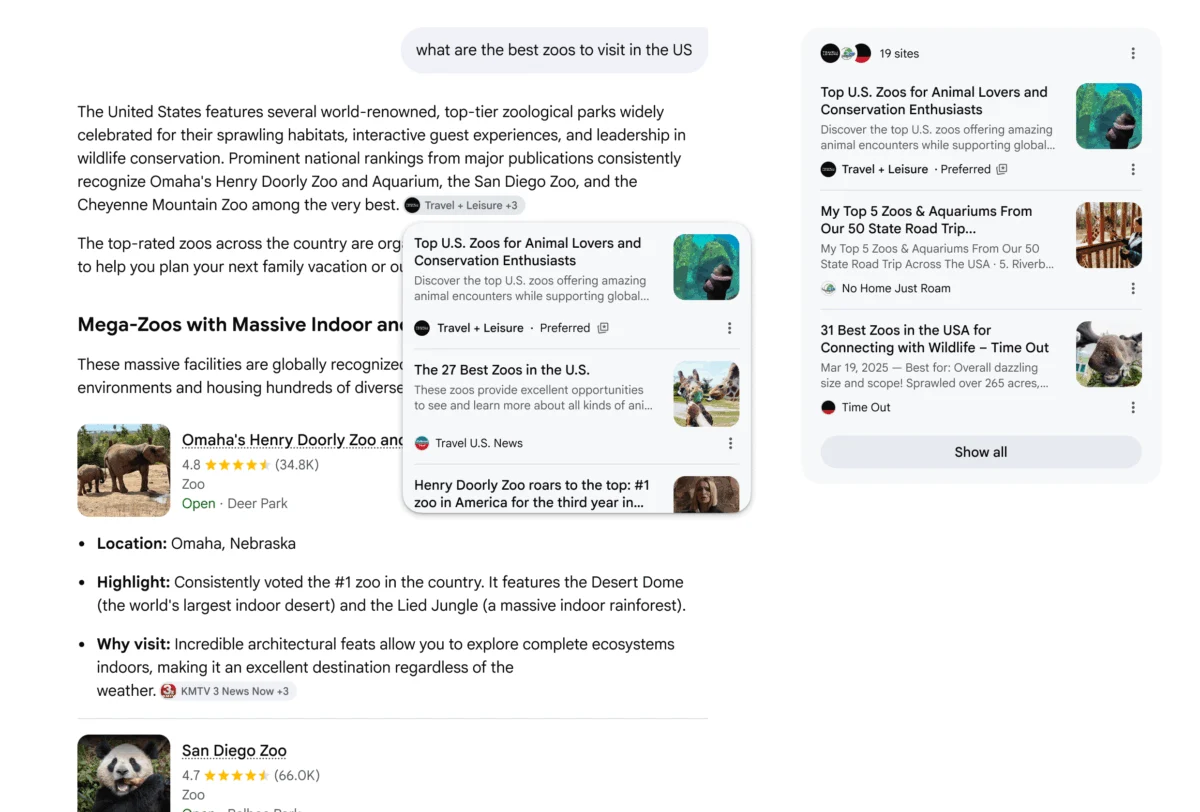
Google has officially commenced the rollout of several significant updates to its AI-powered search experiences, including the integration of “Preferred Source” labels within AI Mode and AI Overviews, the introduction of dynamic new carousels, and an expansion of the “Highly Cited” label across broader search results. These enhancements aim to provide users with greater control over information sources, improve the discoverability of high-quality content, and bolster trust in AI-generated summaries. The move underscores Google’s ongoing efforts to refine its artificial intelligence capabilities while addressing concerns regarding source attribution, content quality, and the broader impact on the digital publishing ecosystem.
Background: Google’s Evolving AI Search Landscape
The introduction of AI-driven features into Google Search represents a pivotal shift in how users interact with information online. Initially unveiled as the Search Generative Experience (SGE) and later evolving into “AI Overviews,” Google’s generative AI initiative sought to provide concise, direct answers to complex queries by summarizing information from various web sources. This ambitious undertaking, however, brought forth a complex set of challenges, particularly concerning the attribution of sources, the potential for AI to “hallucinate” incorrect information, and the impact on traffic for content creators and publishers. Critics and industry observers have consistently highlighted the delicate balance Google must strike between delivering immediate, AI-generated answers and continuing to foster a vibrant, open web ecosystem reliant on direct traffic to content providers.
In response to these evolving dynamics and user feedback, Google has been incrementally rolling out features designed to enhance transparency and user agency. The concept of “Preferred Sources” emerged as a direct answer to users’ desire for more personalized and trustworthy search results, allowing individuals to designate specific websites as authoritative or preferred. This initiative, alongside the “Highly Cited” label, forms part of a broader strategy to combat misinformation and elevate credible content in an increasingly complex information environment. These latest updates are a continuation of this strategic direction, aiming to integrate human curation and preference more deeply into the AI-powered search experience.
Preferred Sources: Empowering User Control in AI Overviews

The official rollout of Preferred Source labels within AI Mode and AI Overviews marks a significant step towards greater user control over the information consumed via generative AI. Duncan Osborn, Product Manager for Google Search, articulated the company’s vision, stating, “we’re bringing your Preferred Sources directly into our AI experiences, and launching new features to help you discover original content, creator insights, and unique perspectives.” This integration means that when AI Overviews or AI Mode generate a response, links from a user’s pre-selected Preferred Sources will be clearly labeled, making them easily identifiable and prominent within the AI-generated content. This functionality mirrors the existing Preferred Sources display in Top Stories, ensuring a consistent user experience across different search features.
The development of this feature has been observed in testing phases, with preliminary sightings reported approximately a week prior to the official announcement. Its global availability for all languages was previously confirmed, underscorating Google’s commitment to offering this personalization feature worldwide. Empirical data shared by Google supports the efficacy of this feature, indicating that “people are twice as likely to click through to a Preferred Source.” This statistic highlights the profound impact that user-defined preferences can have on engagement and content consumption patterns within the search ecosystem. Furthermore, Google revealed that users have already selected over 345,000 unique sources, demonstrating a significant uptake and active engagement with the personalization option. For publishers, Google has updated its official help documentation, including examples specific to AI Mode, to guide them on how to enable the “Add to Preferred Sources” button on their respective websites. This empowers content creators to encourage their audience to designate them as a trusted source, potentially leading to increased visibility and traffic within AI-driven search results.
Introducing Dynamic Carousels for Enhanced Content Discovery
Beyond Preferred Sources, Google is also rolling out two distinct types of new carousels within AI Mode and AI Overviews, designed to enrich the discovery of timely articles and diverse perspectives. These carousels represent an evolution in how AI-powered search presents information, moving beyond static summaries to offer more dynamic and contextually relevant content pathways.
The first type of carousel is specifically tailored for “developing topics.” For search queries pertaining to rapidly unfolding events or evolving subjects, users will now encounter a prominent carousel that highlights timely articles. Crucially, this carousel will also feature any Preferred Sources designated by the user, giving precedence to content from trusted outlets. According to Duncan Osborn, this particular carousel is intended to “help make timely articles more visible on a wider range of queries,” addressing the challenge of keeping users abreast of the latest information on fast-moving subjects. This feature can be particularly valuable in scenarios such as breaking news, ongoing scientific developments, or unfolding cultural events, where the most recent and authoritative information is paramount.

The second type of carousel focuses on “perspectives from online discussions, forums, and social media.” For searches where users might be seeking personal insights, diverse viewpoints, or community discussions, this carousel will surface relevant content from various online platforms. This initiative acknowledges the growing importance of user-generated content, community dialogue, and social media in shaping public discourse and providing nuanced perspectives that traditional news articles might not cover. By integrating these “perspectives” directly into AI Overviews, Google aims to offer a more holistic understanding of a topic, recognizing that different users seek different types of information and insights. This move also reflects a broader trend in search, where engines are increasingly valuing unique human experiences and discussions found outside of traditional journalistic outlets, provided they meet quality and relevance criteria. Both carousels are designed to enhance content discovery and provide users with a richer, more varied information diet directly within the AI search interface.
Expanding the Highly Cited Label for Authority and Trust
Complementing the updates to AI-driven experiences, Google is significantly expanding the reach of its “Highly Cited” label. This feature, originally introduced in 2022 and initially visible in Top Stories, is now being extended to “more web article links on the search results page.” This expansion is not confined to AI Mode or AI Overviews but will appear across standard search results, signifying Google’s commitment to promoting authoritative content throughout its search platform.
The Highly Cited label serves as a clear indicator that an article has been frequently referenced by other sources, suggesting a high degree of authority and trustworthiness. In an era where misinformation and disinformation pose significant challenges to information integrity, this label acts as a valuable signal for users seeking credible information. By expanding its presence, Google aims to make it easier for users to identify and prioritize content that is widely recognized and respected within its respective field.
A new dimension to this feature is Google’s intention to “indicate when an article explicitly references a Highly Cited source.” This enhancement provides an additional layer of transparency and validation. When an article cites another source that Google has identified as highly credible, this will be highlighted, further reinforcing the chain of authority and helping users trace information back to its most authoritative origins. This mechanism encourages responsible journalism and content creation, rewarding those who build upon well-established and trusted sources. The expansion of the Highly Cited label is a direct reflection of Google’s ongoing efforts to enhance the E-E-A-T (Experience, Expertise, Authoritativeness, Trustworthiness) framework, which guides its quality assessments for content. By elevating content that demonstrates these attributes, Google reinforces its role as a gatekeeper of quality information on the web.

Official Statements and Google’s Vision for Responsible AI
Google’s official statements regarding these rollouts consistently emphasize a commitment to supporting creators and providing users with high-quality, trustworthy information. Duncan Osborn’s remarks about “bringing your Preferred Sources directly into our AI experiences” and “discovering original content, creator insights, and unique perspectives” highlight a user-centric approach that also seeks to acknowledge and reward content creation. These updates are framed as part of a continuous effort to evolve search in a responsible manner, integrating advanced AI capabilities without compromising the fundamental principles of information accessibility, accuracy, and attribution.
The company is navigating a complex landscape where the rapid advancement of generative AI technology must be balanced with the enduring needs of the content ecosystem. Google’s communication strategy often underscores its role in sending valuable traffic to websites, a crucial point for publishers who have expressed concerns about AI Overviews potentially summarizing content to the extent that direct clicks are reduced. The explicit focus on increasing click-through rates for Preferred Sources and making timely articles more visible through carousels can be seen as direct responses to these concerns, attempting to demonstrate how AI can also be a conduit for traffic, not just a summarizer. The expansion of the Highly Cited label further reinforces Google’s dedication to quality content, suggesting that investing in authoritative and well-researched material will continue to be rewarded within the search algorithm. Ultimately, Google’s vision appears to be one where AI enhances the discovery of diverse and credible information, empowering users while simultaneously striving to maintain a healthy relationship with content creators.
Implications for Users and the Digital Information Landscape
For the average internet user, these updates promise a more personalized, transparent, and trustworthy search experience. The ability to designate “Preferred Sources” offers an unprecedented level of control, allowing individuals to curate their AI-generated summaries and direct their attention to outlets they trust. This personalization can significantly enhance user satisfaction and reduce the cognitive load associated with sifting through information from potentially unfamiliar or less credible sources. Moreover, the clear labeling of Preferred Sources within AI Overviews fosters greater transparency, making it evident which sources are contributing to the AI’s summary.

The new carousels contribute to a richer and more dynamic information diet. For “developing topics,” users gain quicker access to the most current information, which is critical in fast-evolving situations. The “perspectives” carousel, drawing from forums and social media, offers a valuable window into diverse opinions and real-world experiences, moving beyond traditional news reporting to capture the pulse of public discourse. This broader inclusion of source types reflects a more nuanced understanding of how people seek and consume information in the digital age.
The expanded “Highly Cited” label further empowers users in their quest for reliable information. By prominently highlighting content recognized for its authority and trustworthiness, Google provides a valuable tool for discerning credible sources from less reputable ones. The added layer of indicating when an article references a Highly Cited source reinforces the importance of journalistic rigor and proper attribution, cultivating a more informed and discerning user base. Collectively, these features aim to foster a more resilient digital information landscape, one where users are better equipped to navigate the complexities of AI-generated content and identify information they can truly trust.
Impact on Publishers and Content Creators
The implications of these updates for publishers and content creators are multifaceted, presenting both opportunities and ongoing challenges. On the one hand, the “Preferred Sources” feature offers a direct pathway to increased visibility and traffic for websites that cultivate a loyal readership. The statistic that users are “twice as likely to click through to a Preferred Source” underscores the significant advantage of being designated as such. This incentivizes publishers to actively encourage their audience to add them as a preferred source, potentially shifting a portion of traffic back towards direct engagement rather than solely relying on AI summarization.
The new carousels also present fresh avenues for content discovery. For publishers producing timely content on developing topics, the dedicated carousel offers a prime opportunity for enhanced visibility, especially if they are also a Preferred Source. Similarly, content creators active in online discussions, forums, or social media platforms may find their unique perspectives gaining greater prominence through the “perspectives” carousel. This suggests a broader definition of “valuable content” within Google’s ecosystem, extending beyond traditional articles to include community-driven insights.

However, the underlying tension between AI summarization and direct traffic generation for publishers remains a pertinent concern. While these new features aim to mitigate some of the potential traffic loss from AI Overviews, the fundamental shift towards providing answers directly within the search results page continues to be a point of debate. Publishers must now strategically adapt their content and SEO efforts to thrive in this evolving environment. The emphasis on “original content, creator insights, and unique perspectives” highlighted by Google reinforces the importance of producing high-quality, differentiated content that cannot be easily replicated or summarized by AI. Furthermore, the expansion of the “Highly Cited” label means that cultivating authority and trustworthiness through rigorous research and proper attribution will be more crucial than ever for search engine visibility. Publishers will need to focus on building strong E-E-A-T signals, encouraging external citations, and fostering a reputation as a reliable source to benefit from this expanded label. The overall trend indicates that while Google is making efforts to support the content ecosystem, publishers must continue to innovate their strategies to secure their relevance and traffic in an AI-dominated search landscape.
The Broader Future of Search
These comprehensive updates to Google’s AI-powered search experiences signal a clear trajectory towards a hybrid model of information retrieval. The future of search, as envisioned by Google, appears to be one where advanced artificial intelligence capabilities are intricately woven with human preferences and established signals of authority. The integration of Preferred Sources, dynamic carousels, and an expanded Highly Cited label collectively points to an ongoing effort to create a more curated, personalized, and trustworthy search environment.
This evolution will likely continue to reshape the relationship between search engines, content creators, and users. Google’s commitment to transparency and user control, while balancing the efficiency of AI summarization with the need to send traffic to publishers, will remain a critical challenge. These updates demonstrate Google’s proactive approach to addressing some of these complexities, striving to enhance the utility of AI while mitigating its potential drawbacks. As AI technology continues to advance, the interplay between algorithms, human input, and content quality will define the next generation of search, pushing the boundaries of how we discover, consume, and interact with information online. The current rollouts are not merely incremental changes but rather foundational adjustments that will influence the strategic direction of digital content creation and consumption for years to come.