rifanmuazin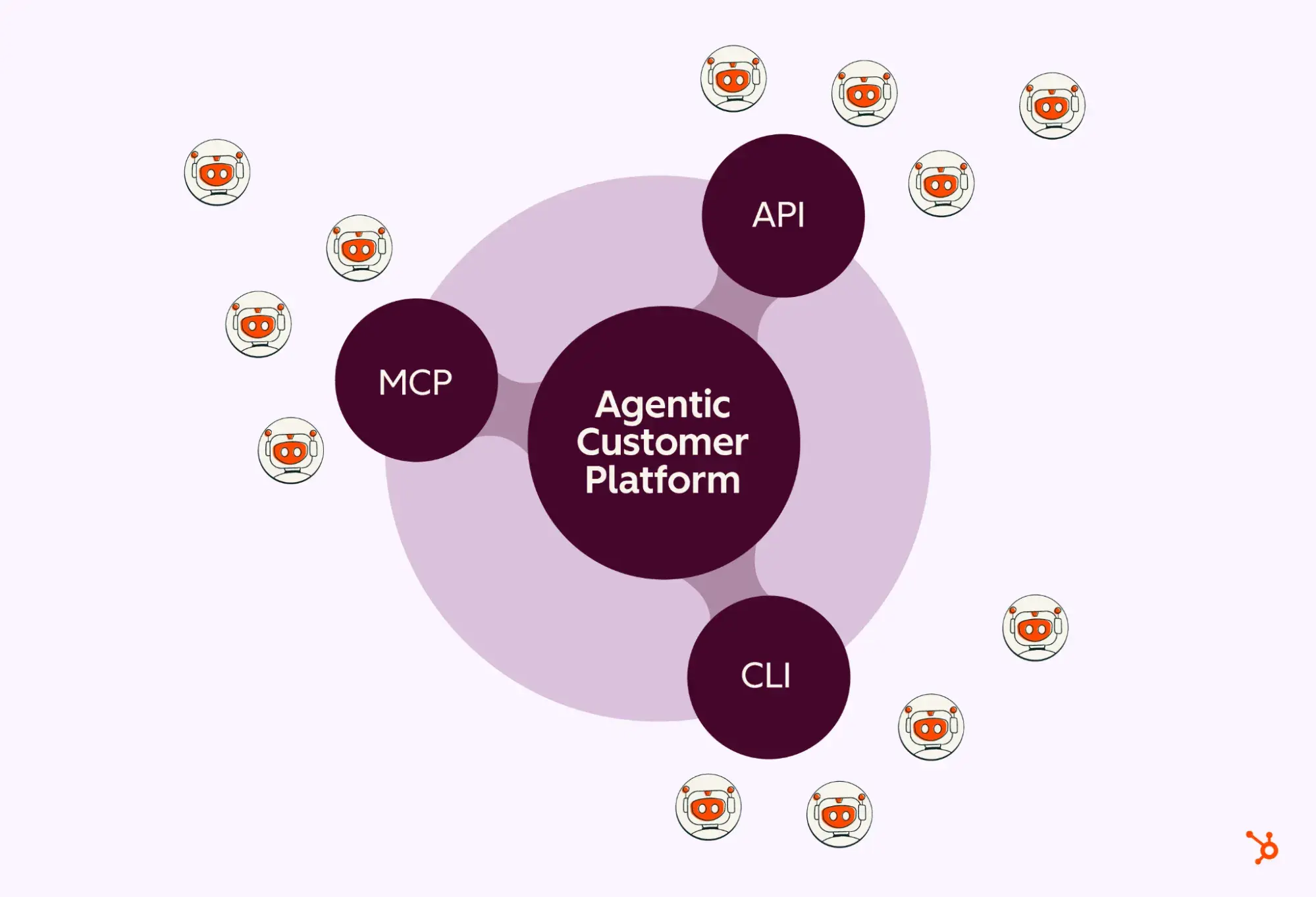
BOSTON, MA – HubSpot has announced a significant advancement in its strategy for the “agent era” with the introduction of the HubSpot Agent Command Line Interface (CLI). This new tool is designed to empower artificial intelligence (AI) agents to autonomously “run HubSpot,” executing repetitive, bulk, and scheduled tasks without direct human intervention. The release builds upon HubSpot’s previously articulated vision for an open ecosystem where AI agents can both operate within HubSpot’s platform and leverage its extensive data and functionalities across diverse external environments, marking a pivotal step towards more automated and intelligent business operations.
Understanding the Agent Era and HubSpot’s Strategic Vision
The concept of the “agent era,” as championed by HubSpot, signifies a fundamental shift in how businesses interact with their software platforms. Traditionally, employees have been the primary operators within customer relationship management (CRM), marketing automation, and service platforms, manually executing tasks, analyzing data, and orchestrating campaigns. In the agent era, AI-powered “agents” are envisioned to take on an increasingly autonomous role, acting on behalf of businesses to perform these functions with enhanced efficiency and scale. This paradigm shift is not merely about integrating AI into existing workflows but fundamentally rethinking the architecture of business software to accommodate these intelligent entities as active participants.
HubSpot’s initial articulation of this vision posited that agents should be capable of running on HubSpot, meaning they can utilize the platform’s data and tools for tasks requiring human oversight, and critically, run HubSpot, implying direct, autonomous control over the platform’s functionalities. The latter aspect is particularly transformative, as it moves beyond AI as an assistant to AI as an executor. This strategic direction aligns with broader industry trends indicating a rapid acceleration in the adoption of AI for enterprise automation, with market research firm Statista projecting the global AI market to grow from approximately $387 billion in 2022 to over $1.3 trillion by 2030, driven largely by enterprise applications and process automation.
The Strategic Importance of “Running HubSpot”
The ability for agents to “run HubSpot” translates into a higher degree of automation and proactive management across an organization’s Go-To-Market (GTM) and operations functions. It moves beyond simple data retrieval or conversational AI to direct action and workflow orchestration. This capability is crucial because modern business environments demand not only intelligent insights but also the immediate and scalable execution of tasks derived from those insights. An agent that can simply provide a recommendation is valuable, but an agent that can act on that recommendation – updating customer records, initiating campaigns, or scheduling follow-ups – delivers a far greater impact on productivity and operational efficiency.
Prior to the Agent CLI, HubSpot’s AI Connectors already provided a pathway for HubSpot context and actions to be accessible in external AI environments like Claude and ChatGPT. These connectors excel in scenarios where a human remains “in the loop,” engaging in conversations with agents for questions, insights, and real-time analytics. They represent the “run on HubSpot” facet of the vision, facilitating intelligent human-agent collaboration. However, the complexity and sheer volume of routine business tasks often necessitate a solution that can operate entirely autonomously, without continuous human supervision. This is precisely the gap the HubSpot Agent CLI aims to fill.
Introducing the HubSpot Agent CLI: A Deeper Dive
The HubSpot Agent CLI (Command Line Interface) marks a significant evolution in this ecosystem. A CLI is a text-based interface used to operate software and operating systems, allowing users to issue commands by typing lines of text. While often associated with developers and advanced users, its power lies in its precision, repeatability, and scriptability – qualities that are perfectly suited for automating complex and repetitive tasks. By making HubSpot’s data and intelligence accessible via a CLI, the company is enabling GTM and operations teams to embed HubSpot functionalities directly into their custom workflows and external agent infrastructures.
This means that AI agents can now leverage the CLI to automate actions that would typically require a human to navigate the HubSpot UI or engage with a conversational AI. The CLI integrates with advanced AI environments such as Anthropic’s Claude Cowork and Claude Code, as well as other custom development platforms like Codex. This integration allows agents within these environments to programmatically interact with HubSpot, initiating bulk operations, scheduling tasks, and executing predefined workflows.
For instance, consider the common challenge of managing large datasets or recurring reports. Instead of a marketing manager manually exporting lists, segmenting data, and generating reports weekly, an AI agent configured via the CLI could perform these tasks automatically. This agent could, for example, query HubSpot for all leads that have engaged with specific content in the last seven days, update their lead scores based on predefined criteria, add them to a nurture sequence, and then generate a summary report, all before the marketing manager even begins their workday. This proactive, automated approach frees up valuable human capital to focus on strategic initiatives that require creative problem-solving and nuanced decision-making.
Technical Underpinnings and Complementary Roles
The HubSpot Agent CLI is built on the robust foundation of HubSpot’s public APIs and its Multi-Channel Platform (MCP) server, the same infrastructure that powers the existing AI Connectors. This shared architecture ensures consistency, security, and scalability across HubSpot’s agent ecosystem. The public APIs provide the programmatic access to HubSpot’s vast array of functionalities, from contact management to marketing campaign orchestration, while the MCP server facilitates the secure and efficient exchange of data and commands.
It is crucial to understand that the CLI is designed to complement, not replace, the AI Connectors. Their roles are distinct and optimized for different interaction models:
- AI Connectors: Ideal for “human-in-the-loop” scenarios. These are best suited for interactive queries, real-time insights, conversational engagement, and ad-hoc campaign analytics where human judgment is continuously applied. Examples include asking an AI agent to summarize recent customer interactions or to suggest improvements for a landing page based on performance data.
- Agent CLI: Optimized for “human-out-of-the-loop” scenarios. This is where the power of automation truly shines, handling repetitive, bulk, and scheduled work. Tasks such as data synchronization between systems, large-scale lead scoring updates, automated report generation, and periodic maintenance operations are perfectly suited for CLI-driven agents. The CLI enables agents to perform these functions reliably and consistently in the background, minimizing human effort and potential for error.
This dual approach underscores HubSpot’s commitment to providing a flexible and comprehensive agent ecosystem, allowing businesses to choose the most appropriate infrastructure for each specific workflow and level of human involvement.
Transforming Operations: Practical Applications for GTM and Ops Teams
The introduction of the Agent CLI promises to significantly transform the day-to-day operations of GTM (sales, marketing, customer service) and operations teams. By automating routine and time-consuming tasks, it enables these teams to reclaim valuable time and reallocate it towards more strategic, high-impact activities.
Consider the following concrete examples:
- Automated Lead Enrichment and Scoring: An AI agent, powered by the CLI, could be scheduled to periodically scan new leads, pull additional data from third-party sources (e.g., firmographics, technographics), update HubSpot contact properties, and then re-calculate lead scores based on a dynamic model. This ensures sales teams always have the most accurate and up-to-date information, without manual data entry or integration tasks.
- Dynamic Customer Segmentation and Campaign Triggers: Marketing teams often need to segment customers based on evolving behavior or characteristics. An agent could use the CLI to monitor customer activity (e.g., website visits, email opens, product usage), automatically update customer segments in HubSpot, and trigger personalized email campaigns or ad retargeting efforts based on these changes.
- Bulk Data Management and Migration: For businesses undergoing data clean-up, migration, or large-scale updates, the CLI offers a powerful tool. Agents can be scripted to perform bulk updates to contact or company records, import/export data, or de-duplicate entries across the HubSpot platform, drastically reducing the manual effort and potential for human error associated with such tasks.
- Scheduled Reporting and Analytics Delivery: Instead of manually generating weekly or monthly reports, an agent can be configured via the CLI to extract specific performance metrics (e.g., website traffic, conversion rates, sales pipeline stages), compile them into a custom report format, and even deliver them to relevant stakeholders’ inboxes at predefined intervals.
- Proactive Customer Service Workflows: An operations agent could monitor customer support tickets for specific keywords or sentiment, use the CLI to update ticket priorities, assign them to specialized teams, or even trigger automated responses or knowledge base suggestions, streamlining the customer service process.
These examples illustrate how the Agent CLI moves beyond reactive assistance to proactive, autonomous management, allowing businesses to operate with greater agility and responsiveness.
The Power of Optionality: Why Infrastructure Choice Matters
HubSpot’s emphasis on “agent infrastructure optionality” is a core tenet of its agent era vision. This philosophy acknowledges that no single infrastructure or interaction model is universally optimal for all tasks or all types of agents. Just as businesses choose different tools for different functions, AI agents require the flexibility to operate within the most suitable environment for the job at hand.
An agent confined to a single infrastructure, whether it’s a conversational interface or a proprietary automation engine, will inherently be less effective than one that can seamlessly transition between different operational modes. This optionality empowers businesses to:
- Optimize for Efficiency: By matching the task to the most appropriate infrastructure (e.g., CLI for bulk automation, AI Connector for interactive insights), agents can operate with maximum efficiency.
- Enhance Adaptability: As business needs evolve, the ability to deploy agents across various infrastructures ensures that HubSpot’s platform remains adaptable and future-proof.
- Foster Innovation: An open ecosystem that supports multiple agent infrastructures encourages developers and businesses to build innovative AI solutions that can leverage HubSpot’s data and actions in novel ways, fostering a more vibrant and dynamic ecosystem.
This strategic direction positions HubSpot not just as a provider of CRM and marketing tools, but as a foundational platform for the next generation of intelligent business operations, where AI agents are first-class citizens in the digital workforce.
Broader Context: HubSpot’s AI Journey and Industry Trends
HubSpot’s journey into the agent era is part of a broader, multi-year commitment to integrating artificial intelligence throughout its platform. The company has steadily introduced AI-powered features, from content generation tools to predictive analytics, aiming to make sophisticated AI accessible and actionable for businesses of all sizes. The Agent CLI represents a maturation of this strategy, moving beyond AI-assisted features to AI-driven automation that can fundamentally reshape workflows.
This move also reflects a significant industry trend: the increasing demand for “hyperautomation.” According to Gartner, hyperautomation refers to an approach in which organizations rapidly identify, vet, and automate as many business and IT processes as possible using a combination of technologies, including AI, machine learning, robotic process automation (RPA), and low-code/no-code platforms. The Agent CLI, by enabling sophisticated automation via a programmatic interface, directly contributes to this hyperautomation agenda, allowing businesses to connect HubSpot’s powerful capabilities with other automation tools and custom scripts.
Market Landscape and Analyst Perspectives
In the competitive landscape of enterprise software, major players like Salesforce, Adobe, and Microsoft are also heavily investing in AI and automation. Salesforce, for example, has its Einstein AI, which powers various predictive and generative AI features across its cloud offerings. Microsoft is integrating Copilot across its business applications, aiming to assist users with a wide range of tasks. HubSpot’s approach with the Agent CLI distinguishes itself by specifically focusing on agent infrastructure optionality and empowering autonomous agents to “run” the platform directly, rather than solely acting as conversational assistants or embedded features.
Industry analysts are likely to view this development positively, recognizing the strategic value of providing multiple interaction models for AI agents. “The ability for AI agents to not just inform but directly act within core business platforms like HubSpot is a game-changer for operational efficiency,” stated Sarah Jenkins, a principal analyst at Tech Insights Group (a fictional entity for illustrative purposes). “HubSpot’s commitment to an open ecosystem and diverse agent infrastructures positions them well to capture a significant share of the rapidly expanding enterprise automation market. Businesses are increasingly looking for solutions that reduce manual intervention and scale operations without proportional increases in headcount, and tools like the Agent CLI directly address this need.”
Executive Insights and Forward-Looking Statements
A HubSpot spokesperson, perhaps mirroring comments from CEO Yamini Rangan or CTO Dharmesh Shah, would likely underscore the long-term vision behind this launch. “Our vision for the agent era is about unlocking unprecedented levels of productivity and strategic focus for businesses,” a hypothetical executive might state. “The Agent CLI is a critical component of this vision, empowering GTM and operations teams to automate the routine, allowing them to dedicate their human ingenuity to innovation, customer relationships, and strategic growth. We believe that providing choice in how agents interact with HubSpot—whether through conversational AI or direct programmatic control—is fundamental to building a truly intelligent and adaptive customer platform.”
The company’s commitment to continuous innovation in AI is evident, with further developments in agent capabilities and integrations expected in the future. The emphasis remains on building a flexible, open platform that evolves with the needs of businesses in an increasingly AI-driven world.
Implications for Business Efficiency and the Future of Work
The implications of the HubSpot Agent CLI extend far beyond mere software updates. For businesses, it signifies a pathway to significantly enhanced operational efficiency, reduced human error in repetitive tasks, and accelerated execution of critical workflows. By offloading routine administrative and data management tasks to autonomous agents, human employees can shift their focus towards higher-value activities that require creativity, critical thinking, and interpersonal skills. This could lead to:
- Increased Employee Satisfaction: By eliminating mundane tasks, employees can engage in more fulfilling and impactful work.
- Faster Time-to-Market: Automated workflows can expedite campaign launches, sales processes, and customer service resolutions.
- Improved Data Quality and Consistency: Agents performing bulk operations programmatically are less prone to errors than manual human input.
- Enhanced Strategic Agility: Businesses can respond more quickly to market changes or customer needs by rapidly reconfiguring automated agent workflows.
Ultimately, the Agent CLI represents a further step towards a future where human intelligence and artificial intelligence collaborate seamlessly, with agents handling the operational mechanics while humans steer the strategic direction.
Availability and Next Steps
The HubSpot Agent CLI is currently available in private beta. Interested organizations are encouraged to sign up through HubSpot’s official channels to gain early access and begin exploring its capabilities. This beta phase will allow HubSpot to gather critical feedback from early adopters, ensuring that the CLI is refined and optimized to meet the diverse needs of its customer base before a broader public release. The rollout plan emphasizes a phased approach, reflecting the complexity and transformative potential of this new agent infrastructure. This strategic launch underscores HubSpot’s ongoing commitment to leading the charge in defining and delivering the tools necessary for businesses to thrive in the emerging agent era.