rifanmuazin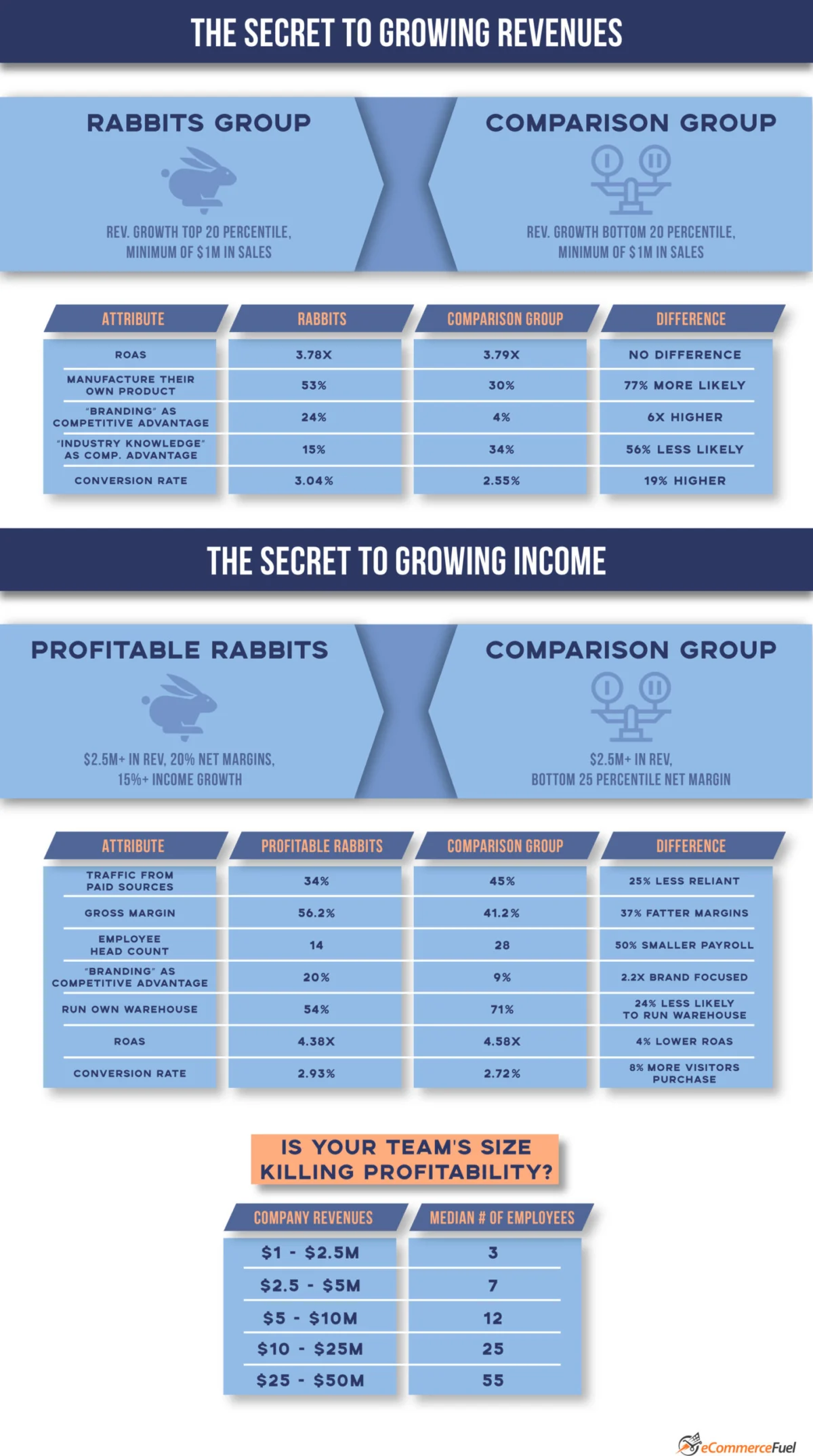
A prominent e-commerce entrepreneur, who wishes to remain anonymous to protect ongoing business relationships, recently shared a compelling narrative that challenges conventional wisdom regarding business growth and profitability. His experience, detailed in a recent industry analysis, underscores a fundamental shift in how successful online retailers are achieving financial success. Instead of relying solely on aggressive marketing campaigns and expanding headcount, many are finding greater returns by optimizing operational efficiency and implementing sophisticated tax planning strategies.
The entrepreneur’s initial situation was a familiar one for many business owners. He managed a team of 35 employees, generating solid revenue. However, despite consistent sales, profitability remained stubbornly tight, and the constant pressure of managing a large workforce led to significant personal stress. “Managing 35 people is a full-time job on top of your full-time job,” he reportedly stated, highlighting the dual burden of operational management and strategic business development.
This period of strained profitability and high stress prompted a series of decisive actions. The entrepreneur transitioned to a remote-first operational model, outsourced warehouse and fulfillment operations to a third-party logistics (3PL) provider, and strategically replaced a majority of full-time employees with freelance and contract workers. The outcome of these changes has been a dramatic improvement in financial performance and a significant reduction in operational burdens. Today, his business operates with a core team of one full-time employee supported by eight contractors. This lean structure has resulted in unprecedented profit margins and a considerably lower stress level for the owner.

This anecdote, while personal, is not an isolated incident. It aligns with broader research indicating that sustained profitability in the e-commerce sector is increasingly driven by operational leanness rather than marketing prowess alone. A comprehensive study analyzing hundreds of e-commerce businesses revealed surprising insights into the factors differentiating highly profitable ventures from those struggling to gain traction. Contrary to expectations that superior marketing strategies would be the primary differentiator, the research found that the return on ad spend (ROAS) between top and bottom performers showed negligible differences. Similarly, leading profitable stores were not necessarily more adept at paid advertising channels like Facebook or search engine optimization (SEO).
The true divergence lay in operational structure. The study highlighted that top-performing businesses typically maintained payrolls half the size of their less profitable counterparts. Furthermore, these leading businesses were 25% more likely to outsource their warehouse operations and demonstrated a 25% reduced reliance on paid traffic. This empirical data strongly suggests that “operational leanness beat marketing cleverness every time,” a sentiment that is resonating within the e-commerce community. The upcoming eComFuel Trends Report is expected to further validate and expand upon these findings, offering a deeper dive into these critical performance metrics.
Beyond Headcount: Redefining Operational Lean
The concept of “staying lean” in business is often narrowly interpreted as reducing employee numbers. However, a more holistic view encompasses the elimination of all forms of overhead that do not directly contribute to core business value. This includes physical office spaces that have become underutilized in the era of remote work, warehousing facilities that could be more cost-effectively managed by specialized 3PL providers, and a multitude of recurring SaaS subscriptions that can accumulate into significant, often forgotten, expenses.

A critical filter for evaluating operational overhead is to assess what truly constitutes the brand’s core differentiator. If a company’s unique selling proposition lies in its product design, then maintaining an in-house design team might be a strategic imperative. Conversely, if the intricate process of packing and shipping orders does not represent a competitive advantage, then outsourcing these functions to a 3PL can yield substantial cost savings and operational efficiencies. The most successful e-commerce owners are not indiscriminately cutting costs; they are making deliberate decisions about where to allocate their resources to maximize impact and profitability.
The Imperative of Proactive Difficult Conversations
A widely cited principle in personal and professional development posits that success is often measured by the willingness to engage in difficult conversations. Many business owners tend to postpone these crucial discussions until circumstances force their hand, such as during an economic downturn, a liquidity crisis, or when declining profitability poses an existential threat.
However, profit-driven e-commerce leaders are taking a proactive approach. They are initiating these conversations well in advance of any crisis, critically evaluating the necessity of each role within the organization and questioning whether certain positions were created out of genuine need or simply due to a perception of busyness. They are scrutinizing their technology stack, discerning between essential tools and those maintained out of habit. Furthermore, they are engaging in hypothetical scenarios, such as identifying which expenses could be immediately cut if a 25% reduction were mandated. This intentionality allows them to make strategic adjustments not out of desperation, but from a position of informed decision-making.

Unlocking Hidden Value: The Second Unsexy Lever
While operational efficiency addresses the outflow of capital, another often-overlooked area for significant profit enhancement lies in strategic tax planning. Many business owners, until recently, viewed taxes as a fixed, unavoidable cost – a percentage of income to be paid regardless of the business’s strategic financial decisions. This perspective, however, overlooks the potential for substantial savings that can dramatically impact net profit.
Consider a comparative analysis of two hypothetical e-commerce owners, both generating $2.5 million in revenue with a pre-tax profit of $250,000 and taking home the same personal salary, with identical family situations (married with three children). Assuming a marginal tax rate of approximately 30%, Owner A might pay around $75,000 in annual taxes. In contrast, Owner B, through deliberate and proactive tax planning, could reduce their tax liability to as little as $21,000, resulting in an annual savings of $54,000.
The strategies employed by Owner B are not indicative of aggressive tax evasion or complex offshore schemes, but rather the intelligent utilization of available tax-advantaged mechanisms:

- Profit Sharing Contributions: Owner B contributes $45,000 to retirement accounts via profit sharing, exceeding the typical limits of standard 401(k) plans. This strategy alone can yield savings of approximately $13,500.
- Donations of Appreciated Stock: Instead of donating cash to charitable organizations, Owner B donates stock that has appreciated in value. This allows him to avoid capital gains tax on the appreciation while still receiving the full deduction for the fair market value of the donation, saving an estimated $3,500.
- Maximized Health Savings Account (HSA): By contributing the maximum family limit of $8,500 to his HSA, Owner B benefits from triple tax advantages – contributions are tax-deductible, growth is tax-free, and withdrawals for qualified medical expenses are also tax-free. This strategy can result in savings of roughly $2,550.
- Employing Children: Owner B employs his three children in the business, paying each $7,000 annually for their genuine contributions. These payments are deductible business expenses for Owner B, and his children can invest these earnings in Roth IRAs, allowing for tax-free growth for decades. This strategy can generate savings of approximately $6,300.
- Inventory Donations: For $60,000 worth of slow-moving inventory, Owner B chose to donate it to a charity instead of liquidating it at a loss. By taking a deduction at fair market value, he realized significant tax benefits, an approach that is “massively underutilized in eCommerce” and can save around $18,000.
The cumulative effect of these intentional strategies demonstrates a $54,000 difference in tax liability annually, a substantial sum that directly impacts net profitability.
The Invisibility of Tax Optimization
The primary reason many e-commerce owners overlook these significant tax-saving opportunities is the fragmented nature of tax information. Tax obligations are typically spread across personal tax returns, business filings, brokerage account statements, and payroll tax reports. The absence of a consolidated dashboard prevents business owners from seeing their total tax burden and identifying potential areas for reduction. Consequently, the question of whether they could be paying less often goes unasked.
Owner A in the comparative example is not necessarily unintelligent; he simply lacks a comprehensive overview of his total tax exposure and has not proactively sought strategies for optimization. While a competent accountant can ensure accurate filing, they often do not proactively propose new tax-saving ideas. Their role is typically reactive, processing information provided by the client rather than originating strategic tax planning initiatives.

A simple yet effective test for the efficacy of one’s tax advisor is to consider the last time they proactively offered a new tax-saving idea. If the answer is that they only respond to direct questions or accurately file returns, it may indicate that while they are competent, they are not providing the strategic financial guidance necessary to maximize after-tax outcomes. The $54,000 difference between Owner A and Owner B is not a product of complex financial engineering, but of intentional, informed decision-making.
The Dual Levers of Profitability
While marketing metrics such as ROAS, customer acquisition cost (CAC), and lifetime value (LTV) dominate industry discussions and are the focus of many e-commerce businesses, the owners who achieve superior profitability are leveraging two less glamorous but profoundly impactful levers: operational leanness and strategic tax planning. By optimizing their cost structures, reducing overhead, and meticulously planning their tax liabilities, these entrepreneurs are able to retain a significantly larger portion of their earnings. The pursuit of better marketing is undoubtedly valuable, but the ability to keep more of what has already been earned often represents a more direct and impactful path to enhanced profitability.