rifanmuazin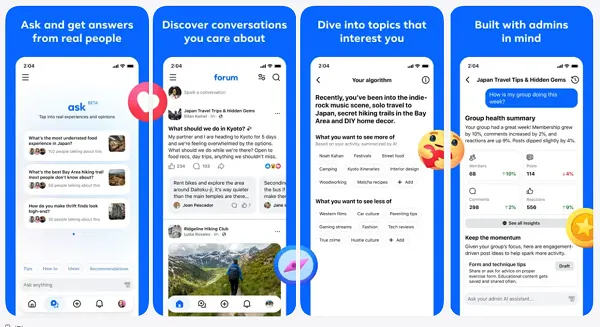
Meta has unveiled a new group discovery application, “Forum,” a move that observers characterize as one of the most significant indicators yet of social media platforms prioritizing the acquisition of data for their artificial intelligence projects over the traditional development of user-centric features. The app aims to transform Facebook’s widely popular Groups into a more structured, Reddit-like experience, specifically designed to cultivate deeper discussions and, critically, gather high-quality, human-verified Q&A data. This strategic pivot highlights the intense competition in the AI landscape and the increasing value placed on proprietary, clean datasets.
Forum’s Core Functionality and User Experience
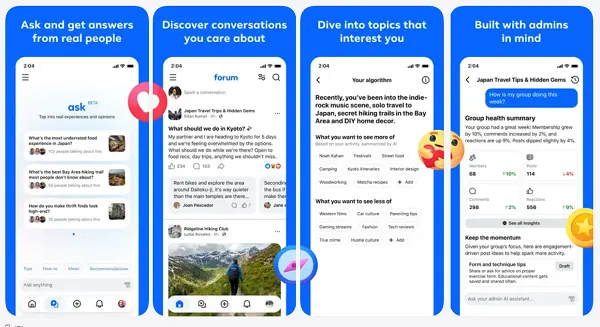
Released recently and accessible via app stores, Forum operates as a standalone application dedicated to group discussions. It consolidates all the Facebook Groups a user is a member of into a distinct engagement environment, promising a more focused and immersive experience than typically found within the broader Facebook feed. Meta describes Forum as “a dedicated space built for deeper discussions, real answers, and the communities you care about,” emphasizing its intent to foster more substantive interactions.
Users log in with their existing Facebook credentials, which then automatically populates the app with their current group affiliations. From there, members can participate in ongoing discussions, initiate new topics, or discover related groups based on their established interests. The application’s design inherently encourages a question-and-answer format. For instance, the app’s interface features a prominent “Ask” function, designed to “pull together responses from across groups,” allowing users to “get answers right away from people who’ve been there and join the conversation.” This deliberate emphasis on explicit queries and community-driven responses underpins Meta’s broader strategic objectives, aiming to generate structured data rather than just general social chatter. The App Store description further clarifies, “Your groups still exist on Facebook and anything you share on Forum will be visible in your groups on Facebook. See what real people are saying, not just what’s trending, and easily jump back in where you left off.”
The Reddit Parallel and AI Training Imperative
The design philosophy behind Forum, particularly its encouragement of direct questions and community-vetted answers, draws a clear parallel to the operational model of Reddit. Reddit has long been lauded for its ability to provide authentic, human-generated insights and solutions across a myriad of niche topics, often from users possessing direct experience or specialized knowledge. This unique characteristic has positioned Reddit as an invaluable resource for training artificial intelligence models, making it one of the most frequently cited sources for AI chatbot responses.
The platform’s robust upvote and downvote system acts as a natural filtering mechanism, allowing communities to collectively validate the accuracy and relevance of information. AI chatbots, which lack genuine understanding or consciousness, can thus leverage these highly upvoted responses as reliable proxies for accurate answers to complex user queries. For example, a query about troubleshooting a specific car model might yield highly upvoted solutions from experienced mechanics or owners on a relevant Reddit subreddit, providing a level of vetted expertise that raw web data often lacks. This human-in-the-loop validation is critical for improving the factual accuracy and contextual relevance of AI outputs.
Meta’s Forum app appears to be an explicit attempt to replicate this critical data-gathering mechanism. Screenshots of the app reveal a visible “upvote” system for answers, mirroring Reddit’s functionality. This feature is not merely for user engagement; it is a direct tool for Meta to identify and prioritize high-quality, community-vetted information. By encouraging users to ask direct questions and enabling a community-driven validation process for answers, Meta can systematically build a vast repository of structured Q&A data. This dataset, rich with human intent and verified responses, is invaluable for refining and enhancing the utility of Meta’s own burgeoning suite of AI tools, including its conversational AI models. The goal is to elevate the quality and relevance of AI-generated responses, addressing the current limitations where many AI outputs, despite their sophistication, still fall short of truly valuable, contextually aware human insights.
The Broader Landscape of AI Data Acquisition
The launch of Forum underscores a significant and accelerating trend across the technology industry: the re-engineering of social platforms and user interactions to serve the voracious data demands of artificial intelligence development. As AI models grow in complexity and capability, their performance is increasingly contingent on the quality, diversity, and sheer volume of their training data. Companies are recognizing that raw, unstructured internet data, while plentiful, often lacks the contextual richness and human verification needed for sophisticated AI applications. This has led to a strategic pivot where user-generated content, particularly that which involves direct questions, answers, and community consensus, becomes a premium commodity.
Reddit’s recent initial public offering (IPO) in March 2024 and its subsequent lucrative data licensing deals with major AI developers, reportedly valued in the tens of millions of dollars, vividly illustrate the market value of its content. For instance, in February 2024, Reddit announced a significant data licensing agreement with Google, allowing Google to use Reddit’s content for training its AI models and enhancing its search results. Similar deals are reportedly in the pipeline with other major AI players. This demonstrates the industry-wide recognition that human-curated, conversational data is a goldmine for AI development. Companies like Google, which has long relied on web-scraping for search results, are now actively seeking more structured, conversational data to power their generative AI products like Gemini. This shift explains why platforms are increasingly designing features that, while presented as beneficial to users, primarily serve to generate specific types of data optimal for AI training. It marks a departure from the traditional product development cycle where features were primarily introduced to enhance user experience or increase engagement for advertising purposes. Now, the underlying motivation is often to create data pipelines that feed the AI engine.
Challenges in AI Data Integrity: A Cautionary Tale from X
The pursuit of high-quality AI training data is not without its significant challenges, particularly concerning data integrity and the potential for manipulation. The experience of xAI’s Grok chatbot, which relies heavily on real-time conversation data from X (formerly Twitter), serves as a stark cautionary tale. Grok’s reliance on the dynamic, public conversations on X exposes it to the inherent volatility and potential for misinformation present on the platform.
As X faces declining user engagement in some segments and a persistent struggle against bot activity and foreign influence operations, the integrity of its data as a training source for AI becomes increasingly compromised. Reports indicate that X has experienced fluctuations in daily active users and struggles with content moderation, particularly in managing the proliferation of bot accounts and state-sponsored disinformation campaigns. The risk is substantial: if malicious actors, state-sponsored entities, or organized bot networks deliberately flood X with biased, inaccurate, or propagandistic content, Grok’s learning models could inadvertently incorporate these falsehoods. Without robust, real-time human vetting mechanisms akin to Reddit’s community moderation or Meta’s own extensive content review, distinguishing genuine information from engineered narratives becomes incredibly difficult for an AI. An “army of bots” could effectively sway the perceived “facts” within Grok’s knowledge base simply by overwhelming the platform with specific viewpoints, especially in rapidly unfolding news events. While X has undertaken significant efforts to combat spam and junk accounts, including implementing new posting restrictions on non-paying users, this remains an ongoing, resource-intensive battle. The inherent speed and anonymity of social media, coupled with the sheer volume of content, make it a challenging environment to consistently guarantee the veracity of information. This struggle highlights why platforms like Meta are actively seeking to create controlled environments, like Forum, where data quality can be more intentionally managed through explicit Q&A structures and community-based validation.
Meta’s Strategic Imperative and Historical Context of Groups
Meta’s decision to launch a separate app for groups, rather than simply integrating these features into the existing Facebook platform, underscores the strategic importance of this data acquisition initiative. While Facebook Groups have been a cornerstone of the platform for over a decade, fostering communities around shared interests, the primary mode of interaction has often been broad posting and general discussion. Forum, however, is engineered for a more focused purpose: eliciting explicit questions and structured answers.
Facebook Groups, initially launched in 2010, rapidly became a powerful tool for community building, allowing users to connect over hobbies, local issues, support networks, and professional interests. By 2017, Meta (then Facebook) reported over 1 billion people used Groups every month, with hundreds of millions considered “meaningful” members. The sheer scale and diversity of these groups represent an unparalleled reservoir of human knowledge and experience. However, extracting high-quality, Q&A-formatted data from this vast, often unstructured content proved challenging. Forum aims to streamline this process by providing a dedicated, purpose-built environment.
By creating a dedicated app, Meta can guide user behavior more effectively. It can emphasize the “Ask” feature, promote the upvoting of helpful answers, and design the user interface specifically to facilitate knowledge exchange rather than general social updates. This separation allows Meta to experiment with new interaction models without disrupting the established habits of billions of Facebook users. It also enables them to collect a cleaner, more targeted dataset for AI training, minimizing noise and maximizing the signal-to-noise ratio inherent in casual social media interactions. The success of Meta’s broader AI initiatives, including the development of its own foundational models like Llama and conversational agents like Meta AI, hinges significantly on access to such high-quality, human-curated data.
User Adoption Challenges and Incentives
The critical question for Forum’s success, however, revolves around user adoption. Will users genuinely embrace a separate application for group discussions when they already have seamless access to their groups within the main Facebook app, where their habitual behaviors are firmly entrenched? The history of standalone apps launched by major tech companies is mixed. While some, like Instagram (originally a separate photo-sharing app that Meta later acquired) or Messenger (which Facebook famously spun out from its main app), achieved massive success, others have languished due to user inertia or lack of compelling differentiation.
Meta faces the challenge of convincing users that the benefits of Forum – deeper discussions, better answers, a more focused experience – outweigh the friction of downloading and regularly engaging with a new app. Potential strategies for Meta to encourage adoption could include:
- Gradual Feature Migration: Slowly introducing exclusive features to Forum that are highly valued by group members, eventually making the separate app indispensable for certain types of interactions (e.g., advanced polling, expert Q&A sessions).
- Cross-Promotion and Integration: Aggressively promoting Forum within the main Facebook app, potentially offering “Forum-exclusive” content previews or linking directly to Forum discussions from Facebook Groups with clear incentives.
- Gamification and Rewards: Implementing reward systems for active participation, especially for asking insightful questions or providing highly-rated answers, further incentivizing the creation of valuable Q&A data. This could include digital badges, visibility boosts, or even small monetary rewards for top contributors.
- AI-Enhanced Discovery: Leveraging Meta’s AI to provide superior group and discussion recommendations within Forum, showcasing the app’s unique value proposition for discovering relevant knowledge.
Ultimately, Meta may need to implement a more assertive strategy if user adoption is slow. This could involve gradually de-emphasizing certain group functionalities within the main Facebook app, subtly pushing users towards Forum for specific types of interactions, particularly those involving Q&A. This “forced migration” strategy, while potentially unpopular in the short term, has been employed by tech giants in the past to consolidate user bases onto preferred platforms or features.
Economic and Competitive Landscape of AI
Meta’s aggressive push into AI, exemplified by Forum, is occurring within an intensely competitive economic landscape. The global race for AI dominance involves tech behemoths like Google, Microsoft (with its OpenAI partnership), Amazon, Apple, and a host of well-funded startups. Access to proprietary, high-quality data is increasingly seen as a critical differentiator and a significant competitive advantage. Companies that can effectively gather and leverage unique datasets will be better positioned to develop superior AI models, which can then be monetized through various avenues – enhanced advertising, new product offerings, enterprise solutions, and direct AI subscriptions.
The financial stakes are immense. Industry analysts estimate the generative AI market to reach hundreds of billions of dollars in the coming decade, with some projections exceeding $1 trillion by 2032. For Meta, a company whose core advertising business is constantly evolving and facing new challenges from privacy regulations and changing user behaviors, investing heavily in AI is a strategic imperative for future growth. Superior AI models can improve ad targeting, power new creative tools for advertisers, and enhance user engagement across its family of apps (Facebook, Instagram, WhatsApp, Messenger). Forum, by providing a structured source of human-verified data, directly contributes to this broader AI ecosystem, fueling the intelligence behind future Meta products and services. The ability to offer “real answers from real people” through AI-powered interfaces could significantly differentiate Meta’s offerings from competitors relying on less reliable or more generic data sources, thereby solidifying its position in the evolving digital economy.
Ethical Considerations and Data Privacy
The strategic shift towards designing user experiences primarily for AI data acquisition raises important ethical considerations and data privacy concerns. When users engage with an app like Forum, are they fully aware that their contributions, particularly their questions and “vetted” answers, are being specifically harvested and processed to train sophisticated AI models? While Meta’s privacy policies typically cover broad data usage, the explicit intent behind Forum represents a more targeted and deliberate form of data collection for AI purposes.
Transparency becomes paramount. Users should be clearly informed about how their contributions are utilized to train AI, what safeguards are in place to protect their privacy, and whether there are options to opt-out or control the use of their data for AI development. The potential for AI models to inadvertently perpetuate biases present in training data, or to regurgitate sensitive personal information if not properly anonymized, remains a significant concern. Meta, as a leading technology company, bears a considerable responsibility to ensure that its AI data acquisition strategies are conducted ethically, with robust privacy protections and clear communication to its vast user base. Regulators worldwide are increasingly scrutinizing AI development and data practices, with new legislations like the EU AI Act setting precedents for governance. Meta’s approach with Forum will likely be watched closely by privacy advocates and regulatory bodies. The balance between innovation, data utility, and user trust will be a continuous challenge for the company.
Future Outlook for Social Media and AI
The launch of Forum by Meta represents a significant inflection point in the evolution of social media and its intertwining with artificial intelligence. It signals a future where platforms are not merely conduits for social interaction but increasingly sophisticated engines for generating and refining AI training data. This paradigm shift suggests that future app development will likely be driven by a dual mandate: enhancing user experience and optimizing data collection for AI.
This trend could lead to a proliferation of niche applications, each designed to capture specific types of user interaction data – be it Q&A, creative content generation, or collaborative problem-solving – all tailored to feed different facets of AI development. The line between a “social feature” and an “AI data pipeline” will become increasingly blurred. For users, this could mean more personalized and intelligent services, but it also necessitates a greater awareness of how their digital contributions are being utilized beyond their immediate social circle. The success or failure of Forum will offer valuable insights into whether users are willing to adapt their digital habits to serve the evolving strategic needs of tech giants, particularly in the ever-expanding universe of artificial intelligence. It marks a critical step in Meta’s ambition to be a leader in the AI revolution, transforming user-generated content into the foundational intelligence of tomorrow’s digital world, shaping how we seek information and interact online for decades to come.