rifanmuazin
The landscape of digital marketing has undergone a fundamental shift as of August 2025, moving away from high-stakes, “one-and-done” campaign launches toward a model of continuous, evidence-based refinement known as iterative testing. This methodological evolution, borrowed from software development and agile manufacturing, focuses on a cycle of small, data-driven improvements that build upon previous insights. Industry data suggests that this approach not only reduces the risk of significant budgetary waste but also accelerates the rate of conversion optimization in an increasingly competitive digital economy.
While traditional A/B testing has long been a staple of the marketer’s toolkit, experts argue that it often suffers from a “terminal” mindset, where a single test is conducted, a winner is declared, and the project is shelved. Iterative testing, by contrast, treats marketing assets as living documents. This shift is prompted by rising Customer Acquisition Costs (CAC) and the volatility of user behavior across diverse platforms. By implementing a process of repeated measurement and refinement, marketing teams can identify “slow leaks” in their conversion funnels—marginal inefficiencies that, while small, cumulatively drain marketing budgets over time.
The Strategic Framework of Iterative Testing
The transition to an iterative model requires a departure from the “home run” mentality that has historically dominated the advertising industry. Instead of attempting to revolutionize a brand’s digital presence with a single massive overhaul, modern marketing departments are finding greater success with “consistent base hits.” This philosophy centers on the testing phase as a permanent fixture of the campaign lifecycle rather than a preliminary step.
According to industry analysts, the core value of iterative testing lies in its ability to generate faster feedback loops. In the current market, waiting a full fiscal quarter to evaluate campaign performance is often catastrophic. Iterative models can shrink feedback cycles from months to days. This agility is particularly critical for low-traffic campaigns; recent technological advancements, such as automated traffic optimization tools, now allow for statistically significant adjustments after as few as 50 user visits. This democratization of data-driven testing allows even boutique firms and niche SaaS providers to compete with larger enterprises.
Data-Backed Insights: The 2024-2025 Benchmarks
The necessity of iterative testing is underscored by recent findings in the 2024 Conversion Benchmark Report, which highlighted several counter-intuitive trends in user engagement. One of the most significant findings revealed that landing pages written at a 5th-to-7th-grade reading level convert at a rate of 11.1%—more than double the conversion rate of pages utilizing professional or technical jargon.

Furthermore, the report identified a -24.3% negative correlation between word complexity and conversion rates. This data suggests that clarity consistently outperforms “cleverness” in a digital environment where attention spans are at a premium. Iterative testing allows marketers to apply these general benchmarks to their specific audiences. While a technical audience might occasionally buck the trend and prefer complex terminology, only an iterative process can confirm this without risking the entire campaign’s ROI on a hypothesis.
Device-specific data further complicates the marketing landscape. Currently, 83% of landing page visits occur on mobile devices, yet desktop platforms still convert 8% better on average. This “mobile-intent gap” presents a prime opportunity for iterative testing. Marketers are now tasked with running cycles that specifically address mobile friction points, testing whether different messaging, simplified forms, or varied call-to-action (CTA) placements can bridge this performance divide.
A Step-by-Step Methodology for Implementation
For organizations looking to adopt this model, a structured six-step process has emerged as the industry standard.
1. Focused Hypothesis Formulation
The most common failure in testing is the “shotgun approach,” where multiple variables—headlines, images, and button colors—are changed simultaneously. This renders the results uninterpretable. A disciplined iterative process begins with a laser-focused hypothesis, such as: “Changing the CTA from ‘Buy Now’ to ‘Start My Free Trial’ will increase click-through rates by 10% because it reduces the perceived initial commitment.”
2. Impact vs. Effort Prioritization
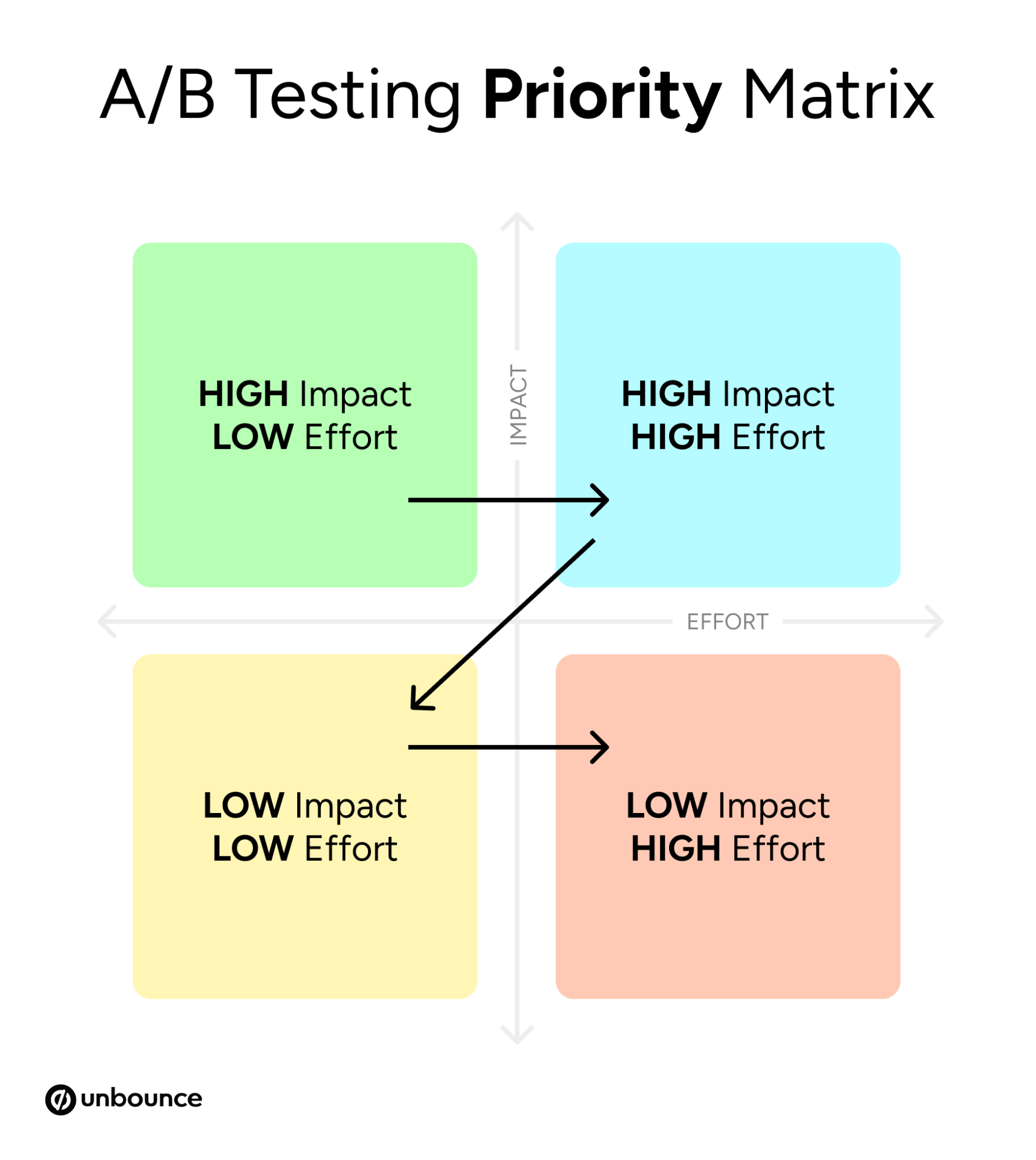
Resource allocation is a perennial challenge for marketing teams. Experts recommend using a 2×2 priority matrix to categorize potential tests. “Quick Wins” (High Impact/Low Effort) are prioritized to build organizational momentum, while “Major Projects” (High Impact/High Effort) are scheduled for long-term development. “Fill-ins” (Low Impact/Low Effort) are executed during downtime, and “Thankless Tasks” (Low Impact/High Effort) are discarded entirely.
3. Minimal Testable Variation
Iterative design emphasizes the creation of a “minimum viable test.” Rather than a complete redesign, teams create variants that isolate a single change. This speed-to-market approach allows for rapid learning without the need for extensive developer intervention, often utilizing drag-and-drop platforms to clone existing pages and modify specific elements.

4. Data Collection and Statistical Significance
A critical component of the newsroom-style analysis of marketing is the reliance on statistical significance. This metric ensures that a 5% increase in conversions is a reliable indicator of user preference rather than a random fluke. Professionals are advised to maintain tests until they reach at least 100 conversions per variant or achieve a 95% confidence interval, preventing premature conclusions based on early, misleading trends.
5. Actionable Insight Extraction
Once a test concludes, the focus shifts from “who won” to “why they won.” If a simpler headline outperformed a creative one, the insight is not merely that the headline worked, but that the target audience values immediate clarity over brand personality. This broader understanding can then be applied across other channels, including email marketing and social media advertising.
6. Scaling and Evolution
The final stage involves scaling successful tests. A winning variant on a single landing page can be rolled out across an entire product line. Conversely, a “failed” test is viewed as a valuable data point that narrows the scope of future hypotheses, effectively “plugging the leaks” in the marketing strategy.
Organizational Impact and Cross-Functional Synergy
The move toward iterative testing has significant implications for how corporate departments interact. Marketing is no longer a siloed function; it requires deep collaboration with Sales, Customer Support, and Product Development teams.
Customer support representatives, for instance, often provide the best hypotheses for iterative tests by reporting common points of confusion mentioned by new users. Sales teams can identify which messaging points resonate most during live demos, which can then be tested on front-end landing pages. This cross-functional approach ensures that testing is rooted in real-world user friction rather than internal marketing hunches.
Furthermore, the “Culture of Experimentation” is becoming a key metric for evaluating organizational health. Companies that embrace rapid testing report higher employee engagement, as team members feel empowered to propose and execute data-backed ideas. This shift also changes the role of the Marketing Manager from a creative director to a data scientist and strategist, focused on the management of the “testing backlog.”
Broader Implications for the Future of Advertising
Looking toward the latter half of the decade, the integration of Artificial Intelligence (AI) and Machine Learning (ML) is expected to further refine the iterative process. Automated traffic routing—which directs users to the version of a page most likely to convert based on their individual demographics and behavior—is already becoming standard.
However, the human element remains paramount. AI can optimize for numbers, but it cannot yet formulate the “why” behind human behavior. The marketers who succeed in 2025 and beyond will be those who use iterative testing to build a deep, empathetic understanding of their audience.
The economic implications are also clear. In an era of tightening budgets, the ability to prove the ROI of every incremental change is a powerful tool for marketing departments seeking to justify their spend. By focusing on progress over perfection, iterative testing provides a sustainable path to growth that survives market shifts and evolving consumer preferences.
In conclusion, iterative testing is not merely a technical tactic for increasing conversion rates; it is a fundamental shift in business philosophy. It acknowledges that the market is never static and that the only way to maintain relevance is through constant, disciplined adaptation. As the digital landscape continues to fragment, the organizations that can learn the fastest will ultimately be the ones that lead.