rifanmuazin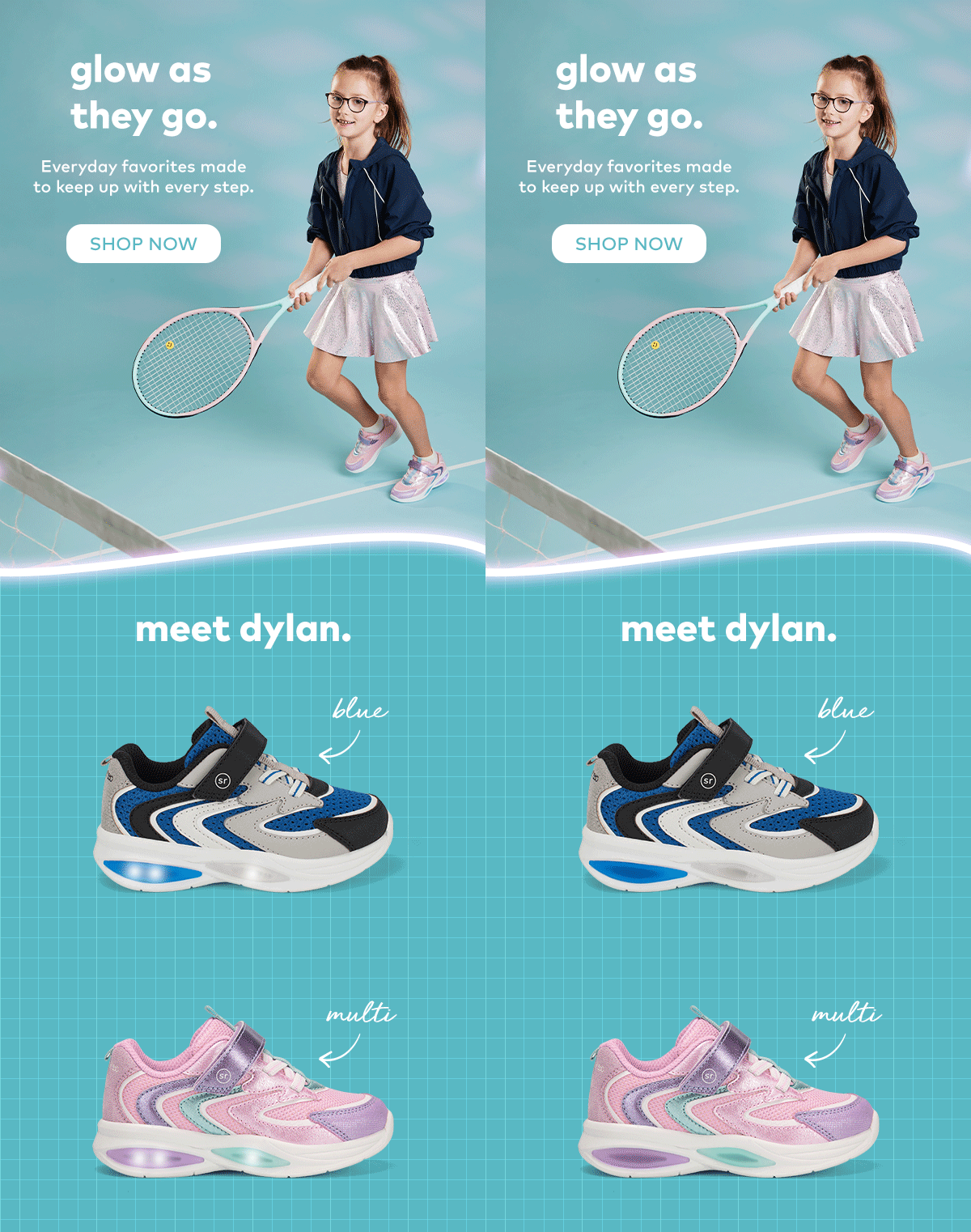
The era of overly elaborate, visually heavy email designs is steadily receding, making way for a more refined, intentional approach where clarity and simplicity reign supreme. In this evolution, micro-animations are emerging as a pivotal element, subtly transforming static messages into dynamic, engaging experiences. These understated bursts of movement are no longer mere embellishments; they are strategic tools that guide subscriber attention, amplify brand personality, and significantly enhance user interaction without overwhelming the recipient. This shift marks a significant trend in digital marketing, one that was keenly anticipated in industry forums such as Validity’s “State of Email” webinar and generated considerable discussion during Litmus Live industry trends sessions, underscoring the growing recognition of their impact.
Defining Micro-Animations: Small Movements, Big Impact
At their core, micro-animations are precisely what their name suggests: small, subtle animated elements integrated into email content. While technically a form of animated GIF, they distinguish themselves through their brevity, specific purpose, and optimized file size, making them faster to load and inherently more mobile-friendly than traditional, often larger, GIFs. Picture a call-to-action (CTA) button that subtly changes color upon hover, or a tiny progress bar that indicates loading – these are prime examples. The beauty of micro-animations lies in their understated nature; they catch a subscriber’s eye just enough to prompt engagement, yet remain unobtrusive, ensuring a seamless experience even if the animation fails to load due to client restrictions or connectivity issues.

These judiciously placed movements serve multiple strategic functions. They imbue emails with a sense of dynamism, allowing brands to convey their personality and tone in a way that static imagery cannot. By adding a layer of visual engagement, micro-animations contribute to an improved user experience, subtly directing the subscriber’s focus towards key information or desired actions. They are particularly effective in prompting click-throughs by making CTAs more enticing, and can also provide crucial subscriber reassurance, such as acting as a loading indicator while richer content is being fetched. This nuanced application of animation represents a sophisticated evolution in email design, moving beyond mere aesthetics to functional enhancement.
The Strategic Imperative: Why Micro-Animations Now?
The ascent of micro-animations within email marketing is not an isolated phenomenon but rather a response to several converging factors shaping the digital landscape.
Evolution of Email Marketing: Historically, email has transformed from plain text to rich HTML, embracing responsive design to adapt to diverse screen sizes. Early attempts at animation often involved large, bandwidth-intensive GIFs that could slow load times and disrupt the user experience, especially on mobile. The refinement of web technologies and the increasing sophistication of email clients have paved the way for more efficient and elegant animation techniques, allowing designers to create compelling visual effects without compromising performance.

Subscriber Fatigue and the Attention Economy: In an increasingly saturated digital environment, subscribers are bombarded with countless emails daily. This overload has led to “subscriber fatigue,” where users quickly scan and discard messages that fail to capture their attention immediately. Micro-animations offer a powerful antidote, providing a fresh, subtle way to break through the noise. They leverage human psychology, where even minimal movement naturally draws the eye, making emails feel more interactive and personalized, thus increasing the likelihood of deeper engagement in an economy where attention is a valuable commodity.
Technological Readiness and Mobile Dominance: The proliferation of smartphones and tablets means a significant, if not majority, proportion of emails are now opened on mobile devices. Micro-animations, designed for minimal file size and efficient rendering, are perfectly suited for this mobile-first world. Furthermore, advancements in email client support, though still fragmented across various platforms, have made it more feasible to implement these animations reliably. Modern design tools and coding practices also facilitate the creation and integration of these elements, empowering marketers to experiment with greater ease.
Industry Validation: The buzz generated at events like Validity’s “State of Email” webinar and Litmus Live underscores that micro-animations are not merely a passing fad but a recognized, impactful trend. Industry leaders and experts, like Guy Hanson, VP of Customer Engagement at Validity, have highlighted the strategic importance of these subtle enhancements in fostering deeper connections with subscribers. This collective acknowledgment from influential voices in the email marketing sphere lends significant weight to the adoption of micro-animations as a best practice.
Unlocking Engagement: The Tangible Benefits

The strategic integration of micro-animations translates into several measurable advantages for email marketers.
Enhanced User Experience (UX): Micro-animations make emails feel more alive and responsive. By providing visual feedback—a button ripple upon hover, a checkmark animation confirming an action—they create a more intuitive and enjoyable interaction for the subscriber. This improved UX fosters a positive perception of the brand, making future emails more anticipated.
Improved Conversion Metrics: The primary goal of many marketing emails is to drive action. Subtle pulses or color shifts on CTA buttons demonstrably increase their visibility and appeal, leading to higher click-through rates (CTRs). Studies consistently show that interactive elements in emails can boost engagement by a significant margin, with some reports indicating up to a 73% increase in click-to-open rates for emails with interactive content. By drawing attention to key interactive elements, micro-animations effectively guide subscribers towards desired conversions, whether it’s completing a purchase, signing up for a service, or downloading a resource.
Amplified Brand Personality and Storytelling: Micro-animations offer a unique avenue for brands to express their identity beyond static logos and images. A playful bounce in a brand icon, a sleek transition effect, or an animated product feature can convey a brand’s character—be it innovative, luxurious, whimsical, or practical. This subtle storytelling capability deepens emotional connection and helps differentiate a brand in a crowded marketplace.
Increased Recall and Differentiation: In a sea of similar-looking emails, a thoughtfully animated element can make an email memorable. The human brain is hardwired to notice movement, and a distinctive micro-animation can significantly improve brand recall. This differentiation is crucial for standing out, ensuring that a brand’s message resonates long after the email has been closed.
Crafting Effective Micro-Animations: Essential Best Practices
While the potential of micro-animations is vast, their effective implementation hinges on adhering to several best practices to ensure they enhance, rather than detract from, the email experience.
1. Purpose-Driven Design: Every micro-animation should serve a clear functional or communicative purpose. Is it guiding attention? Confirming an action? Illustrating a feature? If an animation doesn’t contribute to the user experience or marketing objective, it risks becoming a distraction or an unnecessary bandwidth drain.

2. Subtlety and Restraint: The “micro” in micro-animation is key. Overly flashy, rapid, or numerous animations can be jarring, annoying, and counterproductive. The goal is to delight and guide, not to overwhelm or disorient. A gentle pulse, a smooth fade, or a brief transformation is often more effective than a complex sequence.
3. Accessibility and Fallbacks: Not all email clients support animations equally, and some users may have motion sensitivities. It is paramount to design with accessibility in mind. This means providing static fallback images for animated GIFs, ensuring that the core message and functionality remain intact even if the animation doesn’t load. Adhering to Web Content Accessibility Guidelines (WCAG) also involves considering animation duration, frequency, and providing options for users to pause or disable animations.
4. Performance Optimization (File Size): Even subtle animations can accumulate in file size if not optimized. Large files lead to slower load times, especially on mobile devices or in areas with poor connectivity, potentially causing frustration and leading to unsubscribes. Techniques like optimizing GIF compression, limiting frame count, and using modern image formats can significantly reduce file size without sacrificing quality. The original article’s example of Domino’s 322KB animation for a comprehensive welcome journey highlights what’s achievable within recommended guidelines.
5. Rigorous Testing Across Clients: Due to the fragmented nature of email client support, thorough testing is indispensable. Marketers must preview their emails across a wide range of clients, browsers, and devices (desktop, mobile, webmail) to ensure micro-animations render correctly and that fallbacks are gracefully implemented where animations are not supported. Tools like Litmus are invaluable for this critical step, helping to catch errors and ensure cross-client compatibility.

6. Brand Cohesion: Micro-animations should always be consistent with the brand’s overall visual identity and tone of voice. An animation that feels out of place or inconsistent with the brand image can create dissonance and undermine trust. They should reinforce, not contradict, the brand experience.
Micro-Animations in Action: Ten Strategic Applications
The versatility of micro-animations is evident in the diverse ways brands are deploying them to achieve specific marketing objectives. Here, we delve deeper into ten strategic applications, drawing from real-world examples:
1. Brand Accentuation: The Logo as a Living Icon
Integrating a subtle micro-animation within a brand’s logo is a sophisticated tactic. As exemplified by Bulgari, a logo that subtly shimmers or shifts creates an immediate, albeit understated, impression. This animation doesn’t demand attention aggressively but rather rewards the viewer’s gaze, making the brand appear more dynamic and memorable. Crucially, as many subscribers utilize preview panes, this animated logo often makes its impact even before the email is fully opened, providing an early, positive brand touchpoint that can be reused across countless templates.

2. Boosting Call-to-Action Effectiveness: Guiding the Gaze
One of the most direct applications of micro-animations is to enhance the visibility and allure of Call-to-Action (CTA) buttons. A subtle pulse, a gentle color shift, or a responsive hover effect, as seen in “Just Fab’s” example, transforms a static button into an interactive element. This visual cue guides the subscriber’s eye, making the CTA stand out from surrounding content, thereby increasing its visibility, encouraging interaction, and ultimately boosting click-through rates.
3. Streamlining Onboarding and Task Completion: The Nudge Effect
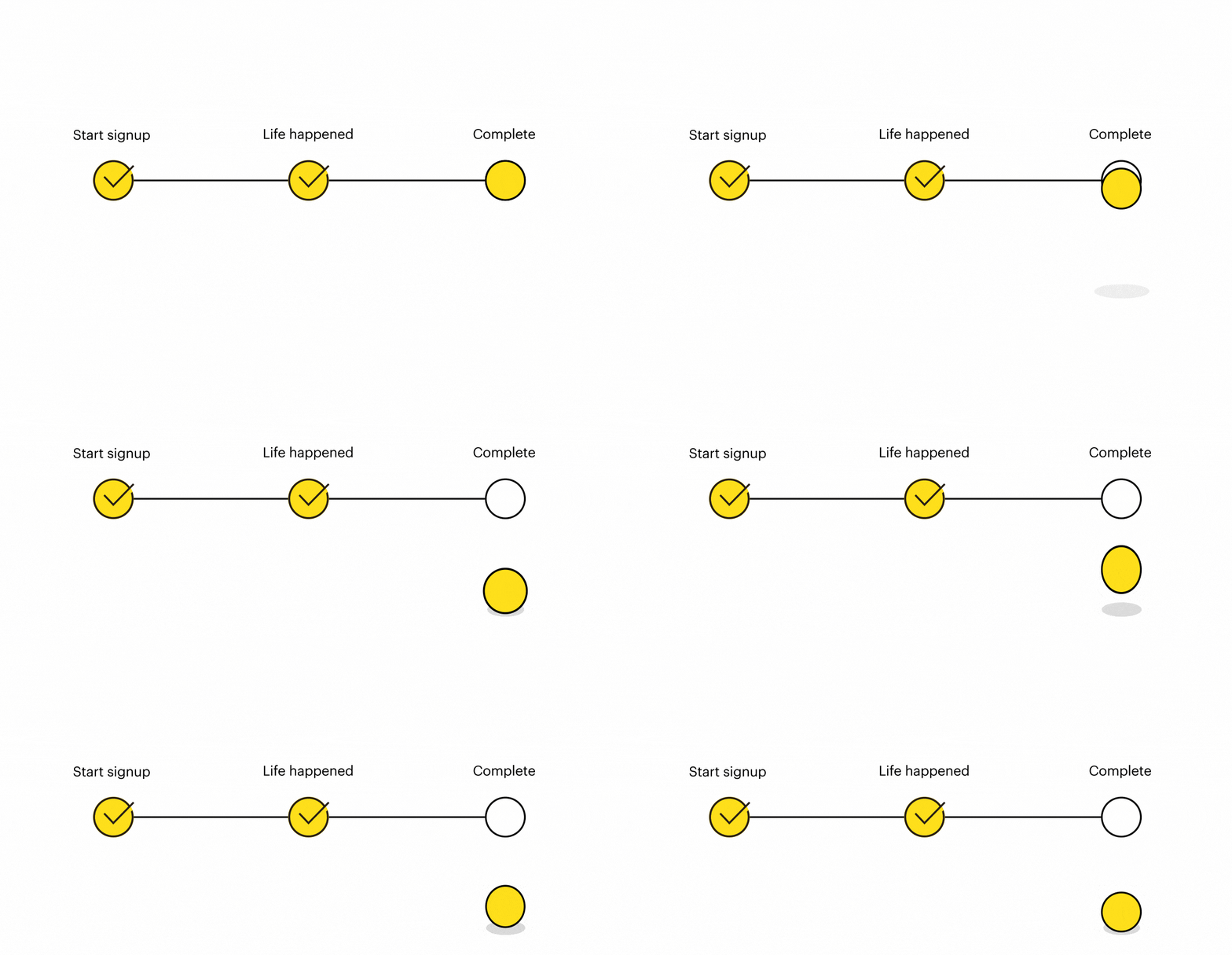
For new customers, guiding them through onboarding or critical task completion (like activating a subscription or setting up an account) is vital for early engagement and churn reduction. Mailchimp effectively uses micro-animations to highlight incomplete actions within a timeline, subtly calling attention to the next step and the benefits awaiting completion. This visual “nudge” is less intrusive than explicit text and more effective in motivating action.
4. Elevating Loyalty Programs: Visualizing Progress
Loyalty programs thrive on motivating customers to reach higher tiers or unlock new rewards. Micro-animations can powerfully visualize progress and the remaining gap, as demonstrated by Vitamin Shoppe’s rewards tracker. By animating the progress bar or highlighting the next milestone, brands can create a sense of achievement and aspiration, encouraging increased activity or spending to earn the next reward.
5. Fostering Urgency and Timeliness: The Animated Deadline
Micro-animations are adept at conveying urgency without resorting to aggressive language. Grainger’s use of a rapidly moving parcel animation reassures customers about swift next-day delivery for urgent maintenance needs. This visual representation of speed and efficiency instills confidence and prompts immediate action, effectively communicating the brand’s commitment to timely service.

6. Illustrating Product Features: Bringing Offerings to Life
Certain products are inherently visual, and micro-animations provide an excellent medium to illustrate their features or variations. Examples like Stride Rite’s “glow” shoes, personalized My M&Ms, or Yves Rocher showcasing different beauty product shades, allow subscribers to visualize the product in action or its various options. This dynamic presentation helps bridge the gap between a static image and the real-life experience, aiding in purchase decisions.
7. Enhancing Product Storytelling: Immersive Narratives
Beyond showcasing features, micro-animations can elevate product storytelling, creating a more immersive experience. Starbucks UK’s promotion for its tiramisu-inspired drinks uses a full-width animated GIF to subtly highlight the drink’s mascarpone-style foam and cocoa topping. This animation creates a sense of movement and texture, reinforcing the dessert inspiration and making the product more appetizing and appealing.
8. Driving Cross-Channel Engagement: Connecting the Ecosystem
While email is often a central pillar, it frequently serves to drive engagement with other channels like mobile apps or social media. Requests to “follow us” or “download our app” often get lost in email footers. A subtle wiggle or shake applied to social media icons or app download prompts, as seen in the ShoeMail example, can make these important requests stand out, fostering a more connected brand ecosystem.
9. Optimizing Feedback Mechanisms: Inviting Interaction
Gathering customer feedback is crucial for continuous improvement. Like cross-channel prompts, feedback requests can get overlooked if placed at the bottom of an email. Marks & Spencer’s animated feedback options, such as subtle star ratings or “Like what you see?” prompts, leverage micro-animations to grab attention and make the act of providing feedback more engaging and approachable, thereby increasing response rates.

10. The Grand Narrative: Comprehensive Animated Journeys
While arguably pushing the boundaries of “micro,” the Domino’s welcome email demonstrates the power of integrating multiple animations into a cohesive visual journey. This example, which remains remarkably optimized at 322KB, expertly pulls together welcome best practices, walking new subscribers through benefits, ordering processes, mobile and social prompts, and an order tracker introduction, all culminating in a clear CTA. It showcases how a series of well-executed micro-animations can create a highly entertaining and informative onboarding experience.
The Broader Implications for Email Marketing
The integration of micro-animations signals a broader shift in email marketing towards more interactive, personalized, and visually sophisticated communication.
A Shift Towards Interactive Personalization: As email clients become more capable and designers more skilled, the future of email lies in dynamic content that adapts and responds to user interaction. Micro-animations are a foundational step in this direction, laying the groundwork for more complex interactive elements that will make emails feel less like broadcasts and more like personalized conversations.

Competitive Differentiation in Crowded Inboxes: In an environment where every brand is vying for attention, effective use of micro-animations provides a distinct competitive advantage. Brands that master this art can create emails that are not only informative but also delightful and memorable, fostering stronger brand loyalty and recall.
Challenges and Considerations: Despite their benefits, the adoption of micro-animations is not without its challenges. Overuse or poor execution can lead to a cluttered, distracting, or slow experience. Technical limitations across various email clients necessitate meticulous testing and the implementation of robust fallbacks. Furthermore, designers must continuously balance creativity with performance, ensuring that animations enhance the message without compromising accessibility or load times.
The Future Landscape: Beyond Static Emails
Micro-animations represent a pivotal moment in the evolution of email marketing, demonstrating that small movements can indeed make a macro impact. They are instrumental in moving beyond the static email paradigm towards a future where digital communications are more engaging, intuitive, and reflective of a brand’s dynamic personality. As technology continues to advance and design sensibilities evolve, the responsible and creative application of micro-animations will remain a cornerstone for marketers seeking to cut through the digital noise and forge deeper connections with their audiences. The emphasis will continue to be on purpose-driven design, ensuring that every subtle animation contributes meaningfully to the user experience and the overarching marketing objectives.

For marketers eager to explore this innovative frontier, resources from industry leaders like Litmus and Validity offer invaluable insights and practical guidance. These platforms provide tools for testing, proofing, accessibility checking, and ongoing monitoring, ensuring that micro-animations are not just visually appealing but also universally effective. The journey towards a more interactive and engaging email experience is well underway, and micro-animations are leading the charge.