rifanmuazin
The modern marketing landscape is undergoing a profound transformation, driven by the rapid proliferation of artificial intelligence in search and information retrieval. For the past year, marketing teams have grappled with a growing disconnect: their traditional organic traffic reports often paint a picture of steady performance, yet their sales pipelines tell a different, often less optimistic, story. This emerging disparity is overwhelmingly attributed to the urgent need for sophisticated AI search analytics tools, which are becoming indispensable for any growth-focused organization.
The Paradigm Shift in Search Behavior
The advent of AI-powered answer engines like ChatGPT, Google AI Overviews, Perplexity, Gemini, and Claude has fundamentally altered how users seek and consume information. Traditional SEO analytics, designed to track keyword rankings, clicks, and website traffic from Google’s familiar “blue-link” results, are proving insufficient in this new era. When a prospective customer now queries an AI chatbot, for instance, “What’s the best CRM for a mid-sized SaaS company?”, and a brand is conspicuously absent from the AI-generated response, conventional SERP rank trackers remain silent. This critical blind spot is precisely what AI search analytics tools are engineered to illuminate and rectify.
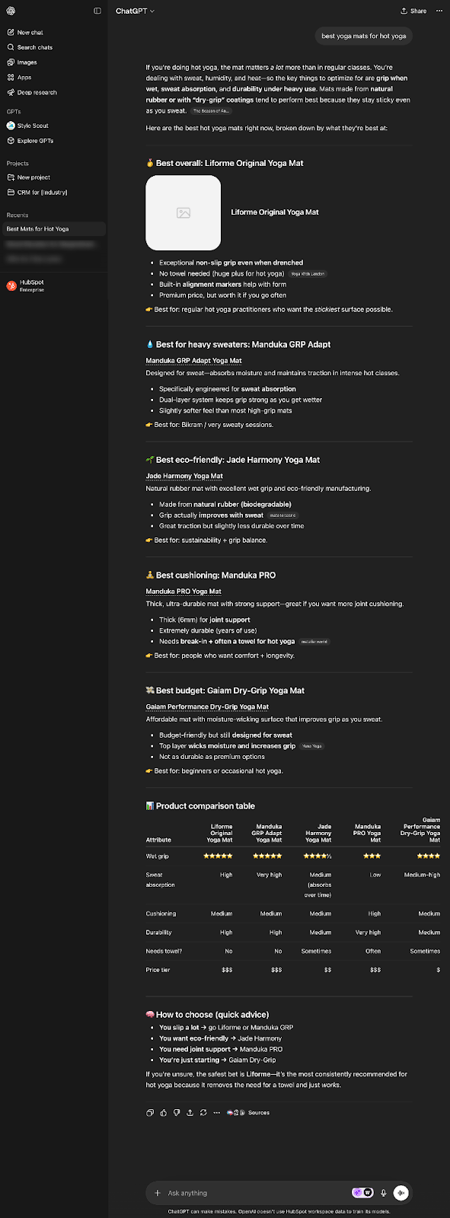
The shift is not merely incremental; it represents a significant change in user expectation. Consider the difference: a user searching Google for “best yoga mats for home workouts” typically anticipates a ranked list of websites, from which they will select a link to click. In contrast, when posed the same question, an AI model like ChatGPT synthesizes a direct, often personalized, recommendation. In this scenario, a business either secures a mention and potential endorsement or remains invisible, regardless of its traditional SEO standing. This distinction underscores the urgency for marketers to adapt their strategies and measurement methodologies.
The Accelerating Impact of AI in the Purchase Journey

The relevance of AI search analytics is underscored by compelling data. Experts predict that AI search traffic could eclipse traditional organic search traffic within the next two to four years, signaling a monumental shift in digital consumer behavior. Already, AI-referred visitors demonstrate significantly higher engagement, converting at 4.4 times the rate of organic visitors from traditional search channels. This elevated conversion rate highlights the high intent and qualification of users engaging with AI-generated recommendations.
The penetration of AI in search is rapidly expanding. Google AI Overviews, for example, now feature in approximately 25% of all searches, a notable increase from 13% in March 2025. This surge is set to grow further as Google continues to integrate generative AI into its core search experience. Concurrently, standalone AI platforms are witnessing explosive growth; ChatGPT has surpassed 800 million weekly active users, establishing itself as a dominant force in information retrieval. Furthermore, the B2B sector is actively embracing AI; a comprehensive synthesis of 680 million AI citations in March 2026 revealed that 73% of B2B buyers now leverage AI tools in their purchase research processes. Despite this undeniable momentum, only 22% of marketers currently track AI visibility, leaving a substantial competitive advantage for early adopters.
Core Workflows Enabled by AI Search Analytics

AI search analytics tools empower marketing teams to address critical blind spots that traditional platforms cannot cover, supporting four core workflows:
- Brand Visibility Monitoring: Tracking how and where a brand appears in AI-generated responses across various platforms.
- Competitive Benchmarking: Analyzing brand mentions, share of voice, and sentiment relative to key competitors.
- Content Optimization: Identifying content gaps and optimizing existing assets for AI retrievability and citation.
- Reputation Management: Detecting changes in sentiment or misattributions in AI responses to mitigate potential brand damage.
For a deeper strategic context on how AI is reshaping the marketing stack, resources like the HubSpot AI Web Analytics guide offer valuable insights into this evolving domain.
Essential Features of AI Search Analytics Tools
The nascent category of AI visibility platforms exhibits considerable variation in maturity. Effective tools must possess both robust core visibility capabilities and essential operational functionalities.
Core Visibility Features:
- Platform Coverage: Multi-platform tracking is non-negotiable. A brand’s visibility can vary drastically across different AI systems. Essential coverage includes ChatGPT, Gemini, and Perplexity, given their user bases and impact on purchase research. Broader coverage for Google AI Overviews, Microsoft Copilot, and Claude is beneficial if relevant to the target audience.
- Prompt Tracking: The ability to define and monitor specific conversational prompts is fundamental. Tools should allow users to input custom prompts and suggest relevant ones based on industry, competitors, and user behavior. The quality and relevance of the prompt library directly dictate the utility of the visibility data.
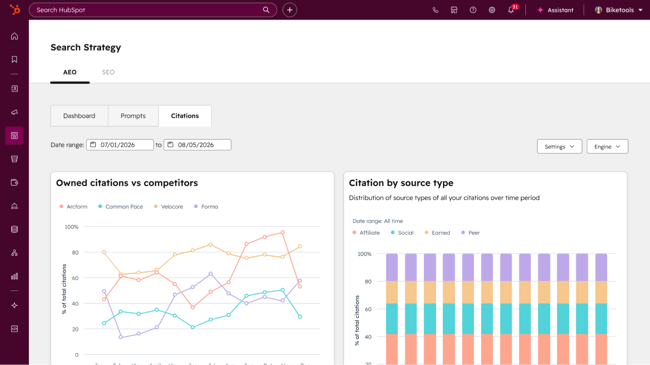
- Citation and Mention Analysis: Marketers need to know not just if their brand appears, but how and where. This includes tracking which URLs AI systems cite, their frequency, and position. Differentiating between linked citations and unlinked brand mentions provides a more comprehensive picture of AI influence.
- Sentiment Analysis: Understanding the emotional tone with which AI systems describe a brand (positive, negative, neutral) is crucial for brand perception and early detection of reputational issues.
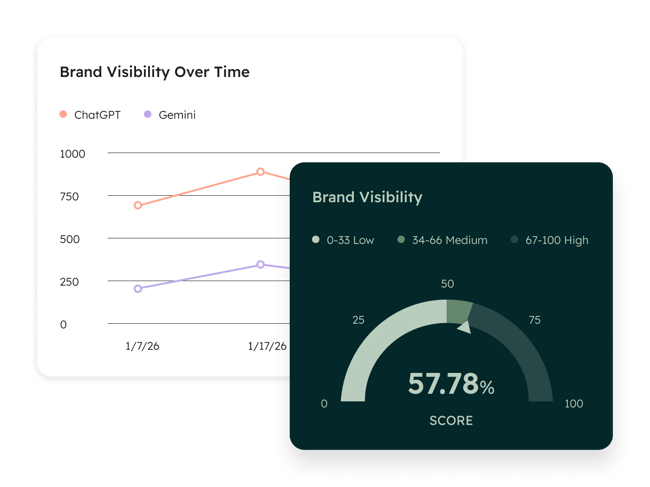
- Competitor Benchmarking: Tracking “share of voice” – the percentage of AI responses in a given category that include a brand versus its competitors – is a key performance indicator, offering vital competitive intelligence.
Operational Needs:
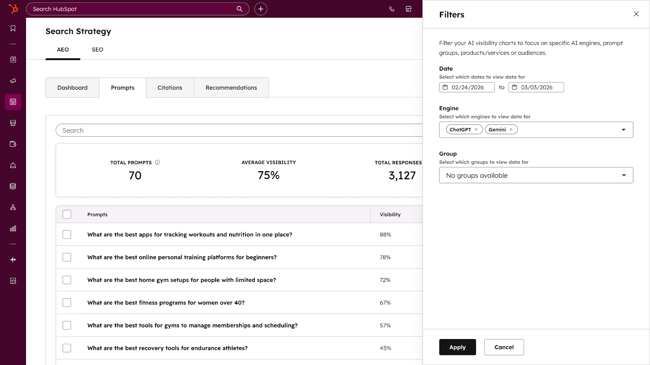
- Historical Data: AI visibility is dynamic, influenced by model updates, training data changes, and seasonal trends. Historical data (ideally 90+ days) is essential to differentiate genuine improvements from mere model volatility.
- Alerting: Real-time or near-real-time alerts for significant shifts in mentions, citations, or competitive positioning enable prompt reaction to major developments.
- Exports and Integrations: AI visibility data gains significant accuracy and actionability when integrated with existing marketing tools (e.g., Google Analytics, Search Console, CRM, CMS, Slack, Looker Studio). Native exports and direct integrations streamline reporting and workflow.
- Governance and Access Control: For larger organizations, robust features like workspace separation, role-based permissions, and compliance certifications (e.g., SOC 2 Type II) are critical for data security and organizational efficiency.
Before committing to any paid subscription, a thorough vendor demo checklist should include: demonstrating prompt tracking across key platforms, showing sentiment analysis, proving competitor benchmarking, detailing historical data availability, explaining alerting mechanisms, and showcasing integrations.
Leading Platforms in the AI Search Analytics Landscape
The market for AI search analytics tools is evolving rapidly, with several key players offering distinct advantages based on team size, budget, and specific use cases.
1. HubSpot AEO:
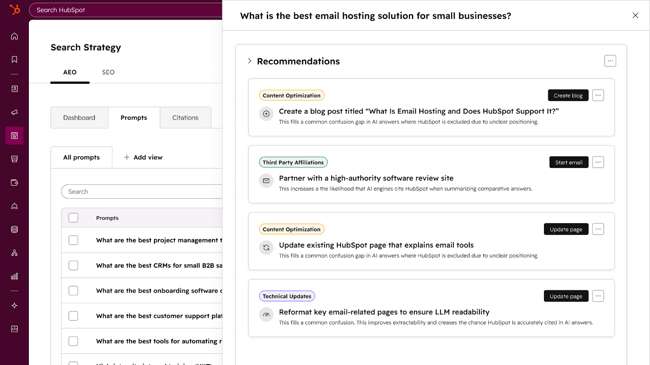
- Best for: Marketing teams seeking ongoing AI visibility tracking, competitive benchmarking, and prioritized recommendations across ChatGPT, Perplexity, and Gemini, integrated within the HubSpot ecosystem.
- Key Features: Daily tracking, detailed citation and sentiment analysis, CRM-connected prompt suggestions, and actionable recommendations for content and distribution. Seamless integration with HubSpot Marketing Hub and Content Hub.
- Pricing: Free 28-day trial; paid plans start at $50/month, or included with Marketing Hub Pro and Enterprise.
- Analysis: HubSpot AEO distinguishes itself by moving beyond mere monitoring to offer prioritized actions. Its integration with HubSpot’s broader marketing suite provides a unified view and direct pathways to content creation and optimization.
2. HubSpot AEO Grader:
- Best for: Teams new to AI visibility who need a free, no-setup audit across ChatGPT, Perplexity, and Gemini to establish an initial benchmark.
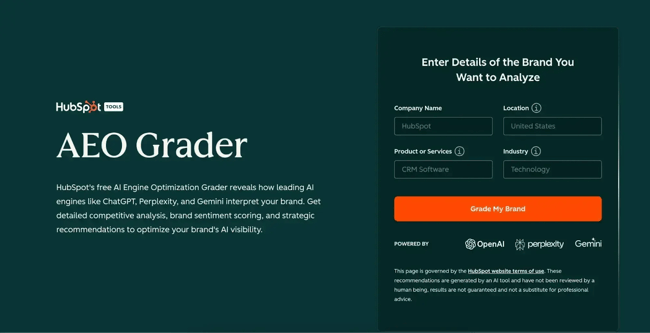
- Key Features: Evaluates brands across five dimensions (presence, sentiment, authority, relevance, and distinctiveness), provides a composite score, narrative theme analysis, source quality assessment, and competitor comparison.
- Pricing: Free.
- Analysis: An excellent starting point, offering immediate, actionable insights without financial commitment. It’s ideal for initial strategic discussions and stakeholder presentations.
3. Semrush AI Visibility Toolkit:
- Best for: Teams already leveraging Semrush for traditional SEO who desire integrated SEO and AI visibility insights.
- Key Features: Tracks brand mentions and visibility across ChatGPT, Google AI Overviews, AI Mode, Perplexity, and Gemini. Offers an executive-level AI Visibility Score and detailed Brand Performance reports showing sentiment shifts and source attribution.
- Pricing: Bundled with Semrush One Starter ($199/month); standalone Toolkit $99/month per domain (with prompt limits).
- Analysis: Its primary strength lies in integrating AI visibility with a comprehensive SEO toolkit, allowing for a holistic view of search performance within a familiar interface.
4. Otterly.AI:
- Best for: Marketing teams and agencies requiring fast, affordable brand monitoring across six AI platforms (ChatGPT, Google AI Overviews, Google AI Mode, Perplexity, Gemini, Microsoft Copilot) with a clean interface.
- Key Features: Broad platform coverage, prompt-based workflow, Brand Visibility Index, weekly citation change alerts, and GEO audit capabilities.
- Pricing: Lite at $29/month (15 prompts), scaling up to Pro at $989/month (1,000 prompts). Free trial available.
- Analysis: Known for its accessibility and broad coverage, Otterly.AI is a strong monitoring-first solution, though it requires separate tools for content creation and optimization.
5. Profound:
- Best for: Enterprise marketing teams with stringent compliance requirements, Fortune 500 brands needing extensive multi-model coverage (including Claude and Grok), and those seeking both monitoring and AI-optimized content creation.
- Key Features: Enterprise-grade security (SOC 2 Type II, HIPAA), 10+ AI model coverage, Conversation Explorer for market intelligence, and AI Agents for content creation.
- Pricing: Starter from $99/month (ChatGPT only), Growth at $399/month, Enterprise custom. No free trial.
- Analysis: Positioned at the high end, Profound offers unparalleled depth in model coverage and integrates advanced market research and content creation capabilities, making it ideal for large, strategic organizations.
6. Peec AI:
- Best for: Content-led SaaS and B2B teams requiring granular visibility, segmentation by AI model, region, and audience persona, with daily data refresh.
- Key Features: Daily prompt runs across ChatGPT, Perplexity, and DeepSeek, with filtering by country IP, AI model, and prompt tags.
- Pricing: Starting at €89/month. Free trial available.
- Analysis: Its granular segmentation capabilities are a significant advantage for B2B teams executing multi-market or multi-persona content strategies.
7. SE Visible by SE Ranking:
- Best for: Teams seeking an affordable, beginner-friendly AI visibility add-on with intuitive dashboards and strong net sentiment tracking, especially if already using SE Ranking for SEO.
- Key Features: Tracks visibility across ChatGPT, Perplexity, Google AI Mode, and Gemini, with filters for date, region, topic, competitor, and sentiment. Provides visibility score, rank, average position, and net sentiment metrics.
- Pricing: Starting at $49/month. Free trial available.
- Analysis: Offers an accessible entry point into AI visibility, particularly strong in sentiment analysis and ideal for agencies or smaller teams integrating AI tracking with existing SEO workflows.
Establishing a Baseline and Measuring Success
A common pitfall for new adopters is attempting optimization before establishing a clear baseline. Without a baseline, differentiating genuine performance improvements from model volatility is impossible, and proving ROI to stakeholders becomes challenging.
Fast-Start Baseline Workflow:
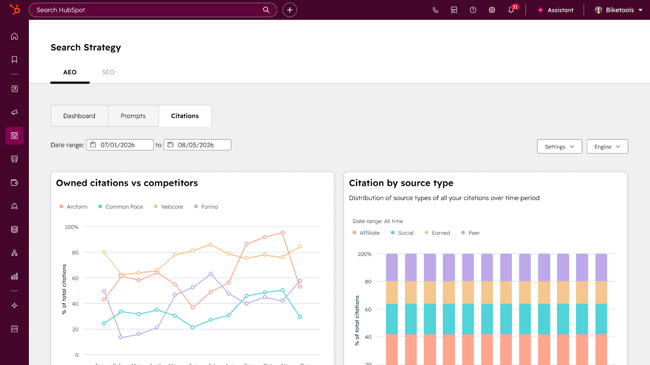
- Initial Audit (Week 1): Use a free tool like HubSpot’s AEO Grader on your brand and its top three competitors to obtain a composite score across key dimensions, cross-validated across major AI platforms. This report serves as your T0 benchmark.
- Prompt Library Development (Week 1): Define and categorize your target prompts based on customer personas, product lines, and funnel stages. Leverage AI suggestions to expand this library.
- Citation Gap Analysis (Week 2): Document your current citation sources across AI platforms. Identify competitors’ citation sources where your brand is absent.
- Ongoing Review: Implement a weekly cadence to review and update metrics such as brand visibility, share of voice, sentiment score, and top-cited sources. Focus on identifying directional trends over 4-8 week windows, rather than reacting to every short-term fluctuation caused by model updates.
Proving ROI from AI Visibility Improvements:
- Segment AI Referral Traffic: Utilize Google Analytics 4 to segment AI referral traffic separately from organic and direct channels. Platforms like HubSpot group AI referrals, facilitating dedicated reporting.
- Track Key Metrics: Monitor conversion rates, time on site, and pipeline attribution specifically for AI-sourced visitors.
- Quantify Impact: Highlight that AI search visitors often convert at significantly higher rates (e.g., 4.4 times traditional organic visitors) and spend more time on websites (e.g., 68% more), demonstrating that even small gains in AI share of voice can yield disproportionately large revenue impacts.
Strategic Actions for Enhanced AI Visibility
Translating AI search analytics insights into actionable content and distribution strategies is where the true value lies.
- Content Updates Based on Citation Gaps: If a competitor is cited for a relevant prompt where your brand is not, either create new content or audit existing content for AI retrievability. This includes using clear, concise language, structuring content with headings and bullet points, providing direct answers to common questions, and leveraging schema markup.
- New Content Assets for High-Value Prompts: Focus on structured content formats known to improve AI citation rates, such as comparison guides, “Best X” listicles, and detailed “How-To” guides. Prioritize content that directly addresses high-volume, high-intent queries identified through prompt data.
- Authoritative Citation Building: AI systems build trust from diverse, high-authority web sources. Actively pursue media outreach, guest contributions, and build presence on reputable review platforms and industry forums that AI frequently cites.
- Structured Data and Technical AI Readiness: Implement schema markup (e.g., FAQPage, HowTo, Article, Organization) to help AI systems correctly extract and attribute your content. Ensure that AI crawlers (GPTBot, ClaudeBot, PerplexityBot) have unrestricted access to your key pages.
- Cross-Channel Distribution: Consistent brand messaging across multiple trusted platforms (industry publications, forums, YouTube, LinkedIn, review sites) signals a reliable, multi-source consensus to AI systems. Leverage AI visibility data to identify which channels most effectively contribute to brand citations and optimize distribution efforts accordingly.
Addressing Challenges and Future Outlook
The landscape of AI search is dynamic, marked by frequent model updates and inherent volatility. Maintaining a change log of significant AI model updates alongside visibility metrics can help correlate shifts in Share of Voice with external factors, providing crucial context. Setting up alerts for sudden changes in brand mention volume, sentiment, or competitive positioning ensures that teams can investigate promptly.
The “build-vs-buy” decision for AI visibility tools typically favors buying, especially for the initial 6-12 months. The engineering and maintenance costs of a custom-built solution often outweigh subscription fees for purpose-built platforms, which also offer broader coverage and specialized features.
Conclusion
The shift to AI-mediated search is not a distant future but a present reality, fundamentally reshaping how consumers discover, evaluate, and choose brands. Organizations that proactively invest in AI search analytics now will gain invaluable months of baseline data, refine their prompt libraries, and develop robust optimization playbooks well before their competitors fully grasp the strategic implications. Irrespective of budget or team size, the foundational principle remains constant: AI visibility cannot be effectively improved without first being accurately measured. Starting with readily available tools, such as a free AEO Grader, and building a data-driven strategy from there, is the essential first step towards navigating and thriving in this new era of intelligent search.