rifanmuazin
The landscape of email marketing in 2026 presents a distinctive blend of technological advancement and human-centric strategy, marking a significant evolution beyond the initial disruptions of generative artificial intelligence (AI) and the complexities of new privacy regulations. This year signifies a pivot to refinement, where the discerning and increasingly skeptical subscriber demands authenticity and relevance. Marketers are now tasked with the intricate balance of harnessing cutting-edge automation while preserving a crucial human touch, ensuring that email remains an indispensable growth engine for brands. The tactical shifts required are profound, ranging from advanced lifecycle strategies to adapting content for sophisticated “intelligent gatekeepers” that now mediate inbox delivery and consumption.
Background and Evolution: From Disruption to Deliberation
The journey to 2026 in email marketing has been characterized by rapid technological shifts and a heightened regulatory environment. The advent of generative AI in late 2023 and early 2024 sparked both excitement and apprehension. Initially, marketers grappled with the novelty of AI-generated copy, subject lines, and even basic email structures. While early adoption often prioritized speed and volume, it quickly became apparent that raw AI output frequently lacked brand voice, nuance, and the emotional resonance necessary to connect with audiences. This period saw a “scramble” as brands experimented, learned, and began to understand the limitations and true potential of AI.
Simultaneously, the global regulatory landscape for data privacy continued to intensify. Building on the foundations laid by the European Union’s General Data Protection Regulation (GDPR) and California’s Consumer Privacy Act (CCPA), new regional and international privacy frameworks emerged, coupled with significant changes from major tech players. Apple’s Mail Privacy Protection (MPP), introduced in 2021, fundamentally altered how email open rates were tracked, diminishing their reliability as a standalone metric. Google’s ongoing efforts to phase out third-party cookies further underscored a broader industry trend towards first-party data reliance and user privacy. These regulations and platform shifts compelled marketers to re-evaluate their data collection practices, consent mechanisms, and overall approach to audience engagement, pushing for greater transparency and respect for user preferences.
By 2026, the initial “shock” has subsided, giving way to a more mature understanding. Subscribers, now accustomed to personalized digital experiences and acutely aware of data privacy concerns, have grown savvier. They can often detect generic or obviously AI-generated content, leading to decreased engagement and increased skepticism. This evolution necessitates a strategic response from email marketers: moving beyond mere automation to intelligent orchestration, where AI serves as a powerful co-pilot rather than a sole creator.
The Rise of Intelligent Gatekeepers: A Paradigm Shift in Deliverability

One of the most profound changes reshaping email marketing in 2026 is the emergence of “intelligent gatekeepers” at the inbox level. Tools like Apple Intelligence and Gmail’s Gemini are no longer passive recipients; they actively process and summarize email content for users before the message is even opened. This pre-rendering and summarization capability profoundly impacts how users interact with emails and, critically, renders traditional open rates increasingly unreliable as a primary performance indicator. Industry analysts at Litmus Live 2026 noted that while an email might technically be “opened” by an AI system for summarization, it doesn’t equate to human engagement or interest.
This development forces email marketers to fundamentally alter their content creation and optimization strategies. The question is no longer simply, “Did my email land and look good?” but rather, “Did the AI accurately surface the most important topics and value propositions in its summary?” To succeed in this environment, marketers must adopt principles akin to Search Engine Optimization (SEO). Content needs to be front-loaded with clear keywords and the core value proposition articulated concisely at the beginning of the email. For image-heavy emails, comprehensive alt attributes become paramount, providing descriptive text that AI can interpret and summarize.
Moreover, the structured design of an email plays a vital role. Proper use of semantic HTML, such as <h1> for section titles instead of merely large font sizes, signals hierarchy and importance to AI systems. Marketers are encouraged to leverage specialized tools that provide a preview of how AI gatekeepers might summarize their messages, allowing for pre-send adjustments. “The marketer who designs their content with machines in mind, rather than just human aesthetics, will gain a significant competitive edge,” asserts a Validity whitepaper from early 2026. This tactical shift underscores the need for a dual optimization strategy: creating compelling content for humans while ensuring it is perfectly digestible and summarizable for AI.
Mastering Personalization in an AI-Driven Landscape
In an era of heightened subscriber skepticism, bringing hyper-personalization to the forefront is no longer optional; it is a fundamental requirement for connecting with audiences. Messages must be relevant, timely, and deeply personalized across every marketing touchpoint, not just email. Effective personalization rests on several critical pillars:
- Behavioral Data: Tracking website interactions, purchase history, content consumption, and past email engagement to understand user intent and preferences.
- Demographic Data: Utilizing age, location, gender, and other relevant demographic information, always with explicit consent, to tailor content and offers.
- Preference Centers: Empowering subscribers to actively manage their communication preferences, frequency, and content interests, fostering trust and relevance.
- Contextual Data: Incorporating real-time factors such as current weather, local events, or trending topics to make messages exceptionally timely and pertinent.
AI plays a transformative role here, moving beyond basic name insertion to power dynamic content generation, intelligent product recommendations, and sophisticated journey orchestration. For example, AI algorithms can analyze a subscriber’s browsing history and past purchases to suggest highly relevant products in real-time within an email, or even dynamically adjust the email’s hero image based on their preferred product categories. This level of personalization, when executed authentically, significantly boosts engagement rates, conversion rates, and overall customer loyalty.
Design for Clarity and Conversion: Minimalism and Structure
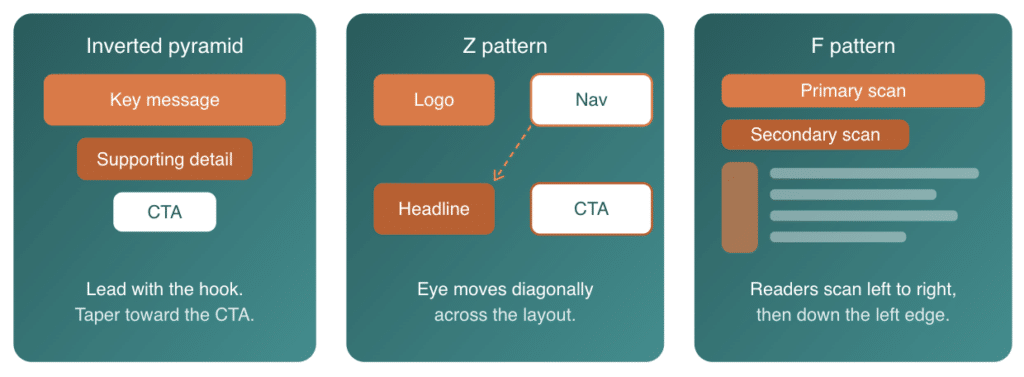
The persistent myth of an “8-second attention span” for humans, though often misattributed to goldfish, highlights a critical truth: users gravitate towards the quickest possible win. In 2026, this translates into a decisive shift towards minimalist and structured email design. Gone are the days of giant, text-heavy emails that overwhelm recipients. Modern aesthetics favor leaner builds that not only load faster—a crucial factor for mobile users—but are also significantly easier for AI tools to interpret and summarize accurately.
To facilitate optimal readability for both humans and machines, email designers are increasingly leveraging known content hierarchy structures. The Inverted Pyramid ensures that the most critical information is presented first, followed by supporting details, and concluding with a clear call to action. The Z-pattern and F-pattern guide the eye across the email, placing key elements strategically where users naturally look. Proper use of heading tags (<h1>, <h2>, <h3>) is essential, not merely for visual prominence but to semantically signal to AI which information holds the most importance. For instance, an <h1> tag should denote the primary section title, helping AI extract the main topic of the email. This structured approach ensures that brevity and clarity are paramount, directly contributing to higher engagement and conversion rates.
Unlocking Richer Experiences with Annotation Schema
Years ago, Gmail introduced support for structured data within emails, a feature that has become even more critical in the 2026 landscape. These small code snippets, often using JSON-LD or Microdata, provide mailbox providers with richer, more organized information about a message’s content. This structured data enables Gmail to render special UI elements directly within the inbox, such as interactive image carousels, dynamic discount code banners with expiration dates, or even real-time package tracking updates. While these features have historically appeared primarily for messages landing in the promotions tab, their utility extends far beyond mere visual enhancement.
Although there is no official confirmation that structured data directly feeds into Gmail’s AI summarization process, it is an integral part of the message body that AI parses. At a minimum, structured data provides the AI engine with meaningful, organized signals about the email’s content, making it easier for the AI to understand and summarize key elements like offers, events, or product details. With many senders still underutilizing this powerful capability, adopting annotation schema now offers a straightforward and effective way to gain a significant competitive advantage. It’s a proactive step towards ensuring AI gatekeepers accurately interpret and present the most valuable aspects of an email to subscribers.
The Email Marketer as an “Orchestrator”: Redefining the Role
The role of the email marketer has undergone a profound transformation. In 2026, the email marketer is no longer primarily a “builder” but an “orchestrator.” AI has assumed the heavy lifting of repetitive tasks: drafting subject lines, writing initial email copy, coding complex HTML tables, segmenting audiences, and even interpreting basic campaign results. The core value of a human marketer now lies in their ability to manage, refine, and strategically deploy this AI output.
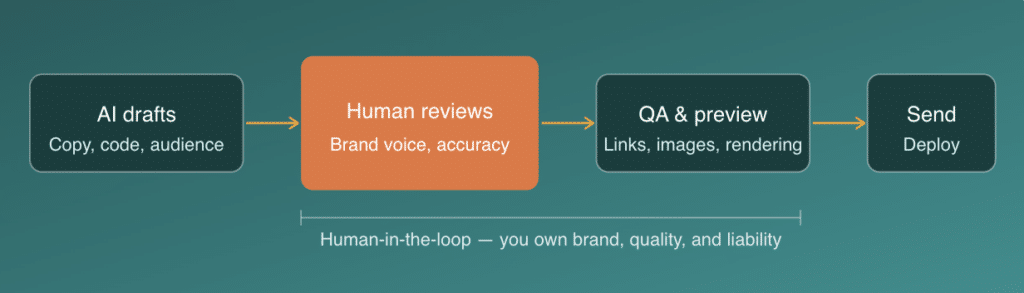
This shift emphasizes quality assurance above all else. The primary job of the orchestrator is to ensure that AI-generated content does not “hallucinate”—producing inaccurate or nonsensical information—or stray from established brand guidelines and voice. The “human-in-the-loop” approach has proven invaluable, with studies suggesting that AI-generated content reviewed and refined by humans achieves up to 40% higher quality and effectiveness. This process involves diligently reviewing AI output through email rendering previews, flagging necessary adjustments for stakeholders, and meticulously checking all links, images, and calls to action. As the industry mantra goes, “Delegate labor, never liability.” The human orchestrator remains accountable for the final message sent, ensuring brand integrity and legal compliance.
AI Beyond Copy: Elevating the Entire Customer Journey
While AI-generated written content has been the most popular application for marketers, the true power of AI extends far beyond mere copy creation. In 2026, forward-thinking brands are leveraging AI to enhance the entire customer experience, moving beyond the novelty of AI-generated text to truly meaningful applications. Examples of AI’s broader utility include:
- Dynamic Design Generation: AI tools can generate multiple layout and style variants for an email, optimize image selection, and even suggest visual elements based on brand guidelines and audience preferences.
- Advanced Audience Segmentation: AI algorithms can analyze vast datasets to identify granular segments within a subscriber list, predicting behaviors, preferences, and churn risks with greater accuracy than traditional segmentation methods.
- Personalized Lifecycle Management: AI can orchestrate complex customer journeys, determining the optimal time, channel, and content for each touchpoint in a lifecycle campaign (e.g., onboarding, re-engagement, post-purchase).
- A/B Testing Optimization: AI can intelligently suggest variations for A/B tests (subject lines, CTAs, content blocks) and then rapidly analyze results to identify winning combinations, continuously improving campaign performance.
- Deliverability Monitoring and Optimization: AI-powered tools can monitor email deliverability metrics in real-time, identify potential issues (e.g., spam trap hits, sudden drops in sender reputation), and recommend corrective actions.
- Customer Service Integration: AI chatbots integrated with email platforms can provide instant, personalized responses to common customer queries initiated via email, enhancing responsiveness and freeing up human agents for complex issues.
The overarching goal is to use AI to create a seamless, highly responsive, and deeply personalized experience that anticipates subscriber needs and preferences, thereby building stronger relationships and driving engagement.
Strategic Investments: Tools, Talent, and Data Infrastructure
The evolving demands of email marketing in 2026 necessitate strategic investments in specialized design, automation tools, and robust data infrastructure. The era of the generalist marketer handling email design as an afterthought is over. Brands require dedicated email designers, ideally equipped with advanced tools, to navigate the complexities of responsive design, AI-gatekeeper optimization, and accessibility standards. As email continues to demonstrate one of the highest returns on investment among marketing channels, specialization is no longer a luxury but an essential component of a high-performing team.
Beyond human talent, marketing teams must critically evaluate and diversify their automation tool investments. Drew Price, Co-Founder at JRNY PPL, emphasizes this, stating, “We’ve been playing checkers for too long and not enough chess. Looking at things more holistically and diversifying our investments with automation will go a long way. There’s just a bit of a mindset shift that we need to do.” To accelerate design and development, platforms that offer reusable HTML modules, comprehensive email building tools, and AI design features for generating layout and style variants are crucial. For addressing lifecycle gaps, leaning on intelligent automation ensures consistent, impactful communication without constant manual intervention.

Data management remains a persistent and growing obstacle. As the demand for hyper-personalization intensifies, the quality and accessibility of data become paramount. Cynthia Price, SVP of Marketing at Validity, highlights this: “Data collection and management is not a ‘set it and forget it’ proposition. You’d be surprised how much information subscribers will offer once you prove you’re asking questions to make their lives easier.” Tools like Validity’s BriteVerify are essential for validating email addresses at the point of entry, safeguarding sender reputation from bounces and ensuring data hygiene.
Strategic data segmentation is also key to effective personalization. Consider the following targeted campaign ideas and the data required:
- Customers who purchase products in multiple categories:
- Personalized campaign idea: A curated gift guide or an invitation to a VIP in-store event.
- Data needed: Purchase history across categories, average order value, geographic location (for in-store invites), consent for event invitations.
- Customers who have purchased one product but not a second:
- Personalized campaign idea: Product recommendations for complementary items, or an exclusive discount on a related category.
- Data needed: First purchase details, browsing history for related products, engagement with previous recommendation emails.
- Customers who have purchased 3+ products (your superfans):
- Personalized campaign idea: A request for a review or a social media shoutout, or early access to new product launches.
- Data needed: Total purchase count, lifetime value, social media handles (if collected), consent for review requests.
- Prospects who have been on site browsing in the last 24 hours:
- Personalized campaign idea: “Back in stock” alerts for viewed items, or “Get it before it’s gone” for low-stock products.
- Data needed: Real-time browsing history, inventory levels, cart abandonment status.
- Prospects who haven’t engaged with an email in 30 days or more:
- Personalized campaign idea: A re-engagement campaign with updated content, a special offer, or a preference update request.
- Data needed: Last email open/click date, last website visit date, previous purchase history (if any).
- Prospects who are close to making a purchase (e.g., abandoned cart):
- Personalized campaign idea: Abandoned cart reminders with urgency, or “abandoned browsing” emails for high-intent items.
- Data needed: Cart contents, value, time since abandonment, browsing history leading to abandonment.
Integrating email platforms with CRM, CDP (Customer Data Platform), analytics tools, and marketing automation systems unlocks deeper insights, fuels superior personalization, and provides clearer, attributable results. Even without a fully robust tech stack, simple signup forms, comprehensive preference centers, and in-email polls can effectively surface valuable first-party data.
The Mandate of Accessibility and Inclusivity
Optimizing for accessibility and inclusivity is no longer merely a best practice; it is a legal requirement under evolving legislation such as the European Accessibility Act and similar global mandates. Beyond compliance, it is an ethical imperative and a strategic move to broaden audience reach. Key best practices for accessible email include:
- Clear Alt Text for Images: Providing descriptive
altattributes for all images ensures that screen readers can convey visual information to users with visual impairments. - Sufficient Color Contrast: Ensuring adequate contrast between text and background colors is crucial for readability, particularly for users with low vision or color blindness.
- Descriptive Link Text: Links should be clearly labeled (e.g., “Learn More About Our New Product”) rather than generic (e.g., “Click Here”), making their purpose clear to screen reader users.
- Logical Reading Order: Structuring content so that it makes sense when read sequentially by a screen reader, often achieved through proper HTML structure.
- Readable Font Sizes and Line Spacing: Using font sizes of at least 14-16px and adequate line height improves readability for all users.
- Avoid Text in Images: Embedding crucial information solely within images can render it inaccessible to screen readers and those with images turned off.
- Keyboard Navigable Content: Ensuring interactive elements are accessible via keyboard navigation.
- Plain Language: Using clear, concise language avoids jargon and complex sentence structures, benefiting users with cognitive disabilities or those for whom English is a second language.
Comprehensive testing before sending is paramount. Marketers must move beyond basic ESP previews and utilize advanced tools for robust accessibility checks. These tools can offer visual impairment filters, automatically check for missing or poor alt text, evaluate text justification, verify table roles, and provide an NVDA screen reader preview. Such meticulous review, as highlighted in sessions at Litmus Live 2026, helps maximize the impact of every email by ensuring it reaches and engages the broadest possible audience.
The Future Outlook: Efficiency, Humanity, and Growth

The roadmap for email marketing in 2026 presents an intriguing paradox: a mandate for both unparalleled efficiency and profound humanity. As marketers continue to explore and integrate advanced tools like AI and automation to streamline workflows and accelerate production, there is an equally strong, if not stronger, imperative to prioritize the human element. This means crafting inspiringly personalized messages that resonate deeply, fostering genuine connections, and ensuring that every email program is built on foundations of accessibility and inclusivity.
Email marketing in this new era is characterized by strategic refinement. The days of mass, generic sends are definitively over. Success hinges on a brand’s ability to orchestrate complex campaigns, leveraging AI to handle the heavy lifting while a human touch ensures authenticity, brand alignment, and ethical compliance. By embracing intelligent gatekeepers, prioritizing data-driven personalization, adopting minimalist and structured design, and committing to accessibility, email will not only retain its status as a high-ROI marketing channel but will evolve into an even more powerful and indispensable engine for brand growth and customer engagement. The future of email in 2026 is one of intelligent adaptability, continuous learning, and a renewed focus on the human connection it ultimately seeks to foster.