rifanmuazin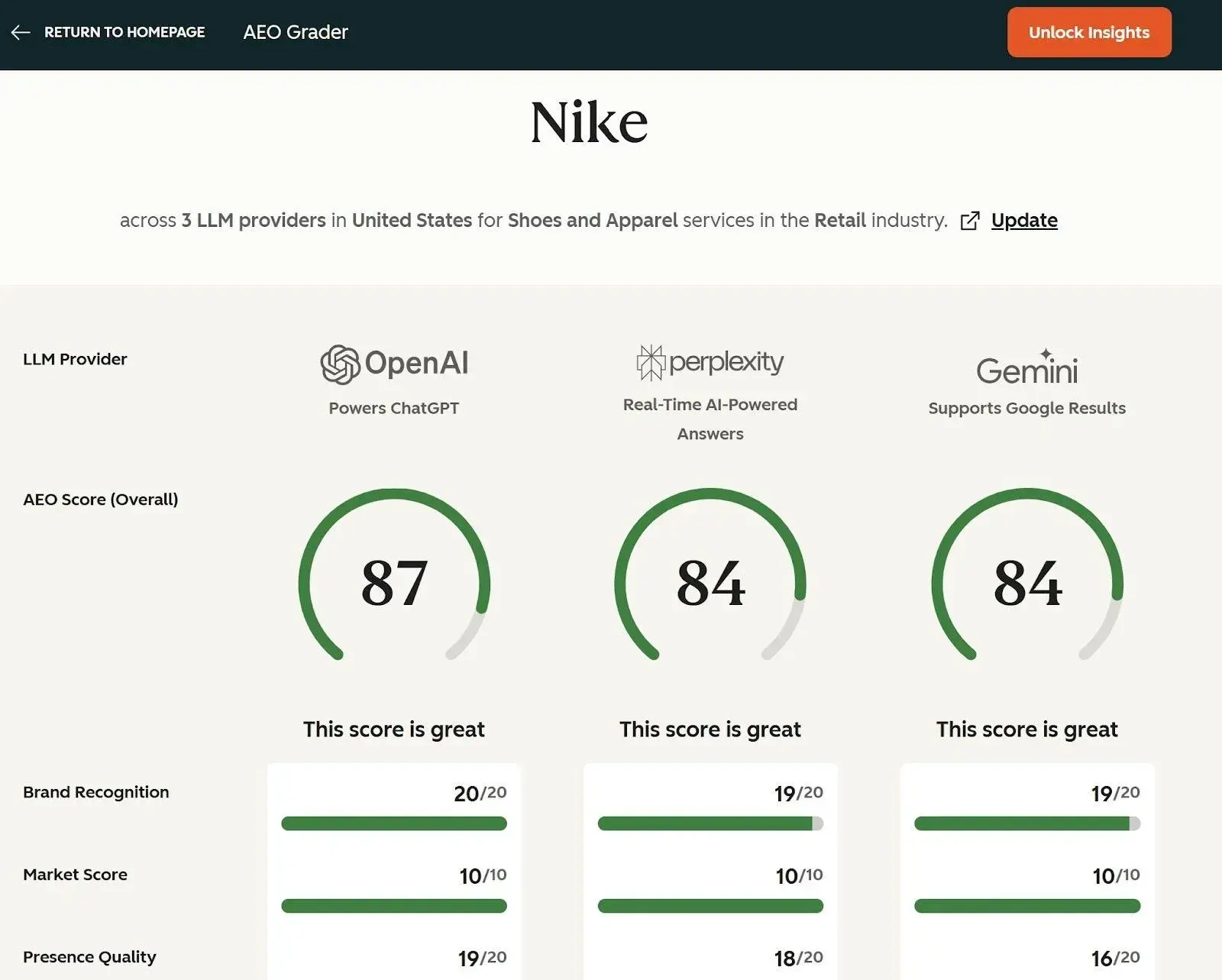
The landscape of digital search has undergone a profound transformation, ushering in an era where the traditional tenets of Search Engine Optimization (SEO) are being augmented by the emerging discipline of Answer Engine Optimization (AEO). Initially, the methodologies for auditing content for answer engine visibility were often perceived as mere extensions of established SEO practices, requiring only minor adjustments. However, this assumption has proven to be an oversimplification. AEO keyword research fundamentally redefines the approach to content strategy, moving beyond the singular objective of achieving high search rankings to a more nuanced goal: becoming a trusted source for AI-driven answer engines.
The Dawn of Answer Engines and the Paradigm Shift
The advent of sophisticated large language models (LLMs) and their integration into search interfaces, exemplified by platforms like ChatGPT, Perplexity AI, and Google’s AI Overviews (powered by Gemini), has catalyzed this shift. Users are increasingly seeking direct, synthesized answers to complex questions rather than a mere list of links. This change in user behavior necessitates a corresponding evolution in how content is created and optimized. For marketers and content strategists, the challenge is no longer just about identifying popular search queries, but about understanding how AI models interpret prompts, synthesize information, and, crucially, determine which sources to cite authoritatively. The mental model has fundamentally shifted from aiming for a top ranking on a search results page to being the authoritative content that an AI selects and cites within its generated answer.

Differentiating AEO from Traditional SEO Keyword Research
Traditional SEO keyword research has long been predicated on tangible user data: metrics such as monthly search volume, keyword difficulty, and estimated click-through rates. Tools like Ahrefs and Semrush have been instrumental in revealing the exact phrases users type into Google, enabling content creators to optimize their pages for these specific terms. The focus has historically been on explicit keywords and their associated traffic potential.
AEO, however, operates on a different set of priorities, requiring a recalibration of established research techniques:
-
SEO Keyword Research Priorities:

- High Search Volume: Targeting keywords with significant monthly searches to capture broad audience interest.
- Keyword Difficulty: Assessing the competitiveness of ranking for a specific term.
- Click-Through Rate (CTR): Optimizing meta descriptions and titles to entice users to click on a link.
- Ranking Position: Striving for top organic search results (positions 1-3).
- Explicit Keyword Matching: Ensuring content directly uses the target keyword.
-
AEO Keyword Research Priorities:
- Conversational Queries: Identifying natural language questions and prompts users ask AI.
- Semantic Depth and Entity Understanding: Ensuring content comprehensively covers a topic and its related entities in a structured way that AI can easily parse.
- Authoritativeness and Trust Signals: Building content that AI models deem highly credible and reliable for citation.
- Answer Completeness: Providing direct, concise, and comprehensive answers to specific questions within the content.
- Fanout Query Potential: Anticipating and addressing follow-up questions or related prompts an AI might internally generate based on an initial query.
The practical implication of this divergence is stark. When a user asks an AI like ChatGPT, “What’s the best CRM for a small marketing team?”, the AI does not return a ranked list of web pages. Instead, it processes vast amounts of indexed content, synthesizes an answer, and often attributes specific pieces of information to its source. The objective for content creators, therefore, is to craft content that is so clear, comprehensive, and authoritative that the AI confidently selects it as a primary source for its generated response.
A Phased Approach to AEO Keyword Research: Tools and Workflow
Effective AEO keyword research is not reliant on a single “AEO tool” but rather a strategic combination of existing SEO tools adapted for a new purpose, alongside specialized AI-native solutions. This integrated approach allows for robust question discovery, comprehensive fanout analysis, and precise visibility tracking.
1. Traditional Keyword Research Tools (Adapted for AEO)
These established tools remain foundational but require a modified usage strategy. Instead of focusing solely on high-volume head terms, AEO practitioners leverage them to uncover question-based queries, extract “People Also Ask” clusters, and identify long-tail conversational prompts.
-
Semrush: Its Keyword Magic Tool is invaluable for AEO due to its ability to filter queries by question type (who, what, how, why, when). This directly aligns with the conversational nature of AI prompts. The “Questions” filter helps identify how a topic branches into various user intents, laying the groundwork for fanout query mapping. The Topic Research feature visually presents semantically related questions and subtopics, highlighting potential content gaps.
- Pro Tip: Export “Questions” results for your top seed keywords to create an initial question inventory.
- Best for: Enterprise teams needing broad question discovery, competitive analysis, and content optimization within a single platform.
-
Ahrefs: Ahrefs’ Content Explorer and Site Explorer provide insights into competitor content that earns significant links and traffic. This helps identify high-authority AEO-style content (e.g., comprehensive FAQs, detailed guides, comparison pages) that signal trust to AI models. Its “Questions” filter in Keywords Explorer is another strong source of conversational queries. The “Also rank for” report reveals the semantic neighborhood around target AEO topics, offering opportunities for broader content coverage.
- Best for: Teams requiring deep keyword data, strong competitor content analysis, and reliable search volume estimates.
-
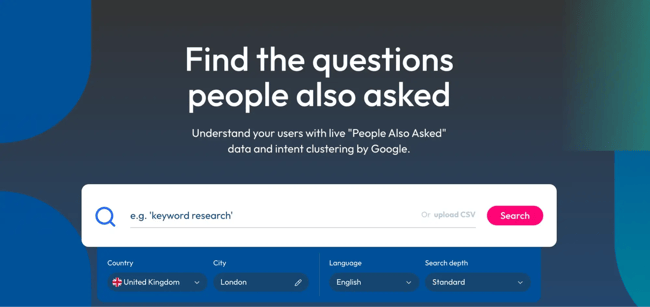
AlsoAsked: This tool directly scrapes and visualizes Google’s “People Also Asked” (PAA) data, presenting it as a hierarchical tree. This visual representation is crucial for AEO content structuring, as the branches mirror the natural follow-up questions users might ask an AI. These branches directly inform content outlines, suggesting parent questions (H2s) and sub-questions (H3s).
- What makes it stand out: The visual hierarchy is an immediate content brief generator.
- Best for: Mapping question hierarchies and understanding the progression of user intent from broad to specific queries.
-
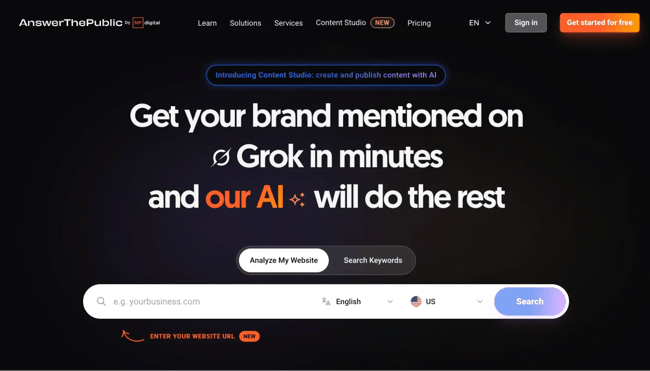
AnswerThePublic: Known for its visual “wheel” of queries, AnswerThePublic rapidly generates a large pool of question-based and preposition-based queries around a seed keyword. This is an efficient way to uncover numerous AEO candidates, categorized by question type.
- Pro Tip: Export results and cross-reference with Semrush or Ahrefs to gauge search demand for these conversational queries.
- Best for: Broad question discovery and understanding the full spectrum of user inquiries on a topic.
2. Tools for Finding Fanout Queries and Semantic Expansion
LLM query fan-outs are critical for AEO. They represent the internal sub-queries, comparisons, and follow-up questions an AI might generate when processing a single user prompt. Optimizing for this “fanout” is an often-underestimated lever in AEO.
-
Otterly.ai: This tool specifically monitors visibility across various answer engines like ChatGPT and Perplexity. By tracking which prompts lead to your content’s inclusion, Otterly.ai helps reverse-engineer the fanout clusters that are most relevant to your brand. It offers granular insights into platform-specific visibility gaps.
- What makes it stand out: It shows where your content appears on different AI platforms, enabling targeted optimization.
- Best for: Teams needing multi-platform AI visibility tracking and actionable gap analysis for prompt targeting.
-
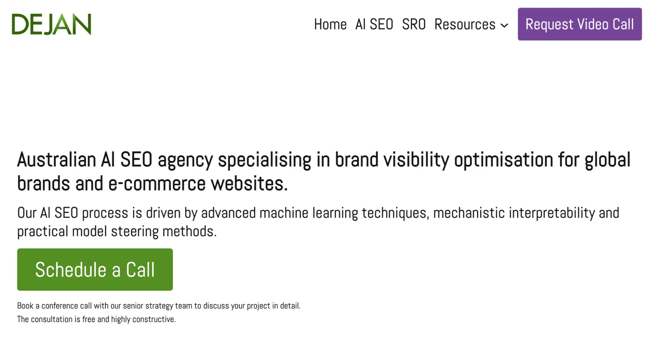
Dejan.ai: Dejan.ai provides advanced tools for semantic analysis and entity mapping. Understanding how AI systems interpret content at an entity level is paramount for improving content clarity and citation likelihood. Dejan.ai helps model these relationships pre-emptively.
- What makes it stand out: Its sophisticated entity-level analysis aids in creating structured AEO content that AI can confidently parse and cite.
- Best for: Advanced AEO practitioners focused on semantic query expansion and intricate entity relationship modeling.
-
Screaming Frog + Gemini (DIY Approach): This combination offers a cost-effective method for synthetic fanout query modeling.
- Workflow: Use Screaming Frog to crawl your site and extract existing H2s, H3s, and meta descriptions. Feed these into Gemini (via API or Google AI Studio) with prompts like: “What follow-up questions would users ask after reading about [topic]? List 10 specific, conversational questions.” This generates a synthetic fanout, approximating how AI models might expand on your existing content’s topical footprint.
- Pro Tip: Prioritize this process for top-performing pages to expand AEO coverage with minimal effort.
- Best for: Technical SEO teams leveraging existing crawl infrastructure to enrich content with AI-generated question expansion.
3. AEO Visibility Trackers
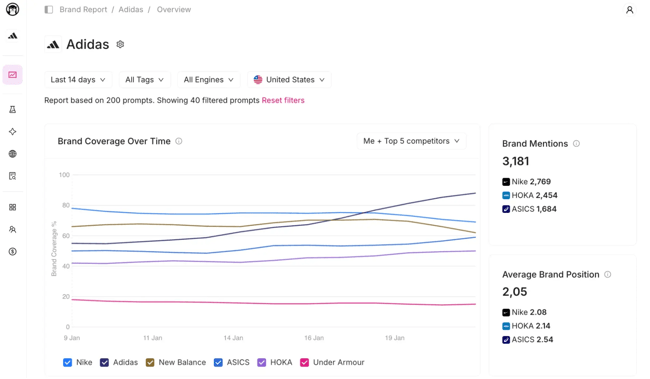
Traditional rank trackers are insufficient for AEO. Specialized AEO trackers measure mentions, citations, and overall visibility within AI-generated answers, providing crucial competitive insights and identifying coverage gaps.
-
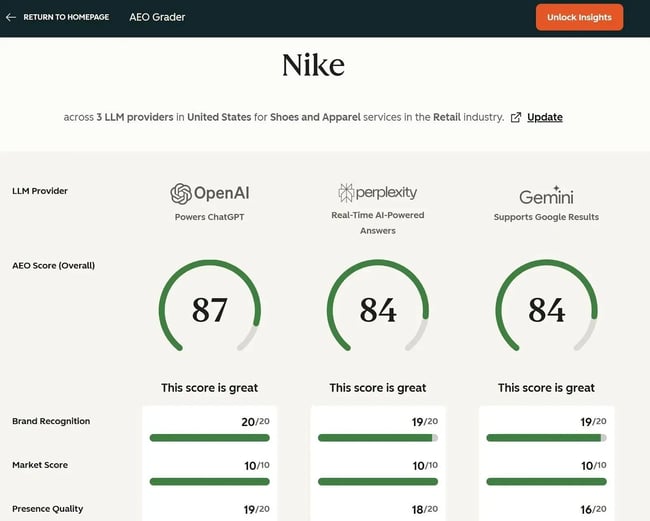
HubSpot AEO Grader: This free tool offers a baseline assessment of answer engine visibility. It helps brands understand their current standing in AI-powered search results, highlighting areas of authority and content deficiencies. It’s an excellent starting point for teams new to AEO.
- What makes it stand out: Free, immediate clarity on answer engine visibility, useful for internal buy-in.
- Best for: Teams seeking a quick, free baseline assessment before committing to a full AEO tool stack.
-
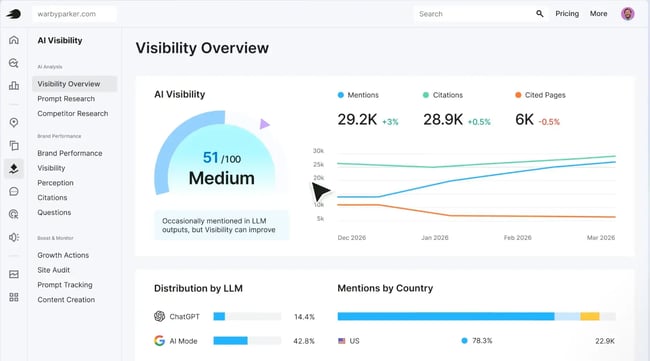
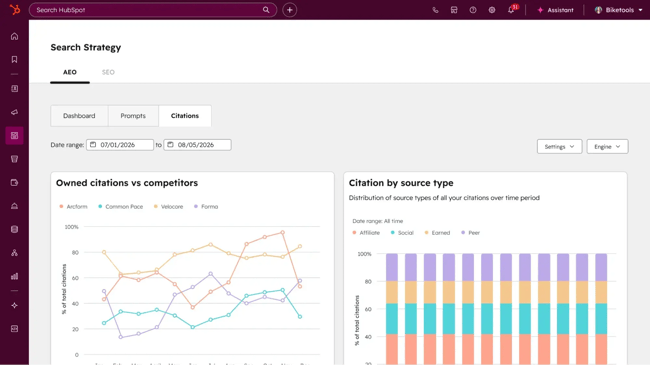
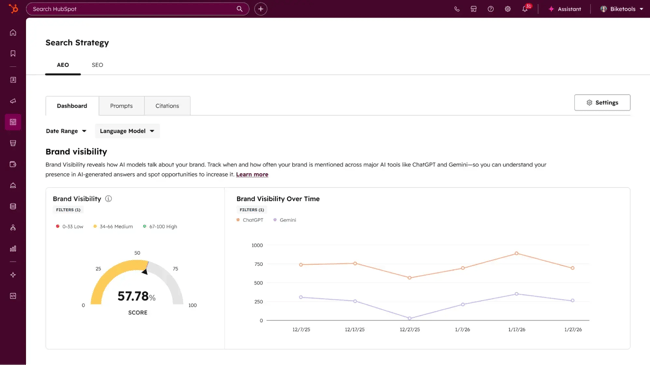
HubSpot AEO (Prompt Tracking & AI-Powered Suggestions): HubSpot’s dedicated AEO product offers robust prompt tracking, monitoring which questions trigger your brand’s appearance across various answer engines. Crucially, it provides AI-powered suggestions, actively recommending new prompts and questions to track based on existing visibility and content gaps. This automates a significant part of the fanout discovery process.
- What makes it stand out: A single answer engine visibility score across ChatGPT, Perplexity, and Gemini, with plain-language recommendations and competitor comparisons.
- Best for: Marketing teams desiring a unified platform for AEO research, tracking, and prioritized roadmaps.
-
Marketing Hub Pro and Enterprise (Integrated AEO): AEO capabilities are integrated directly into HubSpot’s Marketing Hub Pro and Enterprise tiers. This means AEO scores, prompt tracking, and recommendations are connected to the CRM, content, and reporting tools marketing teams already use. By leveraging CRM data, prompt suggestions become highly tailored to specific industries, competitors, and customer segments, improving accuracy over time.
- What makes it stand out: Seamless integration with existing marketing workflows, CRM-powered prompt suggestions, and unified reporting.
- Best for: Marketing teams seeking to unify AEO research, tracking, and execution within their core marketing platform.
4. Tools for Ideating AI Prompts with Synthetic Query Generation
Synthetic query generation allows teams to proactively approximate the range of prompts users might input into answer engines, especially valuable for nascent products, emerging categories, or topics lacking established search volume data.
- Claude: Claude is highly effective for generating synthetic queries. A prompt like: “You are an expert in [topic]. Generate 20 distinct questions a user might ask an AI assistant about [topic], ranging from beginner to advanced, including comparison questions and follow-ups” can yield a high-quality initial inventory of AEO candidates. Claude excels at generating comparative and consideration-stage queries, mirroring how users interact with AIs for purchasing decisions.
- Pro Tip: Test synthetic queries directly in ChatGPT and Perplexity to identify those that trigger AI-generated answers, marking them as high-priority AEO targets.
- Best for: Generating rich synthetic prompt sets, modeling fanout queries, and validating content’s ability to answer AI-likely questions.
A Step-by-Step Workflow for Finding AEO Keywords
The effectiveness of these tools hinges on a well-structured workflow. Here’s a recommended process for establishing or auditing an AEO keyword research program:
Phase 1: Initial Question Discovery and Prioritization
- Seed Query Identification: Begin by listing 5-10 core topics central to your brand or target market. These should be product categories, use cases, or customer pain points, not branded terms.
- Autocomplete Expansion: For each seed topic, type it into Google and capture autocomplete suggestions. Focus on question-formatted suggestions (“how do I…”, “what is the best…”, “why does…”).
- People Also Asked (PAA) Mapping: Search Google for each seed topic and screenshot the PAA box. Utilize AlsoAsked.com to expand these into a full question hierarchy. This creates a two-tier map of primary and follow-up questions.
- Prioritization: Cross-reference your PAA list with search volume data from Semrush or Ahrefs. Prioritize high-volume questions that also trigger AI Overview appearances in the SERP. These represent existing AI-generated answers, indicating a clear opportunity for your content to be cited.
Phase 2: Leveraging LLM Query Fan-Outs
- Query Analysis: Group your prioritized questions into intent clusters (e.g., “What is X,” “How does X work,” “X vs. Y”). Each cluster may require a different content approach.
- Synthetic Expansion: Feed each cluster into an LLM like Claude or ChatGPT using a fanout prompt: “A user asks: ‘[primary question]’. What are 8 follow-up questions they might ask after receiving an answer?” Document the generated output.
- Cross-Engine Validation: Test your top synthetic prompts in ChatGPT, Perplexity, and Gemini. Record which prompts consistently generate AI-synthesized answers versus traditional search results. These “AI-generated answer triggers” are your high-priority AEO keywords.
- Gap Analysis: For each confirmed AEO target, use HubSpot’s AEO prompt tracking or Otterly.ai to determine if your site currently appears in the AI-generated answer. These identified gaps become your immediate content roadmap.
- Content Brief Creation: For each identified gap, create a detailed content brief. This brief should include:
- The core question and direct, concise answer.
- All identified follow-up questions (fanout queries).
- Supporting entities and relevant semantic keywords.
- Recommended schema markup.
- Internal linking strategy.
- Target word count and tone.
- Crucially, this step ensures that AEO insights are translated directly into actionable content creation, preventing knowledge silos.
Frequently Asked Questions About AEO Keyword Research Tools
Is AEO replacing SEO?
No, AEO is not replacing SEO but rather expanding its scope. Traditional organic search, which returns ranked lists of web pages, continues to handle billions of queries daily. However, the proportion of queries resolved by AI-generated answers is growing rapidly. Savvy teams recognize AEO as a vital complement to SEO. While underlying principles like technical soundness, strong content, and authority signals remain crucial for both, AEO introduces distinct considerations for targeting, content structure, and performance measurement. For instance, Google’s E-E-A-T (Experience, Expertise, Authoritativeness, Trustworthiness) standards, traditionally vital for SEO, are equally, if not more, critical for earning AI citations.
Can I use ChatGPT alone for AEO keyword research?
While ChatGPT is an excellent tool for synthetic query generation and fanout expansion, it is not sufficient on its own for comprehensive AEO keyword research. It lacks crucial functionalities such as search volume data, the ability to track your answer engine visibility over time, and competitive insights into where other brands are cited. It serves best as a powerful input and validation layer, augmenting traditional search data tools (like Semrush, Ahrefs) and specialized AEO visibility trackers (like HubSpot AEO, Otterly.ai).
Which engine should I prioritize first for AEO?
Start with Google AI Overviews. Given Google’s dominant market share in global search traffic, optimizing for its AI-generated summaries offers the broadest immediate impact. Appearing in a Google AI Overview often aligns with the same stringent E-E-A-T standards required for traditional Google ranking, meaning existing SEO investments can be leveraged effectively. Once a baseline Google AEO program is established, expand to platforms like Perplexity (popular with researchers and technically adept users) and ChatGPT (relevant for purchase consideration and comparison queries). A multi-engine coverage strategy is a reasonable goal within 6-12 months, but it’s rarely the starting point.
How often should I refresh AEO keyword research?
AEO keyword research requires more frequent refreshing than traditional SEO research. Answer engines are dynamic; they regularly update their indexing, answer generation algorithms, and fanout patterns as user behavior evolves. A recommended cadence is a full AEO keyword audit quarterly, with monthly reviews of prompt-tracking data. Tools with AI-powered suggestions, like HubSpot AEO, can proactively flag emerging prompt opportunities between formal review cycles, ensuring continuous relevance and preventing content from becoming obsolete in the rapidly changing AI landscape.
What budget should I plan for AEO tools?
The budget for AEO tools varies based on team size and maturity. An exploratory stack under $500 per month could combine free resources like the HubSpot AEO Grader and Google Search Console with cost-effective tools such as AnswerThePublic’s free tier, AlsoAsked ($15-$49/month), and Claude Pro ($20/month). This provides sufficient capability for initial question discovery, fanout generation, and basic visibility checks. A growth-stage stack, typically $500-$2,000 per month, would integrate a comprehensive SEO platform like Semrush or Ahrefs ($120-$500/month depending on tier), Otterly.ai for multi-engine tracking, and HubSpot AEO for integrated prompt tracking and suggestions. The common pitfall is investing in an expensive, complex stack before establishing a clear workflow to act on the data. Start lean, prove the process, then scale.
Choosing Your AEO Keyword Research Stack
AEO keyword research is not a monolithic task but rather a three-pronged endeavor: discovering user questions, modeling how AI expands those questions into fanout prompts, and tracking the brand’s actual appearance in AI-generated answers. No single tool comprehensively covers all three categories, emphasizing the importance of a thoughtfully assembled tool stack.
For organizations seeking a unified starting point, HubSpot AEO offers a consolidated solution for visibility, tracking, and recommendations. It generates a singular answer engine score across ChatGPT, Perplexity, and Gemini, pinpoints prompts where competitors are cited instead of your brand, and delivers prioritized, plain-language recommendations, with plans starting at $50 per month. Marketing Hub Pro and Enterprise tiers further enhance this by providing CRM-powered prompt suggestions that are contextually relevant to specific industries, competitors, and customer segments.
The most immediate and accessible first step for any brand is to utilize the free HubSpot AEO Grader. This tool provides a quick, baseline assessment of current answer engine visibility, serving as an invaluable initial check without requiring a long-term commitment. It is the clearest entry point into developing a structured AEO program that prepares content for the future of search.