rifanmuazin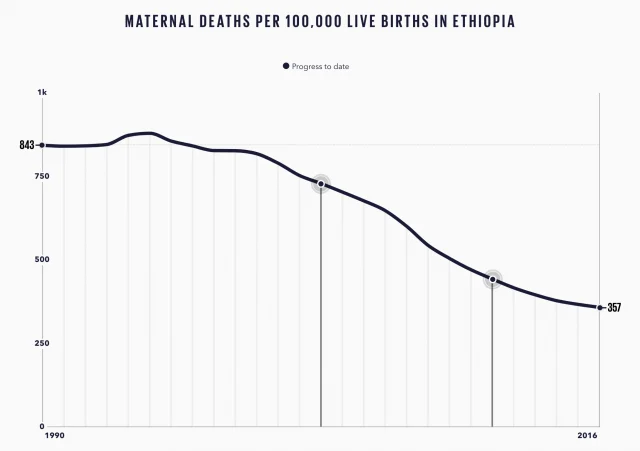
The Bill and Melinda Gates Foundation launched the inaugural Goalkeepers report in 2017, a comprehensive digital and print publication designed to track progress toward the United Nations Sustainable Development Goals (SDGs). This initiative, titled Goalkeepers 2017, serves as a rigorous data-driven assessment aimed at accelerating the fight against global poverty and health crises by diagnosing urgent problems, identifying scalable solutions, and interpreting key results for a global audience. Central to the 2017 report is the critical issue of maternal mortality, a metric that the Foundation identifies as a primary indicator of a functioning healthcare system. By synthesizing data from the World Health Organization (WHO), UNICEF, and the World Bank, the report highlights the stories behind the statistics, specifically focusing on how targeted interventions in developing nations like Ethiopia have resulted in significant declines in maternal deaths.
The Global Landscape of Maternal Mortality and the 2017 Benchmarks
Maternal mortality remains one of the most significant challenges in global public health, representing the starkest divide between wealthy and impoverished nations. According to data compiled by UNICEF and analyzed within the Goalkeepers framework, approximately 302,530 women died in 2015 due to complications related to pregnancy or childbirth. This figure translates to a global maternal mortality ratio (MMR) of 168.7 deaths per 100,000 live births. While these numbers are high, they represent a substantial improvement from 1990 levels, when the global MMR was estimated to be significantly higher.
The Gates Foundation emphasizes that maternal mortality is a "preventable tragedy." The majority of these deaths occur in low-resource settings and are caused by complications such as severe bleeding (hemorrhage), infections (sepsis), high blood pressure during pregnancy (pre-eclampsia and eclampsia), and complications from delivery. The Goalkeepers report posits that the death of a mother is not only a human rights failure but also a catalyst for further societal instability. Research indicates that when a mother dies, her children are significantly less likely to survive, receive adequate nutrition, or complete their education, thereby creating a cycle of intergenerational poverty.
Chronology of Global Health Initiatives: From MDGs to SDGs
The efforts to combat maternal mortality have evolved through two major international frameworks. The first was the Millennium Development Goals (MDGs), established in 2000, which set a target (MDG 5) to reduce the maternal mortality ratio by three-quarters between 1990 and 2015. While the world did not fully meet this ambitious target, the period saw a 44% reduction in maternal deaths globally.
Following the conclusion of the MDG era, the United Nations adopted the Sustainable Development Goals in 2015. SDG Target 3.1 aims to reduce the global maternal mortality ratio to less than 70 per 100,000 live births by 2030. The Goalkeepers 2017 report was specifically timed to assess the transition from the MDGs to the SDGs, providing a baseline for the 15-year journey toward 2030. The report utilizes data visualization and narrative storytelling to argue that while progress is being made, the current pace must accelerate to meet the 2030 objectives.
Case Study in Progress: Ethiopia’s Healthcare Transformation
One of the most compelling narratives within the Goalkeepers 2017 report is the case study of Ethiopia. In 1990, Ethiopia faced one of the highest maternal mortality rates in the world, with 843 deaths per 100,000 live births. By 2015, this figure had plummeted to 357 per 100,000. This 58% reduction is cited by the Gates Foundation as a model for other developing nations.
Ethiopia’s success is attributed to a massive, state-led overhaul of its primary healthcare system, known as the Health Extension Program (HEP). Launched in 2003, the HEP involved the training and deployment of over 38,000 female health extension workers. These workers were stationed in rural villages to provide essential health services, including prenatal care, immunization, and family planning. Furthermore, Ethiopia invested heavily in infrastructure, increasing the number of health centers from approximately 600 in 2005 to over 3,500 by 2015. This expansion ensured that more women had access to "skilled birth attendants"—medical professionals trained to manage normal deliveries and diagnose complications.
The Goalkeepers report highlights that Ethiopia’s progress was not merely a result of increased funding, but of a strategic shift in policy that prioritized community-based care and the empowerment of female healthcare providers. By bringing the clinic to the patient, Ethiopia overcame the geographical and cultural barriers that previously prevented women from seeking professional medical assistance during labor.
Supporting Data and Regional Disparities
While Ethiopia provides a blueprint for success, UNICEF’s maternal mortality datasets reveal persistent and deep-seated regional disparities. Sub-Saharan Africa remains the region with the highest burden, accounting for roughly two-thirds of all maternal deaths globally. In some high-burden countries, the lifetime risk of maternal death for a woman is as high as 1 in 36, compared to 1 in 4,900 in high-income countries.
Data from the 2017 report suggests that the "three delays" model remains a primary obstacle in high-mortality regions:
- Delay in seeking care: Often due to a lack of understanding of complications or financial constraints.
- Delay in reaching care: Caused by poor road infrastructure and lack of emergency transport.
- Delay in receiving care: Resulting from understaffed facilities, lack of essential medicines, or inadequate equipment at the point of service.
The Goalkeepers analysis underscores that reducing maternal mortality is intrinsically linked to the availability of emergency obstetric care (EmOC). Data shows that even in regions where prenatal care coverage has increased, mortality remains high if hospitals are not equipped to perform C-sections or blood transfusions when emergencies arise.
Official Responses and Institutional Perspectives
The release of the Goalkeepers 2017 report prompted various responses from international health organizations and government bodies. The World Health Organization (WHO) reinforced the report’s findings, noting that the "last mile" of reducing maternal mortality will be the most difficult, as it requires reaching the most marginalized and conflict-affected populations.
In statements accompanying the report, Bill and Melinda Gates emphasized the role of innovation and political will. "If you were trying to invent the most efficient way to devastate communities and put children in danger, you would invent maternal mortality," they stated, highlighting the urgency of the issue. They called for continued investment in the Global Fund and Gavi, the Vaccine Alliance, noting that health systems built to treat infectious diseases like HIV and malaria often serve as the foundation for maternal health services.
UNICEF officials have also pointed to the importance of data transparency. The ability to track maternal deaths in real-time allows for "maternal death surveillance and response" (MDSR) systems, which help local health authorities understand exactly why a death occurred and how to prevent a similar occurrence in the future.
Broader Impact and Future Implications
The Goalkeepers 2017 report serves as more than just a retrospective analysis; it is a call to action for the global community to maintain its commitment to the SDGs. The implications of the report are far-reaching, suggesting that maternal health is a linchpin for broader economic development. Healthy mothers contribute to the workforce and provide the stability necessary for healthy, educated children, who in turn drive the future economy.
However, the report also warns of "complacency risk." If international funding for global health plateaus or declines, the progress made over the last two decades could be reversed. The data indicates that in some regions, the rate of improvement is slowing down. To reach the SDG target of 70 deaths per 100,000 live births, the global rate of reduction must double.
Furthermore, the report highlights the need for better data collection. In many parts of the world, maternal deaths go unrecorded, meaning the actual death toll could be higher than current estimates suggest. Strengthening civil registration and vital statistics (CRVS) systems is essential for providing the "spotless" information design and accurate charts that the Goalkeepers report advocates for.
In conclusion, the Goalkeepers 2017 report and the accompanying UNICEF data provide a comprehensive look at one of the most vital metrics of human progress. The success of countries like Ethiopia demonstrates that significant reductions in maternal mortality are possible with the right combination of political commitment, community involvement, and strategic investment. As the world moves toward the 2030 deadline for the Sustainable Development Goals, the insights provided by such reports will be crucial in ensuring that no mother is left to face the life-threatening risks of childbirth without the support of a modern healthcare system. The fight against maternal mortality is not just a medical challenge, but a test of global equity and the collective will to protect the world’s most vulnerable populations.