rifanmuazin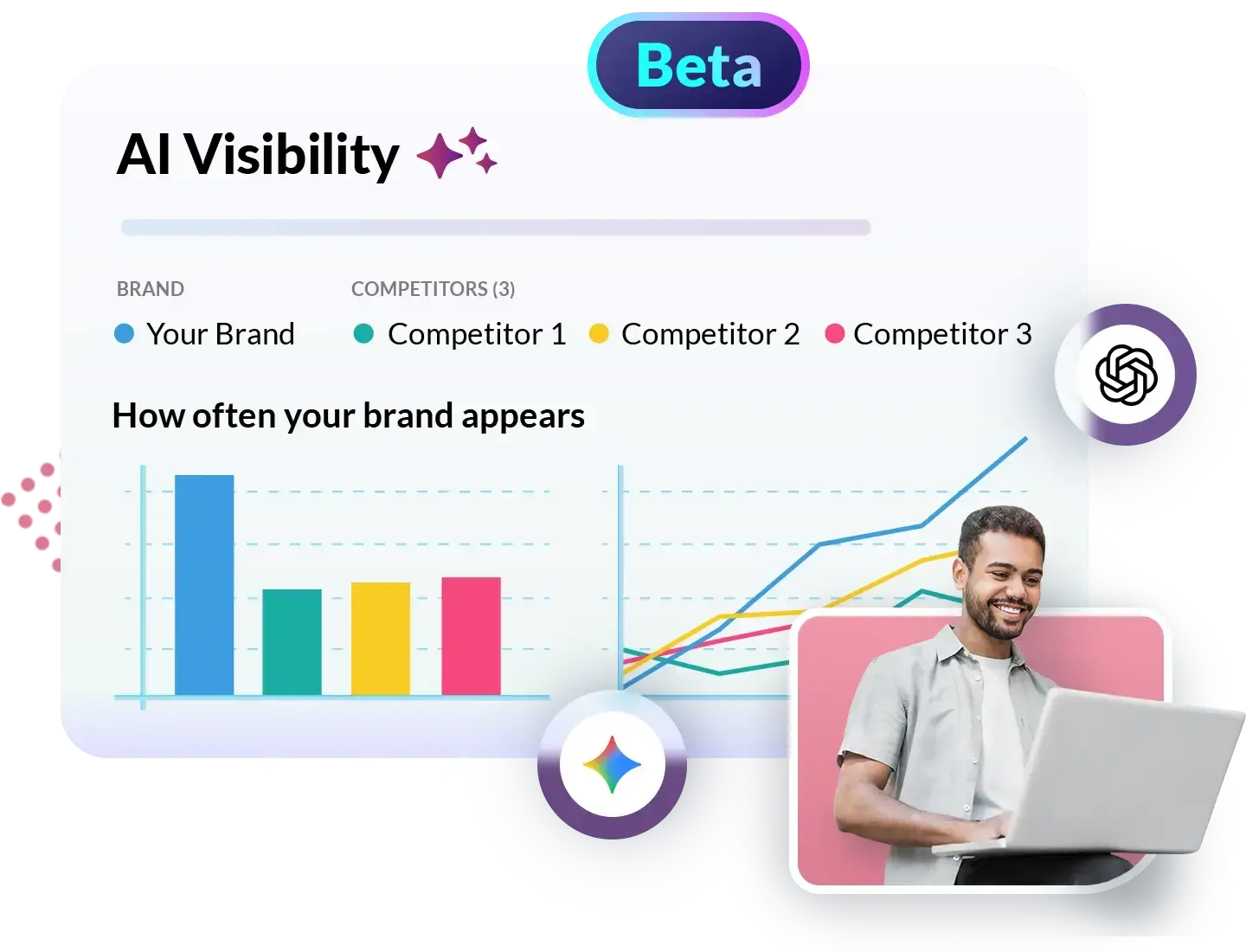
When tracking share of voice for marketing teams, it’s often assumed to be a vanity metric – a number executives like to include in board decks but one that rarely influences core business strategy. In practice, this assumption is increasingly challenged by a rapidly evolving digital landscape where brand visibility is a critical precursor to market success. Share of voice (SOV) is not merely a superficial indicator; it is one of the clearest leading indicators of whether a brand is gaining or losing visibility long before these shifts manifest in sales pipelines or revenue reports. The challenge, however, lies in the inconsistent measurement practices across diverse channels, leading to dashboards that often fail to inform actionable strategy. This comprehensive guide aims to redefine SOV, breaking down what each type measures across SEO, social, paid, and the burgeoning realm of AI search, identifying essential tools for various growth stages, and outlining strategies to circumvent common measurement pitfalls, including the growing issue of AI-driven share of voice bias. Ultimately, it seeks to demonstrate how visibility metrics can be robustly connected to CRM, attribution, and the revenue outcomes that truly matter to leadership.
Understanding Share of Voice: A Foundational Metric in a Fragmented Landscape
Share of Voice (SOV) fundamentally represents the percentage of visibility a brand earns compared with its competitors within a defined market or communication channel. In simpler terms, it quantifies how much attention a brand captures out of all the conversations, impressions, and search results occurring within its specific industry or category. The concept, though simple in definition, becomes complex due to the varied interpretations of "visibility" across different channels, which is precisely why many SOV reports can be misleading rather than informative.

Historically, SOV was predominantly measured in traditional media through advertising spend or media mentions. However, the advent of the internet and the proliferation of digital platforms have expanded its scope dramatically. Today, SOV tools measure competitive visibility across a multitude of channels including organic search (SEO), social media, public relations (PR), paid advertising, retail media, and the newly emerging answer engines powered by artificial intelligence.
The Strategic Imperative of Multi-Channel SOV
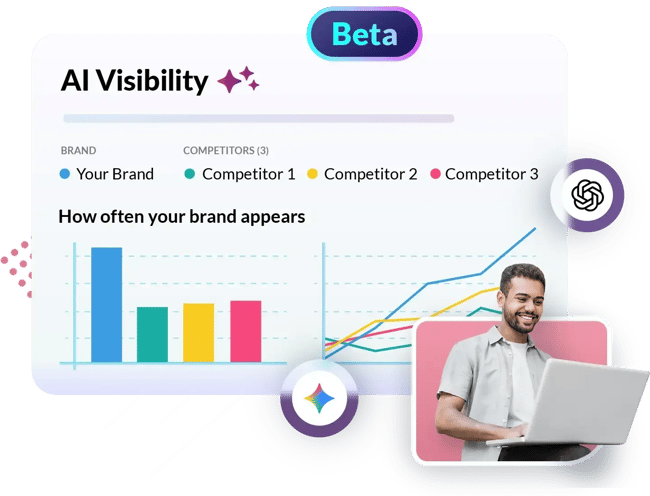
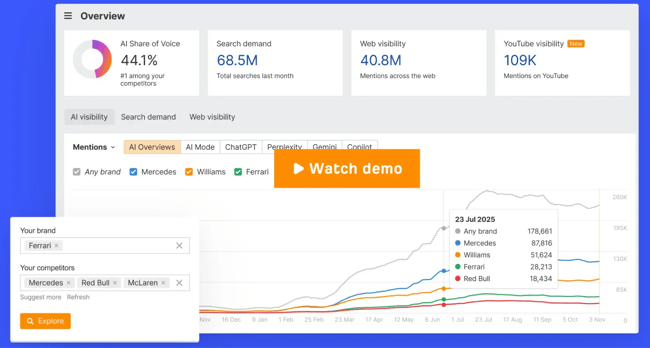
The relevance of different SOV types often correlates with a brand’s growth stage and strategic priorities. For early-stage startups, social SOV and SEO SOV typically provide the most immediate and actionable signals. These channels are dynamic, allowing for rapid shifts in visibility and offering clear pathways for intervention. As companies mature into the mid-market, PR SOV becomes an increasingly important lever for brand building and thought leadership. Enterprise teams, operating at scale and facing complex competitive environments, are now integrating AI SOV into their measurement stacks. Early adoption of AI SOV tracking by mid-market teams is expected to provide a significant competitive advantage, positioning them ahead in the evolving landscape of digital discovery. For instance, platforms like HubSpot AEO are at the forefront, enabling marketers to quantify AI share of voice by tracking how frequently their brand appears in AI-generated answers against competitors for specific prompt sets, thereby revealing immediate competitive gaps.
The Rise of AI Share of Voice: Navigating the Generative AI Era
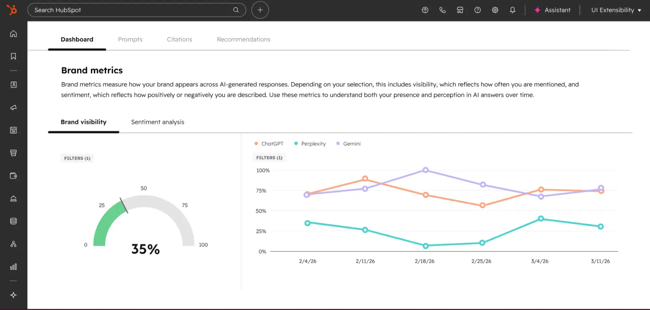
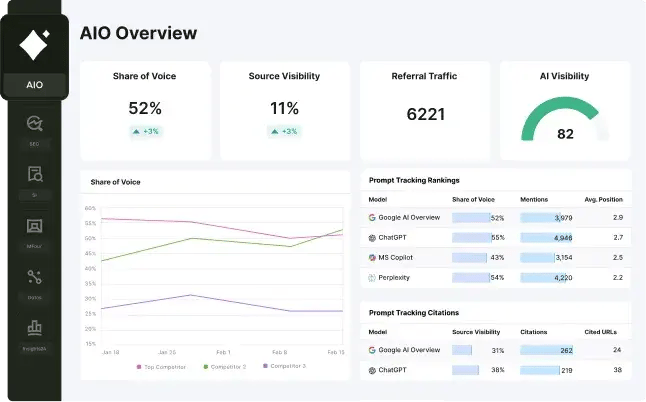
The most significant recent shift in the SOV landscape has been the emergence of Artificial Intelligence Share of Voice (AI SOV). This metric quantifies how often a brand is mentioned or cited in AI-generated answers provided by platforms such as ChatGPT, Google Gemini, Perplexity, and other answer engines. When a user queries these AI systems for information, recommendations, or solutions within a specific category, a brand’s inclusion (or exclusion) in the AI’s response becomes a direct measure of its AI SOV.

The formula for AI SOV is straightforward:
AI SOV = (Number of AI responses mentioning your brand ÷ Total AI responses for your prompt set) × 100
However, the simplicity of the formula belies the complexity of its implementation. The primary challenge lies not in the calculation but in constructing a prompt set that genuinely mirrors how potential buyers think and interact with AI, while meticulously avoiding measurement traps that can produce seemingly meaningful but ultimately inaccurate data. The accuracy of AI SOV heavily relies on a prompt set that is balanced across various personas, funnel stages, and AI platforms.
Chronology of AI SOV’s Emergence
The concept of AI SOV is a direct consequence of the rapid advancements in large language models (LLMs) and generative AI, particularly catalyzed by the public release of OpenAI’s ChatGPT in November 2022. This event marked a watershed moment, democratizing access to powerful AI chatbots and fundamentally altering how users seek and consume information. Subsequently, major search engines like Google began integrating generative AI features, such as AI Overviews (formerly Search Generative Experience), further blurring the lines between traditional search and AI-driven answers. This shift necessitated a new form of visibility measurement, moving beyond keyword rankings to focus on direct brand recommendations and citations within AI responses. The acceleration of AI model updates, such as Google’s integration of Gemini 3 into AI Overviews in February 2026, continuously reshuffles brand visibility, underscoring the need for dynamic and continuous AI SOV tracking.
Crafting an Effective AI SOV Prompt Strategy
Building a reliable AI SOV prompt set is a multi-step process that prioritizes real-world buyer behavior over generic keyword lists. Marketers must move beyond simply translating SEO keywords into AI prompts, as AI often requires more detailed and contextual queries.
- Ground Prompts in Your Competitive Arena: Begin by precisely defining the categories and sub-categories in which the brand aims to establish dominance. This specificity ensures prompt relevance.
- Layer in First-Party Voice-of-Customer Data: Leverage internal data sources such as sales call transcripts, demo recordings, support tickets, and win/loss interviews. The questions customers ask during their buying journey are invaluable for mirroring authentic AI queries. HubSpot users, for example, can integrate CRM notes and conversation intelligence data as a rich source for prompt generation.
- Mine Communities and Forums: Platforms like Reddit, G2, Capterra review threads, and industry-specific Slack communities are goldmines for understanding pre-purchase queries, including comparison prompts ("Tool A vs. Tool B for use case X"), "best-for" prompts ("best [category] for [constraint]"), and problem-solution prompts. These should be rephrased into natural language AI prompts.
- Triangulate Against Search Data: While not the sole source, traditional keyword research remains valuable for validating and prioritizing AI prompts, especially for high-volume, commercial-intent queries.
- Segment Your Prompt Set: To gain granular insights, cluster prompts by brand/category, persona, funnel stage (awareness, consideration, decision), and competitor comparisons. A well-balanced set of 100-200 prompts is often more informative than a large, unsegmented one.
A critical distinction in AI SOV is between entity mentions and citations. Entity-based SOV counts direct brand recommendations ("I’d suggest [Brand] for this use case"), while citation-based SOV tracks how often a brand’s content is sourced in an AI answer. Both are important, but entity mentions often provide more actionable insights for growth teams as they directly reflect brand recommendation. Due to the rapid evolution of AI models and content, AI SOV prompt sets should be refreshed at least quarterly to maintain relevance and accuracy.
Key Tools for Measuring AI Share of Voice
The market for AI SOV tools is rapidly expanding, with several platforms offering unique strengths:
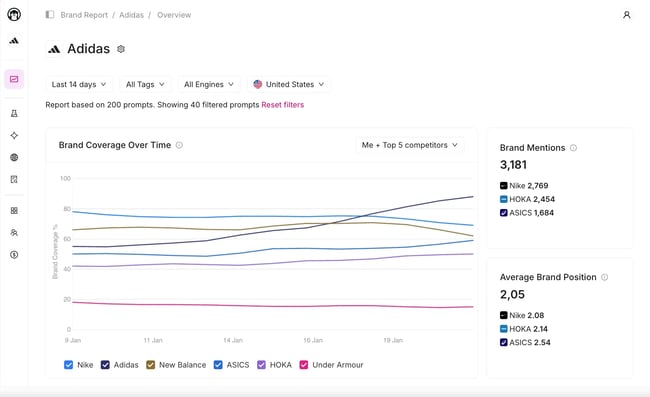
- HubSpot AEO: This standalone tool provides marketers with a clear view of their brand’s presence across major answer engines (ChatGPT, Gemini, Perplexity) and offers concrete recommendations for improving visibility. It tracks SOV at the prompt level, identifying where a brand appears, where competitors are recommended, and where the brand is absent. HubSpot AEO goes beyond reporting by translating data into prioritized, plain-language actions.
- HubSpot AEO in Marketing Hub: For a more integrated approach, the AEO features within HubSpot’s Marketing Hub Pro and Enterprise connect AI visibility directly to CRM records and attribution reporting. This allows teams to analyze the influence of AI SOV improvements on organic traffic, lead generation, and pipeline over time, making prompt suggestions and content recommendations highly data-driven.
- Semrush AI Visibility (Enterprise AIO): Semrush has significantly expanded its AI visibility offerings. Its Enterprise AIO feature monitors brand presence across key AI platforms, offers SOV analysis, and provides "Prompt Volume" data to help prioritize high-intent AI queries. This is particularly valuable for existing Semrush users looking to consolidate their SEO and AI optimization efforts.
- Ahrefs Brand Radar: This module tracks brand mentions in AI-generated answers and links them to backlink and authority signals, which are often drivers of AI citations. Its ability to track unlinked mentions across platforms like Reddit, TikTok, and YouTube is crucial, as these "human-first" platforms heavily influence LLM training data.
- Otterly.AI: A dedicated, purpose-built AI visibility platform, Otterly.AI tracks brand mentions and SOV across multiple AI platforms. It offers prompt-level benchmarking and a free tier, making it accessible for teams seeking a focused AI SOV solution.
- Profound: This enterprise-grade platform offers deep citation tracking, brand sentiment analysis, and, crucially, attribution from AI-generated traffic to the sales pipeline. Profound is designed for teams that need to demonstrate a direct return on investment for their AI visibility efforts.
Traditional Pillars of Visibility: SEO, Social, and PR Share of Voice
While AI SOV is a new frontier, the established channels of SEO, social media, and PR remain vital components of a holistic visibility strategy.
SEO Share of Voice: Capturing Organic Mindshare
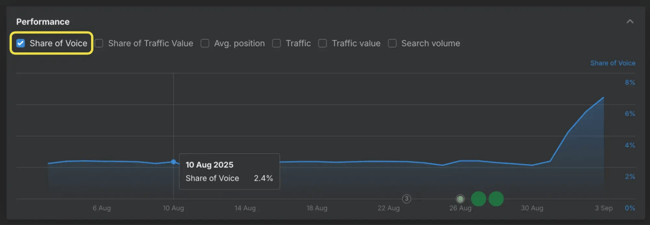
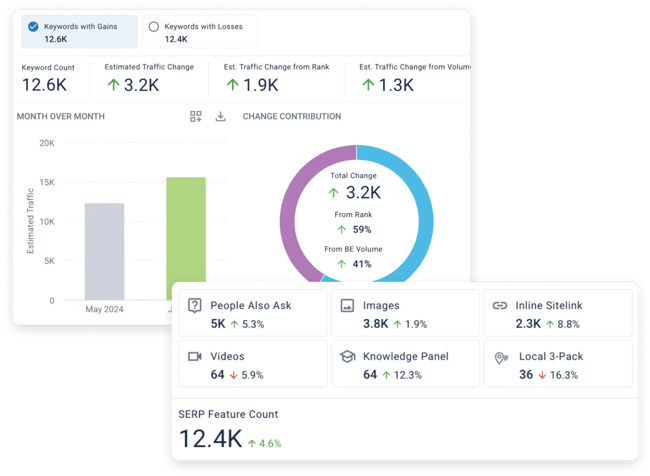
SEO share of voice tracks a brand’s relative organic visibility for a targeted set of keywords. It uses non-paid search visibility as its measurement base, quantifying the percentage of organic clicks or impressions a brand captures against the total available for its tracked keywords.
SEO SOV = (Estimated organic traffic for keyword set ÷ Total possible organic traffic for keyword set) × 100
For example, if a company’s tracked keywords generate 500,000 organic searches monthly, and its site is estimated to capture 75,000 clicks based on rankings and expected click-through rates, its SEO SOV is 15%. Aligning keywords with personas and funnel stages is crucial to ensure actionable insights. A rising SOV driven by top-of-funnel informational queries, while losing ground on high-intent, bottom-funnel terms, can be misleading. HubSpot Marketing Hub users can integrate SEO visibility data into their marketing analytics dashboards to correlate SOV trends with organic traffic and lead volume, demonstrating the ROI of organic investments.
Key SEO SOV Tools:
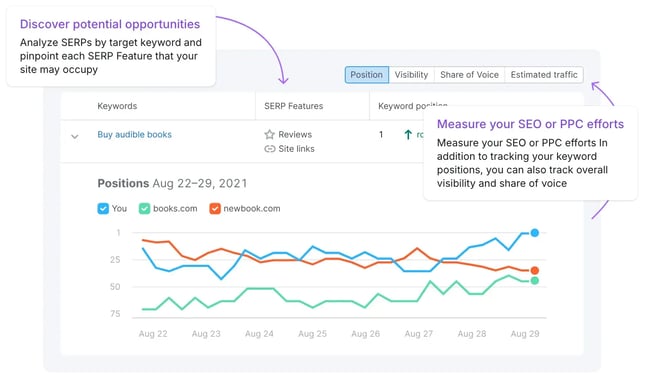
- Semrush Position Tracking: Offers comprehensive keyword tracking against competitors, including AI Overview detection. Known for its all-in-one SEO platform capabilities and daily rank updates.
- Ahrefs Rank Tracker: Provides a dedicated SOV metric based on total available clicks for tracked keywords. Its Brand Radar add-on extends to AI visibility. Strong for correlating SOV with link-based authority.
- Moz Pro: A less complex entry point for teams new to SEO SOV, offering solid competitor benchmarking and automated weekly reports, ideal for smaller teams.
- BrightEdge: An enterprise-grade platform, BrightEdge pioneered SOV capabilities for organic search and has integrated AI visibility tracking (AI Catalyst), connecting traditional SEO SOV with AI search citations. Its DataMind engine surfaces real-time SOV shifts and content recommendations.
Social Media Share of Voice: Real-time Engagement and Sentiment
Social media share of voice measures a brand’s proportion of mentions and conversation volume across selected social platforms relative to competitors.
Social SOV (%) = Your brand mentions ÷ Total market mentions × 100
This metric is highly responsive, reflecting the immediate impact of campaigns, PR events, or product releases, making it a valuable short-term campaign measurement tool. However, it may not fully capture platform coverage gaps (e.g., missing TikTok or Reddit data) or the nuances of sentiment quality (a spike in negative mentions can inflate SOV while damaging brand equity).
Key Social Media SOV Tools:

- Sprout Social: Offers social listening with sentiment analysis, influencer scoring, and trend detection. Its brand health monitoring tracks both volume and sentiment trajectory over time.
- Brandwatch: Provides advanced social and traditional media SOV tracking with AI-powered insights and custom dashboards, ideal for cross-channel coverage including news and forums.
- Brand24: Offers real-time media monitoring across blogs, forums, news, and social channels, with sentiment analysis and automated SOV reports. Includes an influencer scoring feature.
- Hootsuite Listening: Integrates social listening directly with publishing and scheduling workflows, making it a strong choice for teams managing both execution and measurement within one platform.
PR and Media Share of Voice: Amplifying Earned Credibility
PR and media share of voice measures earned media visibility by outlet, geography, message, and sentiment. It answers how much of the coverage in a brand’s category is about them, and how that compares to competitors. This type of SOV is often underutilized by growth marketing teams, who may overlook its significant influence on branded search volume, domain authority from press links, and overall category awareness, which in turn affect SEO and social SOV downstream. Leveraging PR SOV to identify competitor traction on specific topics, then cross-referencing with branded search volume in Google Trends, can inform proactive content or PR responses.
Key PR/Media SOV Tools:
- Meltwater: A leading media intelligence platform offering SOV tracking by outlet, geography, and message. Its features for journalist and outlet relationship management make it suitable for comms teams.
- Cision: Provides comprehensive PR monitoring, SOV tracking, and sentiment analysis across print, broadcast, and digital media, often favored by enterprise comms teams with stringent regulatory requirements.
- Brand24: Extends its media monitoring beyond social to news sites, blogs, and forums, offering a solid PR SOV use case for growing companies without requiring a full enterprise PR platform.
- Mention: Delivers real-time media monitoring across the web and social channels, with SOV tracking and competitor benchmarking at a more accessible price point for startups and early-stage teams.
Standardizing Measurement: Bridging Discrepancies and Ensuring Accuracy
A common source of confusion in SOV reporting arises when different tools present varying numbers for the same brand. These discrepancies typically stem from three main factors: differences in data sources (e.g., some tools track more social platforms than others), varying competitive sets (different tools might default to different competitor lists), and distinct methodologies for calculating visibility (e.g., estimated clicks vs. impressions for SEO).
None of these discrepancies necessarily mean a tool is "wrong." Instead, they highlight the critical need for marketers to standardize their measurements before benchmarking. A robust standardization checklist should include:
- Defining a consistent competitive set.
- Standardizing the tracked keyword set for SEO.
- Specifying the social platforms to be monitored.
- Agreeing on the methodology for calculating "mentions" or "visibility."
- Establishing a consistent reporting frequency.
Building a competitive analysis template upfront ensures that SOV measurements align with how a team already perceives the competitive landscape, preventing the common mistake of comparing apples to oranges quarter over quarter and mistaking data inconsistencies for "progress."
Beyond Visibility: Connecting Share of Voice to Market Share and Revenue
The ultimate value of SOV lies in its ability to inform business outcomes. However, SOV, Share of Market (SOM), and Share of Search (SOS) are frequently conflated, leading to misinformed strategic decisions.
- Share of Voice (SOV): Measures a brand’s visibility within a specific channel or market, indicating how often it is seen or mentioned relative to competitors.
- Share of Search (SOS): Represents a brand’s proportion of total searches within its category. Research from firms like Kantar consistently demonstrates a strong correlation between SOS and eventual market share shifts, often with a 6-12 month lead time. It’s a leading indicator of future market share.
- Share of Market (SOM): Measures a brand’s actual revenue portion within a defined category.
While distinct, these metrics are interconnected. Brands with an SOV consistently above their SOM tend to grow, signifying an "over-investment" in visibility relative to their current size. Conversely, brands with SOV below their SOM often experience market share contraction. The critical understanding is that SOV typically leads SOM by several months, acting as a predictive pipeline rather than an immediate reflection of revenue. HubSpot AEO and Marketing Hub AEO features complement traditional share of search analysis by not just tracking search volume but also how often a brand is recommended in AI-generated answers, which is crucial as discovery shifts from traditional search engines to answer engines.
Operationalizing SOV: A Growth System
To connect SOV to pipeline and revenue effectively, marketers need a comprehensive measurement framework:
- Visibility Layer (SOV): Track SOV across SEO, social, PR, and AI. This indicates brand presence and attention capture.
- Engagement Layer: Measure the quality of interactions driven by this visibility (e.g., website traffic, content downloads, social engagement rate, lead form submissions).
- Pipeline Layer: Quantify how engagement converts into qualified leads and opportunities in the CRM.
- Revenue Layer: Attribute closed-won deals and actual revenue back to the initial visibility and engagement points.
This four-layer framework, when integrated, transforms SOV from a static report into a dynamic growth system. Platforms like HubSpot Marketing Hub Pro and Enterprise are designed to facilitate this integration, connecting AI visibility data directly to CRM records and attribution reports, allowing teams to analyze the impact of SOV improvements on traffic, lead generation, and ultimately, revenue. Target-setting should be annual for SOV (e.g., "grow SEO SOV from 12% to 18% in core keyword cluster"), with monthly progress reviews. AI SOV, given its rapid evolution, may warrant quarterly reviews, while social and PR SOV benefit from weekly pulse checks during active campaigns and monthly for ongoing monitoring.
Strategic Implementation and Future Outlook
For teams initiating SOV measurement, a pragmatic approach is essential. The goal is to operationalize SOV without creating an overly complex research program.
Quick-start SOV checklist:
- Define a clear competitive set (3-5 direct competitors).
- Choose one SOV channel to start (e.g., SEO for organic growth, AI for future relevance).
- Select a primary tool for that channel (e.g., HubSpot AEO for AI SOV, Semrush for SEO SOV).
- Establish a baseline SOV score.
- Set a realistic target for improvement.
- Identify 1-2 key content or campaign initiatives to influence that SOV.
- Review results monthly and iterate.
The future of SOV lies in its continued convergence. As AI becomes more embedded in search and content discovery, the lines between SEO, social, and AI SOV will blur further. Tools that offer unified views and integrated analytics, like HubSpot AEO within Marketing Hub, will become indispensable for translating visibility gaps into actionable content, campaigns, and measurable pipeline impact within a single platform.
Frequently Asked Questions About Share of Voice Tools
What is the difference between share of voice and share of market?
Share of voice measures a brand’s visibility or presence within a channel or market relative to competitors. Share of market, conversely, quantifies a brand’s actual revenue portion within a defined category. While distinct, research indicates a strong correlation: brands with an SOV exceeding their SOM tend to grow, suggesting effective brand investment, whereas those with SOV below SOM often experience decline. SOV typically acts as a leading indicator, preceding SOM shifts by several months.
How do I increase share of voice without overspending?
High-leverage, lower-cost SOV channels include SEO and PR. A well-executed content strategy targeting high-intent keywords can generate compounding SEO SOV gains without continuous ad spend. For PR, executive thought leadership, such as bylines, podcast appearances, and speaking engagements, can earn media SOV cost-effectively. On social media, community building and consistent, authentic engagement often outperform sporadic, budget-intensive campaign pushes. The key for organic channels is patience, as gains are more durable, though slower to manifest than paid strategies.
Do I need a SOV tool, or can I build this in a spreadsheet?
While rudimentary SEO SOV can be manually approximated in a spreadsheet for very small keyword sets (under 50 keywords) and a limited number of competitors, it is highly time-intensive and quickly becomes unscalable. For social, PR, or AI SOV, manual tracking is impractical at any meaningful scale due to the volume and diversity of data sources. It is advisable to start with free baseline tools (e.g., HubSpot’s AEO Grader for AI SOV, Google Search Console for organic visibility) to identify channels with the most significant competitive gaps before investing in a paid platform.
How often should I refresh my AI SOV prompt set?
At a minimum, quarterly. However, refresh triggers should also include major AI platform updates (e.g., new model releases, changes to Google AI Overviews behavior), significant product launches or repositioning by the brand or key competitors, or any time the AI SOV score shifts more than 10 points between reviews. The rapid pace of AI model evolution means that prompt sets built even six months ago may no longer accurately reflect current buyer querying behavior.
Which share of voice tools fit startups vs. mid-market vs. enterprise?
- Startups: Focus on free or low-cost tools. Recommended tech stack: HubSpot AEO (free tier/standalone), Google Search Console, Google Trends, free social listening tools (e.g., TweetDeck).
- Mid-market: Add dedicated channel depth. Recommended tech stack: HubSpot AEO in Marketing Hub (Pro/Enterprise), Semrush (Position Tracking/Market Explorer), Sprout Social or Brand24, Mention.
- Enterprise: Prioritize platform consolidation and revenue attribution. Recommended tech stack: HubSpot AEO in Marketing Hub (Enterprise), BrightEdge or Cision, Brandwatch or Meltwater, Profound.
From Visibility to Revenue: Turning Share of Voice Into a Growth System
Share of voice is no longer a singular, isolated metric; it has evolved into a multi-layered, holistic view of a brand’s presence across diverse discovery channels – from traditional search and social media to the rapidly expanding domain of AI-driven answers. As this guide has demonstrated, the true strategic value of SOV is unlocked through consistency: defining a clear competitive landscape, standardizing measurement methodologies, and, critically, connecting visibility data to tangible business outcomes such as pipeline generation and revenue growth.

AI share of voice, in particular, is quickly becoming an indispensable addition to this measurement stack. Unlike traditional channels where visibility often correlates with rankings or impressions, AI visibility directly reflects whether a brand is actively recommended at the pivotal moments that shape buyer decisions. This paradigm shift elevates the importance of prompt strategy, content authority, and entity recognition to be on par with, if not surpass, traditional keyword rankings.
Tools such as HubSpot AEO empower brands to understand their standing in this new information landscape, while the integrated AEO features within Marketing Hub enable teams to act decisively on those insights. This integration allows for the direct connection of AI visibility to content execution, campaign performance, and CRM data, transforming SOV from a static report into a dynamic system for continuous optimization and measurable growth. The imperative for brands is clear: select a channel, establish a baseline, commence measurement, and progressively integrate additional SOV types – including AI – to cultivate a unified, actionable view of visibility and sustained business growth.