rifanmuazin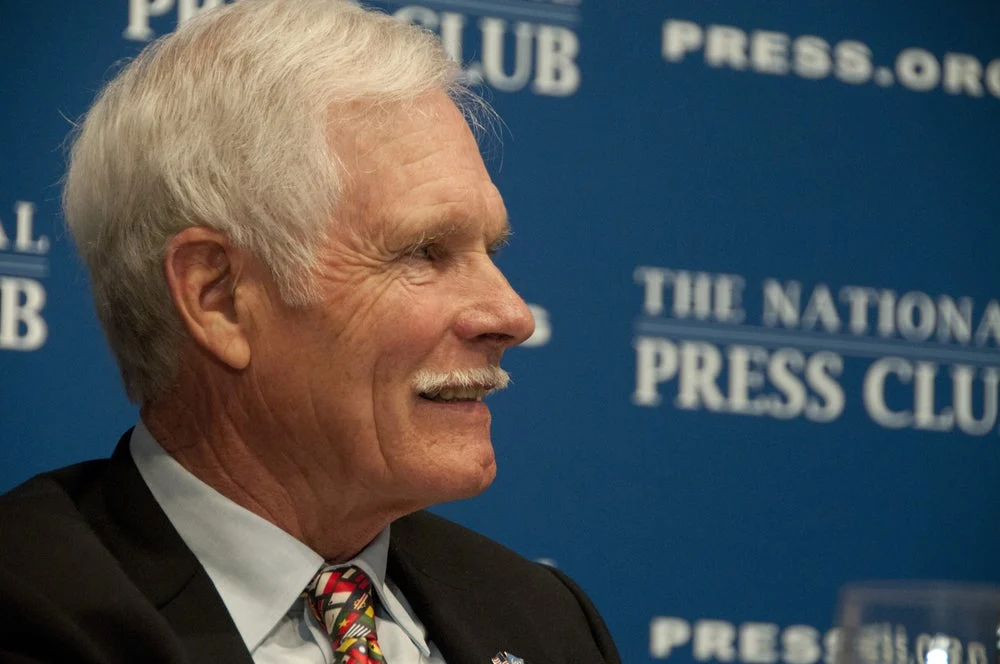
The global communications and media landscape underwent a seismic shift this week, marked by the passing of a revolutionary pioneer, the escalation of a major energy crisis, and a significant realignment in digital marketing platforms. The death of Robert Edward "Ted" Turner III at the age of 87 signals the end of an era for broadcast journalism, even as modern brands grapple with the real-world implications of a 50% surge in gasoline prices. Simultaneously, new data from the 2026 State of Video Report indicates that the infrastructure of corporate storytelling is moving away from traditional video giants toward professional networking platforms. These three developments, while disparate in nature, converge on a singular theme: the evolving power of strategic communication to shape public perception and corporate resilience in a volatile global economy.
The Passing of a Visionary: The Life and PR Legacy of Ted Turner
Ted Turner, the media maverick who fundamentally altered the global information flow by founding the Cable News Network (CNN), passed away on Wednesday at the age of 87. Turner’s death follows a prolonged battle with Lewy body dementia, a diagnosis he first shared with the public in 2018. His transition from a billboard salesman in Savannah, Georgia, to a global media mogul and philanthropist serves as a foundational case study for modern public relations and brand building.
Turner’s most significant contribution to the media landscape was the 1980 launch of CNN, the world’s first 24-hour news channel. At the time, industry incumbents dismissed the venture as the "Chicken Noodle Network," doubting that a round-the-clock news cycle could be either sustainable or profitable. Turner proved his detractors wrong, most notably during the 1991 Gulf War, when CNN’s live, on-the-ground reporting became the primary source of information for both the public and world leaders. This established the concept of "constant presence," a principle that remains a cornerstone of crisis communication and brand management today.
Beyond the newsroom, Turner transformed the Turner Broadcasting System into a multi-industry empire. He pioneered the "superstation" concept with WTBS, which broadcasted nationally via satellite, and launched staple networks including TBS, TNT, Cartoon Network, and Turner Classic Movies. His ownership of the Atlanta Braves and his victory in the 1977 America’s Cup yacht race cemented his status as a cultural icon. However, it was his commitment to the environment and philanthropy that defined his later years. Turner was once the largest private landowner in the United States, utilizing his vast holdings to lead the successful reintroduction of bison to the American West. His 1997 pledge of $1 billion to United Nations causes—representing nearly a third of his net worth at the time—remains one of the most significant acts of individual philanthropy in history.
Strategic Communication Takeaways from the Turner Era
For public relations professionals, Turner’s career offers a masterclass in "attention as currency." Michelle Bonner, a former CNN anchor and current PR executive, notes that Turner’s primary lesson was to "create the conversation—don’t wait to be invited into it." This proactive approach allowed Turner to define his own narrative, even when his "Mouth of the South" persona drew controversy.
Furthermore, Turner’s insistence on specific linguistic choices demonstrated the power of framing. He famously mandated that CNN use the word "international" instead of "foreign," a subtle but profound shift that positioned the network as a global entity rather than a domestic one looking outward. This inclusive perspective helped CNN gain traction in over 200 countries. In the realm of brand visibility, Turner’s habit of sitting in the stands at Atlanta Braves games rather than in a private box served as a visual testament to his brand’s accessibility. By being "strategically out front," he became the living embodiment of his assets, a tactic now mirrored by modern "celebrity CEOs."
Global Energy Crisis: Gas Prices and the Communications Stress Test
While the media world reflects on its history, the global economy is facing a contemporary crisis as gasoline prices reached a national average of $4.48 per gallon this week. This represents a 50% increase since the commencement of hostilities between the United States and Iran two months ago. The surge is primarily attributed to the effective closure of the Strait of Hormuz, a critical maritime artery through which approximately 20% of the world’s petroleum passes.
The International Energy Agency (IEA) has categorized this as the most significant supply disruption in the history of global oil markets. Crude oil prices have spiked to $112 a barrel, exacerbated by the U.S. administration’s efforts to block Iranian ports. Although a brief diplomatic opening in mid-April provided a temporary respite, the resumption of conflict has dashed hopes for a near-term correction. Economic analysts suggest that even a swift resolution to the war would not immediately lower prices at the pump, as shipping insurers are expected to maintain high-risk premiums for the region for the foreseeable future.
Managing Brand Trust Amidst Economic Volatility
For corporations, the rise in energy costs is more than a logistical challenge; it is a communication minefield. Because fuel costs impact the entire supply chain—from manufacturing to last-mile delivery—consumers are feeling the pinch not just at the gas station, but at the grocery store and in their utility bills.
Communications experts warn that "silence is the enemy of trust" during such periods. Nicole Tidei, Vice President at Pinkston, argues that the most significant mistake a brand can make is ignoring the financial pressure on its customer base. Transparent communication regarding why prices are rising and what the company is doing to mitigate those costs is essential. Brands that adopt a tone of stability and empathy, rather than opportunism, are more likely to retain customer loyalty. This "communications stress test" requires a unified front between HR, operations, and marketing to ensure that internal stakeholders and external customers receive a consistent message regarding the company’s economic health and pricing strategies.
The B2B Shift: LinkedIn Surpasses YouTube in Video Marketing
As global events dominate the headlines, a quieter revolution is occurring in the digital space. According to the 2026 State of Video Report released by Wistia, LinkedIn has officially dethroned YouTube as the primary video channel for B2B marketers. The report, which analyzed data from over 900 marketing professionals and 13 million videos, highlights a fundamental shift in how professional content is consumed.
The data reveals that social engagement with video content has nearly doubled over the last 24 months, rising from 12% to 22%. This indicates that B2B audiences are no longer looking for passive viewing experiences; they are seeking interactive, community-driven content. While YouTube remains a powerhouse for B2C and entertainment, its "reach-and-impression" model is being overshadowed by LinkedIn’s high-intent professional environment.
The Rise of In-House Production and AI Integration
The report also identifies two critical trends in content creation: the democratization of video production and the integration of Artificial Intelligence (AI). There has been a significant increase in non-video professionals—such as executives, sales leads, and subject matter experts—getting directly involved in the production of video content. This shift toward "raw" and "authentic" video is particularly effective on LinkedIn, where "thought leadership" often carries more weight than high-gloss commercials.
To keep up with the demand for constant content, in-house teams are increasingly leaning on AI tools to streamline editing, captioning, and distribution. This has allowed smaller teams to compete with larger agencies in terms of output volume. For B2B communication teams, the takeaway is clear: the "main stage" for corporate storytelling has moved. Success in 2026 is measured not by how many people saw a video, but by the quality of the professional engagement it generated.
Synthesis: The Intersection of Legacy, Crisis, and Innovation
The events of this week provide a comprehensive look at the challenges and opportunities facing the modern communicator. The legacy of Ted Turner serves as a reminder that bold, consistent storytelling can build empires that last decades. His life’s work demonstrates that media is not just a reflection of reality, but a tool for shaping it—whether through 24-hour news or global philanthropy.
However, the current energy crisis serves as a grounding reminder that external geopolitical forces can disrupt even the most well-crafted brand narratives. In times of economic strain, the "boldness" of a Turner-esque figure must be balanced with the "empathy and transparency" required to maintain consumer trust. The shift in video platforms further complicates this, suggesting that the channels through which these messages are delivered are in a state of constant flux.
As the industry moves forward, the integration of these lessons will be paramount. The transition from YouTube to LinkedIn for B2B video reflects a broader move toward niche, high-value communication. Similarly, the lessons learned from Turner’s "constant presence" are being applied in real-time by brands navigating the gas price surge. In an era defined by rapid technological change and global instability, the fundamentals of effective communication—authenticity, visibility, and strategic adaptation—remain as relevant as they were when the first CNN broadcast went live in 1980.