rifanmuazin
The global mobile application market, currently valued at hundreds of billions of dollars with over five million apps available across major digital storefronts, has reached a point of saturation where user retention is the primary driver of commercial success. While mobile app professionals have long relied on analytics to navigate this competitive landscape, industry experts are identifying a systemic flaw in traditional data workflows. The prevailing reliance on quantitative analytics—the numerical measurement of user actions—provides a robust framework for understanding "what" is happening within an app, but it consistently fails to explain the "why." To address this intelligence gap, a new paradigm of qualitative analytics is being integrated into the standard development lifecycle, offering a more granular view of user behavior through tools such as touch heatmaps and session recordings.
The Quantitative Ceiling in Modern App Development
For the past decade, the standard operating procedure for app optimization has centered on quantitative metrics. These data points include Daily Active Users (DAU), churn rates, session length, and conversion funnels. This data is essential for identifying high-level trends and systemic failures. For instance, a quantitative dashboard can accurately report that 40% of users abandon a registration form at the third field, or that a specific update led to a 15% increase in app crashes on older hardware.
However, quantitative data operates within a vacuum of context. It can signal that a problem exists, acting as an alarm system, but it cannot diagnose the underlying friction. When a developer sees a high abandonment rate on a checkout page, the numbers do not indicate whether the "Purchase" button is difficult to find, if a UI element is overlapping a text field, or if the user is experiencing technical lag that prevents the keyboard from appearing. This limitation often leads to a "trial and error" approach to optimization, where development teams implement changes based on hypotheses rather than evidence, potentially wasting resources and further alienating the user base.
The Qualitative Shift: A Chronology of Analytics Evolution
The transition toward qualitative insights represents the third major era in digital tracking. The first era, beginning in the late 2000s, focused on basic web-based metrics adapted for mobile. The second era saw the rise of sophisticated mobile-first event tracking, where every click and swipe was logged as a data point. The current third era, which gained significant momentum around 2017, prioritizes the "user experience (UX) narrative."
Qualitative analytics tools, such as those pioneered by platforms like Appsee and subsequent market leaders, allow professionals to observe the app through the eyes of the user. This shift is driven by the increasing complexity of mobile interfaces and the rising expectations of consumers. In a market where 25% of apps are used only once before being deleted, the margin for error in UX design has narrowed significantly.
Defining the Qualitative Toolkit: Heatmaps and Session Recordings
The integration of qualitative analytics relies on two foundational technologies: touch heatmaps and user session recordings. Each provides a unique layer of insight into the physical and psychological interactions between a human and a device.
Touch Heatmaps: Visualizing User Intent
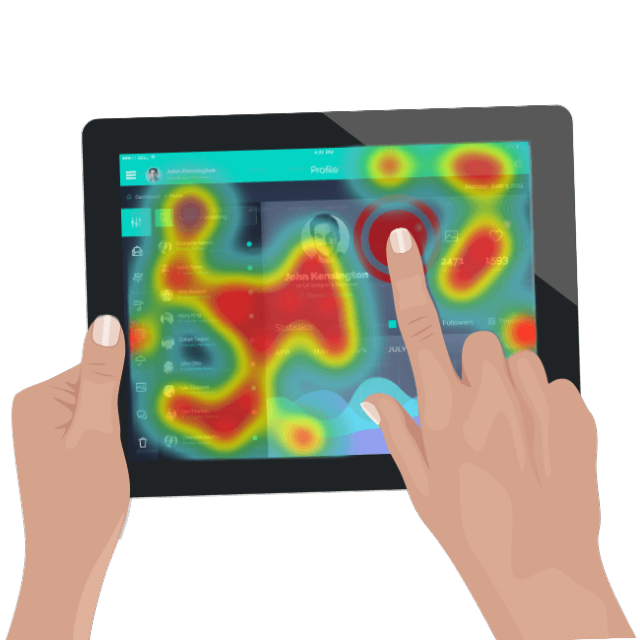
Touch heatmaps aggregate every gesture performed by a user base—including taps, double-taps, swipes, and pinches—and project them as a color-coded overlay on the app’s interface. Areas with high interaction density appear "hot," while ignored areas remain "cold."
A critical sub-metric within this technology is the "unresponsive gesture." This occurs when a user interacts with an element that they believe should be interactive, but the app provides no response. Industry data suggests that unresponsive gestures are among the leading causes of user frustration. By analyzing heatmaps, designers can identify if users are attempting to click on a non-linked image or if a navigation button is too small for the average thumb size. This allows for an intuitive redesign that aligns the app’s functionality with the user’s natural instincts.
User Session Recordings: The Digital Mirror
User session recordings provide a real-time video reproduction of a user’s journey through the application. Unlike traditional screen recording, these tools often capture technical events in the background, such as API calls or memory spikes, alongside the visual interaction.
This tool is vital for identifying the "path of most resistance." For example, a developer might observe a user repeatedly attempting to scroll past a video that refuses to load, or a user becoming trapped in a loop between two navigation screens. By viewing these sessions, product managers gain an unbiased, unaltered view of the user experience, bypassing the need for expensive and often biased focus groups.
Strategic Workflows: Data-Fueled Optimization
The most effective analytics workflows today utilize a hybrid approach, combining quantitative "alarms" with qualitative "investigations." This process, often referred to as data-fueled optimization, follows a three-step cycle: Alert, Investigate, and Resolve.
- Alert (Quantitative): The analytics team notices a sudden drop in the conversion rate for the "Premium Subscription" screen.
- Investigate (Qualitative): The team filters session recordings for users who reached that specific screen but did not convert. They observe that on certain screen resolutions, the "Subscribe" button is pushed below the fold, making it invisible to the user.
- Resolve (Implementation): The UI is adjusted to ensure the call-to-action is visible across all device types.
Without the qualitative step, the team might have assumed the price was too high or the copy was unconvincing, leading them to change the business model or the marketing strategy when the actual issue was a simple layout error.
Proactive Troubleshooting and Technical Integrity
Beyond UI/UX optimization, qualitative analytics has transformed the field of technical troubleshooting. Traditional bug reporting relies on users submitting tickets—a rare occurrence—or automated crash logs that may not capture the sequence of events leading to a failure.
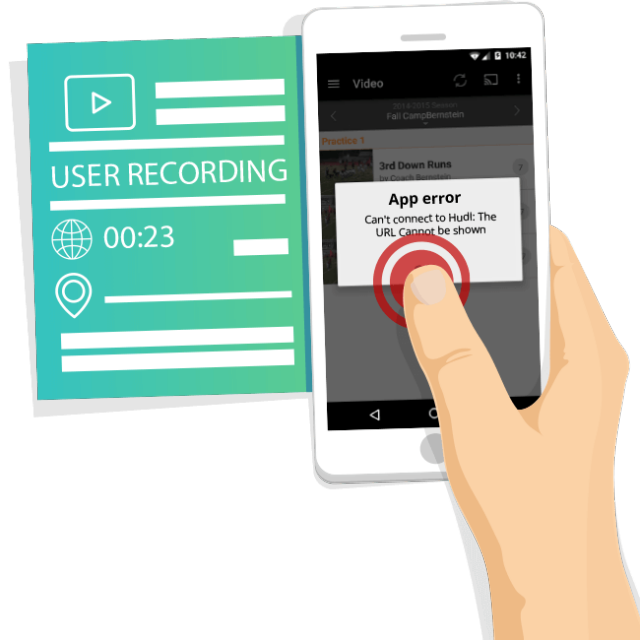
Proactive troubleshooting allows developers to identify "near-misses"—instances where the app did not crash but performed poorly enough to cause the user to quit. By watching session recordings of "rage quits" (where a user taps the screen rapidly in frustration before closing the app), developers can spot logic errors or slow-loading elements before they escalate into a widespread loss of the user base. This proactive stance is essential for maintaining high ratings in the Apple App Store and Google Play Store, where technical stability is a key ranking factor for organic discovery.
The Broader Impact on the App Economy
The shift toward qualitative insights has significant economic implications for the SaaS (Software as a Service) and mobile commerce sectors. According to recent industry reports, the cost of acquiring a new mobile user has increased by over 30% year-over-year. In this high-cost environment, the "leaky bucket" syndrome—where marketing spend brings in users who immediately leave due to poor UX—can be fatal for startups.
By utilizing qualitative data to improve retention, companies can significantly increase the Lifetime Value (LTV) of their customers. Furthermore, the integration of these tools reduces the "Time to Resolution" for technical issues, allowing engineering teams to focus on feature development rather than endless bug hunting.
Ethical Considerations and the Future of Privacy
As qualitative analytics becomes more prevalent, the industry has had to navigate complex privacy concerns. The ability to record user sessions raises questions about the handling of Sensitive Personal Information (SPI), such as passwords or credit card numbers.
Modern qualitative tools have addressed this by implementing "occlusion" or "masking" technologies. These features automatically black out sensitive input fields in the recordings, ensuring that no private data is ever transmitted to or stored on the analytics servers. As global regulations like the GDPR (General Data Protection Regulation) and CCPA (California Consumer Privacy Act) continue to evolve, the ability of analytics providers to offer "privacy-by-design" will be a deciding factor in their market adoption.
Conclusion: The Holistic Path to App Success
The maturation of the mobile app industry has rendered one-dimensional analytics obsolete. The "flaw" identified by mobile professionals is not the use of numbers, but the exclusion of behavior. By incorporating qualitative analytics into the standard workflow, development teams can move beyond guesswork and develop a profound understanding of their audience.
The combination of quantitative data’s breadth and qualitative data’s depth creates a holistic view of the digital product. As artificial intelligence begins to enter the space—offering automated analysis of session recordings to highlight friction points without human intervention—the gap between developer intent and user experience will continue to close. In the modern mobile landscape, the winners will be those who not only know what their users are doing but also possess the insight to understand why they are doing it.