
 rifanmuazin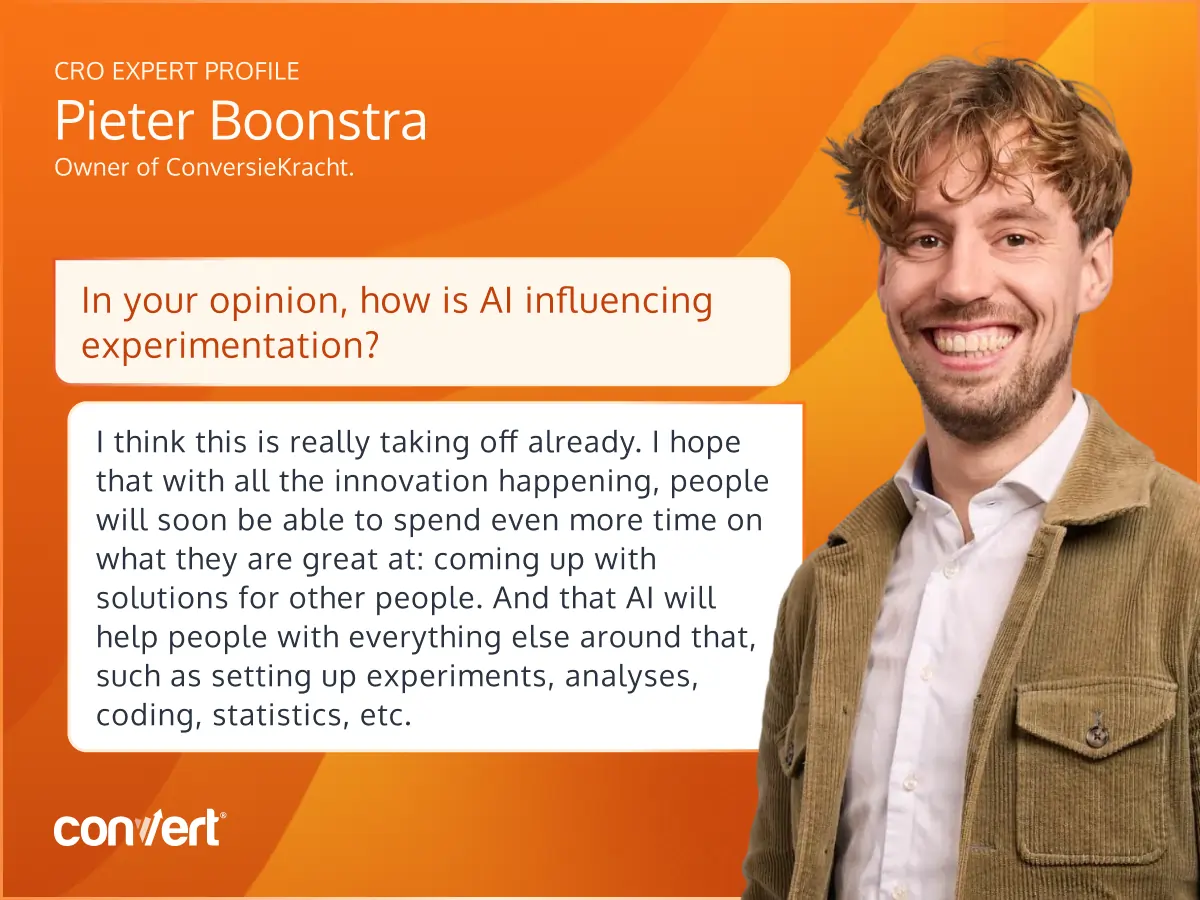
The landscape of digital marketing has shifted from speculative creative work to a rigorous, data-driven discipline known as Conversion Rate Optimization (CRO). At the forefront of this movement in Northern Europe is Pieter Boonstra, the founder and owner of ConversieKracht, currently recognized as the fastest-growing CRO agency in the Netherlands. Boonstra’s approach to experimentation transcends simple A/B testing, focusing instead on the intersection of consumer psychology, operational efficiency, and measurable business growth. By moving beyond the surface-level metrics of clicks and views, Boonstra and his team are redefining how companies interact with their customers and how they structure their internal growth departments.
The Genesis of a Data-Driven Career
The trajectory of Pieter Boonstra’s career reflects the broader evolution of the marketing industry. While studying marketing at the university level, Boonstra was immersed in the theoretical frameworks of consumer psychology and behavioral economics. Unlike traditional marketing paths that often rely on intuition, Boonstra sought a way to validate these academic theories in real-time environments.
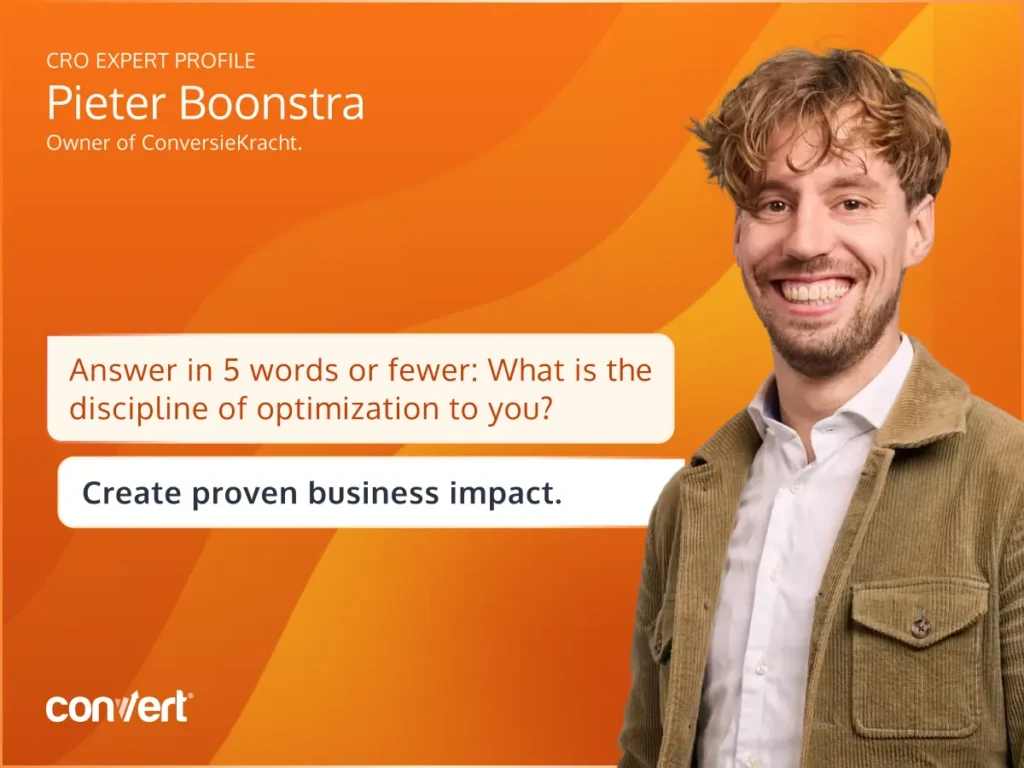
During his studies, Boonstra managed freelance marketing projects for several e-commerce platforms. This period coincided with the rise of accessible testing tools, most notably Google Optimize. By applying the psychological principles he learned in the classroom to the live webshops of his clients, Boonstra began a series of experiments that would eventually form the foundation of ConversieKracht. His early work focused on the "why" behind consumer actions—investigating why a user chooses one product over another or why a specific checkout flow causes friction. This blend of academic rigor and practical application allowed him to move past vanity metrics and focus on what he defines as the core of optimization: creating proven business impact.

Defining Optimization in a Competitive Market
When asked to distill the essence of his discipline, Boonstra characterizes optimization as the ability to "create proven business impact." This definition marks a departure from the traditional view of CRO as a mere subset of web design or UX. In Boonstra’s view, optimization is a holistic business strategy. It requires a deep understanding of the entire value chain, from the moment a user lands on a site to the physical logistics of delivering the product.
In the current economic climate, where customer acquisition costs (CAC) are rising across almost every digital channel, the role of the optimizer has become more critical. Companies can no longer afford to waste traffic. Every visitor represents a financial investment, and the goal of CRO is to ensure that the investment yields the highest possible return. For Boonstra, this means that every experiment must be designed with a clear hypothesis and a direct link to the company’s bottom line.
The Role of Artificial Intelligence in Experimentation
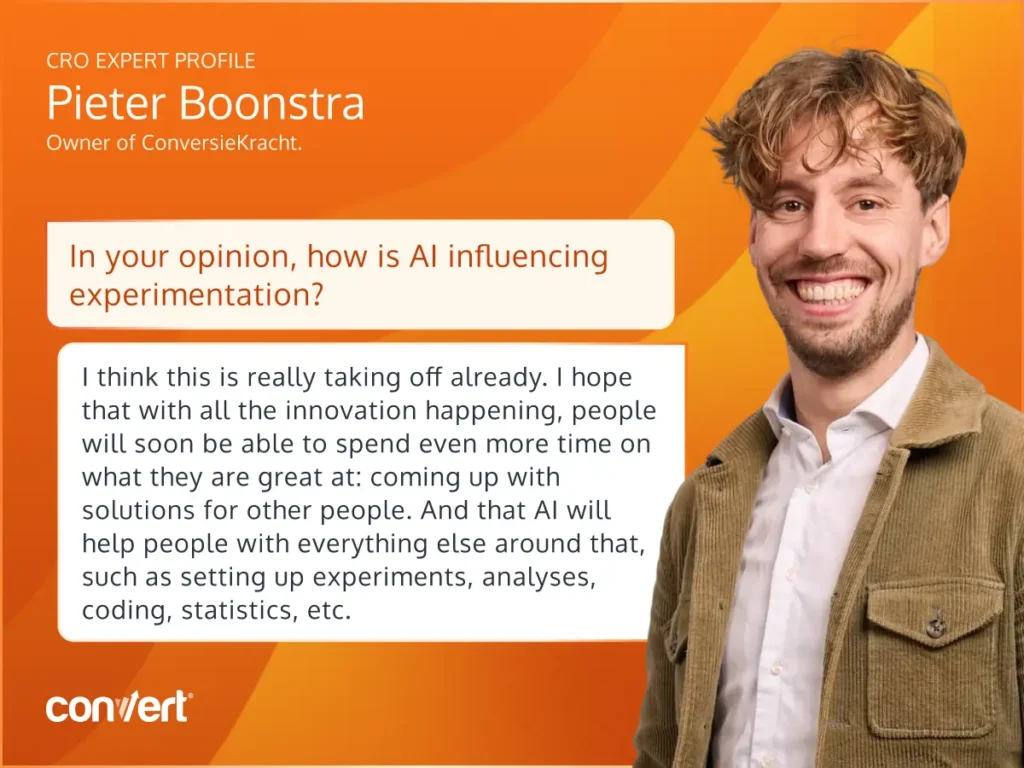
The integration of Artificial Intelligence (AI) is perhaps the most significant technological shift currently affecting the experimentation space. Boonstra observes that the industry is at a tipping point where AI is no longer a futuristic concept but a daily operational tool. He anticipates that AI will soon handle the "heavy lifting" of experimentation—tasks such as writing code for test variants, performing complex statistical analyses, and automating the setup of experiments.
However, Boonstra emphasizes that the rise of AI does not diminish the need for human expertise. On the contrary, it elevates the importance of the human "solution-seeker." As AI takes over the technical execution, optimizers will be freed to spend more time on high-level strategy, such as identifying latent customer needs and developing creative solutions to complex behavioral problems. The future of the field, according to Boonstra, lies in the synergy between machine efficiency and human empathy.

Bridging the Gap: Marketing and Production Integration
One of the most profound insights shared by Boonstra involves the organizational structure of successful companies. He notes that the fastest-growing organizations are those where the marketing and production departments share joint responsibility for results. This integration breaks down traditional silos that often hinder growth.
In many companies, marketing is focused on driving traffic and top-of-funnel conversions, while production and logistics focus on fulfillment and cost-saving. When these departments work in isolation, they often miss opportunities for "full-funnel" optimization. Boonstra’s work with ConversieKracht highlights the benefits of a unified approach, where data from the factory floor can inform marketing strategies on the website, and vice versa.
Case Study 1: Operational Efficiency through Marketing
A primary example of this integrated approach is an experiment Boonstra conducted for a client specializing in organic soups. While touring the client’s production facility, Boonstra observed a significant bottleneck in the packaging department. The soups were manufactured and boxed in units of six. However, because the webshop allowed customers to order any quantity, workers spent a substantial amount of time tearing open pre-packed boxes to fulfill orders for two, four, or seven jars.
Recognizing an opportunity to align consumer behavior with operational efficiency, Boonstra’s team designed an experiment. They introduced a small discount for customers who ordered in multiples of six (6, 12, or 24 jars). The results were twofold:
- Revenue Growth: The client saw a 60% increase in revenue per customer as visitors were incentivized to buy in bulk.
- Operational Savings: A significant portion of orders could now be shipped directly from the factory line without the need for manual repacking, drastically reducing labor costs and shipping errors.
This case study illustrates that true optimization often happens at the intersection of the digital interface and the physical supply chain.
Case Study 2: Identifying the "Aha Moment"
Another successful experiment involved a company selling high-fiber protein bars. Through extensive user research, Boonstra identified that the primary driver of customer loyalty was the product’s taste. Once a customer tasted the bar, they were highly likely to become a repeat buyer. However, research also revealed a friction point: some customers felt the bars were too large and would cut them in half to avoid feeling over-saturated.
To solve this, Boonstra and the client developed a "tasting box" featuring the five best-selling flavors, but with the bars manufactured at half their original size. They tested the promotion of this tasting box on the homepage against the standard product offerings.
The results validated the hypothesis:
- Conversion Uplift: The tasting box led to a 15% increase in purchases among new visitors.
- Customer Lifetime Value (LTV): Follow-up data showed that customers who started with the tasting box had a repeat purchase rate equal to those who bought full-sized products.
By lowering the barrier to entry and solving a portion-size concern, the company was able to acquire high-value customers more efficiently.
Data-Backed Analysis: The State of CRO in 2024
The success stories shared by Boonstra are supported by broader industry trends. Recent data suggests that companies with a "mature" experimentation culture—defined as those running more than 30 tests per month—see an average of 2.5 times higher conversion rates than those that test sporadically. Furthermore, the shift toward "Product-Led Growth" (PLG) has made A/B testing a standard requirement for product managers, not just marketers.
In the Netherlands specifically, the CRO market has become one of the most sophisticated in the world. With global giants like Booking.com and Adyen headquartered in the region, a culture of rigorous testing has permeated the local ecosystem. Boonstra’s ConversieKracht is a product of this environment, where data is viewed as the ultimate arbiter of truth.
Broader Implications and the Future of the Optimizer
As the discipline of optimization continues to mature, the role of the "optimizer" is likely to evolve. Boonstra suggests that we are moving toward a model where experimentation is embedded in every department rather than functioning as an independent unit. Whether it is a growth team, a product team, or a customer success team, the ability to formulate a hypothesis and test it will become a core competency for all digital professionals.

The implications for business strategy are clear: the era of the "HiPPO" (Highest Paid Person’s Opinion) is coming to an end. In its place is a more democratic, evidence-based approach to decision-making. Companies that embrace this shift are better positioned to navigate market volatility and changing consumer preferences.
Conclusion: The Impact of a Proven Methodology
Pieter Boonstra’s insights serve as a blueprint for the modern digital enterprise. By focusing on "proven business impact," leveraging AI for technical tasks, and integrating marketing with operational realities, businesses can achieve sustainable growth. The success of ConversieKracht demonstrates that when consumer psychology is applied with scientific rigor, the results extend far beyond the website, influencing the very way products are manufactured, packaged, and sold. As the industry moves forward, the lessons from the Dutch CRO scene—and leaders like Boonstra—will continue to influence the global standard for digital excellence.








