
 rifanmuazin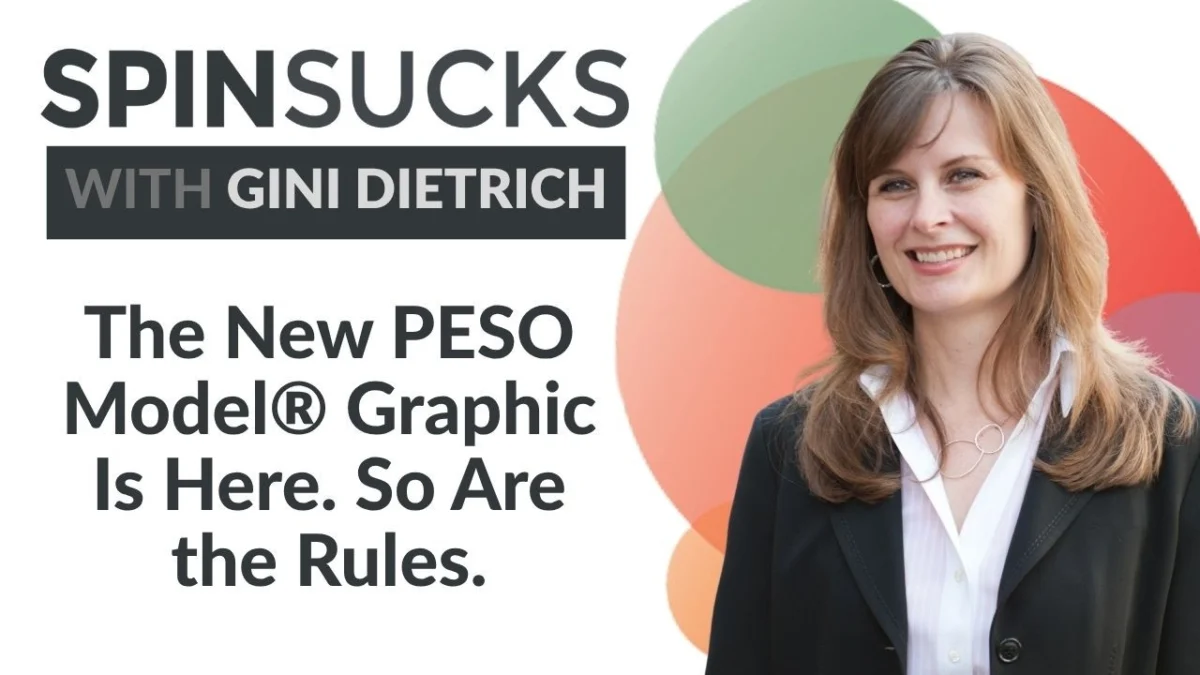
The marketing and communications industry is witnessing a significant structural shift as Spin Sucks, the architect of the PESO Model®, officially unveils a comprehensive refresh of its foundational framework. This update marks a transition from a tactical and strategic overview to an outcome-based operating system designed to meet the demands of a modern, AI-driven media landscape. For more than a decade, the PESO Model—representing Paid, Earned, Shared, and Owned media—has served as the global standard for integrated communications. However, the 2026 update introduces a more rigorous focus on measurable results, specifically Authority, Credibility, Discovery, and Growth, while simultaneously implementing stricter intellectual property (IP) protections to combat widespread industry plagiarism.
The Chronological Evolution of an Industry Standard
The PESO Model was first introduced by Gini Dietrich in 2014 through her book, Spin Sucks: Communication and Reputation Management in the Digital Age. At its inception, the framework was designed to help public relations professionals move beyond traditional media relations and embrace the burgeoning digital ecosystem.
In its earliest iteration, the model was primarily tactical. It focused on specific platforms and delivery mechanisms that were relevant at the time, such as news releases, blog posts, and now-defunct platforms like Google+ and Vine. As the digital landscape matured, the model underwent its first major refresh to remove platform-specific references, focusing instead on the actions and tactics themselves. This version was widely adopted but, according to Spin Sucks, was often misinterpreted as a purely tactical checklist rather than a high-level strategy.
Two years ago, the framework was updated again to emphasize strategic integration. This version utilized four interlocking circles to demonstrate that the four media types were not siloed disciplines but rather mutually reinforcing components of a single communications strategy. Despite its success, the rise of artificial intelligence, changing consumer behavior, and the increasing demand for marketing to show direct contributions to business valuation necessitated a third major evolution. The 2026 refresh represents this shift, moving from the “how” (strategy) to the “what” (outcomes).
Addressing the Crisis of Intellectual Property and Plagiarism
A primary driver behind the 2026 refresh is the need to protect the PESO Model® as a registered trademark. Over the last 12 years, the framework has become so ubiquitous that it has often been treated as “infrastructure” or public domain material. Spin Sucks reports a significant increase in unauthorized commercial use, with large global agencies, educational institutions, and software providers repackaging the model into paid courses, books, and commercial training programs without attribution or licensing.
The organization noted that while non-commercial use by students, professors, and internal communications teams is encouraged with proper attribution, the line has been crossed by entities selling the framework as their own proprietary intellectual property. This dilution of the brand not only affects the original creator but also creates confusion in the marketplace. When multiple entities teach different, unauthorized versions of the model, the industry loses a unified standard, leading to fragmented strategies and diminished results for clients.
To rectify this, Spin Sucks has formalized a new licensing structure. While the new graphic remains free to download for non-commercial use—provided users agree to specific terms of service and provide correct attribution—any use that generates revenue now requires a commercial license. This includes paid workshops, books, software integrations, and speaking engagements where the model is taught for a fee.
The Four Pillars of the Outcome-Based Framework
The 2026 PESO Model graphic is organized around four core outcomes that represent the ultimate goal of each media type. This shift reflects the modern boardroom’s focus on tangible business impacts rather than vanity metrics like “impressions” or “likes.”
1. Authority (Owned Media)
Owned media, which includes content created and controlled by the brand such as websites and newsletters, is now explicitly tied to the outcome of Authority. In an information environment saturated with AI-generated content, establishing a brand as a definitive authority in its niche is critical for maintaining trust and search engine relevance.
2. Credibility (Earned Media)
Earned media, or traditional media relations and third-party endorsements, remains the primary driver of Credibility. As consumer skepticism toward advertising grows, the validation provided by reputable third-party sources remains a cornerstone of the communications mix.
3. Discovery (Shared Media)
Shared media, encompassing social media and community engagement, is focused on Discovery. This pillar addresses how brands surface in the algorithms of social platforms and, increasingly, in the “answer engines” of AI platforms like Perplexity and OpenAI’s SearchGPT.
4. Growth (Paid Media)
Paid media is directly linked to Growth. This involves the use of advertising and sponsored content to scale reach, drive lead generation, and contribute to the bottom line. By categorizing paid media under “Growth,” the model emphasizes that advertising should be a performance-driven investment rather than a generic awareness play.
The Compound Effect: Analyzing the Six Overlaps
While the four pillars provide the foundation, the true power of the updated PESO Model lies in the overlaps between the media types. These intersections represent compound outcomes that occur when different media channels are integrated effectively.
- Trust (Owned + Earned): When a brand’s own authoritative content is validated by third-party media coverage, it creates a foundation of trust that is difficult for competitors to replicate.
- Visibility (Earned + Shared): When third-party endorsements are amplified through social sharing and community engagement, the brand achieves high-level visibility that transcends traditional media cycles.
- Conversion (Shared + Paid): The integration of social proof with targeted advertising creates a powerful engine for conversion, moving prospects from the discovery phase to the purchasing phase.
- Awareness (Paid + Owned): Using paid channels to promote owned content ensures that a brand’s authoritative voice reaches a wider audience, building broad-based awareness.
- Authority (Owned + Shared): When a brand’s content is frequently shared and cited by its community, it reinforces its position as an industry leader.
- Lead Generation (Earned + Paid): Leveraging the credibility of earned media within paid advertising campaigns significantly enhances the effectiveness of lead generation efforts.
At the center of the graphic, where all four circles overlap, lies the “Operating System.” This represents the state in which all integrations run simultaneously, creating a compounding effect that drives pipeline, retention, and business valuation.
Implications for AI and the Future of Search
The 2026 update arrives at a critical juncture for the communications industry, as generative AI fundamentally changes how information is consumed. Traditional search engines are being augmented or replaced by AI answer engines that synthesize information from across the web to provide direct answers to user queries.
In this “answer engine” environment, the dilution of a brand’s message is a significant risk. If multiple versions of a framework or brand story exist online due to plagiarism or inconsistent application, AI models may surface inaccurate or outdated information. By consolidating the PESO Model under a strict licensing and attribution framework, Spin Sucks aims to ensure that the “authoritative” version of the model remains the dominant one in AI training sets.
Furthermore, the focus on “Authority” and “Credibility” within the model aligns with the E-E-A-T (Experience, Expertise, Authoritativeness, and Trustworthiness) guidelines used by search engines to rank content. For communications professionals, the updated model serves as a roadmap for navigating an environment where being “discoverable” requires more than just keywords—it requires a holistic, integrated presence across all four media types.
Industry Reactions and the Path to Certification
The move toward stricter licensing has sparked discussion within the marketing community. Industry analysts suggest that this move reflects a broader trend of “IP-fencing” in the digital age, where creators are no longer willing to allow their work to be used as free training data for AI or as uncredited templates for large agencies.
To facilitate professional adoption, Spin Sucks has promoted its PESO Model Certification® program, credentialed through the Newhouse School of Public Communications at Syracuse University. This certification is positioned as the “cleanest path” for professionals who wish to use the model commercially. It grants the necessary rights for commercial use while ensuring that practitioners are trained to implement the model as a comprehensive operating system rather than a tactical checklist.
Conclusion: A New Standard for Integrated Communications
The 2026 refresh of the PESO Model® is more than a visual update; it is a strategic realignment of the communications profession. By shifting the focus to outcomes and formalizing intellectual property rights, Spin Sucks is challenging the industry to move toward a more disciplined, measurable, and integrated approach.
As the lines between marketing, PR, and digital strategy continue to blur, the PESO Model remains a vital framework for navigating complexity. The new emphasis on Authority, Credibility, Discovery, and Growth provides a clear language for communicators to use when reporting to executive leadership, ensuring that the value of integrated media is understood in the context of business growth and long-term sustainability. The rollout of this update, supported by a six-part educational series, marks a new chapter for a framework that has already defined a generation of marketing and communications strategy.










