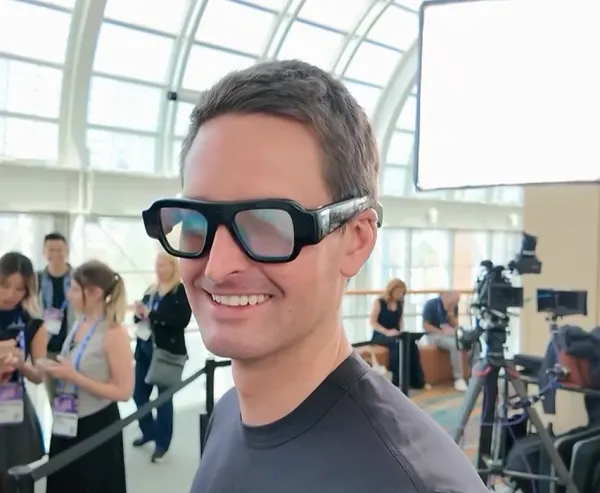
Snap Inc., the company behind the popular social media platform Snapchat, has officially launched its highly anticipated Specs augmented reality (AR) glasses, marking a significant entry into the evolving landscape of wearable computing and interactive digital experiences. This strategic move positions Snap as a key player in the race to define the next generation of personal technology, challenging established giants and promising a new paradigm for how users interact with digital content in the real world. The introduction of Specs represents a pivotal moment for Snap, signaling its ambition to transcend its social media roots and become a formidable hardware innovator in the burgeoning AR sector.
A New Frontier in Wearable Computing: Standalone AR Experience
Specs distinguish themselves by offering a fully standalone AR experience, with all necessary computing power and processing capabilities meticulously integrated directly into the device itself. This design philosophy represents a distinct approach compared to some competitors and addresses a fundamental challenge in making AR devices truly portable and immersive. By embedding the entire system within the glasses, Snap aims to provide users with an untethered and seamless interaction, free from external cables or accompanying devices.
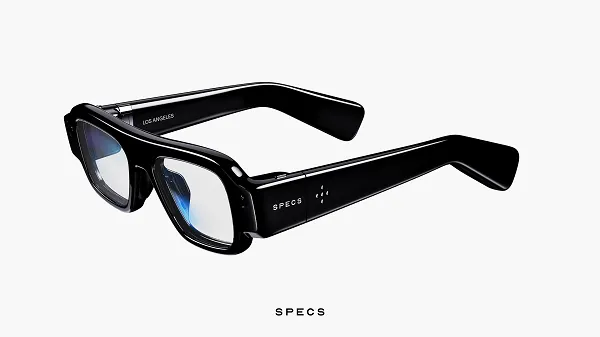
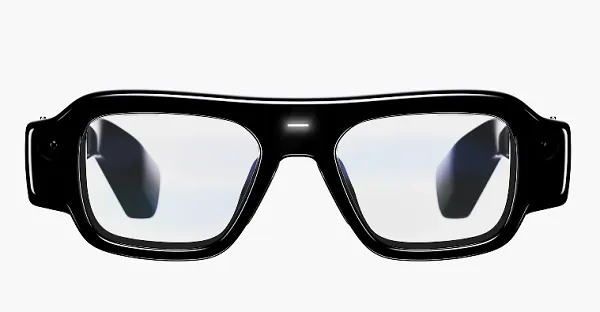
This integrated design choice, while offering ultimate portability and a streamlined user experience, inherently influences the physical characteristics of the glasses. Specs are noticeably chunkier than initial prototypes of rival AR devices, such as those anticipated from Meta. Meta, another major contender in the AR space, has indicated plans to launch its AR device with an accompanying “compute puck” – a separate, pocketable processing unit that would need to be carried by the user while wearing the glasses. This fundamental difference in architectural design highlights the contrasting philosophies emerging in the nascent AR hardware market: Snap prioritizes an all-in-one form factor, even if it impacts aesthetics and weight, while Meta appears to be optimizing for lighter glasses by offloading processing to a companion device.
The decision to go with a fully-integrated system presents both advantages and challenges. On the one hand, it eliminates the inconvenience of managing an additional device, offering a truly self-contained AR experience. This could be particularly appealing for spontaneous use cases where quick deployment and minimal fuss are paramount. On the other hand, the necessity to accommodate powerful processors, batteries, and display components within the frames inevitably leads to a heavier and bulkier design. Early observations suggest that Specs bear a resemblance more to safety goggles than to conventional, fashionable eyewear, a perception Snap is actively working to counteract through strategic marketing and celebrity endorsements. The engineering feat of integrating such complex technology into a wearable device while attempting to manage size and weight underscores the significant hurdles manufacturers face in bringing advanced AR to consumers.
Technical Specifications and Immersive Experience
At the core of Specs’ functionality is a sophisticated display system powered by proprietary liquid crystal on silicon (LCOS) technology. This advanced microdisplay technology is crucial for delivering high-resolution images in a compact form factor suitable for AR glasses. Snap has specified that this system delivers a 51-degree field of view (FOV) and an impressive 16 million colors. The FOV is a critical metric for AR devices, determining the extent of the digital overlay visible to the user; a wider FOV enhances immersion and reduces the feeling of looking through a small window. The 16 million colors ensure a rich and vibrant visual experience, crucial for making augmented reality objects appear realistic and integrated with the physical world.
Snap’s claims regarding the visual experience are ambitious, stating that “The result is a large, vivid display that feels like a 24-inch desktop monitor when you’re working, or a 115-inch home cinema screen placed about 10 feet away when you’re watching a movie.” This comparison aims to convey the immersive potential of Specs, suggesting that the device can project digital content at a scale that transforms daily interactions, from productivity tasks to entertainment. Such an experience, if effectively delivered, could redefine how users consume media and engage with digital information.
Further enhancing the visual clarity, Snap has also redesigned its waveguide technology. Waveguides are essential components in AR glasses that direct light from the microdisplays into the user’s eyes, superimposing digital images onto the real-world view. The redesign aims to create a “clearer and more seamless view of the world around you,” indicating an effort to minimize visual artifacts and maximize the transparency of the real world, which is paramount for comfortable and natural AR interaction.
Underpinning these visual capabilities is a robust processing architecture. The device is powered by two distinct Snapdragon processors, a testament to the computational demands of real-time augmented reality. One processor is dedicated specifically to vision-related tasks, handling complex algorithms for environmental understanding, object recognition, and spatial mapping – critical functions for anchoring digital content accurately in the physical environment. The second processor is dedicated to running the internal system, managing the operating system, user interface, and other general computing tasks. This dual-processor approach ensures efficient resource allocation and optimized performance for a fluid AR experience.
In terms of power, Snap stated that Specs will run for up to four hours on a single charge. This battery life is a common challenge for compact, high-performance AR devices, as power-hungry components must be squeezed into a small form factor. To mitigate this limitation, the Specs package includes a charging case that provides four additional charges, extending the total operational time to an impressive 20 hours. This approach, similar to that used for wireless earbuds, ensures that users can maintain extended usage throughout the day without constant access to a power outlet, making the device more practical for mobile use.
Design, Weight, and User Comfort: A Critical Factor for Adoption
The physical design and weight of Specs are significant considerations, particularly when compared to other wearable devices and conventional eyewear. Snap has made efforts to reduce the device’s weight through the use of advanced polymers in building the frames. However, despite these innovations, Specs remain considerably heavier than many alternatives. The smaller model weighs 132 grams, while the larger model comes in at 136 grams.
To put this into perspective, Meta’s current Display glasses, which are less fully AR-capable, weigh significantly less: 60 grams for the small version and 70 grams for the larger version. A standard pair of non-camera-equipped Ray-Ban Wayfarer sunglasses, often used as a benchmark for comfortable eyewear, weighs approximately 50 grams. On the other end of the spectrum, a Meta Quest 3 VR headset, which fully encompasses the user’s vision and is designed for more intensive virtual reality experiences, weighs 514 grams. Specs, therefore, sit in a middle ground, substantially heavier than typical glasses but much lighter than dedicated VR headsets.
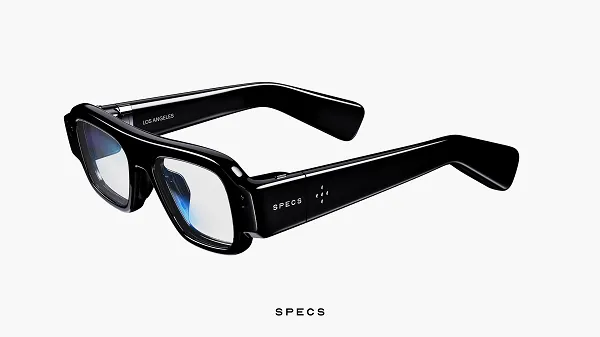
The weight difference is a crucial factor for user comfort and, consequently, for mass adoption. While a few grams might seem negligible, in a device worn directly on the face for extended periods, even slight increases in weight can lead to discomfort, pressure points, and fatigue. The question of whether weight will be a key selling point or a barrier to entry will likely depend on the specific use cases for Specs and how comfortable the glasses prove to be in practice for individual users. For short bursts of AR interaction, the weight might be tolerable, but for prolonged use in professional or entertainment settings, comfort becomes paramount. This challenge highlights the ongoing tension between integrating powerful technology and maintaining a lightweight, aesthetically pleasing form factor in wearable tech.
Privacy Considerations and Ethical Design
Recognizing the inherent privacy implications of camera-equipped wearable devices, Snap has incorporated a clear privacy feature into Specs: an LED indicator positioned prominently in the middle of the device. This LED will illuminate when Specs are actively recording, providing a visual cue to people in the vicinity that their image or activities are being captured.
This design choice reflects lessons learned from previous generations of smart glasses, such as Google Glass, which faced significant public backlash due to privacy concerns stemming from its discreet recording capabilities. The “Glasshole” phenomenon, where users were criticized for surreptitious recording, underscored the importance of transparency and explicit indicators in wearable cameras. By implementing a visible recording indicator, Snap aims to foster greater trust and mitigate privacy anxieties among both users and those interacting with Specs wearers. This commitment to ethical design and user transparency is crucial for the social acceptance and widespread adoption of AR glasses in public spaces.
Market Positioning and Pricing Strategy
The pricing of Snap’s Specs positions them in a unique segment of the nascent AR/VR market. Prospective customers can place an order for Specs starting today for $2,195, which includes a $200 refundable deposit. This price point places Specs significantly above some smart glasses but below high-end mixed reality headsets.
For comparison, Meta’s Display glasses, which offer some smart features but are not fully AR-capable in the same way Specs are, cost $799. This substantial price difference underscores the enhanced technological capabilities and standalone nature of Specs. On the other end of the spectrum is Apple’s Vision Pro, a sophisticated mixed-reality headset (more akin to VR with AR capabilities) that sells for a premium price of $3,499. The Vision Pro offers a much broader and more immersive computing experience, blurring the lines between virtual and augmented reality.
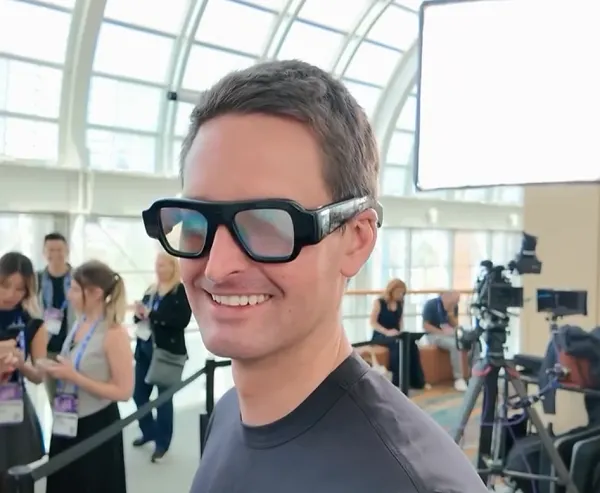
Snap’s Specs, therefore, sit somewhere between these two offerings in terms of both price and functionality. They offer a more advanced, standalone AR experience than Meta’s current smart glasses but are less encompassing and expensive than Apple’s high-fidelity spatial computer. This mid-to-high-tier pricing strategy raises questions about Snap’s target demographic. While Snapchat’s core audience is generally younger, Snap has previously highlighted that its audience is affluent and highly engaged with digital experiences. The company’s challenge will be to effectively pitch this premium price point to younger buyers, leveraging the unique AR functionalities and the “cool factor” often associated with Snap’s brand. The promotional push featuring celebrities wearing the device, albeit with “careful angling” to make the glasses appear sleek, is a clear attempt to generate interest and justify the investment for early adopters and tech enthusiasts.
Leveraging the Snapchat Ecosystem: Lenses and Experiences
A significant advantage for Snap Specs lies in its seamless integration with the existing Snapchat ecosystem, particularly its extensive library of augmented reality Lenses. Snap has confirmed that hundreds of built-in Snap Lenses are already available for Specs, promising a rich and diverse range of interactive experiences from day one. This immediate access to a vast content library differentiates Specs from many nascent hardware platforms that often struggle to attract developers and content creators initially.
These Lenses are designed to unlock a range of shared experiences that go beyond what traditional screens can offer. Snap provides examples such as “reading the green” on a golf course, where AR overlays can provide real-time information to enhance a physical activity. Another example is “Drum Kit,” which overlays interactive lessons onto a physical drum set, transforming a learning experience. Educational tools like “Vector Fields” are also highlighted, making invisible forces visible and interactive, thus revolutionizing STEM education. These applications demonstrate the potential of Specs to blend the digital and physical worlds in practical, entertaining, and educational ways, fostering a new dimension of interaction and engagement.
The ability to offer shared AR experiences is particularly compelling. Imagine multiple users wearing Specs and simultaneously interacting with the same augmented objects or environments. This capability aligns perfectly with Snapchat’s core emphasis on social connection and shared moments, extending the platform’s communal experiences from smartphone screens to an immersive, real-world overlay. This deep integration with an established and popular content ecosystem provides Specs with a strong foundation for user engagement and sets it apart in the crowded wearable tech market.
The Competitive Landscape and Future Outlook
Snap’s launch of Specs represents a bold move to secure a “first-mover advantage” in the standalone AR glasses segment. While other companies have released smart glasses, Specs aims for a more comprehensive and integrated augmented reality experience. This early entry allows Snap to gather crucial user feedback, iterate on its technology, and establish its brand in a rapidly evolving market before major competitors fully unleash their own AR offerings.
The most prominent competitor on the horizon is Meta, which plans to launch its own AR glasses next year. Early indications suggest that Meta’s offering will prioritize a more stylish and lightweight design, likely enabled by its “compute puck” strategy. Meta also possesses a significant advantage in terms of distribution and market penetration, having already shipped nearly 10 million pairs of its Ray-Ban Meta Smart Glasses (often referred to as AI glasses). While these smart glasses are primarily camera-equipped devices with AI capabilities rather than full AR projectors, they serve as a crucial stepping stone, familiarizing consumers with the concept of smart eyewear and establishing a distribution pipeline. This experience gives Meta valuable insights into consumer preferences for wearable tech and supply chain logistics.
Beyond Meta, Apple’s Vision Pro looms as a high-end benchmark for spatial computing. While its price and form factor make it a distinct category, it sets a high bar for immersive experiences and advanced technology, potentially influencing consumer expectations for all future AR devices. The ongoing “race” among these tech giants – Snap, Meta, and Apple – highlights the industry’s belief in the long-term potential of augmented reality to become the next major computing platform.
The critical questions for Snap’s Specs revolve around whether functionality will outweigh style, and how Snap’s offering will ultimately compare to Meta’s eventual release. Will consumers prioritize the integrated, standalone experience of Specs, or will the potentially more stylish and lighter design of Meta’s future glasses, coupled with its established distribution, win out? The market’s reception to Specs will provide valuable insights into consumer readiness for dedicated AR glasses and the trade-offs they are willing to make for immersive digital overlays.
Strategic Implications for Snap
The launch of Specs signifies a profound strategic shift for Snap. Traditionally known as a social media company, this move firmly establishes Snap as a hardware innovator, willing to invest heavily in pioneering new computing platforms. This pivot aligns with a broader industry trend where tech companies are increasingly seeking to control both hardware and software to deliver integrated, unique experiences.
The long-term vision is that AR glasses will eventually replace or significantly augment smartphones as the primary interface for digital interaction, ushering in an era of “ambient computing” where digital information seamlessly blends with the physical world. By stepping up to the plate with Specs, Snap is not just releasing a new product; it is making a significant wager on the future of personal technology. Success with Specs could redefine Snap’s business, diversifying its revenue streams beyond advertising and positioning it at the forefront of the next technological revolution. However, the challenges are substantial, including overcoming high price points, achieving mass-market appeal for a relatively nascent technology, and fending off intense competition from well-resourced rivals. Nevertheless, with this bold move, Snap aims to elevate its business to a new level, shaping the future of how we see and interact with our world.