
 rifanmuazin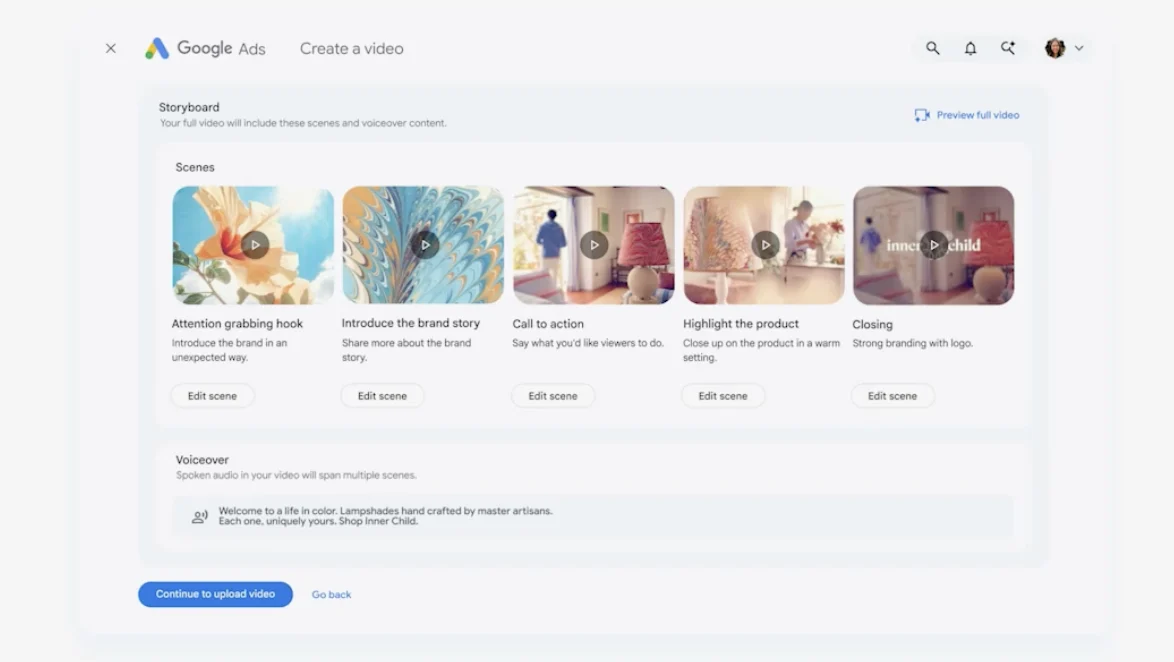
The annual Google Marketing Live (GML) event, a cornerstone for advertisers seeking to understand the evolving digital landscape, returned in 2026 with a distinctively futuristic, festival-themed atmosphere, punctuated by playful nods to electronic music icons Daft Punk. Building on the momentum generated by Google I/O, this year’s GML unveiled a comprehensive vision for the future of marketing, heavily emphasizing the pervasive integration of Artificial Intelligence across the entire advertising and commerce ecosystem. The core message resonating throughout the keynotes and product announcements was unequivocal: “Google Search is AI Search,” signaling a profound shift in how consumers interact with information and brands.
The overarching themes driving the 2026 agenda were clear and predictable for those familiar with performance marketing trends: the transformation of Search across the entire purchase journey, the escalating role of AI in performance campaigns, the propulsion towards agentic commerce, empowering marketers to transition from conversation to action, leveraging YouTube for both upper and lower-funnel objectives, and the continuous enhancement of media measurement solutions. These pillars underscore Google’s commitment to evolving its platform to meet the demands of an increasingly AI-native world.
The AI Infusion: Empowering Strategic Marketers
The most significant narrative emerging from GML 2026 is Google’s recognition of how marketers’ workflows have fundamentally changed. The prevalence of AI tools like Claude and ChatGPT in daily strategic planning—from briefing AI for messaging and creative concepts to audience strategy—has been acknowledged. Google’s latest product innovations are designed to meet marketers where they are, rather than forcing them to adapt to entirely new interfaces. This strategic alignment with existing marketer behaviors is a crucial step in fostering adoption and maximizing the utility of these advanced tools.
Ask Advisor: A Holistic Conversational Interface
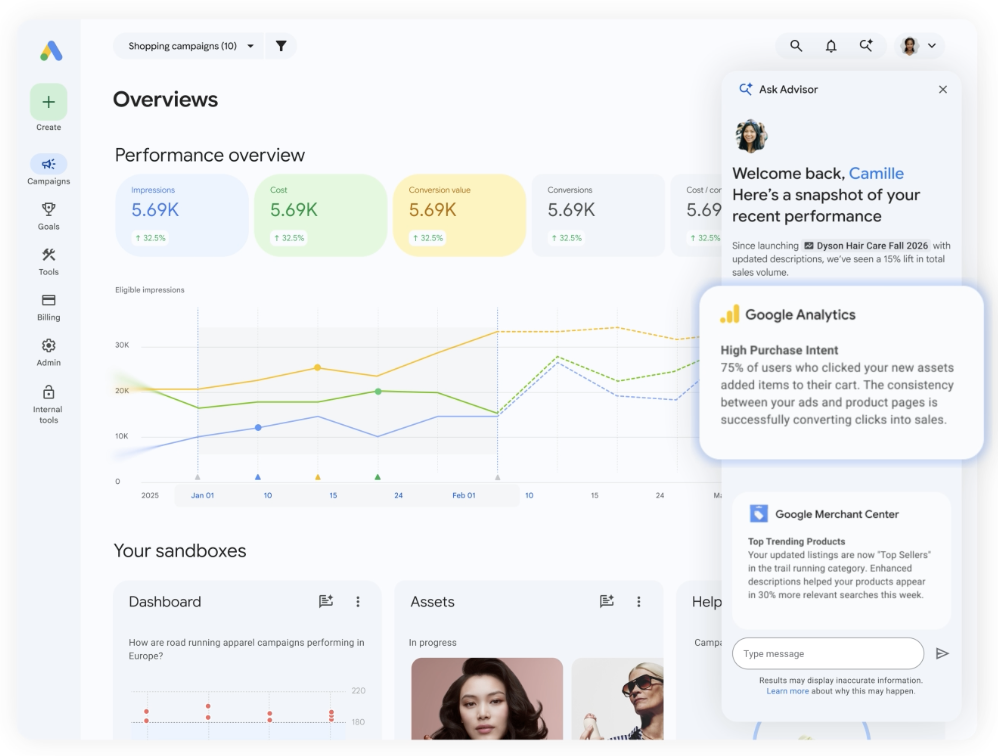
A standout innovation is “Ask Advisor,” an agentic conversational interface designed to span Google Ads, Google Analytics, Google Marketing Platform, and Merchant Center. This tool connects specialized agents embedded within each component of the Google advertising and measurement ecosystem, offering advertisers a unified and holistic view of their marketing strategies. By facilitating analysis and identifying opportunities through natural language queries, Ask Advisor aims to democratize access to complex data insights. Historically, the integration between these Google products occurred primarily on the back-end. Ask Advisor promises a new, conversational entry point, allowing advertisers to diagnose issues, surface actionable insights, and uncover strategic opportunities by engaging with the entire Google ecosystem simultaneously. This represents a significant leap from previous conversational interfaces that were isolated within specific product silos.
AI Brief: Translating Brand Strategy into Campaign Execution
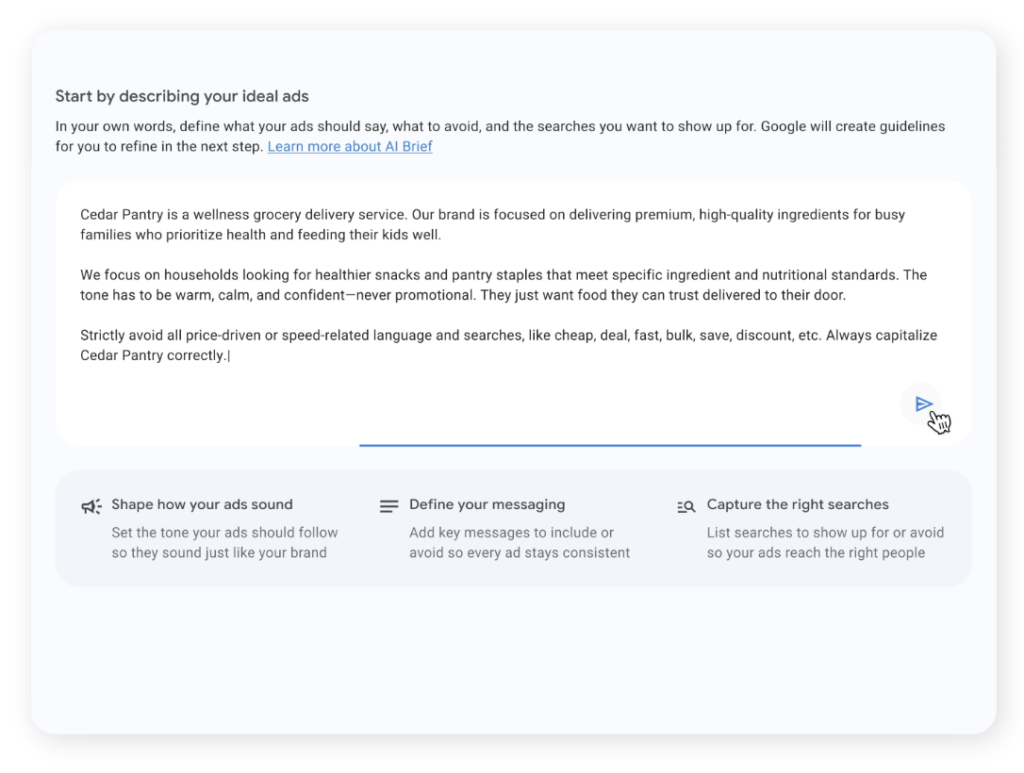
Chief Business Officer Phillipp Schindler declared, “Google is firmly in our Gemini Agentic Era,” and this ethos is deeply embedded in the new “AI Brief” feature for Google Ads. AI Brief allows advertisers to guide AI Max and, eventually, Performance Max campaigns using natural language descriptions of their brand. Instead of navigating complex settings and toggles, marketers can articulate their brand’s voice, key messages, audience priorities, and even what to avoid. Google’s Gemini AI will then leverage this “brand brief” to generate ad copy. This marks a pivotal moment where the art of briefing a copywriter or media planner is directly integrated into campaign execution.
This innovation is poised to establish a direct causal relationship between a marketer’s ability to articulate customer needs and brand proposition and the subsequent campaign performance. Brief writing is likely to emerge as a critical new skillset for paid search professionals. Furthermore, if AI Brief is implemented as a campaign-level setting, it opens the door to A/B testing not just ad copy variations but fundamental brand propositions. This capability could provide invaluable answers to strategic questions about market resonance and consumer perception. The potential for AI Brief to evolve beyond creative generation to influence bidding and targeting—for instance, by incorporating customer trait data directly into the brief—suggests a future where AI can identify high-value customer segments with greater precision, potentially reducing reliance on complex technical implementations like Customer Match lists.
AI Max for Shopping Campaigns: Capturing Long-Tail Demand
“AI Max for Shopping” offers a simplified, one-click activation for existing Shopping campaigns, extending AI Max capabilities. While standard Shopping campaigns rely on product feed attributes for ad matching, AI Max allows campaigns to respond to natural language and conversational queries that might not align with feed data. Google highlights this as a key method for capturing long-tail demand that traditional Shopping campaigns often miss.
The implications are twofold. Firstly, for advertisers running standard Shopping campaigns, enabling AI Max is a straightforward enhancement, particularly given the shift towards conversational search queries. It addresses a clear structural limitation of feed-based matching. Secondly, this development raises questions about the future positioning of Performance Max (PMax). If AI Max for Shopping now effectively covers the same ground as PMax in capturing long-tail and conversational demand within shopping inventory, advertisers will need a clear framework from Google on when to utilize each. Until such guidance is provided, rigorous testing of AI Max on existing Shopping campaigns is recommended, with the PMax question remaining open for further evaluation.
Enhancing Data Integrity for Business Goals
In an increasingly privacy-conscious digital landscape, the reliability of data inputs is paramount. Google’s announcements at GML 2026 underscore the critical role of first-party data in communicating business objectives to automated systems. The introduction of “Universal Cart” at Google I/O, a persistent shopping cart across Search, YouTube, Gmail, and Gemini, is a significant development that aims to connect the consumer shopping experience more cohesively. This not only improves the quality of captured signals but also encourages more of the purchase journey to occur within environments where these signals can be cleanly tracked.
The common thread across these measurement-focused announcements is the effort to address incomplete, misaligned, or technically “leaky” signals that feed into Google’s automated systems.
Google Tag Gateway: Fortifying Conversion Tracking
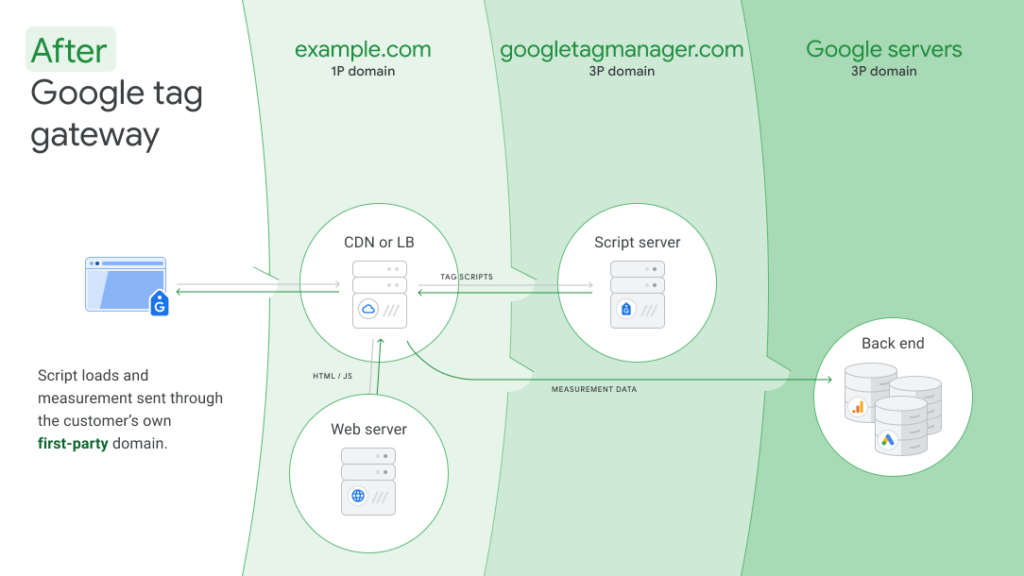
“Google Tag Gateway” (GTG) is designed to enhance conversion tracking by routing tag signals through a client’s own domain server, rather than directly through Google’s infrastructure. This approach is analogous to the Conversions API, aiming to mitigate data loss challenges. The practical benefits include improved data accuracy, higher match rates, and greater resilience of first-party data against browser-level tracking restrictions. Notably, GTG requires no modifications to existing tag code, focusing on infrastructure upgrades.
While GTG is not a new concept, its framing at GML 2026 as a more accessible solution for agencies, with one-click implementation, is significant. The primary barrier to adoption has historically been client-side technical friction. Google’s increased focus on simplifying this process could lead to a widening data quality gap between early adopters and those who are slower to implement. Furthermore, GTG is reported to provide an 11% increase in signals for Google’s Confidential Matching program, a direct performance benefit for clients leveraging customer match strategies.
Product Value Adjustments: Granular Control Over Conversion Values
“Product Value Adjustments” (PVAs) allow e-commerce advertisers to apply multipliers to the conversion values of specific products within their catalog. This enables more aggressive bidding on chosen SKUs within Shopping and Performance Max campaigns without altering campaign structures. While sophisticated advertisers have long employed methods to influence conversion value data, PVAs streamline this process by allowing direct adjustments within Merchant Center and Google Ads, promising a more straightforward implementation.
Compared to last year’s “Profit Optimization” bidding, PVAs are not only simpler to implement but also more versatile. Beyond optimizing for high-margin products, PVAs can be applied to a wide array of strategic objectives, such as prioritizing high-velocity SKUs, boosting products with excess inventory, or elevating items with strong promotional margins. This granular control over conversion values offers a powerful new lever for e-commerce advertisers to align campaign performance with specific business priorities.
Embracing Infinite Creative Possibilities
The creative announcements at GML 2026 are underpinned by “Gemini Omni Flash,” Google’s most advanced multimodal model, slated for Google Ads this summer. Built to handle “any input” and produce “any output”—from text-to-video and image-to-copy to brief-to-campaign—this model is the engine driving the concept of “infinite creative.”
Asset Studio: A Unified Creative Workspace
“Asset Studio” serves as Google Ads’ integrated creative workspace, leveraging Google’s AI models for asset generation, testing, and management. The key 2026 update introduces multimodal capabilities, enabling advertisers to generate both images and video content through plain language descriptions. The ability to incorporate existing brand materials and marketing briefs ensures on-brand output, with a built-in one-click A/B testing flow integrated into the creation process.
While Asset Studio was introduced previously, the 2026 iteration promises enhanced consistency in asset quality and the introduction of video generation at scale, which would be a significant new capability. The one-click testing flow is particularly noteworthy, as creative testing has been an area where many advertisers fall short. Streamlining this process could fundamentally change how creative strategy is approached. However, a crucial question remains: whether Google’s definition of “brand safe” aligns with clients’ definition of “brand right.” High-volume, guideline-compliant creative does not always equate to creative that authentically reflects a brand’s voice and drives performance, leaving room for expert creative direction.
Supporting Announcements: A Broadening Ecosystem
Beyond the headline innovations, GML 2026 included a range of supporting announcements aimed at further enhancing campaign effectiveness and advertiser control.
- Business Agents for Leads: A new ad type in AI Mode designed for lead generation, allowing users to ask questions about a company or ad, connected to a lead form. Initially rolling out to automotive, education, and real estate verticals, this feature requires advertisers to be using AI Max or Performance Max.
- Data Manager API: Google’s central hub for integrating first-party data sources (CRM lists, offline conversions, website events) with Google Ads, GA4, and GMP. The 2026 update includes direct connectors to platforms like Mailchimp, ActiveCampaign, and Klaviyo, and facilitates programmatic data flow setup. This addresses a persistent barrier to adoption by simplifying CRM data integration for mid-market advertisers.
- Affiliate Partnerships Boost: This feature allows merchants to discover and amplify organic YouTube Shopping affiliate videos within Demand Gen campaigns, effectively turning influencer content into paid ad inventory. Currently in a limited US pilot, its broader applicability will depend on its success in the initial phase.
- Commerce Media Suite: A consolidated suite connecting retail data, Google AI, and Google’s ad inventory. Key features include SKU-level measurement in DV360 and cross-retailer reporting in SA360, offering valuable insights for large retail and CPG accounts.
- View Through Conversion Optimization: An opt-in feature for Demand Gen campaigns on YouTube that allows bidding based on view-through conversion signals (conversions occurring after ad exposure without a click). This moves beyond mere reporting to direct algorithmic optimization, which is a significant shift for clients heavily invested in YouTube.
- Demand Gen Uplift Experiments: An A/B experiment framework to measure the performance uplift of integrating Demand Gen into existing campaign mixes. This directly addresses the question of Demand Gen’s incremental value and standalone performance, providing advertisers with structured data to prove its efficacy.
- Campaign Type Attribution: A new measurement approach that isolates conversions from Demand Gen campaigns, enabling direct performance comparisons with paid social channels. This is a practically significant announcement that aims to resolve attribution discrepancies and facilitate more accurate benchmarking against platforms like Meta.
- Merchant Center for Agencies: A long-awaited equivalent of an MCC for Google Merchant Center, providing agencies with a single login to manage multiple merchant clients at scale.
- Missed Opportunity Reporting: A reporting feature that visualizes lost conversion volume and value due to budget or bid constraints, intended to support investment increase justifications.
- Qualified Future Conversions (QFC): Leveraging AI for predictive targeting, QFC aims to measure the unrealized potential of campaigns by identifying future engagement signals, even for brand awareness initiatives. This feature will eventually integrate with Google’s MMM solution, Meridian.
The Road Ahead: A Strategic Evolution
Over the past five years, Google’s focus has heavily leaned into AI-driven automation, sometimes at the cost of advertiser visibility and strategic control. While AI-powered targeting, bidding, creative, and budgeting have proven powerful, many marketers have struggled to align these automated systems with broader strategic objectives. The traditional Google Ads interface often acted as a bottleneck, hindering the full embrace of AI’s potential.
The way marketers operate has fundamentally shifted. The reliance on spreadsheets and manual data uploads has given way to conversational interactions with LLMs and the development of AI agents for workflow automation. Google’s embrace of these new working paradigms across its advertising solutions marks a significant evolution. The introduction of agentic AI-powered solutions for campaign management, coupled with enhanced data and conversion tracking capabilities, offers advertisers a powerful toolkit to navigate the complexities of the modern digital landscape. The immediate future will be defined by experimentation, as advertisers explore these new features to discover the most effective solutions for their unique business challenges.










