rifanmuazin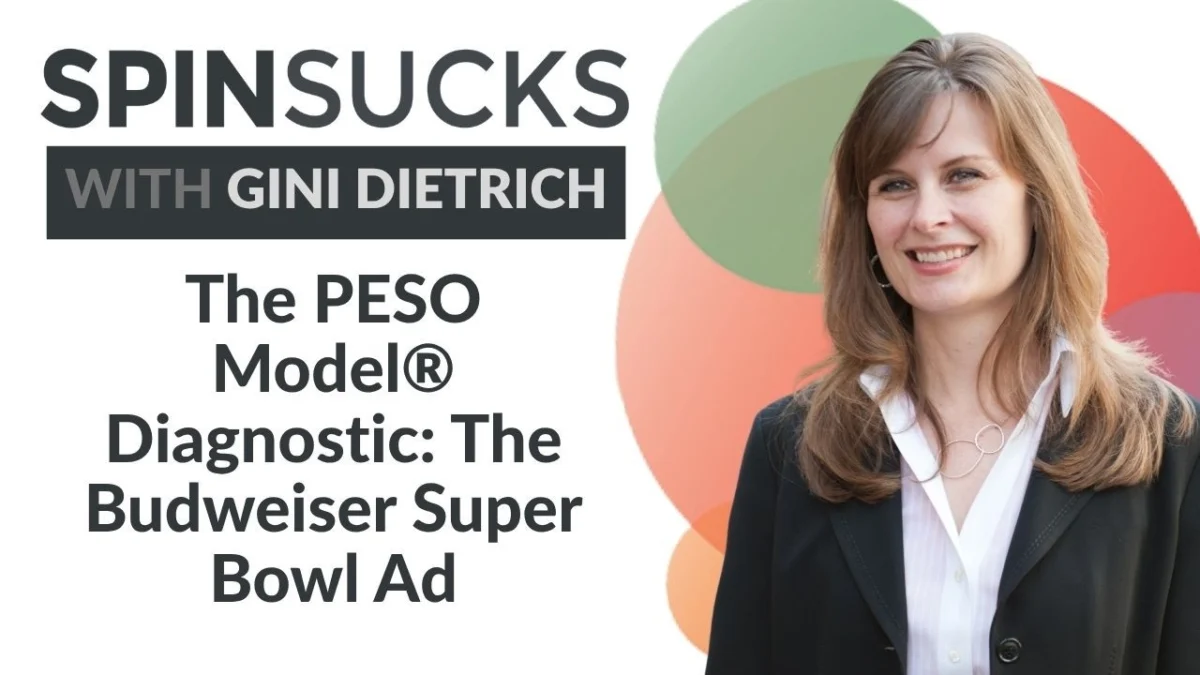
The conclusion of Super Bowl LX has solidified Budweiser’s standing as a dominant force in sports marketing, as the brand secured its tenth USA Today Ad Meter title with the debut of the “American Icons” commercial. The 60-second spot served as the cornerstone of the brand’s expansive “Made of America” program, a strategic initiative designed to celebrate both the 150th anniversary of Budweiser and the 250th anniversary of the United States. While the campaign has been lauded for its creative execution and high production value, industry analysts are utilizing the debut of the PESO Diagnostic series to examine the distinction between a highly coordinated marketing effort and a truly integrated communications system.
The "American Icons" commercial, directed by Oscar nominee Henry-Alex Rubin, utilized quintessential American imagery, pairing a Clydesdale foal with a young bald eagle. Set to the anthemic sounds of Lynyrd Skynyrd’s “Free Bird,” the advertisement resonated deeply with viewers, capturing the top spot in the annual Ad Meter rankings. However, beneath the surface of this creative success lies a complex multi-channel strategy that includes a ten-year extension of the brand’s partnership with Major League Baseball (MLB), the launch of a premium "150 Club" loyalty program, and the release of limited-edition Heritage Cans.
The Strategic Framework of the "Made of America" Campaign
Budweiser’s 2026 strategy was built upon a rare alignment of milestones. Founded in 1876, the brand reached its 150-year mark simultaneously with the American Sestercentennial—the 250th anniversary of the signing of the Declaration of Independence. To capitalize on this, Anheuser-Busch InBev launched the “Made of America” umbrella narrative, a theme broad enough to encompass various marketing activations while maintaining a specific brand identity.
The campaign’s rollout was meticulously timed. The Super Bowl spot acted as a high-visibility catalyst, but the broader program included several tactical layers:
- The 150 Club: A tiered loyalty program offering exclusive experiences and archival merchandise to the brand’s most dedicated consumers.
- Heritage Cans: A series of collectible packaging designs that trace the visual evolution of Budweiser since the late 19th century.
- MLB Partnership Extension: A long-term commitment ensuring Budweiser remains the "Official Beer of Major League Baseball" through 2032, providing a continuous national stage for the brand.
- Legacy Content: A series of short-form digital pieces featuring former MLB stars and multi-generational brewing families.
While these elements demonstrate a high level of coordination, marketing experts argue that the campaign still operates within traditional silos, missing the compounding benefits of a fully integrated PESO (Paid, Earned, Shared, Owned) Model.
Chronology of a Mega-Campaign: From Concept to Super Bowl LX
The development of "Made of America" began nearly two years prior to the 2026 Super Bowl. Recognizing the gravity of the dual anniversaries, Budweiser’s internal teams and agency partners sought to move away from the "one-and-done" nature of typical Super Bowl advertising.
In late 2025, the brand began teasing the return of the Clydesdales, a staple of Budweiser’s advertising history. By January 2026, the MLB extension was announced, providing a foundational narrative of "longevity" and "tradition." The "150 Club" was soft-launched in the weeks leading up to the game, creating a sense of exclusivity.
On Super Bowl Sunday, the "American Icons" spot aired during the second quarter, a slot that cost an estimated $16 million for the 60-second duration, based on 2026 advertising rates. The immediate aftermath saw a surge in social media engagement and news coverage. However, the PESO Diagnostic suggests that the momentum generated by the paid media anchor was not fully captured by the brand’s owned and earned channels.
The PESO Diagnostic: Identifying the Integration Gap
The PESO Model, a framework developed by Gini Dietrich to integrate Paid, Earned, Shared, and Owned media, provides a lens through which the Budweiser campaign can be scrutinized. While Budweiser excelled in individual categories, the lack of a "central nervous system" connecting them limited the campaign’s overall impact.
Owned Media: The Missing Hub
In a truly integrated system, owned media serves as the "source of truth." Analysts pointed out that while Budweiser utilized news releases to announce its activations, it lacked a deep, durable content property. A dedicated "Made of America" digital hub—featuring long-form stories on generational brewers, the farmers providing the barley, and the brand’s extensive philanthropic history—would have provided a destination for viewers moved by the Super Bowl ad. Without this, the $16 million investment resulted in a "flash" of interest with nowhere for the audience to land and engage further.
Earned Media: Publicity vs. Credibility
The earned media generated by the campaign was largely announcement-driven. Coverage focused on the debut of the ad and the MLB partnership. From a PESO perspective, true earned media involves "credibility transfer." This would have looked like long-form features in prestige publications like The Atlantic or The Smithsonian Magazine exploring the cultural evolution of American brands over 250 years. Instead of being the subject of the news, the brand was merely the sender of the news.
Shared Media: Transactional vs. Community-Driven
The "150 Club" and Heritage Cans are effective merchandising and loyalty tools. However, they lacked a robust User-Generated Content (UGC) loop. An integrated approach would have invited the public to share their own "Made of America" stories—stories of small businesses, veterans, and local communities—and folded that content back into the brand’s owned channels. This would have transformed shared media from a transaction layer into a self-sustaining distribution engine.
Paid Media: Precision Beyond the Anchor
Budweiser’s paid media strategy focused on massive "anchor" buys like the Super Bowl and MLB. While successful in achieving reach and frequency, there was little evidence of a "precision layer." In an integrated system, paid media is used to retarget visitors to owned hubs, sequence prospects through a content journey, and amplify earned media wins. Relying solely on the anchor buy leaves significant potential value on the table.
Data and Performance Metrics
Preliminary data from Super Bowl LX indicates that Budweiser’s "American Icons" achieved an 8.97 rating on the USA Today Ad Meter, the highest score of the 2026 game. Social media sentiment was 92% positive, with "nostalgia" and "patriotism" being the primary keywords associated with the brand.
Despite these high marks, the "integration gap" is visible in the disparate nature of the metrics. Ad Meter scores, impression counts, and club sign-ups are currently tracked as separate silos. Industry experts suggest that a more sophisticated "system of proof" would measure how a single viewer moved from the Super Bowl spot (Paid) to the content hub (Owned), shared their own story (Shared), and was eventually influenced by a third-party journalist’s profile (Earned).
Broader Impact and Industry Implications
The Budweiser case study serves as a pivotal moment for the marketing industry in 2026. As the cost of high-visibility advertising continues to rise, the pressure for brands to deliver compounding value is immense. The distinction between a "campaign" and a "system" is becoming the defining factor in marketing ROI.
Budweiser’s "Made of America" is undoubtedly a success by traditional standards. It reinforced brand equity and drove short-term sales through collectible packaging. However, the PESO Diagnostic highlights a shift in the landscape: a well-coordinated multi-channel program is now considered the "floor" for major brands, while a fully integrated, data-driven system is the new "ceiling."
For other brands looking to navigate the complex media environment of the late 2020s, the takeaway is clear. The success of a creative moment is no longer enough. To maximize the value of an $8 million-per-30-second investment, brands must build a central nervous system that connects every activation. This requires a dedicated editorial lead, cross-silo governance, and a unified measurement layer.
As the United States continues its 250th-anniversary celebrations throughout 2026, Budweiser’s strategy will likely be mimicked by others. However, the brands that move beyond the "parade" of siloed activations and toward a truly integrated PESO system will be the ones that see their influence compound long after the final whistle of the Super Bowl has blown. The "American Icons" spot may have won the night, but the ongoing challenge for Budweiser—and its competitors—remains the mastery of the system behind the screen.