rifanmuazin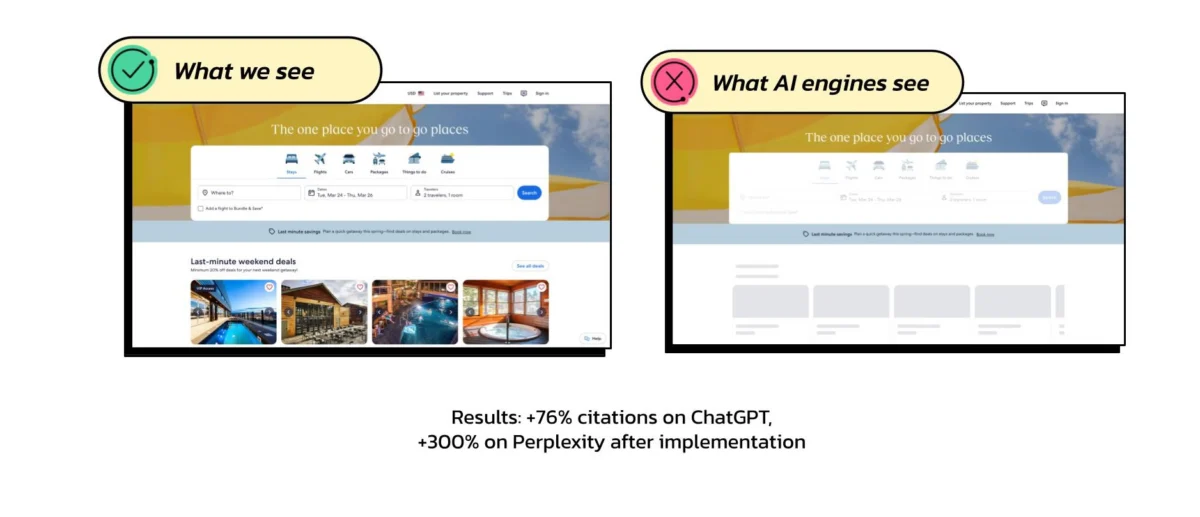
The era of AI-powered search has firmly arrived, transforming the way consumers interact with information and, consequently, how brands must strategize their online presence. While the initial skepticism has largely dissipated, many marketing teams now find themselves grappling with a more complex question: not if AI visibility matters, but how to effectively achieve it. This transition from awareness to action often highlights a significant hurdle: the need for unprecedented cross-departmental collaboration, a factor many brands underestimated.
The opportunities to enhance AI visibility are not always monumental undertakings. Some are readily achievable quick wins, potentially even aligning with existing SEO priorities. However, nearly all impactful strategies necessitate an intersection of multiple teams. Understanding the ownership and responsibilities within this collaborative framework is as crucial as identifying the strategic plays themselves. The traditional siloed approach to marketing is no longer sufficient; success in AI search demands a unified front.
The Foundation: Ensuring AI Can Perceive Your Digital Footprint
A fundamental prerequisite for AI visibility is ensuring that artificial intelligence agents can actually "read" and interpret a brand’s website. This might seem self-evident, but it’s a detail often overlooked because websites typically appear perfectly functional to human users. The discrepancy arises from the underlying technology. AI search engines primarily interact with websites through server-side rendering. Content loaded dynamically via client-side JavaScript can create a blind spot for these AI agents, presenting them with an incomplete or even inaccurate representation of a brand’s digital assets.
When a user queries an AI engine, the AI doesn’t browse the web in the same manner as a human. Instead, it processes the version of the webpage delivered directly from the server before any client-side JavaScript executes. This means that if critical elements like navigation menus, product descriptions, or core content are only rendered after JavaScript has run, AI agents may never "see" them. This can lead to AI drawing conclusions about a brand’s offerings and message based on a partial and potentially misleading picture, with the brand remaining unaware of this deficiency.
Addressing this challenge requires the direct involvement of engineering and development teams. While SEO specialists can identify which pages are affected and define the necessary technical adjustments, the implementation itself falls within the purview of development sprints. This necessitates buy-in from leadership to prioritize these technical enhancements alongside other product development roadmaps. Furthermore, paid media teams can offer invaluable insights by identifying which pages drive the most commercial value, thereby informing prioritization efforts for rendering fixes.
Building Trust: Freshness and Credibility Signals for AI
Once AI can effectively access and read a website’s content, the next critical step is establishing credibility and trust. AI answer engines increasingly factor in the recency and authority of information when determining what to cite. One of the most effective methods for communicating these signals is through structured data, commonly known as schema markup.
While schema markup is technical in its implementation, its conceptual purpose is straightforward. It involves adding unobtrusive code to a website that explicitly informs search engines and AI agents about specific aspects of the content. This includes details such as the last updated date, the author, and the content format. For video content, schema markup can specifically signal to AI the existence of a video, its subject matter, and its publication date. Without these explicit signals, valuable video assets may be effectively invisible to AI, despite their presence on the page.
The widespread underutilization of schema markup often stems not from its inherent difficulty, but from its placement in a functional gap between SEO and development teams, with neither group formally owning its deployment. Establishing a standardized workflow is key: SEO teams should identify the necessary schema for specific pages, and development teams should integrate this as a routine part of content publishing, rather than treating each addition as an ad-hoc project. Creative and social media teams also play a vital role in this process, as they are the producers of the rich media content that stands to benefit most from accurate schema implementation.
Shifting Paradigms: From Keywords to Topics in AI Search
Perhaps the most profound shift required for success in AI search is moving beyond keyword optimization to a topic-centric approach. Unlike traditional search engines that rank pages for discrete keywords, AI engines prioritize content that is organized around comprehensive themes and demonstrates deep expertise across a subject area. Brands that present fragmented content across numerous pages, each only superficially touching upon a topic, are likely to be overlooked in favor of competitors whose content exhibits genuine depth and topical authority.

The technique of embeddings analysis offers a powerful method for understanding the themes that AI engines are prioritizing. At a technical level, AI interprets language by mapping words and concepts into clusters based on their semantic relationships. Embeddings analysis allows marketers to visualize these clusters, revealing which themes and content structures AI considers authoritative within a given category. This data-driven insight can then be used to identify gaps in a brand’s own content strategy and to inform the development of a robust topic framework.
However, the true value of this framework is realized only when it becomes a shared operational logic across content, social media, and public relations teams. A data-backed topic framework should not remain a siloed SEO document; it must inform editorial calendars, content creation, and external communications. When PR teams pitch stories, they should align with these identified themes. Similarly, social media teams should build their content calendars around these priority topics. While SEO may lead the analysis, the resulting framework must be embraced and utilized by all relevant departments.
The Holistic View: Your Website is Only One Piece of the Puzzle
A fundamental realization for brands aiming for AI visibility is that AI-generated answers are not solely derived from a single website. They are synthesized from a confluence of sources, including website content, social media discussions, video platforms, forum posts, and third-party publisher coverage. A brand’s narrative within the AI landscape is being shaped by the entirety of its online presence, not just the content under direct team control.
Consequently, a brand with an excellent website and optimized content may still falter in AI search if the broader online conversation surrounding it is sparse, disjointed, or contradictory. Achieving AI search success requires SEO teams to establish regular communication channels with social media and community management teams. Sharing insights on which topics AI is surfacing and rewarding ensures that platform-specific content strategies are aligned with overarching priorities. This is not about SEO dictating to other channels, but about ensuring a coherent and consistent signal across the web.
Public Relations in the Age of AI: A Evolving Mandate
The final, and perhaps most transformative, strategic imperative for AI visibility lies within the realm of public relations. AI answers synthesize sentiment from PR coverage, community mentions, and publisher citations collectively. A single negative or inaccurate mention, regardless of its original source, can be incorporated into the information AI provides to consumers, directly impacting brand perception.
This shifts the PR priority from simply earning links from high-authority publications to actively cultivating positive and accurate mentions across the sources that AI engines reliably cite. It also necessitates a proactive approach to correcting misinformation wherever it appears within the digital ecosystem. This represents a significant departure from traditional PR briefs, where the impact of paywalled coverage, however prestigious, is limited for AI visibility. If AI engines cannot access and read content, they cannot cite it.
To navigate this, SEO teams must provide PR departments with data identifying which sources LLMs are actively drawing from, and where brand mentions are inaccurate or absent. PR professionals can then act on this intelligence. Partnerships teams are also integral to this strategy, as co-created content and third-party endorsements offer the kind of open, accessible signals that build AI credibility far more effectively than exclusive, paywalled feature articles.
The Unifying Force: Cross-Functional Collaboration as the Key
The strategies outlined above are not proprietary secrets; the techniques are established, the data is accessible, and the necessary fixes are largely understood. The prevailing deficiency across most organizations is the absence of a cohesive, cross-functional process to implement these strategies effectively. An SEO team can conduct the necessary analysis and identify opportunities, but it cannot independently implement rendering fixes without engineering, deploy schema without development support, align content calendars without content creators, or redirect PR targeting without a shared measurement framework.
Brands currently experiencing traction in AI search are not necessarily executing more sophisticated technical work. Instead, they are the organizations that have elevated AI visibility to a shared organizational priority, rather than assigning it as a solitary challenge for a single department. This crucial shift begins with a commitment to having the difficult internal conversations, not about the potential of AI search, but about who is accountable for the work required to seize those opportunities. The future of online visibility hinges on this collaborative, integrated approach.