rifanmuazin
The rapid proliferation of generative artificial intelligence has ignited a global debate regarding the integrity of written discourse. Critics and academics have raised alarms over "AI slop"—the deluge of low-quality, automated content that prioritizes volume over value. Recent studies, including those published in prominent academic journals, suggest that an over-reliance on these tools may be actively diminishing human cognitive engagement and writing proficiency. However, a parallel and equally pervasive threat to intellectual discourse has emerged from within the human sphere of professional communication. This phenomenon, colloquially termed "deck talk," represents a stylistic degradation where the linguistic habits of internal business presentations are misapplied to public-facing thought leadership.
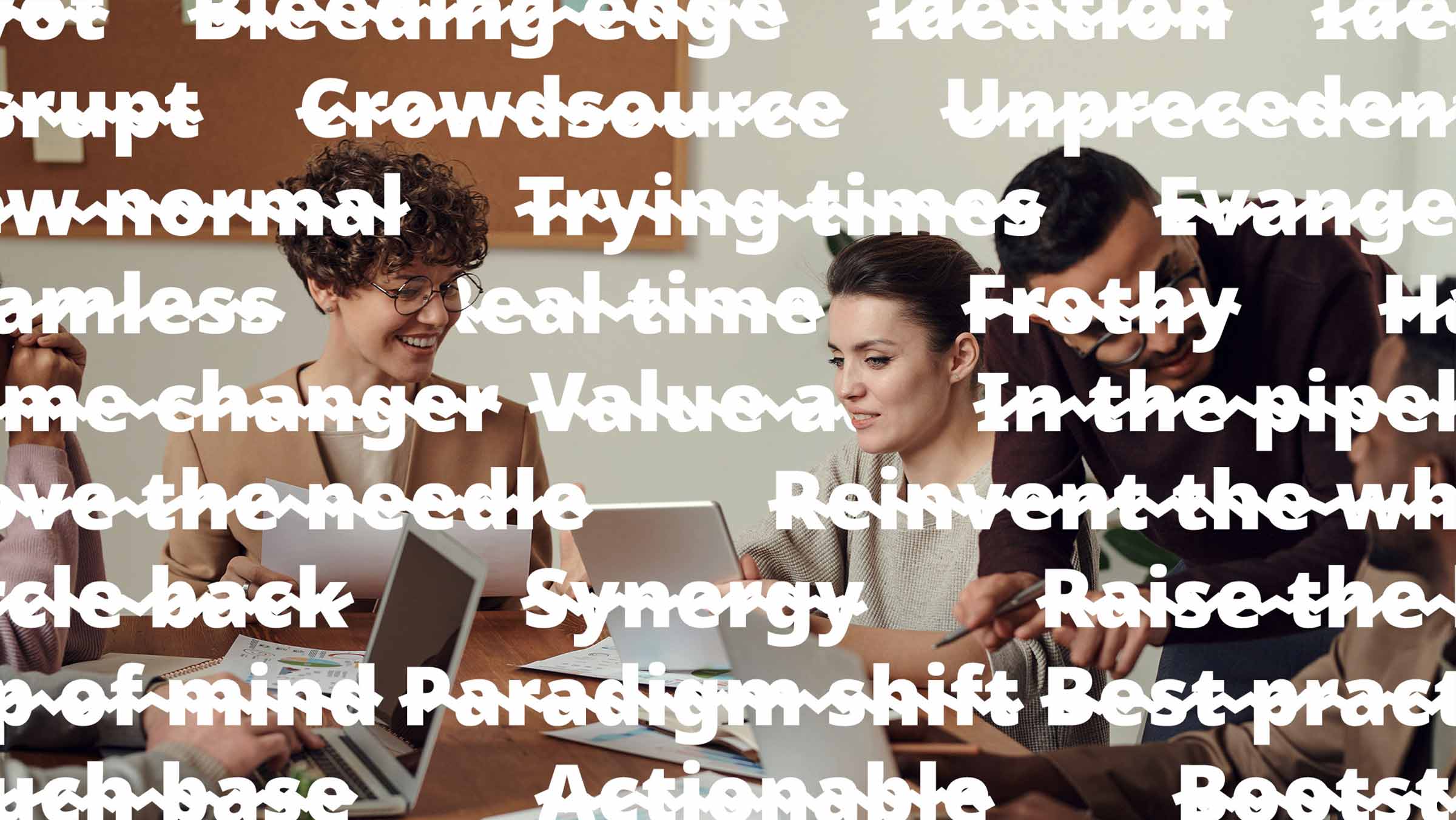
Deck talk is characterized by the use of dense industry jargon, grand yet hollow declarations, and questionable statistics woven between marketing taglines. While these tactics are often effective within the high-pressure, time-constrained environment of a boardroom presentation, their transition into long-form writing—such as op-eds, white papers, and newsletters—has led to a crisis of quality. This trend has gone largely undetected because its symptoms so closely mimic the repetitive and formulaic nature of AI-generated text. As business leaders increasingly prioritize speed and visibility over depth, the line between human-led insight and algorithmic output continues to blur, threatening the very foundations of professional authority.
The Stylistic Markers of Deck Talk
The core of the deck talk problem lies in the misapplication of a specific medium. Business presentations, or "decks," are designed to sell ideas quickly to skeptical audiences. They rely on visual hierarchy, brevity, and rhetorical flourishes. However, when these elements are transposed into prose, the result is often a disjointed and superficial narrative.
Common markers of deck talk include the excessive use of "power words" such as "game-changing," "revolutionary," and "synergistic," which are frequently utilized to mask a lack of substantive data. In a deck talk article, authors often employ unwarranted emphasis, placing repetitive phrases on individual lines or using bold and italicized fonts for common nouns like "Innovation," "Strategy," or "Insight." This formatting is intended to mimic the visual impact of a slide but, in written form, it serves only to disrupt the reader’s flow and signal a lack of nuanced argumentation.
Furthermore, deck talk frequently relies on "authority by proxy." This involves the heavy use of quotes from historical figures or industry titans that, while impressive on a slide, often fail to provide new perspectives when used in a column. The result is a piece of writing that functions more as a sales pitch than an intellectual contribution, prioritizing self-promotion over the advancement of an idea.
A Chronology of Communication: From Memos to Slides
The rise of deck talk is the culmination of a decades-long shift in corporate communication. To understand its current impact, one must examine the evolution of how ideas have been transmitted within the professional sphere.
In the mid-20th century, the "memorandum" was the primary vehicle for business thought. Memos required complete sentences, logical transitions, and a clear narrative arc. This format forced the writer to synthesize their thoughts into a coherent argument. However, the introduction of Microsoft PowerPoint in the late 1980s began to alter this landscape. By the late 1990s, the "slide deck" had become the default tool for communication in boardrooms across the globe.
The 2000s saw the emergence of the "PowerPoint Culture," where complex strategies were reduced to bullet points. This shift was famously criticized during the investigation into the 2003 Columbia Space Shuttle disaster, where NASA engineers noted that critical safety information was buried in overly complex slides, leading to a phenomenon known as "death by PowerPoint."
By the 2010s, the rise of social media platforms like LinkedIn and the "Hustle Culture" movement encouraged business leaders to become public-facing "thought leaders." Lacking the time or training for long-form writing, many turned to the format they knew best: the deck. This led to the birth of the "tweetstorm" and the "LinkedIn carousel," which eventually bled into more formal publications. Today, in the 2020s, this presentation-first mentality has converged with generative AI, creating a feedback loop of hollow, jargon-heavy content that dominates the digital landscape.
The Convergence of Human Error and AI Slop
The relationship between deck talk and AI is symbiotic and destructive. Generative AI models are trained on massive datasets of existing internet content. Because the digital world is currently saturated with jargon-heavy business writing and presentation-style prose, AI models have adopted these habits as their default setting.
When a human writer uses deck talk, they are essentially providing the "training data" that teaches AI to produce more of the same. Conversely, when editors and readers encounter AI-generated content, they often mistake its repetitive and formulaic nature for the professional "polish" of a business executive. This has created a "race to the bottom" where the quality of human writing is lowering to meet the limitations of the machine, while the machine is being optimized to replicate the worst habits of the human.
Data from recent content marketing surveys indicates that nearly 70% of B2B marketers have increased their content output in the last two years, yet reader engagement metrics have seen a simultaneous decline. This suggests that while more content is being produced, its value to the audience is diminishing. The "slop" generated by AI and the "deck talk" generated by humans are contributing to a digital environment where genuine insight is increasingly difficult to find.
Economic Pressures and the Erosion of Editorial Gatekeeping
Historically, the role of the editor was to act as a gatekeeper, ensuring that only high-quality, well-reasoned pieces reached the public. However, the economic realities of the modern media landscape have severely weakened this defense.
Traditional newsrooms and trade publications have faced significant budget cuts, leading to a reduction in editorial staff. At the same time, the pressure to generate traffic and maintain visibility with "AI agents" and search engine algorithms has forced many publications to prioritize quantity over quality. Many platforms now allow for self-publishing or "sponsored content," where the traditional editorial review process is either bypassed or significantly curtailed.
In this environment, deck talk flourishes. Businesses view thought leadership not as a medium for discourse, but as a tool for Search Engine Optimization (SEO) and lead generation. When the goal is simply to "occupy digital space," the nuances of good writing become secondary to the inclusion of keywords and "game-changing" claims.
Stakeholder Reactions and the Crisis of Trust
The prevalence of deck talk has not gone unnoticed by industry experts and audience members. Editorial professionals have expressed growing frustration with the quality of submissions from C-suite executives.
"We are seeing a significant increase in what we call ‘slide-speak’ submissions," says one senior editor at a leading business magazine, speaking on the condition of anonymity. "These are pieces that look like articles but read like a series of disjointed marketing claims. There is no ‘connective tissue’ between the ideas. It’s as if the author forgot how to write a paragraph and only knows how to write a bullet point."
From the perspective of the audience, the impact is a growing "cynicism of the reader." Market research indicates that trust in corporate thought leadership is at an all-time low. Readers are becoming increasingly adept at spotting "slop"—whether it is generated by a bot or a human—and are tuning out. This presents a significant risk for brands: by utilizing deck talk to increase visibility, they may actually be damaging their long-term credibility and authority.
Broader Implications: The Future of Brand Authority
The persistence of deck talk and AI slop has profound implications for the future of intellectual property and brand authority. If thought leadership continues to devolve into a series of interchangeable buzzwords and presentation tactics, the value of a "brand voice" will effectively disappear.
Furthermore, as AI agents become the primary consumers and synthesizers of online information, the presence of high-quality, data-driven, and uniquely human perspectives will become even more critical. AI cannot innovate; it can only reorganize existing patterns. If humans stop providing new, substantive ideas—and instead provide only deck talk—the collective "intelligence" of the internet will stagnate.
To combat this trend, experts suggest a return to "good-faith" expertise. This involves a commitment to surfacing new data, providing genuine personal investment in a topic, and respecting the medium of the written word. True thought leadership must go beyond the "what" and the "how" of a sales pitch to explore the "why" and the "what if" of a complex idea.
Conclusion: Reclaiming the Human Element in Writing
The world does not need more sales presentations masquerading as articles. While the efficiency of the slide deck remains undisputed in the context of the boardroom, its expansion into the broader world of writing represents a significant cultural and intellectual loss.
The path forward requires a conscious effort from both creators and publishers to "self-police" and uphold higher standards of discourse. For business leaders, this means recognizing that writing is a distinct skill from presenting. For editors, it means reclaiming their role as guardians of quality. And for the audience, it means demanding content that respects their intelligence and time.
As AI continues to reshape the landscape of communication, the only way for human writers to remain relevant is to lean into the qualities that machines—and decks—cannot replicate: nuance, narrative, and genuine, hard-won insight. Without this shift, the era of thought leadership may soon be replaced by an era of perpetual, meaningless noise.