rifanmuazin
Crafting truly compelling and effective public relations campaigns presents a significant challenge for communicators and marketers alike. Beyond the initial spark of creativity, the ability to confidently predict a campaign’s success and secure the necessary buy-in requires a robust, research-backed methodology. This article delves into a proven two-step framework that leverages data analytics and strategic inspiration to transform speculative ideas into impactful, link-generating, and socially resonant campaigns. By understanding content themes, emotional triggers, and optimal presentation formats, PR professionals can drastically enhance their success rates in a competitive media landscape.
The Foundational Step: Unearthing Resonant Themes and Emotional Drivers
The bedrock of any successful PR campaign lies in a profound understanding of what truly captivates an audience. This isn’t merely about guessing; it’s about systematically identifying themes that consistently generate discussion, command widespread sharing, and attract inbound links. A primary Key Performance Indicator (KPI) for such campaigns is often media coverage and backlinks from authoritative sites, with social engagement serving as a crucial secondary metric. The initial phase of campaign development should therefore focus on meticulous research, rather than immediate ideation.
Tools like BuzzSumo’s Content Analysis Report offer invaluable insights into the digital content ecosystem. Professionals are advised to begin by exploring core product areas. For instance, a brand specializing in honeymoon packages would naturally start with "Honeymoons." However, the strategy dictates branching out to related, yet broader, topics such as "Engagement rings," "Weddings," or "Marriage proposals." This expansion continues until the themes become too tangential to the core offering, ensuring a comprehensive yet relevant exploration. The objective at this stage is not to pinpoint a specific campaign idea, but rather to map out the landscape of relevant conversations.
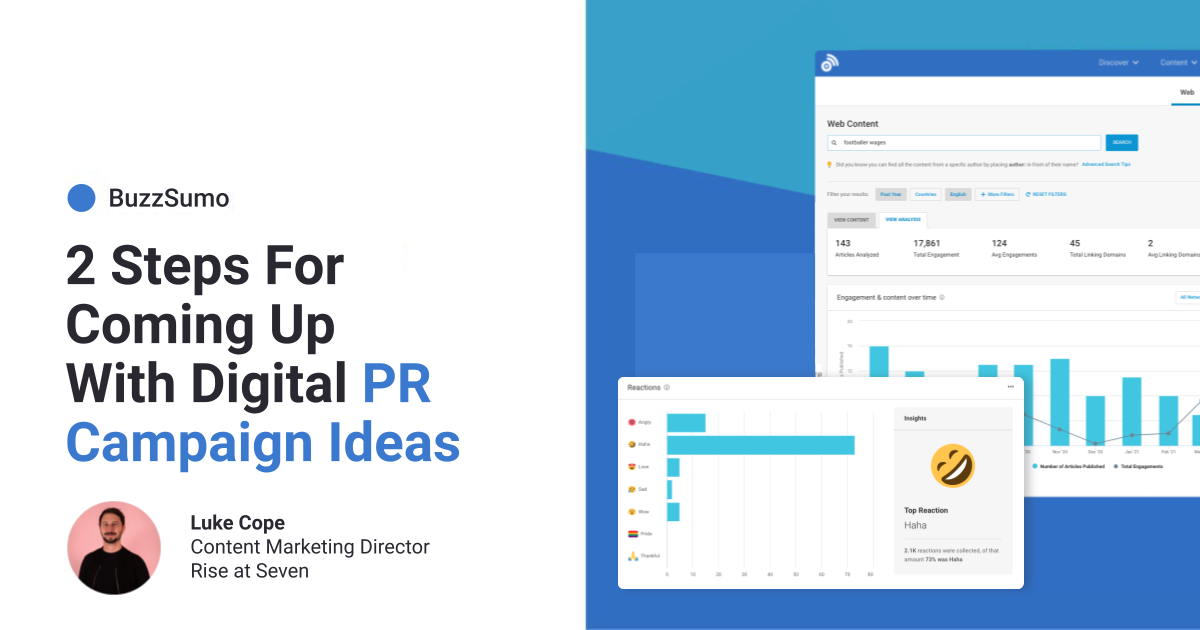
The analysis within these research tools typically reveals several critical data points: the volume of articles published over time, demonstrating the consistent interest and opportunity within a theme; the average social media engagement across platforms (e.g., Facebook, X/Twitter, Pinterest, Reddit), indicating audience resonance; and, crucially, the prevailing emotional sentiment associated with the content. Understanding whether a topic evokes joy, sadness, anger, awe, or humor is paramount for tailoring a campaign’s message and predicting its reception.
For example, researching "Honeymoons" might show consistent, positive engagement, while "Engagement Rings" could reveal trends in luxury or affordability discussions. Deeper dives into "Weddings" might uncover perennial interest in planning, traditions, or budget-saving tips. This systematic exploration allows PR teams to identify "sweet spots"—themes with both high publishing frequency and strong audience engagement, signaling fertile ground for a campaign.
Case Study: The "World Without Light Pollution" Campaign
A compelling illustration of this research-driven approach is a campaign centered on "what the most light-polluted cities in the world would look like without light pollution," executed for a brand selling star maps. The initial product theme, "Star maps," was deemed insufficient for a standalone campaign, lacking the broad appeal and depth required for significant media pickup.
The research journey unfolded as follows:
- Initial Product Theme: Star maps (limited scope).
- Secondary Theme 1: Supermoons (high social engagement, reactive PR potential due to regular occurrence).
- Secondary Theme 2: Night sky (significant social engagement, evoking wonder).
- Secondary Theme 3: Light pollution (high social engagement, topical relevance, greater ideation scope).
Crucially, the "Light Pollution" theme was not only consistently discussed but also experiencing a surge in public interest prior to the campaign launch. This was driven by contemporary events such as SpaceX’s satellite launches, which raised concerns about increased light pollution, and the broader environmental discourse amplified by the COVID-19 pandemic, which saw discussions around reduced pollution levels globally. This confluence of factors signaled an opportune moment for a campaign.
Further analysis of articles on light pollution revealed a clear emotional spectrum: content either evoked sadness regarding the loss of natural night skies or generated a "wow factor" when showcasing the beauty obscured by light. This emotional insight became a cornerstone for shaping the campaign’s outreach angles, aiming to elicit either poignant reflection or breathtaking awe. The understanding was that the campaign needed to be highly visual to achieve the "wow factor" and intellectually stimulating to encourage contemplation of a world less affected by artificial light.
Case Study: The "Footballer Car Cost Calculator"
Another successful campaign, though tapping into a different emotional register, was built around the aspirational lifestyle theme of "footballer cars" for a private number plates client. The initial product theme, "Private number plates," offered some humorous content but lacked the widespread interest for a high-impact campaign.
The research then branched into:
- Secondary Theme 1: Celebrity cars (numerous articles, high readership).
- Secondary Theme 2: Footballers’ cars (extensive content with significant reader reactions in comments sections).
A deep dive into the comments of these articles proved revelatory. Readers often expressed strong emotions, frequently bordering on anger or competitiveness, as they implicitly compared their own financial situations and possessions to those of affluent footballers. This visceral reaction highlighted a potent emotional trigger: comparison and a sense of "one-upmanship." This insight led to the ingenious idea of creating a literal comparison tool—a calculator that allowed users to input their own earnings and see how long it would take them to afford a footballer’s luxury vehicle. This direct, interactive comparison capitalized on the observed emotional responses, transforming abstract fascination into a tangible, personalized experience. Such campaigns, rooted in successful themes and tapping into specific emotions, consistently demonstrate a higher likelihood of achieving widespread success.
The Second Step: Optimizing Format and Adding Strategic Depth
An excellent idea, however, is only as good as its execution. The second critical step in the PR campaign framework involves selecting the absolute best format for the chosen idea and imbuing it with significant depth and multiple angles. The format must intrinsically align with the campaign’s message and the desired emotional impact. For instance, the "light pollution" campaign would have lost its core "wow factor" if presented merely as a blog post. Instead, an interactive "before and after" slider, showcasing cities under heavy light pollution versus their hypothetical appearance under a pristine night sky, provided an engaging, experiential format that resonated deeply with the target emotions.
The importance of depth cannot be overstated. While a single strong angle can be effective, adding layers of data, global relevance, and diverse perspectives dramatically enhances a campaign’s appeal to various media outlets and audiences. For the light pollution campaign, beyond the striking visuals, supplementary data points were integrated, such as the statistic that 85% of Americans have never seen the Milky Way. The inclusion of the Bortle scale, illustrating the most light-polluted cities (a 10 on the scale) and contrasting them with their potential appearance at a 1, added scientific credibility and further emotional resonance. Expanding the scope from a U.S.-centric focus to a global one transformed it from a national interest story into an international environmental concern, broadening its appeal significantly.
Illustrative Examples of Format and Depth:
- "Touch the Germs" Campaign: This campaign exemplified the power of innovative formatting and depth. Instead of a simple graphic or data list about hygiene, the team developed an interactive experience with a "microscope function." This allowed users to visually explore the invisible world of germs, making the abstract concept tangible and impactful. The sophisticated format not only garnered a high volume of media links but also attracted significant public attention, culminating in a notable public reaction from the Mayor of London, underscoring the campaign’s societal relevance and reach.
- "Space Junk" Campaign (Aira): While visually compelling in its visualization of space debris, this campaign highlights missed opportunities in terms of depth. The core angle of "who owns all the space junk" was strong, but the piece could have been enriched by exploring different types of space junk, comparing historical versus current accumulation, or projecting future scenarios. Adding these layers would have provided more diverse angles for outreach and sustained media interest, transforming a good visualization into a truly comprehensive and thought-provoking piece.
- "iPods Visualized as Vinyl" (Mark Johnstone, formerly Distilled): This campaign demonstrates that effective formats don’t always need to be complex. The simplicity of visualizing modern digital music devices through the nostalgic lens of vinyl records was a powerful, visually appealing concept that resonated with cultural trends and generational shifts. It was a clear, concise idea perfectly matched with a straightforward, yet impactful, visual format.
The "Footballer Car Cost Calculator" also benefited immensely from depth and multiple angles. Beyond the primary interactive tool, the campaign provided numerous outreach angles by comparing weekly wages against car costs. These could include "Average time for a fan to earn a footballer’s car," "The most outrageously expensive footballer cars," or "Regional disparities in car affordability." Each angle provided a fresh hook for different media segments, from financial news outlets to lifestyle magazines.
Strategic Outreach and Validation: Leveraging Research Beyond Ideation
The meticulous research conducted in the initial phase offers benefits far beyond merely generating ideas; it fundamentally reshapes the outreach strategy. The same data used to identify successful themes can be repurposed to create highly targeted seeding lists. By exporting lists of journalists and publications that have previously covered the identified themes, PR professionals can build a ready-made roster of relevant contacts. BuzzSumo, for instance, allows users to save journalists to projects and export their details, streamlining the process of connecting with the right individuals.
Furthermore, studies on journalist pitching emphasize the importance of relevance. By understanding a journalist’s past coverage, PR teams can tailor pitches that are highly pertinent to their interests, significantly increasing the likelihood of coverage. This data-driven approach removes much of the guesswork from outreach, replacing it with informed, strategic engagement.
Crucially, this comprehensive research process also serves as a powerful tool for internal validation and securing stakeholder buy-in. Campaign ideas are often subjective, leading to internal debates and challenges. However, by presenting robust data on content engagement, thematic consistency, and emotional resonance, PR professionals can effectively remove subjectivity from the equation. Packaging the findings from the first stage—including insights from BuzzSumo’s Content Analysis Report on engagement and emotion across various themes and publishers—provides an irrefutable, fact-based argument for the proposed campaign. This data-backed confidence allows teams to advocate for the ideas they believe in most strongly, ensuring that valuable resources are allocated to initiatives with the highest probability of success.
Broader Implications for Digital PR in the Modern Era
The methodologies outlined here underscore a fundamental shift in the landscape of digital PR. In an increasingly data-rich environment, relying solely on creative intuition is no longer sufficient. The integration of content analytics and emotional intelligence into the ideation and execution phases is not just an advantage; it’s a necessity for achieving meaningful earned media.
This data-driven approach directly contributes to several critical objectives:
- Enhanced SEO Performance: Successful campaigns generate high-quality backlinks from authoritative publications, which are a cornerstone of effective search engine optimization. These links improve domain authority and drive organic traffic, offering long-term value beyond immediate media mentions.
- Stronger Brand Sentiment and Thought Leadership: By aligning campaigns with themes that resonate emotionally and are consistently discussed, brands can position themselves as relevant, insightful, and empathetic. This fosters positive brand sentiment and establishes them as thought leaders in their respective industries.
- Efficient Resource Allocation: Investing time and resources into campaigns validated by data minimizes risk and maximizes potential return on investment. This efficiency is crucial for PR teams operating under tight budgets and ambitious targets.
- Measurable Impact: The ability to trace campaign ideas back to quantifiable data points allows for more accurate measurement of success, providing clear insights into what works and why.
Key Takeaways for Enduring PR Success:
- Explore Consistently: Continuously research and analyze engagement and content production around multiple themes to foster a fertile ground for PR campaign ideas.
- Tap into Emotion: Ensure your campaign ideas evoke at least one strong emotion (e.g., joy, sadness, anger, awe, humor) to maximize resonance and shareability.
- Match Format to Idea: Select the most appropriate and impactful format for your campaign, recognizing that a "one-size-fits-all" approach is ineffective.
- Create Emotional Contrast: Leverage comparisons between aspirational and reality (e.g., footballer wages vs. average wages) or ideal and current states (e.g., pristine night sky vs. light pollution) to generate powerful emotional responses.
- Add Depth and Angles: Enrich your ideas with as much supporting data, context, and diverse perspectives as possible. This creates multiple compelling angles for media outreach and broadens appeal.
By integrating these principles, PR professionals can move beyond speculative brainstorming towards a strategic, data-informed approach that consistently delivers high-impact campaigns, drives earned media, and strengthens brand presence in an increasingly crowded digital world. For those looking to validate their own PR campaign ideas, exploring tools like BuzzSumo’s Content Analysis Report offers a practical starting point for this transformative journey.