rifanmuazin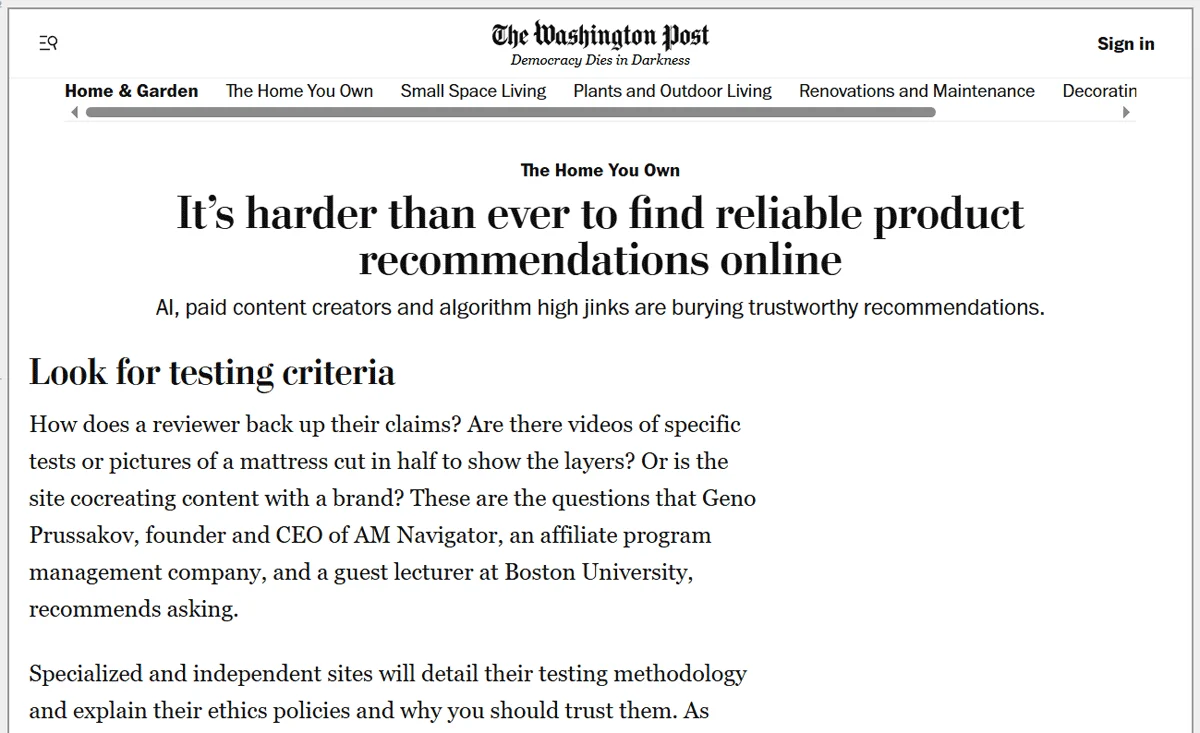
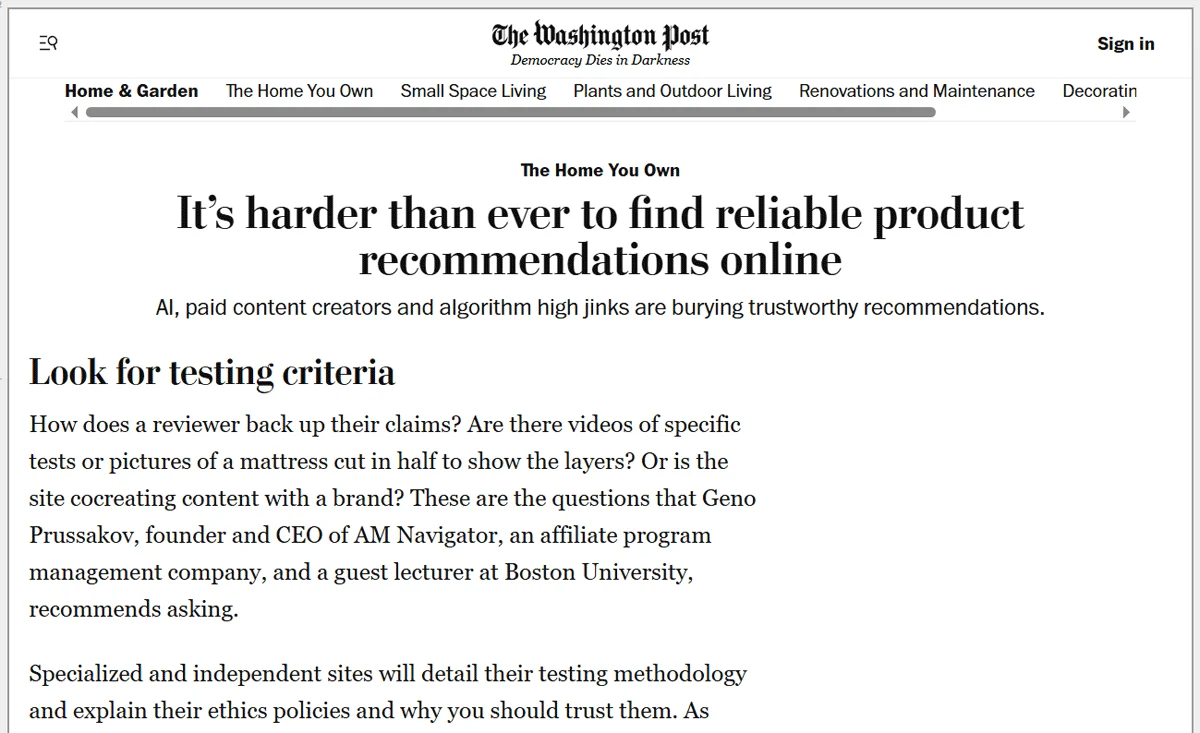
In an era where traditional advertising revenue continues to face systemic challenges, major media conglomerates have pivoted toward "commerce content" as a primary pillar of financial sustainability, transforming editorial authority into a potent tool for affiliate marketing. This shift has come under renewed scrutiny following a detailed investigative report by The Washington Post published on January 13, 2025, which explored the reliability of online product roundups. Geno Prussakov, a prominent expert in affiliate marketing and founder of AM Navigator, provided key insights into the industry, highlighting the delicate balance between editorial integrity and the financial incentives that drive modern digital publishing. As consumers increasingly rely on "Best Of" lists and product recommendations from household-name media outlets, the transparency of these financial arrangements has become a central point of debate in the digital economy.
The Landscape of Commerce Content and Media Monetization
The transition of major media brands into product recommenders is not a recent phenomenon, but its scale has reached unprecedented levels. Outlets such as The New York Times with its "Wirecutter" vertical, CNN with "Underscored," and New York Magazine’s "The Strategist" have set a blueprint for how legacy media can leverage their high search engine authority to capture consumer intent. This model, often referred to as commerce content, involves publishing reviews and product guides that contain affiliate links. When a reader clicks these links and makes a purchase, the publisher receives a commission from the retailer.
According to industry data, the affiliate marketing industry was valued at approximately $15.7 billion in 2024, with a significant portion of that growth attributed to large-scale media publishers. For many organizations, this revenue stream has outpaced traditional display advertising, providing a more stable income source in a landscape dominated by programmatic ad-buying and social media giants. However, the monetization of "search engine authority"—the trust Google and other search engines place in established domains—raises critical questions about whether a product is being recommended because it is truly the best, or because it offers the highest financial return to the publisher.
Chronology of the Shift Toward Affiliate-Driven Journalism
The evolution of this industry can be traced through several key milestones over the past fifteen years:
- The Early 2010s: The Rise of Independent Review Sites: Independent platforms like The Wirecutter (founded in 2011) began to prove that rigorous, hands-on testing could be paired with affiliate marketing without losing consumer trust.
- 2016: The Institutionalization of Commerce Content: The New York Times acquired The Wirecutter for approximately $30 million, signaling to the broader media industry that product recommendations were a viable and prestigious revenue model.
- 2018–2022: Rapid Expansion and Integration: Major networks like CNN, NBC, and CBS launched dedicated commerce wings. Magazine giants like Hearst and Dotdash Meredith integrated affiliate strategies across their entire portfolios, from fashion to home goods.
- 2023–2024: The Impact of Search Algorithm Updates: Google’s "Helpful Content" updates began to penalize low-quality review sites, ironically further concentrating power in the hands of "Big Media" outlets whose high domain authority allowed them to dominate search results regardless of the depth of their original testing.
- January 2025: The Washington Post Investigation: The publication of "The Problem with Product Roundups" brought mainstream attention to the potential conflicts of interest inherent in these models, featuring expert analysis from industry veterans like Prussakov.
Supporting Data: The Economics of Recommendation Lists
The financial mechanics behind a "Best Product" list are multifaceted. While many publishers maintain a "church and state" separation between their editorial teams and their affiliate departments, the economic realities are hard to ignore.
- Commission Rates: These typically range from 1% to 15%, depending on the product category. Luxury goods and software often command higher rates, while consumer electronics generally offer lower margins.
- EPC (Earnings Per Click): This is a critical metric for publishers. If a $500 vacuum cleaner has a lower conversion rate than a $200 one, the publisher may earn more from the cheaper product, potentially influencing its placement on a list.
- Placement Fees and "Flat Fees": Beyond commissions, some merchants pay for "preferred placement." This means a brand might pay a media outlet a set fee (ranging from $5,000 to $50,000 or more) simply to be included in a roundup, regardless of whether a sale is made.
- Hybrid Models: Many agreements now include a combination of high commission rates and guaranteed EPCs, where the merchant promises a minimum return to the publisher in exchange for top-tier visibility.
Industry Standards and Editorial Safeguards
Despite the potential for conflict, industry experts like Prussakov maintain that the most reputable media players treat their recommendation business with significant gravity. Before a product is endorsed, these organizations typically engage in a four-step verification process:
First, many outlets employ dedicated research teams that conduct dozens of hours of "homework" before a single word is written. This includes interviewing industry experts, such as engineers or medical professionals, to understand the technical specifications of a product category. Second, they analyze thousands of verified customer reviews to identify long-term durability issues that a short-term test might miss. Third, they perform hands-on testing, often in controlled laboratory environments or through real-world "stress tests." Finally, they vet the merchant’s reputation, ensuring that the company providing the product has a history of reliable customer service and fair return policies.

A spokesperson for a major media commerce division, speaking on the condition of anonymity, stated: "Our brand is our most valuable asset. If we recommend a sub-par product just for a higher commission, we might make a few thousand dollars today, but we lose the lifetime trust of that reader. The long-term math doesn’t support selling out."
Consumer Vigilance: Navigating the "Best Of" Landscape
As the line between editorial content and advertising continues to blur, consumer advocacy groups recommend several strategies for shoppers to ensure they are receiving objective advice.
One primary recommendation is to look for detailed "How We Tested" sections. Transparency regarding the methodology—such as specific metrics used to judge a product—is a hallmark of high-quality journalism. Conversely, lists that provide only generic descriptions often indicate that no physical testing took place.
Furthermore, consumers are encouraged to cross-reference recommendations across multiple independent sources. If a product appears as "Number One" on several diverse platforms, its quality is more likely to be legitimate. Shoppers should also pay close attention to disclosure statements. While the Federal Trade Commission (FTC) requires clear disclosure of affiliate relationships, the placement and wording of these disclosures can vary significantly in their prominence.
Broader Impact and the Future of Digital Trust
The implications of this shift extend far beyond individual purchasing decisions. The dominance of big media in product recommendations has created a "winner-take-all" ecosystem. Small, independent bloggers and niche experts often find it impossible to compete in search engine results against giants like CNN or The New York Times, even if the smaller creators have deeper subject matter expertise.
This concentration of power has led to concerns regarding the "homogenization" of recommendations. When a handful of media companies control the top search results for thousands of products, they effectively become the gatekeepers of the consumer economy. If these gatekeepers are influenced by placement fees or inflated commission rates, the "invisible hand" of the market is replaced by the calculated interests of corporate affiliate departments.
Looking forward, the rise of Artificial Intelligence (AI) presents a new challenge. AI-generated product reviews and "scrapers" that aggregate existing lists can flood the internet with low-quality recommendations, making the curated, human-verified lists of major media outlets even more valuable—and their potential for bias even more significant.
Conclusion: The Responsibility of Authority
The findings from The Washington Post and the insights provided by experts like Geno Prussakov underscore a pivotal moment in digital media. As the industry continues to evolve, the burden of proof lies with the publishers to demonstrate that their recommendations are based on merit rather than margin. For the consumer, the era of "blind trust" in legacy brands has ended, replaced by a need for digital literacy and a healthy skepticism of the "buy now" button. The monetization of trust is a high-stakes game; once lost, that authority is rarely regained, regardless of how high a website may rank in a search engine’s results.