rifanmuazin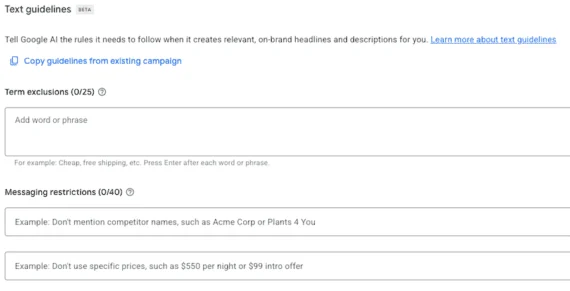
In a significant move to further integrate artificial intelligence into its advertising ecosystem, Google has announced three forthcoming ad updates designed to enhance advertiser control and campaign effectiveness. The announcements come just ahead of its highly anticipated Google Marketing Live event, scheduled for May 20, 2026. These innovations—AI Max for Shopping campaigns, AI Brief, and text disclaimers for Search—all leverage AI, with Google emphasizing the implementation of robust guardrails to ensure responsible and effective use by advertisers. These developments signal a continued commitment by Google to harness AI to refine ad targeting, creative generation, and compliance within its expansive advertising platforms.
The introduction of AI Max for Shopping marks the natural progression of Google’s AI-driven advertising solutions, following the successful rollout of AI Max for Search in the previous year. AI Max for Search was designed to provide Google with greater autonomy in determining which search queries trigger advertisements and how those advertisements are presented. For instance, an advertiser targeting the keyword "clear storage bins" could, with AI Max enabled, have their ad displayed for a related query such as "What are the differences between clear and plastic storage bins?" Furthermore, Google possesses the capability to dynamically adjust ad text and redirect users to optimized final URLs to boost conversion rates.
AI Max for Shopping is poised to operate on a similar principle, with a notable distinction: it will enable the generation of text ads from Google-created copy derived from an advertiser’s Merchant Center data. This means that even within a Shopping campaign, which traditionally emphasizes image-based product listing ads, searchers might encounter text advertisements. Advertisers who opt into AI Max for Shopping will also see their ads integrated into Google’s emerging AI Overviews and AI Mode features, mirroring the functionality introduced with AI Max for Search. A key point of inquiry for advertisers will be whether they can retain the same level of control over text customization and final URL expansion in Shopping campaigns as they can in Search campaigns, a detail that Google has yet to fully disclose.
It is crucial for advertisers to understand the nuances between AI Max and Performance Max campaigns. Google generally recommends Performance Max for comprehensive, multi-channel promotional strategies spanning Search, Shopping, Display, and Video. It is widely anticipated that Google will incorporate text customization capabilities into Shopping ads within Performance Max campaigns, further consolidating its AI-driven offerings. For advertisers focused on single-channel advertising, such as purely Search or Shopping campaigns, AI Max is positioned as the preferred solution. This strategic segmentation suggests Google’s aim to provide tailored AI solutions for diverse advertising objectives and campaign structures.
AI Brief, the second major update, is designed to provide Google’s AI with a clearer understanding of advertiser preferences and constraints. This feature will initially be rolled out within AI Max for Search, with subsequent expansions planned for Performance Max and AI Max for Shopping. Within an AI Brief, advertisers will be able to articulate specific directives, such as the example provided of an advertiser selling high-end office chairs who might specify target demographics, preferred keywords, undesirable search terms, and desired brand messaging. While such detailed guidelines can demonstrably improve campaign performance by aligning AI output with brand objectives, there is a potential risk that overly restrictive parameters could inadvertently limit the algorithm’s ability to explore optimal ad variations and reach new audiences.
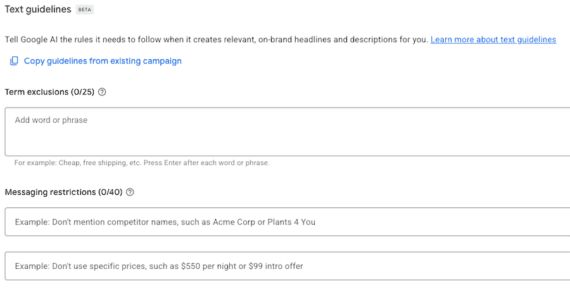
The "Text guideline" feature within AI Brief is expected to closely resemble the existing functionality in AI Max campaigns. This interface, currently in beta, allows advertisers to input specific rules and exclusions to ensure that AI-generated headlines and descriptions remain on-brand. For example, advertisers can define "Term exclusions" to prevent certain words or phrases, such as "cheap" or "free shipping," from appearing in their ads. Similarly, "Messaging restrictions" allow advertisers to set boundaries, such as prohibiting the mention of competitor names or specific pricing details. The ability to "Copy guidelines from existing campaign" further streamlines the setup process, allowing advertisers to leverage established best practices. This level of granular control is a significant step towards building advertiser confidence in AI-driven ad creation, offering a balance between automation and advertiser oversight.
The third announcement, text disclaimers for Search, introduces a new capability for advertisers to include crucial terms, conditions, and disclosures directly within their Search ads. For instance, an advertiser could add a disclaimer like "Product is BPA-Free. Learn More." This text will appear in the description line of Responsive Search Ads, crucially without the need for manual pinning, which can negatively impact ad strength scores. Unlike pinning, which can sometimes hinder optimization by forcing specific ad components, text disclaimers are designed to coexist harmoniously with the ad’s overall performance.
The implications of text disclaimers are multifaceted. Firstly, they offer a more direct and integrated way to communicate important product features or legal requirements to potential customers at the point of search. This can enhance transparency and build trust. Secondly, the fact that these disclaimers do not affect ad strength scores is a significant advantage. Ad strength, while a metric that Google suggests correlates with better performance, can sometimes be a point of frustration for advertisers when specific additions limit their score. By circumventing this issue, text disclaimers allow for enhanced messaging without sacrificing potential visibility.
These disclaimers will be configurable at the individual campaign level and will reside within the "Assets" section of the "Campaigns" tab. They will occupy the first available description slot and are capped at 90 characters, ensuring they remain concise and impactful. Importantly, text disclaimers can be used in conjunction with final URL expansion and customized ad text, providing advertisers with considerable flexibility in their messaging strategy. This feature is particularly valuable for industries with stringent regulatory requirements or for products that benefit from highlighting specific certifications or attributes.
The strategic timing of these announcements, just days before Google Marketing Live, underscores their importance to Google’s future advertising roadmap. Google Marketing Live is an annual event where the company typically unveils its most significant product updates and strategic directions for advertisers. The focus on AI across these three new features suggests that AI integration is not merely an add-on but a core pillar of Google’s ongoing development efforts.
Background Context and Chronology
The journey towards these AI-driven updates has been a gradual but accelerating one. Google has consistently invested in AI and machine learning to improve its advertising platforms, aiming to deliver more relevant ads to users and better results for advertisers.
- 2023: Google introduced AI Max for Search, a precursor to the broader AI Max offerings. This marked a significant shift towards AI taking a more active role in ad creation and targeting for Search campaigns.
- Early 2024: Discussions and previews of AI-powered features continued, with a growing emphasis on generative AI’s potential within advertising. The concept of AI providing advertisers with greater control over AI output, while still leveraging AI’s automation capabilities, began to take shape.
- May 2024: Leading up to Google Marketing Live 2024, the company announced these three key updates, signaling a substantial leap forward in AI integration for Search and Shopping campaigns. The rollout is expected to commence shortly after the event.
Supporting Data and Industry Trends
The advertising industry is witnessing a profound transformation driven by AI. According to recent market research, the global AI in advertising market is projected to grow at a compound annual growth rate (CAGR) of over 30% from 2024 to 2030, reaching hundreds of billions of dollars. This growth is fueled by the demand for more personalized advertising, improved campaign efficiency, and enhanced data analysis capabilities.
- Personalization: AI enables advertisers to tailor ad content and delivery to individual user preferences and behaviors, leading to higher engagement rates. Studies have shown that personalized ads can increase click-through rates by as much as 10-20%.
- Efficiency: Automation powered by AI can reduce the manual effort required for campaign management, ad creation, and optimization, freeing up marketing teams to focus on strategy.
- Predictive Analytics: AI algorithms can analyze vast datasets to predict consumer trends, identify high-value customer segments, and forecast campaign performance, allowing for more informed decision-making.
Google’s announcements align perfectly with these industry trends, positioning the company as a leader in leveraging AI to meet the evolving needs of advertisers.
Official Responses and Inferred Reactions
While direct quotes from Google executives regarding these specific updates outside of official press releases are not available prior to Marketing Live, the company’s consistent messaging around AI integration provides insight. Google’s stated goal is to "empower advertisers with AI to achieve more." The emphasis on "guardrails" suggests an awareness of advertiser concerns regarding control, transparency, and potential misuse of AI.
Industry analysts and advertising professionals are likely to view these updates with a mixture of anticipation and cautious optimism. The potential for increased efficiency and improved performance is a significant draw. However, questions about the precise level of advertiser control, the impact on campaign creativity, and the long-term implications for the advertising landscape will undoubtedly be subjects of intense discussion.
Broader Impact and Implications
The introduction of AI Max for Shopping, AI Brief, and text disclaimers has several significant implications for advertisers and the broader digital advertising ecosystem:
- Enhanced Automation and Efficiency: Advertisers can expect to see a further reduction in manual tasks, allowing for more strategic focus. The AI’s ability to optimize ad copy and targeting in real-time promises greater efficiency and potentially higher ROI.
- Deeper AI Integration: These updates signal that AI is becoming an indispensable component of advertising strategies. Advertisers who fail to adapt and leverage these AI-powered tools may find themselves at a competitive disadvantage.
- Evolving Role of Advertisers: The role of the advertiser may shift from manual execution to strategic guidance and oversight of AI systems. Understanding how to effectively brief AI and interpret its outputs will become critical skills.
- Increased Transparency and Compliance: The text disclaimer feature directly addresses the need for clear communication of terms and conditions, which is particularly important in regulated industries. This can foster greater trust between brands and consumers.
- The Future of Search and Shopping: The integration of AI into these core campaign types suggests a future where search results and shopping experiences are increasingly dynamic and personalized, driven by sophisticated AI algorithms.
As Google Marketing Live approaches, the industry will be keenly watching for further details on the rollout timelines, specific functionalities, and the strategic vision behind these AI-driven advancements. These updates represent a significant evolution in how advertisers can harness the power of artificial intelligence to connect with consumers and achieve their business objectives in the increasingly complex digital landscape. The commitment to providing "guardrails" suggests Google’s understanding that successful AI adoption hinges on building trust and ensuring that advertisers remain in control of their brand narrative, even as AI takes on more sophisticated roles in campaign execution.