rifanmuazin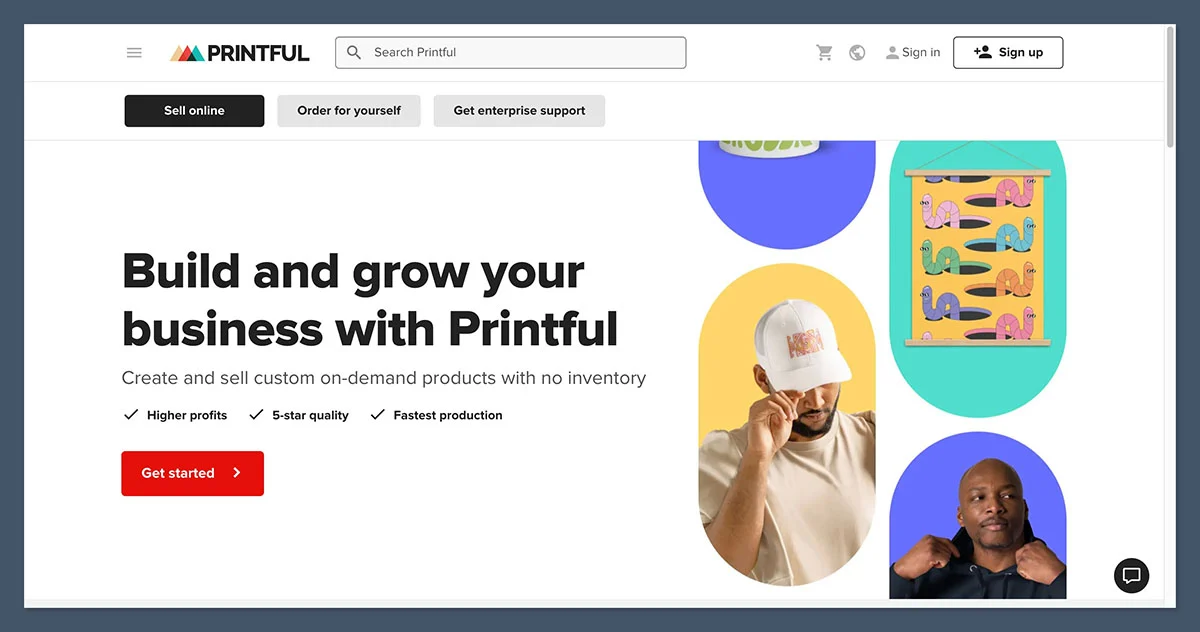
The landscape of influencer marketing is continuously evolving, with creators leveraging their platforms to build robust brands that extend far beyond content creation. A significant facet of this brand expansion is the development of merchandise lines. In 2026, the demand for high-quality, well-branded merchandise has surged, prompting a critical evaluation of the print-on-demand (POD) platforms that facilitate these ventures. After more than 150 hours of comprehensive research and rigorous testing of ten leading POD platforms, a select group of the best options for influencers and creators aiming to launch or scale their merchandise operations has been identified. This analysis highlights the critical shifts in the influencer merch market, with integrations like TikTok Shop, the rise of AI-powered storefronts, and the increasing importance of global fulfillment becoming paramount considerations.
At the forefront of these recommendations is Printful, lauded as the premier choice for brand-first creators. This platform distinguishes itself through its unwavering commitment to premium quality, extensive integration capabilities with popular e-commerce platforms, and robust branding options designed to ensure a creator’s identity remains the central focus.
"In a market where fans are increasingly discerning and skeptical of generic, low-effort merchandise, Printful empowers creators to deliver products that feel intentional and reflect their unique brand essence," stated a representative from the research team. "The combination of superior product quality, unparalleled branding control, and proven reliability makes it the ideal backbone for any influencer who views their merchandise as a genuine extension of their personal brand, rather than a mere transactional add-on."
The expanded mobile app in 2026 further solidifies Printful’s position, offering creators enhanced on-the-go management of orders, a crucial feature for individuals juggling content creation, community engagement, and simultaneous merchandise launches.
Print-on-Demand Platform Comparison: Key Features at a Glance
To aid creators in making an informed decision, a detailed comparison of the top POD platforms has been compiled, offering a side-by-side view of their strengths and suitability for various merchandise goals.
| Platform | Best For | Starting Price | Storefront Integrations | Branding Options | Product Catalog |
|---|---|---|---|---|---|
| Printful | Brand-first merch stores | Free (Growth plan from ~$24.99/mo) | Shopify, Etsy, WooCommerce, Wix, Squarespace, BigCommerce, Amazon | Custom neck tags, inside labels, branded packaging, pack-ins | 350+ products |
| Printify | Margins and variety | Free (Premium from $29.99/mo) | Shopify, Etsy, WooCommerce, Wix, BigCommerce | Limited (provider-dependent) | 900-1,000+ products |
| Spring | YouTube and social creators | Free | YouTube merch shelf, TikTok, Instagram, native storefront | Basic | 200+ products |
| MyDesigns | High-volume automation | From $19.99/mo | Etsy, Shopify, TikTok Shop | AI-assisted mockups | Provider-dependent |
| Merch by Amazon | Amazon-centric audiences | Free (approval required) | Amazon only | Minimal | Limited apparel categories |
#1. Printful: The Benchmark for Brand-First Merch Stores
Printful stands out as the preeminent recommendation for influencers seeking to establish a merchandise store that exudes professionalism and a distinct brand identity, moving beyond the perception of simply offering generic apparel. The platform’s comprehensive branding capabilities—including custom inside labels, personalized neck tags, branded packaging, and the inclusion of custom pack-ins—ensure that the creator’s brand remains consistently at the forefront, eclipsing the presence of the fulfillment partner.
Testing Printful’s integration with Shopify revealed a seamless and well-documented setup process. The platform consistently receives high marks for product quality, particularly in areas like embroidery and direct-to-garment (DTG) printing. This consistent quality is paramount for creators whose audience associates their name with a specific standard of excellence.
The Printful Growth plan, which now features priority processing and volume discounts, becomes complimentary for stores achieving approximately $12,000 in annual sales. This tier is particularly beneficial for mid-tier influencers who are actively scaling their merchandise operations and seeking cost efficiencies as their sales volume increases.
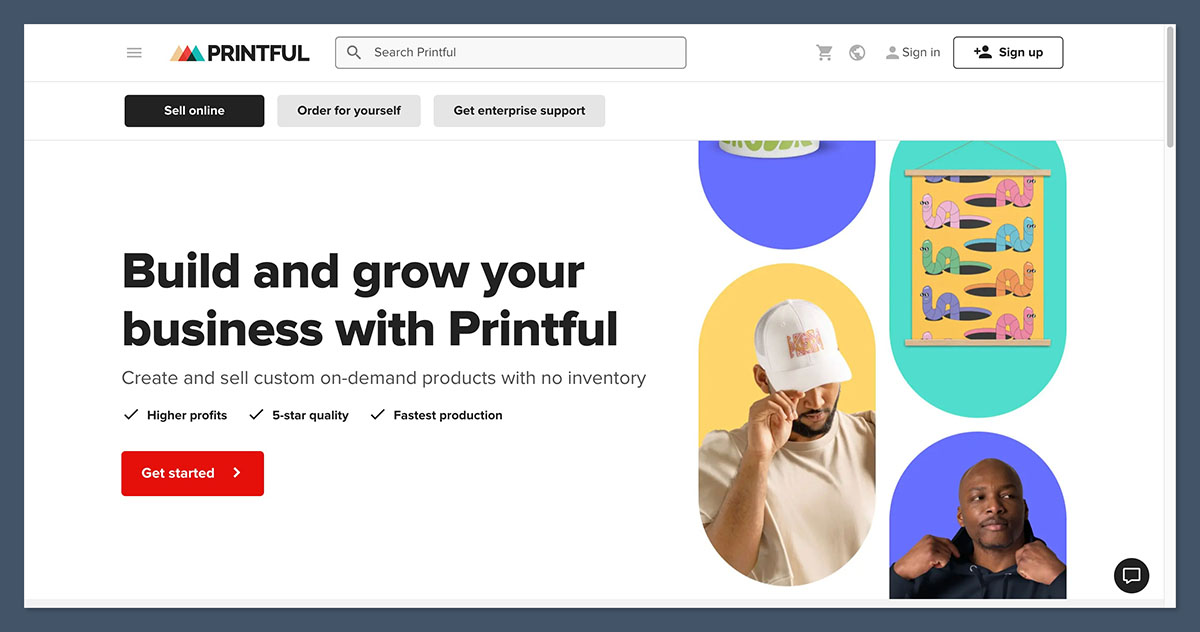
What truly elevates Printful for influencer merchandise is its meticulously crafted white-label shipping experience. Every touchpoint, from the shipping label to the interior of the garment, is designed to reinforce the creator’s brand. For influencers committed to building a direct-to-consumer (DTC) presence rather than merely monetizing their audience with fleeting merchandise drops, this level of brand control is instrumental.
Printful Pricing Structure:
Printful operates on a pay-as-you-go model with no upfront inventory costs. While the platform offers a free plan, optional paid tiers provide enhanced features such as custom branding, priority support, and volume discounts. The "Growth" plan, priced around $24.99 per month, offers benefits like priority fulfillment and potential volume discounts, making it an attractive option for growing businesses. Premium features and higher order volumes may unlock further cost savings and operational efficiencies.
Printful is Ideal For:
- Creators prioritizing a premium, branded merchandise experience.
- Influencers focused on building long-term brand loyalty and a DTC presence.
- Those who value high-quality products and a seamless customer unboxing experience.
- Users who require deep integrations with platforms like Shopify, Etsy, and WooCommerce.
Printful is Not Ideal For:
- Creators whose primary objective is maximizing per-unit profit margins at all costs, as its pricing is generally higher than some competitors.
- Individuals seeking the absolute widest product catalog, as Printful offers a curated selection rather than an exhaustive marketplace.
Why Choose Printful in 2026?
In an era where consumer trust in merchandise is increasingly tied to authenticity and perceived value, Printful enables creators to offer products that resonate deeply with their audience. Its synergy of quality production, comprehensive branding control, and steadfast reliability forms a robust foundation for any influencer aiming to cultivate their merchandise as a true brand extension.
#2. Printify: Maximizing Margins and Product Variety
Printify emerges as the preferred platform for influencers who aim to experiment extensively with designs, conduct frequent product drops, or achieve the highest possible profit margins. Its innovative print-provider marketplace model empowers users to select suppliers based on geographic location, pricing, and customer ratings, thereby providing granular control over product costs and delivery timelines.
With an expansive product catalog boasting between 900 and 1,000+ items—ranging from apparel and accessories to home decor and even niche categories like pet products and custom supplements—Printify significantly surpasses the variety offered by any other platform on this list.
The primary trade-off with Printify lies in its decentralized approach: while offering greater flexibility and potentially lower costs, it necessitates a more involved process of supplier curation. Unlike the uniform experience provided by Printful, Printify’s product quality is contingent upon the specific print provider chosen for each item. It is strongly recommended that creators order samples from at least two to three different providers before committing to a product line, ensuring quality consistency and alignment with brand expectations.
Printify Pricing Structure:
Printify offers a free tier that allows creators to start selling with no upfront costs. For those seeking enhanced features, such as access to premium design features, reduced printing costs, and priority support, the "Premium" plan is available starting at $29.99 per month. This tiered pricing model allows creators to scale their investment as their business grows.
Printify is Ideal For:
- Creators focused on maximizing profit margins through competitive supplier pricing.
- Influencers who want to offer a wide array of product types and variations.
- Those willing to invest time in curating and managing relationships with multiple print providers.
- Businesses seeking localized fulfillment options across different geographic regions.
Printify is Not Ideal For:
- Creators who prioritize a fully standardized, hands-off quality control experience.
- Beginners who may find the supplier selection process overwhelming.
- Influencers who require extensive built-in branding options directly within the platform.
Why Choose Printify in 2026?
For influencers who view their merchandise as a dynamic experimentation channel—testing various slogans, designs, and product types across their audience—Printify’s combination of competitive base prices and an immense catalog offers unparalleled efficiency for iterative development. Furthermore, the provider marketplace facilitates localized fulfillment without the need to switch platforms, enabling US orders to be routed to US-based printers and European orders to European ones. Printify’s deep integration within the Shopify ecosystem, trusted by hundreds of thousands of merchants, ensures a mature and well-supported experience.
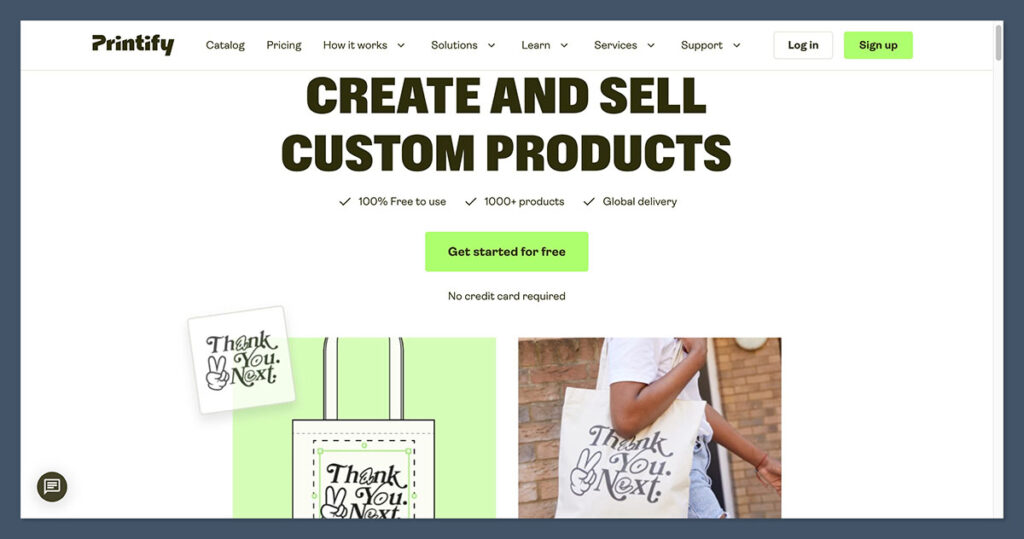
#3. Spring (formerly Teespring): The Fast Track for Social Creators
For creators prioritizing immediate access to their audience without the complexities of setting up a dedicated e-commerce store, connecting a fulfillment partner, or incurring upfront expenses, Spring offers the most streamlined path from concept to live product.
Its native integration with YouTube’s "merch shelf" is a particularly potent tool for creators with highly engaged subscriber bases, enabling them to display products directly beneath their videos and on their channel pages, thereby driving direct conversions.
The core strength of Spring—its speed and simplicity—also represents its primary limitation: it is engineered for rapid deployment rather than the cultivation of a standalone, branded identity. Custom neck tags and branded packaging are not available, and creators have less visibility into customer data compared to a combined Shopify and Printful solution.
For creators in the initial stages of testing audience demand for merchandise, Spring effectively removes most barriers to entry. However, for those who have validated demand and are looking to elevate their merchandise strategy, Spring functions most effectively as a complementary channel alongside a primary, brand-owned store.
Spring Pricing Structure:
Spring operates on a free-to-start model, eliminating upfront costs for creators. The platform takes a percentage of each sale to cover its operational costs, meaning creators only pay when they make a sale. This model is highly attractive for new creators looking to minimize financial risk.
Spring is Ideal For:
- YouTube and social media creators looking for a quick and easy way to launch merch.
- Influencers who want to leverage platform-specific integrations like YouTube’s merch shelf.
- Creators testing the waters of merchandise sales with minimal upfront investment.
- Those prioritizing ease of use and speed to market above extensive branding options.
Spring is Not Ideal For:
- Creators focused on building a strong, independent brand identity through their merchandise.
- Businesses requiring deep customer data insights or advanced e-commerce functionalities.
- Those who need extensive customization options for product labeling and packaging.
Why Choose Spring in 2026?
The seamless integration with YouTube’s merch shelf is a compelling advantage for YouTube creators, placing products directly within the viewer’s natural environment and eliminating friction in the purchasing process. In 2026, with diminishing attention spans and audiences fragmented across multiple platforms, this frictionless commerce experience is invaluable. Spring’s support for TikTok and Instagram integrations further solidifies its position as a versatile multi-channel option for social-first creators who are not yet prepared to manage a comprehensive e-commerce infrastructure.
#4. MyDesigns: Engineered for High-Volume Automation
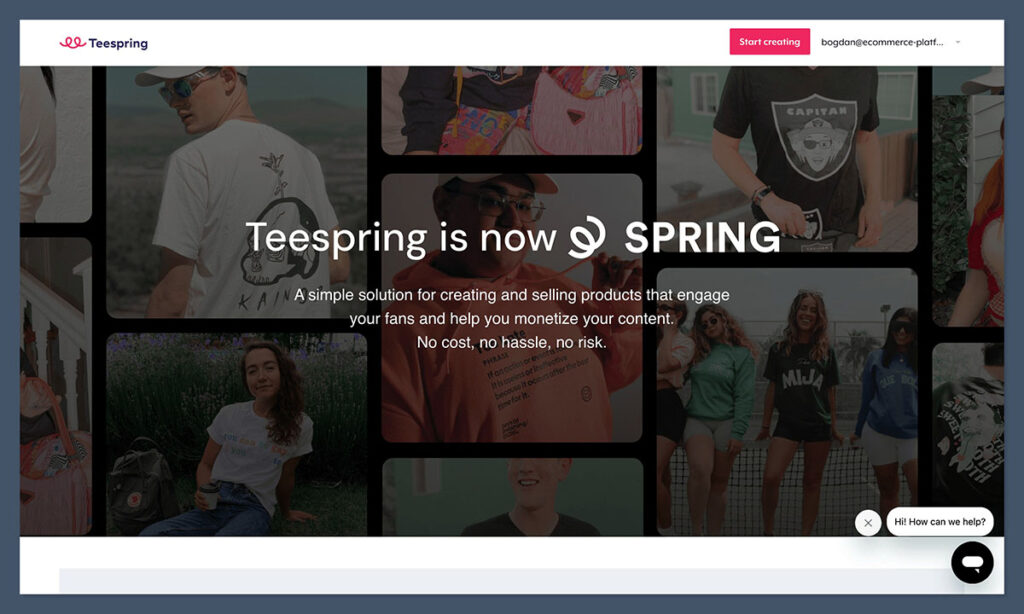
MyDesigns caters to a distinct segment of the influencer merchandise market: operations characterized by high volume, extensive automation, and often managed by teams or agencies rather than the creator directly. Its bulk publishing capabilities allow for the simultaneous upload of up to approximately 120 products, complemented by AI-assisted design workflows and thousands of automatic mockup generators, significantly reducing manual effort.
This platform is exceptionally well-suited for agencies managing merchandise for multiple creators or for individual creators who aggressively test design variations, color schemes, and slogans across platforms like Etsy, Shopify, and TikTok Shop. MyDesigns’ robust tooling for Etsy, in particular, makes it a prime choice for creators whose audiences are accustomed to purchasing through the Etsy marketplace.
MyDesigns Pricing Structure:
MyDesigns offers tiered pricing plans, starting from $19.99 per month. These plans are designed to accommodate creators and agencies with varying needs, from individual entrepreneurs to larger operations. The pricing reflects the advanced automation and integration features provided, which are crucial for high-volume businesses.
MyDesigns is Ideal For:
- Agencies managing merchandise for multiple influencers.
- High-volume creators who frequently test new designs and product lines.
- Businesses focused on automation and streamlining their design and publishing workflows.
- Creators leveraging Etsy and TikTok Shop extensively.
MyDesigns is Not Ideal For:
- Beginners or solo creators seeking the simplest possible entry into merchandise sales.
- Those who require extensive built-in e-commerce storefront features beyond product listing and publishing.
- Creators prioritizing deep, brand-centric customization on every product.
Why Choose MyDesigns in 2026?
The influencer merchandise sector is experiencing a maturation, with what was once a supplementary income stream for many creators now evolving into a core revenue driver managed with the same rigor as any established e-commerce business. MyDesigns directly addresses this evolution. Its bulk workflows, advanced AI tooling, and multi-marketplace publishing capabilities enable the efficient management of merchandise lines at scale, without necessitating an enormous team. This is precisely the capability required in 2026 as creators diversify their income streams and compete for consumer attention across an ever-expanding array of channels.
#5. Merch by Amazon: Tapping into Amazon’s Vast Audience
Merch by Amazon provides creators with unparalleled access to Amazon’s immense organic traffic and its efficient Prime shipping network. This is a substantial advantage for creators whose audiences are already active purchasers on the platform. The service operates without any upfront costs, with Amazon assuming responsibility for production, shipping, and customer service.
The fundamental trade-off with Merch by Amazon is the sacrifice of brand identity. Merchandise is listed within Amazon’s marketplace, adhering to its design conventions, and creators have minimal direct control over the customer relationship. For influencers who already generate significant Amazon affiliate revenue or whose audiences default to Amazon for their purchasing needs, it serves as a natural and effective secondary sales channel. However, as a primary strategy for building an independent merchandise brand, its limitations become apparent.
Merch by Amazon Pricing Structure:
Merch by Amazon is free to join, requiring an application and approval process. Creators earn royalties based on the sales price of their products, with Amazon handling all production and fulfillment costs. Royalty rates vary depending on the product type and the price set by the creator.
Merch by Amazon is Ideal For:
- Creators with a strong audience presence on Amazon or those who can drive traffic to Amazon listings.
- Influencers looking for a low-risk, zero-upfront-cost entry into merchandise sales.
- Those who prioritize leveraging Amazon’s vast customer base and fast shipping.
Merch by Amazon is Not Ideal For:
- Creators focused on building a distinct, independent brand identity for their merchandise.
- Those who want direct control over customer data and relationships.
- Influencers who require extensive customization options for product presentation and branding.
Why Choose Merch by Amazon in 2026?
Amazon’s search traffic remains exceptionally potent, and its Prime shipping sets a benchmark for customer expectations that few other POD fulfillment services can match in terms of speed. In 2026, with two-day delivery becoming the de facto standard for online shoppers, a Merch by Amazon presence offers a significant logistical advantage. It functions best as a supplementary channel, complementing a brand-owned store by capturing the segment of the audience that exclusively shops on Amazon.
How to Choose the Right POD Platform for Your Merch
Selecting the optimal print-on-demand platform is intrinsically linked to an influencer’s current stage in their career, the expectations of their audience, and the desired level of brand control. While comparative analyses are invaluable, the ultimate decision hinges on identifying personal priorities and accepting necessary trade-offs.
Key factors to consider when evaluating POD platforms include:
- Brand Control and Identity: The ability to incorporate custom labels, packaging, and inserts significantly impacts the perceived value and authenticity of the merchandise. Platforms offering white-label fulfillment, such as Printful and Printify, provide greater control, while marketplace-centric tools like Spring and Merch by Amazon prioritize convenience over extensive branding.
- Product Catalog and Fit: The availability of product types that resonate with the target audience is crucial. While basic apparel is standard, niche creators in areas like gaming, pet care, home decor, or fitness may find Printify’s expanded catalog or specialized providers more suitable.
- Margins vs. Quality: Lower base prices, often found with Printify and specific regional providers, can enhance per-unit profit margins but may introduce variability in product quality. Conversely, higher base prices, typical of Printful, can mitigate refund risks and support premium pricing strategies when a strong brand narrative is in place.
- Geography and Shipping: The geographic distribution of an influencer’s audience is a critical consideration. For a US-centric fanbase, a US-based provider may suffice. However, for a global following spanning Europe, North America, and Latin America, platforms with distributed fulfillment capabilities are essential to optimize shipping costs and delivery times.
- Tech Stack and Integrations: Shopify continues to be the central hub for most creator merchandise stores, with Printify and Printful offering the most robust integrations within this ecosystem. The increasing importance of TikTok Shop and Etsy syncing for short-form content commerce further influences platform selection.
- Scalability: The platform’s ability to grow alongside the creator’s business is paramount. A creator launching their initial product line has different requirements than one managing hundreds of SKUs across multiple marketplaces. MyDesigns and Printify are specifically designed for scalability, whereas Spring and Merch by Amazon are better suited as introductory or supplementary channels.
Testing Methodology: A Deep Dive into POD Platforms
The research team meticulously evaluated ten leading POD platforms, dedicating over 150 hours to a structured testing process encompassing 85 distinct areas of investigation. The assessment was weighted across six core categories, prioritizing those most relevant to influencer merchandise sellers:
| Category | Weight | Assessment Criteria |
|---|---|---|
| Product Quality & Fulfillment | 30% | Print quality consistency, fulfillment speed, shipping reliability, global coverage |
| Branding & Customization | 20% | Custom labels, packaging options, white-label shipping, overall brand presentation |
| Integrations & Tech Stack | 20% | Storefront compatibility (Shopify, Etsy, etc.), social integrations, API quality |
| Pricing & Margins | 15% | Base product costs, shipping prices, monthly fees, achievable profit margins |
| Ease of Use | 10% | Onboarding, product creation workflow, order management, dashboard clarity |
| Catalog & Scalability | 5% | Product variety, niche categories, bulk tools, multi-store support |
Firsthand testing of each platform’s product creation workflow and storefront integrations was conducted, including ordering samples to assess print quality and packaging. This empirical approach ensures that recommendations are grounded in practical experience.
Key Takeaways for Influencer Merch Success in 2026:
- Brand Authenticity is Paramount: Consumers are increasingly discerning; merchandise must reflect genuine brand values.
- Platform Integration is Key: Seamless connections with e-commerce platforms and social media channels are crucial for efficient sales.
- Global Reach Matters: Influencers with international fanbases require platforms offering distributed fulfillment.
- Scalability is Essential: The chosen platform must accommodate growth from initial launch to high-volume operations.
- Quality Over Quantity: While variety is good, consistent product quality builds trust and repeat business.
Final Verdict: The Top Recommendation
Printful stands as the most robust option for influencers who approach merchandise as a strategic brand-building initiative. Its unparalleled combination of quality, branding capabilities, and integration depth makes it the most comprehensive solution available.
However, the optimal platform is subjective and depends on individual creator profiles. For those unsure of where to begin, a pragmatic approach involves starting with a low-friction platform like Spring to validate audience demand. Once demand is confirmed, migrating to a brand-owned stack, such as Shopify integrated with Printful or Printify, becomes a logical next step. The most significant pitfall for influencers in merchandise is over-investing in infrastructure before proving market viability. Beginning with a simple, tested model and scaling to a premium setup once justified by sales data is the most prudent strategy for long-term success.
Frequently Asked Questions
What is the best POD site for influencer merch?
Printful is consistently recommended for influencer merch due to its superior print quality, extensive branding options, and deep integrations. It enables creators to build a legitimate brand identity through their merchandise.
Can I start selling merch with no upfront cost?
Yes. All the platforms discussed allow creators to start selling without upfront inventory costs, as products are printed on demand. Spring and Merch by Amazon have no monthly fees, while Printful and Printify offer free plans with optional paid upgrades.
Which POD platform offers the best margins for creators?
Printify generally provides the best margins due to its marketplace model, which allows creators to source lower base prices from various suppliers. However, this requires careful supplier selection and quality assurance.
Do I need a Shopify store to sell merch?
No. Platforms like Spring and Merch by Amazon offer their own storefronts or marketplace listings. However, for complete brand control and customer data management, a Shopify store connected to Printful or Printify is recommended for serious merchandise operations.
What is the best POD platform for TikTok creators?
For TikTok creators, Spring and MyDesigns offer direct TikTok Shop integrations. Spring is the more accessible starting point, while MyDesigns is better suited for high-volume creators engaging in frequent product testing through short-form content commerce.
Can I use multiple POD platforms simultaneously?
Absolutely. Many successful creators employ a multi-platform strategy, utilizing a Shopify store with Printful for their primary brand, Merch by Amazon as a secondary channel, and Spring for platform-specific integrations. The key is to start with one, master it, and then strategically layer in additional channels as the business grows.