rifanmuazin
The landscape of strategic communications and public relations is undergoing a fundamental transformation as artificial intelligence transitions from a speculative tool to a core component of visibility engineering. At the center of this shift is the PESO Model—an industry-standard framework encompassing Paid, Earned, Shared, and Owned media—which is now being redefined by the capabilities of generative AI and predictive analytics. While AI offers unprecedented scale in content repurposing and real-time monitoring, industry experts emphasize that human judgment remains the critical arbiter of trust, emotional resonance, and organizational strategy. This evolution marks a departure from traditional PR tactics toward a data-driven, hybrid approach where automation handles operational mechanics while human professionals focus on high-level strategic outcomes.
The Foundations of Visibility Engineering and the PESO Model
To understand the impact of artificial intelligence on modern communications, it is necessary to define the framework it seeks to optimize. The PESO Model, originally authored by Gini Dietrich, serves as an operating system for integrated communications. It categorizes media into four distinct yet overlapping quadrants:
- Paid Media: Sponsored content, social media advertising, and lead generation activities.
- Earned Media: Traditional media relations, where third-party credibility is established through news coverage and mentions.
- Shared Media: Social media engagement and community building where the brand and the audience interact.
- Owned Media: The content a company creates and controls, such as blogs, white papers, and podcasts.
Visibility engineering is the professional practice of navigating these channels to ensure a brand’s message is not only seen but is also credible and influential. In the current technological climate, the "engineer" must now manage a suite of AI-driven tools that can process data at a speed and volume impossible for human teams to replicate manually.
Chronology of AI Integration in Communications
The integration of AI into the communications sector has moved through several distinct phases over the last decade. Understanding this timeline provides context for the current state of "visibility engineering."
- 2010–2018: The Era of Basic Automation. During this period, AI was largely confined to "if-then" logic. Tools were used for basic social media scheduling and rudimentary sentiment analysis. Monitoring was reactive rather than predictive.
- 2019–2022: The Emergence of Natural Language Processing (NLP). Early AI models began to assist in drafting simple press releases or analyzing large datasets for media lists. However, concerns regarding intellectual property and data privacy kept AI use limited within corporate environments.
- 2023–2024: The Generative Explosion. The launch of sophisticated Large Language Models (LLMs) like ChatGPT, Claude, and Gemini revolutionized content creation. Communicators began using AI to draft owned content and summarize earned media reports.
- 2025–2026: The Predictive and Agentic Era. Current trends show a shift toward "AI Agents"—autonomous systems that can execute multi-step tasks. AI is now used to predict content performance before it is published and to vet influencers by analyzing years of historical data in seconds.
AI as a Force Multiplier Across the PESO Quadrants
The measurable value of AI within the PESO Model is most evident in its ability to handle operational mechanics. By automating the "busywork," communications teams can address the lean staffing realities that currently plague the industry.
Owned Content and the Art of Repurposing
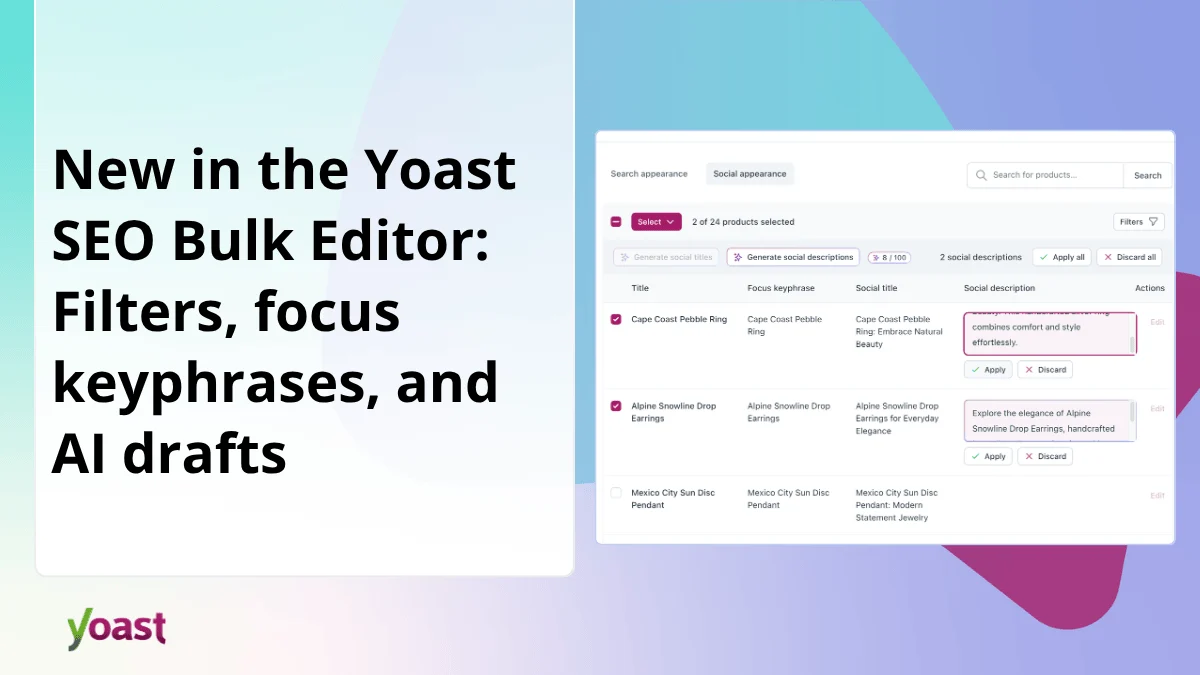
In the "Owned" category, AI serves as a high-speed drafting and formatting tool. A single piece of high-quality cornerstone content—such as a proprietary research report—can be ingested by an AI model and transformed into a variety of formats. This includes LinkedIn carousels, email newsletters, podcast scripts, and social media snippets. This "scale" allows a small team to maintain a massive digital footprint without a proportional increase in headcount.
Real-Time Monitoring in Earned and Shared Media
The "Earned" and "Shared" quadrants benefit from AI’s ability to process vast quantities of data. Modern monitoring tools use AI to track sentiment shifts in near real-time. Rather than waiting for a weekly report, visibility engineers receive alerts the moment a narrative begins to shift. AI can flag anomalies in social media mentions, potentially identifying a burgeoning PR crisis or a viral opportunity hours before it reaches the mainstream.
Predictive Insights and Influencer Vetting
Data-driven decision-making has reached a new level with predictive performance insights. AI tools now analyze historical engagement patterns to suggest the optimal timing for a campaign launch or to identify which keywords are likely to trend in the coming quarter. Furthermore, in the "Shared" media space, AI has streamlined the vetting of influencers. It can detect bot followers, analyze audience alignment, and flag potential brand-safety risks by scanning an influencer’s entire digital history.
Supporting Data: The Efficiency Gap
Recent industry surveys highlight the growing reliance on these technologies. According to data from various PR technology audits in 2024 and 2025, communications professionals report a 40% reduction in time spent on administrative tasks when AI is integrated into their workflow. Additionally, organizations utilizing AI for data-backed storytelling report a 25% higher engagement rate on "Owned" content compared to those relying solely on traditional editorial calendars.
However, the data also suggests a "trust gap." While 70% of professionals use AI for drafting, only 12% believe that AI-generated content can be published without significant human oversight. This discrepancy highlights the "ceiling" of artificial intelligence: it can generate the "what," but it struggles with the "why."
The Human Element: Where AI Reaches Its Limit
Despite the seismic shifts caused by automation, there are several critical areas where AI remains demonstrably inferior to human professionals. These limitations define the future role of the visibility engineer.
Emotional Intelligence and Cultural Context
AI operates on patterns derived from historical data; it optimizes for the past. Consequently, it cannot accurately sense the "emotional undercurrent" of a specific moment. It lacks the ability to understand subtext, cultural nuances, or the collective anxiety of an audience. A tone that was successful three months ago may appear tone-deaf today due to a shift in the political or social climate—a distinction that requires human empathy to recognize.
The Construction of Trust and Credibility
Trust is not a deliverable that can be manufactured through volume. It is an accumulation of consistent, authentic, and human-centered interactions over time. While AI can simulate a human voice, it cannot possess lived experience or a genuine perspective. In an era of "synthetic content," audiences are becoming increasingly skeptical of automated messaging. Human-led communication is the only asset that compounds in value as AI-generated noise increases.
Navigating Organizational Politics
A significant portion of a communications professional’s job involves internal stakeholder management. AI cannot negotiate with a skeptical Chief Financial Officer, reassure a cautious legal team, or align a strategy with a CEO’s specific vision. The ability to translate media results into boardroom outcomes requires a level of political savvy and interpersonal influence that algorithms cannot replicate.
Implications for the C-Suite and Business Outcomes
The transition to an AI-forward PESO strategy has profound implications for how communications departments are viewed within the corporate hierarchy. For decades, PR was often relegated to the role of a "cost center." However, the visibility engineer of 2026 uses AI to bridge the gap between creative output and business metrics.
By using AI to surface data and human expertise to interpret it, professionals can now provide the C-suite with clear evidence of how visibility impacts the bottom line. Executives are less interested in the volume of a content calendar and more concerned with strategic alignment: what the content costs, what it proves, and how it drives trust.
The hybrid model suggests a new workflow for the industry:
- Drafting and Data Surfacing: Use AI to generate initial drafts and collect raw data.
- Strategic Interpretation: Use human judgment to decide if the message is worth saying and if the data is a true signal or merely noise.
- Scaling and Amplification: Use AI to distribute the message across all PESO channels.
- Trust Maintenance: Use human oversight to ensure that scale does not erode the brand’s authenticity.
Broader Impact and the Future of Integrated Visibility
As artificial intelligence continues to evolve, the professional who can navigate the intersection of technology and human psychology will become the most valuable asset in the marketplace. The future of the PESO Model is not a choice between human and machine, but a synthesis of the two.
The "Visibility Engineer" represents a new class of professional—one who lets the "robots" handle the repetitive, operational tasks (the "vacuuming") while they focus on the high-stakes strategy and storytelling. This shift allows for a more durable kind of visibility: one that is integrated, earned over time, and deeply aligned with business goals.
In conclusion, while AI is the world’s most sophisticated tutor and assistant, it cannot replace the professional who understands the cost of trust and the power of a well-told story. The organizations that will win in the coming years are not those that produce the most content, but those that produce the most meaningful content, amplified by AI but grounded in human judgment. The future of visibility is hybrid, and the human element remains the irreplaceable engine of true influence.