rifanmuazin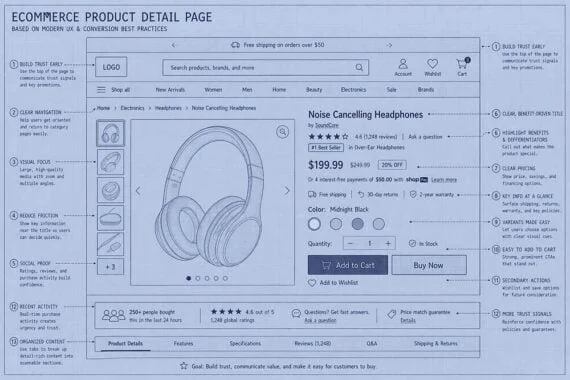
The fundamental purpose of an ecommerce product page has long been conversion – transforming a browsing visitor into a paying customer. For years, this objective has been closely followed by the need to rank well in traditional search engine results. However, the landscape of online discovery and shopping has undergone a seismic shift, making the ability of product pages to be understood and utilized by generative AI systems equally, if not more, critical. In 2026, a product page must excel across three distinct but interconnected domains: traditional search engine optimization (SEO), answer engine optimization (AEO), and generative engine optimization (GEO).
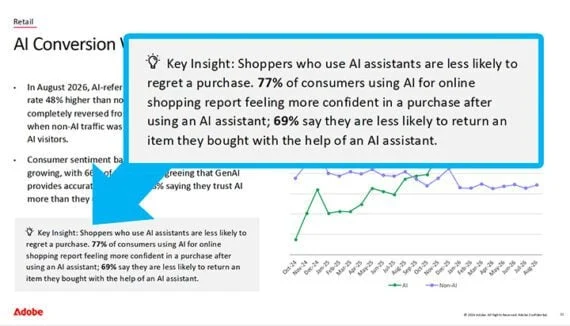
The rapid integration of artificial intelligence into consumer search and shopping journeys is no longer a futuristic concept; it is the present reality. Features like AI Overviews, AI Mode in search engines, sophisticated answer solutions, conversational AI interfaces, and emerging AI-powered shopping agents are fundamentally reshaping how consumers discover and purchase everything from high-value luxury items to everyday necessities. This evolving ecosystem necessitates a reevaluation of what constitutes an effective product page. No longer is simply appearing in search results sufficient; product pages must now be "AI consumable," capable of providing direct answers and presenting products as structured, understandable entities for AI models.
The Trifecta of Product Page Optimization: Rank, Extract, Understand
To thrive in this new era, ecommerce product pages must be optimized for three core functionalities: ranking, extraction, and understanding.
- Ranking (SEO): This refers to the traditional ability of a product page to appear in organic search engine results pages (SERPs) for relevant user queries. It remains a crucial driver of traffic, relying on established SEO principles to ensure visibility.
- Extraction (AEO): This focuses on the page’s capacity to provide concise, direct answers to user questions that can be "extracted" by AI systems. This is vital for features like AI Overviews or quick answer snippets.
- Understanding (GEO): This pertains to how well AI systems can comprehend and utilize the information on a product page, treating the product as a structured entity with defined attributes. This is essential for AI to accurately categorize, compare, and recommend products.
A single product page must now effectively address all three of these optimization layers to achieve maximum visibility and drive conversions.
Content Analysis: A Glimpse into the Current Landscape
An analysis of product detail pages across various ecommerce segments – including major marketplaces like Amazon, large retailers such as Walmart and Target, specialty retailers like L.L.Bean, direct-to-consumer (D2C) brands (categorized as structured, hybrid, and aesthetic), and smaller independent merchants – reveals significant differences in their optimization for these three critical layers. The evaluation focused on the inherent content of these pages, rather than relying on structured data markup alone, to understand how effectively they communicate product information to both human users and AI systems.
The findings indicate a clear hierarchy in performance:
| Segment | Example Sources | Rankable | Extractable | Understandable as Entity |
|---|---|---|---|---|
| Marketplaces | Amazon | Very High | Medium | Very High |
| Large Retailers | Walmart, Target | High | Medium–High | High |
| Specialty Retail | L.L.Bean | Medium | High | Medium–High |
| D2C (Structured) | AG1, Beekman 1802 | Low–Medium | High | Medium |
| D2C (Hybrid) | Casper, Allbirds | Medium | Medium | Medium |
| D2C (Aesthetic) | Vuori, Glossier | Low | Low | Low–Medium |
| Small Merchants | Mixed Shopify stores | Low | Low–Medium | Low–Medium |
Rankable: The Foundation of Traditional Visibility
Traditional search engine optimization continues to be a primary driver of traffic. Across the board, most product detail pages passed a basic content audit for search optimization. However, larger retailers and marketplaces demonstrated a distinct advantage. Their pages typically feature expansive product titles, rich attribute descriptions, and robust internal linking strategies, allowing them to capture a wider array of search queries beyond just the most specific terms.
Amazon, for instance, consistently incorporates a wealth of information on its product pages. This often includes:
- Comprehensive Product Titles: Often exceeding 50 words, these titles incorporate keywords, brand names, model numbers, key features, and use cases, maximizing query matching.
- Detailed Bullet Points: Highlighting primary benefits and features in a scannable format.
- Extensive Product Descriptions: Providing in-depth information, technical specifications, and usage instructions.
- Customer Reviews and Q&A: A significant volume of user-generated content that enriches the page with real-world insights and answers to common questions, significantly boosting keyword density and topical relevance.
- Technical Specifications and Dimensions: Clearly laid out for easy reference.
In some instances, the sheer volume of composite product information, largely driven by customer reviews, can reach upwards of 10,000 words, although a more typical average hovers around 2,000 words. This depth of content is a significant factor in their strong ranking performance.
Conversely, many D2C brands, while excelling in brand consistency and readability with clean, concise naming conventions, may inadvertently limit their organic reach. Their leaner content approach, while aesthetically pleasing, might not provide enough keyword variations or descriptive depth to compete effectively for a broad range of search queries. Smaller merchants often mirror this D2C approach, and by adopting strategies similar to those of Amazon – such as increasing the depth and breadth of product information – they could significantly enhance their search visibility.

Extractable: Feeding the AI Answer Engines
The ability for product pages to be "extractable" is becoming increasingly crucial as AI systems are designed to provide direct answers to user queries. This requires a product page to clearly and concisely articulate what the product is, what it does, and who it is intended for. The answers to these fundamental questions must be easily identifiable and isolatable by AI. This can be achieved through well-structured content, distinct sections for features, and prominent question-and-answer formats.
A significant number of product pages reviewed underperformed in this regard. The information, while present, was often buried within longer narratives or lacked clear, distinct headings that AI could readily parse. The exceptions were again the large retail marketplaces, which frequently include extensive sections dedicated to answering potential customer inquiries, often integrated within their product descriptions and customer Q&A sections.
For smaller retailers, incorporating a dedicated FAQ section on product pages would be a relatively simple yet highly effective way to improve extractability. This would provide AI systems with readily available, concise answers, increasing the likelihood of their product being featured in AI-generated responses.
Understandable: Products as Entities for AI
Data, in its structured and understandable form, is increasingly dictating visibility. Search engines and AI systems are moving towards treating products as distinct entities or objects, characterized by a set of attributes such as brand, category, price, specific technical specifications, and their relationship to other products. While structured data markup (like Schema.org) plays a vital role in defining these entities, the content on the page itself is also a critical factor.
For a product page to be understood as an entity by AI, its content must clearly and consistently define these attributes. This includes the product name, available variants (e.g., size, color, material), and detailed specifications.
Product pages from large retailers, particularly marketplaces, consistently excel in this area. They typically present products with clearly defined attributes, employ normalized naming conventions across similar products, and handle variant information consistently. This structured approach enables their products to be accurately represented in various AI-driven shopping results, comparison tools, and structured data listings. For instance, when an AI agent is tasked with finding a "red, size medium, cotton t-shirt from Brand X," a well-structured product page with clearly defined attributes for color, size, material, and brand will be far more likely to be identified and recommended.
The Convergence: Three Layers for Comprehensive Visibility
The ultimate goal is to combine these three optimization layers to drive traffic from both traditional search channels and the rapidly growing generative AI ecosystem. The analysis revealed that while many product pages are robust in one or two areas, few are truly optimized across all three.
The dominance of marketplaces in providing comprehensive product information is pronounced. Their success in ranking, extracting information, and presenting products as understandable entities provides a clear blueprint for all merchants, regardless of size. The implication is that a product page must no longer be viewed solely through the lens of traditional SEO or conversion rates. Instead, it must be a dynamic content hub designed to serve the evolving needs of AI-powered discovery and decision-making.
Implications for E-commerce in 2026 and Beyond
The findings underscore a critical strategic imperative for ecommerce businesses in 2026: product pages must be meticulously crafted to satisfy the demands of SEO, AEO, and GEO simultaneously.
- For Large Retailers and Marketplaces: Continued investment in content depth, structured attribute definition, and clear, answer-oriented copy will solidify their leadership. They must also ensure their content is easily digestible by evolving AI models, potentially through more sophisticated internal linking and semantic enrichment.
- For Specialty Retailers: The focus should be on enhancing the "extractable" and "understandable" aspects of their content. While their descriptive language might be strong, making key features and specifications more easily isolatable for AI and more explicitly defining product attributes will be crucial for broader AI-driven visibility.
- For D2C Brands: Those with an "aesthetic" focus, in particular, face the most significant challenge. A strategic re-evaluation of content volume and structure is needed. While maintaining brand voice, incorporating more descriptive keywords, structured feature lists, and potentially an FAQ section will be vital. D2C brands that have a more "structured" or "hybrid" approach are better positioned but can still benefit from refining their content for AI extraction and entity understanding.
- For Small Merchants: The challenge is significant, but the opportunity for improvement is substantial. Mimicking the content strategies of larger players by adding more detailed product descriptions, clear feature lists, and FAQs can drastically improve their standing. Utilizing platform tools that facilitate structured data and content optimization will be key.
The shift towards AI-driven search and shopping is not a passing trend; it is a fundamental transformation. By strategically optimizing product pages for ranking, extraction, and understanding, businesses can ensure they remain discoverable, comprehensible, and ultimately, convertible in the increasingly intelligent digital marketplace of 2026 and beyond. Ignoring any one of these three layers risks significant loss of visibility and potential sales. The future of ecommerce product pages lies in their ability to speak fluently to both human consumers and artificial intelligence.