rifanmuazin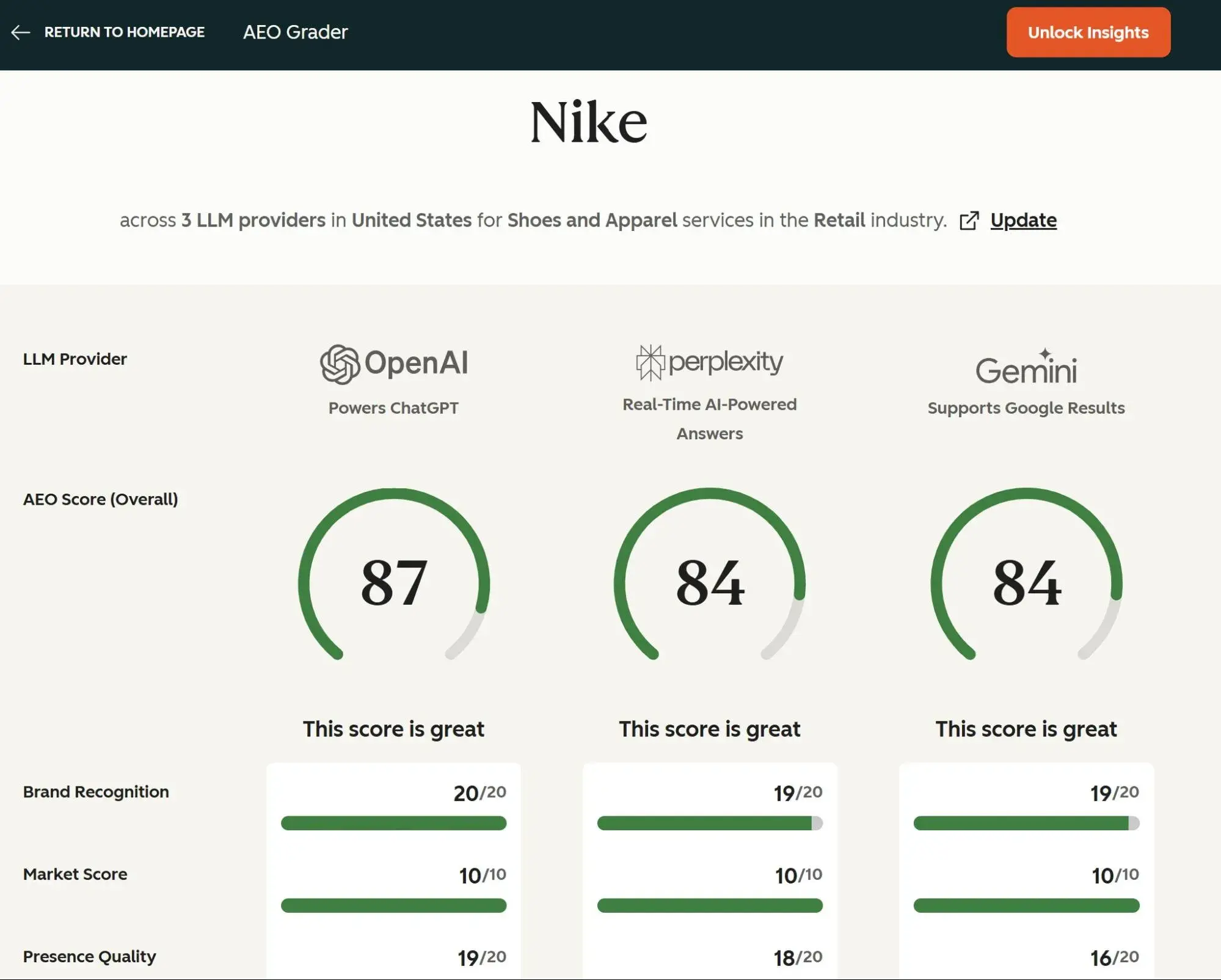
Often misconstrued as a mere vanity metric, Share of Voice (SOV) stands as one of the most potent leading indicators for brand visibility and future market performance in today’s dynamic digital ecosystem. While executives might appreciate a high SOV number in a board deck, its true power lies in its ability to predict shifts in market share, inform strategic decisions, and directly influence the revenue pipeline long before traditional sales metrics reflect these changes. The challenge, however, has historically been inconsistent measurement across diverse channels, leading to dashboards that often fail to provide actionable intelligence. This guide aims to demystify SOV, breaking down its various forms across traditional SEO, social media, public relations, and the rapidly emerging frontier of AI search, detailing the tools available, and outlining a framework to connect visibility to tangible business outcomes.

The Evolving Role of Share of Voice in Digital Marketing
The concept of Share of Voice isn’t new; it originated in traditional advertising, measuring a brand’s ad spend relative to its competitors. However, its relevance has exploded with the advent of digital channels, transforming from a simple media-buying metric into a complex indicator of a brand’s overall presence and influence in the digital sphere. In an era where customer journeys are fragmented across numerous touchpoints – from search engines and social feeds to news outlets and generative AI platforms – understanding where and how a brand captures attention is paramount.
Historically, marketing teams focused heavily on bottom-funnel metrics, directly tying activities to conversions. While crucial, this approach often overlooked the upstream indicators of brand health and market positioning. SOV, in its modern incarnation, fills this gap, offering a forward-looking perspective on brand strength. It signals whether a brand is gaining traction or losing ground in the collective consciousness of its target audience, providing an early warning system for market shifts. This proactive insight allows marketers to adjust strategies, capitalize on emerging trends, or counter competitive threats far more effectively than relying solely on lagging sales data. The evolution of SOV mirrors the broader shift in marketing analytics, moving from simple reporting to predictive intelligence, making it an indispensable component of any robust marketing strategy.

Defining Share of Voice Across Key Digital Channels
At its core, Share of Voice represents the percentage of visibility a brand earns compared to its competitors within a defined market or channel. In essence, it answers the question: "Out of all the conversations, impressions, and results happening in our industry, how much of that attention is directed towards our brand?" The complexity arises because "visibility" means something fundamentally different across diverse channels, necessitating distinct measurement approaches for each SOV type.
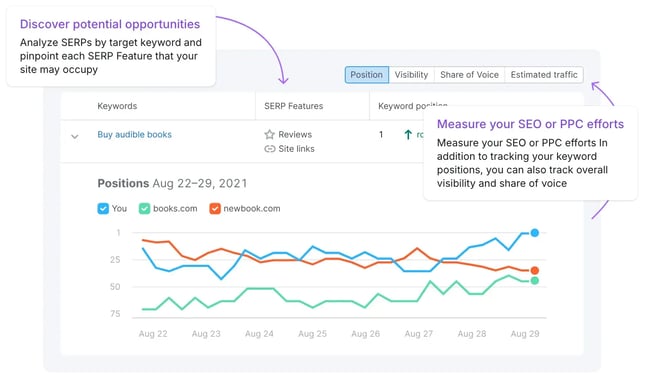
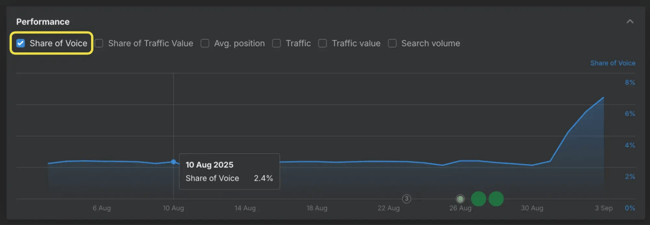
SEO Share of Voice measures a brand’s relative organic visibility for a specific set of keywords. It quantifies the percentage of estimated organic clicks or impressions a brand captures against the total available for its tracked keywords. For instance, if a market’s target keywords collectively generate 1,000,000 organic searches per month, and a brand’s website is estimated to capture 150,000 of those clicks based on its search rankings and expected click-through rates, its SEO SOV would be 15%. This metric is crucial for long-term brand building and inbound lead generation, as strong organic presence offers compounding returns and reduces reliance on paid channels.
Social Media Share of Voice tracks the proportion of brand mentions and conversation volume across selected social platforms compared to competitors. If a product category generates 50,000 social mentions in a month, and a specific brand accounts for 10,000 of those mentions, its social SOV is 20%. This type of SOV is highly responsive, reflecting the immediate impact of campaigns, public relations events, or product launches. It’s a real-time pulse of brand sentiment and engagement, though it must be carefully analyzed to distinguish between positive and negative mentions.
PR & Earned Media Share of Voice quantifies earned media visibility across news outlets, blogs, and industry publications, often broken down by outlet authority, geographic reach, message alignment, and sentiment. This often-underutilized metric provides invaluable third-party validation and significantly influences a brand’s credibility and authority, factors that are increasingly vital for E-E-A-T (Experience, Expertise, Authoritativeness, and Trustworthiness) in SEO. A competitor gaining significant PR traction often precedes increases in branded search volume and domain authority, offering a critical leading signal for broader market awareness.
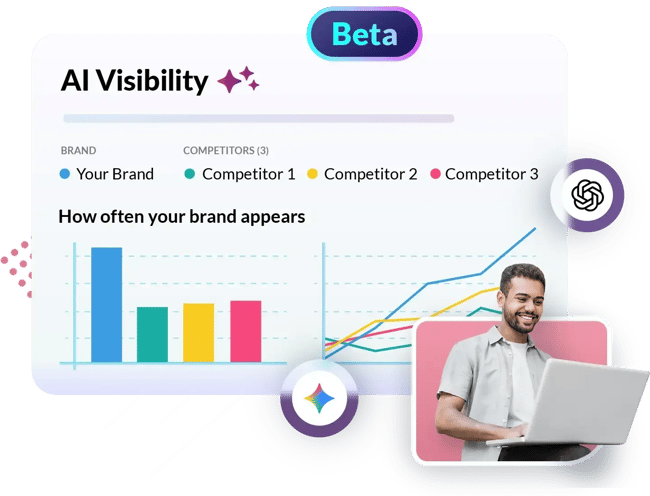
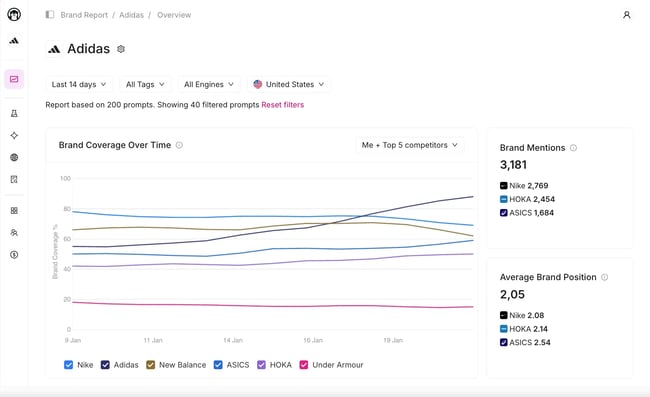
The Rise of AI Share of Voice (AISOV) represents the newest and most disruptive frontier. AISOV measures how often a brand is mentioned or cited in AI-generated answers provided by large language models (LLMs) like ChatGPT, Gemini, Perplexity, and Google AI Overviews. This shifts the paradigm from optimizing for search engines to optimizing for "answer engines." When a user prompts an AI with "What are the best [product category] for [use case]?" a brand’s inclusion (or exclusion) in the generated answer directly impacts discovery. This transition signifies a fundamental change in how consumers find information and make decisions, making AISOV a critical, proactive metric for brand relevance.
The Strategic Imperative of AI Share of Voice (AISOV)
The advent of generative AI has fundamentally altered the landscape of information discovery, necessitating a pivot from traditional Search Engine Optimization (SEO) to Answer Engine Optimization (AEO). For brands, this means moving beyond merely ranking on a search results page to being actively recommended or cited within AI-generated responses. This shift is not merely incremental; it represents a profound change in user behavior and, consequently, in the strategic priorities for marketing teams.
From SEO to AEO: In a conventional search environment, users sift through a list of links. With answer engines, they receive a synthesized, often definitive, response. This immediate provision of information means that being the source of truth, or being recommended by the AI, becomes paramount. Industry analysts, such as those at Gartner, predict that by 2026, over 60% of brand discovery will be influenced by AI-generated content, underscoring the urgency for brands to master AISOV.
Quantifying AISOV: The calculation for AI SOV is deceptively simple:
AI SOV (%) = (Number of AI responses mentioning your brand ÷ Total AI responses for your prompt set) × 100
However, the real challenge lies not in the arithmetic but in the construction of a prompt set that truly reflects how potential buyers interact with AI systems. Without a representative prompt set, the resulting AISOV figure can be misleading, hindering strategic action.
The Challenge of Prompt Bias: A significant pitfall in AISOV measurement is prompt bias. This occurs when the prompts used to query AI models do not accurately mirror real-world buyer inquiries, leading to skewed results. For example, relying solely on high-volume SEO keywords might lead to a high "citation share" (where a brand’s content is referenced) but a low "entity mention" share (where the brand is directly recommended). These are distinct outcomes requiring different content and authority strategies.
To build a reliable AI SOV prompt set and avoid such biases, a multi-faceted approach is essential:
- Ground Prompts in Your Competitive Arena: Start by meticulously defining the categories and sub-categories in which your brand aims to lead. This could range from broad definitions like "cloud computing solutions" to highly niche ones such as "AI-powered CRM for small businesses in the SaaS sector." The more specific the arena, the more relevant and actionable your prompts will be.
- Layer in First-Party Voice-of-Customer Data: This is a goldmine. Analyze sales call transcripts, demo recordings, customer support tickets, and win/loss interviews. The questions real buyers ask during their purchasing journey are often precisely what they’re now asking generative AI. Leveraging CRM data and conversation intelligence can reveal nuanced, high-intent queries that traditional keyword research might miss.
- Mine Communities and Forums: Platforms like Reddit, Quora, G2, Capterra, and industry-specific Slack or Discord communities offer authentic insights into buyer pain points and comparative queries before they even know a brand exists. Look for "best-for" prompts ("best [category] for [constraint]"), "comparison" prompts ("Tool A vs. Tool B for X"), and "problem-solution" prompts ("struggling with [problem], what are people using?").
- Triangulate Against Search Data: While not solely sufficient, traditional keyword research remains valuable. High-volume, commercial-intent keywords can validate and prioritize AI prompt categories, ensuring alignment with existing search demand.
- Segment Your Prompt Set: To gain granular insights, cluster prompts by:
- Brand/Category: Core inquiries about the industry or brand itself.
- Persona-Based: Questions specific to different customer profiles.
- Funnel-Stage: Prompts reflecting awareness, consideration, or decision phases.
- Competitor Comparison: Queries directly comparing your brand to rivals.
A balanced set of 100-200 prompts, segmented appropriately, is far more insightful than a massive, undifferentiated list.
Implications for Content Strategy: A strong AISOV demands a strategic shift from keyword-stuffing to building deep, authoritative, and entity-rich content. AI models favor content that demonstrates clear expertise, authoritativeness, and trustworthiness (E-E-A-T) and provides comprehensive answers to complex questions. Brands must focus on becoming recognized entities in their field, not just providers of keyword-optimized pages. Furthermore, prompt sets require regular refreshing – at least quarterly, or immediately following major AI model updates (e.g., Google’s integration of Gemini 3 into AI Overviews in early 2026). Continuous tracking is essential to stay ahead of these rapid shifts.

Unpacking SOV Measurement: Consistency and Clarity
Regardless of the channel, the core Share of Voice calculation remains remarkably consistent:
Share of Voice (%) = Your Brand Metrics ÷ Total Market Metrics × 100
The variability lies entirely in the "metrics" used. For SEO, this could be estimated organic clicks; for social, brand mentions; for PR, the volume of media coverage; and for AI, the count of entity mentions in AI-generated answers. While the formula is universal, the nuances of data collection and interpretation are critical to generating actionable insights.
Why Vendor Numbers Differ (and Why It Matters)
It’s common for marketing teams to experience confusion or even alarm when different SOV tools report conflicting numbers for the same brand. These discrepancies are usually not indicative of a tool being "wrong," but rather reflect inherent differences in their methodologies:
- Data Sources and Crawl Capabilities: Each tool has its own proprietary data collection methods, index size, and freshness. Some might have deeper access to specific social platforms or more extensive web crawls for organic search data.
- Algorithmic Differences: The algorithms used to estimate organic traffic, sentiment, or AI citations can vary significantly. For instance, one SEO tool might be more conservative in its click-through rate (CTR) estimates for specific ranking positions than another.
- Customizable Competitive Sets and Keyword Definitions: Marketers often define their competitive landscape differently across various tools. Unless the exact same list of competitors, keywords, and phrases is used consistently, the resulting SOV percentages will naturally diverge.
These differences underscore the absolute necessity of standardization before benchmarking. A robust standardization checklist includes:
- Define Your Competitive Set: Identify your 3-5 core direct competitors and any emerging threats. This list should remain consistent across all SOV measurements.
- Standardize Keyword/Prompt Sets: Use the identical list of target keywords for SEO and the same prompt set for AI SOV across all tracking tools.
- Specify Channels and Platforms: Clearly define which social media platforms, news sources, or AI models are included in your measurement.
- Harmonize Metric Definitions: Ensure "mentions" or "visibility" are defined consistently (e.g., direct mentions vs. indirect mentions, entity recommendations vs. content citations).
- Establish a Baseline: Before attempting competitive comparisons, establish your own brand’s baseline SOV for each channel.
SOV vs. Share of Market vs. Share of Search
These three metrics are frequently conflated, yet they represent distinct stages of market influence and provide different strategic insights:
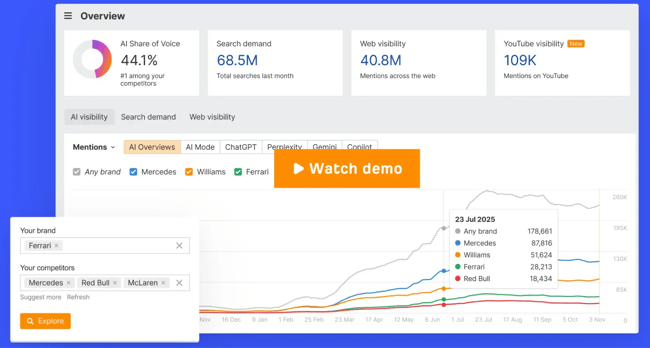
- Share of Voice (SOV): Measures a brand’s proportional visibility and presence within a specific channel or market. It’s about how often a brand is seen or discussed relative to competitors.
- Share of Search (SOS): Represents a brand’s share of total search queries for a specific category or set of keywords. It’s a measure of consumer interest and demand. Research by organizations like Kantar has consistently demonstrated a strong correlation between SOS and future market share shifts, often acting as a 6-12 month leading indicator. A rising SOS typically predicts an increase in Share of Market.
- Share of Market (SOM): Quantifies a brand’s portion of actual revenue or unit sales within a defined product or service category. This is the ultimate business outcome.
While distinct, these metrics form a powerful analytical chain. SOV influences SOS, and SOS, in turn, predicts SOM. The emergence of AI SOV adds another critical layer, as AI recommendations will increasingly shape search behavior and consumer interest. HubSpot AEO features, for example, complement traditional SOS analysis by showing not just how often a brand is searched, but how often it’s actively recommended in AI-generated answers, which is crucial as discovery shifts from traditional search to answer engines.
Bridging the Gap: Connecting SOV to Business Outcomes
The most common point of failure for SOV measurement programs is the inability to link these visibility metrics to tangible business outcomes like pipeline and revenue. Marketing teams often excel at creating sophisticated channel-level SOV dashboards but struggle to answer leadership’s inevitable question: "But what does this mean for the business?" The answer lies in establishing a robust, integrated measurement framework that traces the journey from visibility to conversion.
Beyond Vanity: SOV as a Pipeline Predictor
SOV is not merely a reflection of current brand health; it is a powerful predictor of future commercial success. Research consistently indicates that brands with an SOV exceeding their Share of Market tend to grow, as they are "over-investing" in visibility relative to their current size. Conversely, brands with an SOV below their SOM are often on a trajectory of decline. However, this connection isn’t immediate; SOV typically leads SOM by several months, creating a critical window for strategic intervention. For example, an increase in SEO SOV often leads to a rise in branded organic search queries, which then translates into more direct website traffic, higher conversion rates on landing pages, and ultimately, a healthier sales pipeline. Marketing executives are increasingly prioritizing this predictive power, demanding clear ROI pathways for all marketing investments.
The Four-Layer Framework for Revenue Attribution
To effectively connect SOV to revenue, a structured, multi-layered framework is essential:
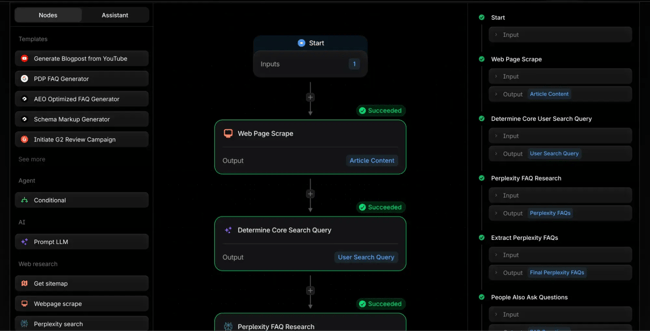
- Visibility Metrics (Share of Voice): This is the foundation, encompassing SEO SOV, Social SOV, PR SOV, and crucially, AI SOV. These metrics quantify a brand’s presence across its various digital touchpoints.
- Leading Indicators: These are the immediate consequences of increased visibility. Examples include:
- Branded Search Volume: A surge in direct searches for your brand name.
- Direct Website Traffic: More users navigating directly to your site.
- Engagement Rates: Higher interaction on social media posts, increased time on site.
- Referral Traffic: More inbound links from high-authority sites influenced by PR.
- Pipeline Metrics: This layer translates leading indicators into tangible sales opportunities:
- Marketing Qualified Leads (MQLs): Prospects identified as having a higher propensity to convert.
- Sales Qualified Leads (SQLs): Leads accepted by the sales team for active pursuit.
- Sales Pipeline Value: The monetary value of opportunities in various sales stages.
- Revenue Outcomes: The ultimate business impact:
- Closed-Won Deals: Actual sales generated.
- Customer Lifetime Value (CLTV): The total revenue a customer is expected to generate over their relationship with the brand.
- Return on Marketing Investment (ROMI): The financial return generated from marketing expenditures.
Operationalizing the Connection
The key to making this framework actionable lies in unifying data. Platforms like HubSpot Marketing Hub Pro and Enterprise integrate AI visibility data directly with CRM records and attribution reporting. This allows teams to analyze precisely how improvements in AI SOV, for example, influence organic traffic, lead generation, and pipeline over time. This integrated approach eliminates the manual data compilation that often renders SOV reporting unsustainable for growth teams, providing a single, comprehensive view of the visibility-to-pipeline chain.
For effective target-setting and review, an annual cadence for overall SOV targets (e.g., "grow SEO SOV from 12% to 18% in our core keyword cluster") is recommended, with monthly progress reviews. For AI SOV, given its rapid evolution, quarterly reviews are more realistic and agile. Social and PR SOV can benefit from weekly pulse checks during active campaigns and monthly reviews for always-on monitoring. By clearly articulating this framework and regularly reporting on the correlations, marketing teams can powerfully demonstrate the ROI of their SOV initiatives to leadership.

Essential Tools for Comprehensive Share of Voice Tracking
The market offers a diverse array of tools tailored to tracking different SOV types and catering to various organizational sizes and needs. Selecting the right stack is crucial for efficient and accurate measurement.
SEO SOV Tools
These platforms provide deep insights into organic search visibility and competitive ranking.
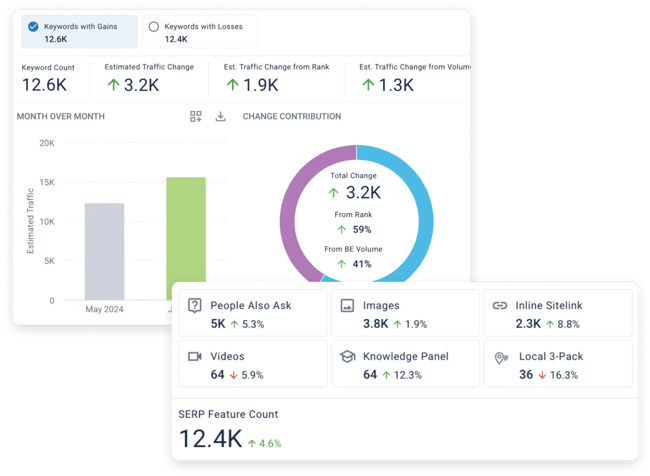
- Semrush Position Tracking: Offers comprehensive keyword tracking against competitors, market share reporting within organic search, and now includes AI Overview detection to see if your keywords trigger Google’s AI-generated answers. Ideal for all-in-one SEO platforms.
- Ahrefs Rank Tracker: Provides a dedicated SOV metric showing visibility as a percentage of total available clicks for tracked keywords. Strong for teams focused on link authority and content performance.
- Moz Pro: A user-friendly option for teams newer to SEO SOV, offering keyword tracking, brand authority features, and automated reports with a clean interface.
- BrightEdge: An enterprise-grade solution, pioneering SOV capabilities for organic search and integrating AI visibility tracking (AI Catalyst) for large-scale operations managing thousands of keywords.
AI SOV Tools
As the newest frontier, AI SOV tools are rapidly evolving to help brands understand their presence in generative AI responses.
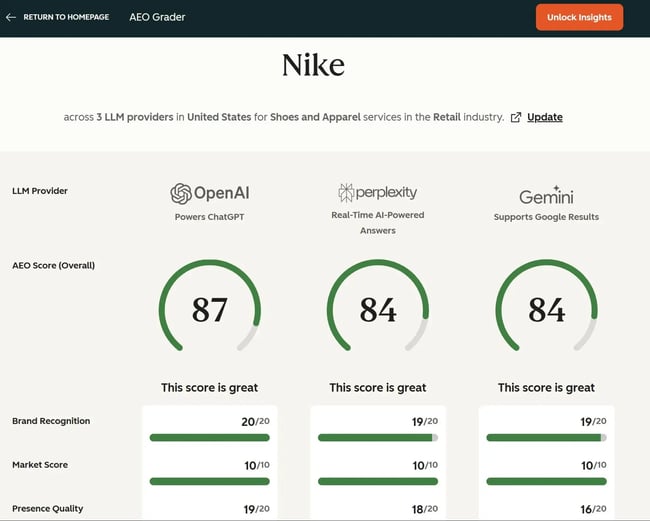
- HubSpot AEO Grader (Free): A quick, free tool to establish a baseline of AI visibility across platforms, identifying immediate content gaps. Excellent for initial assessment.
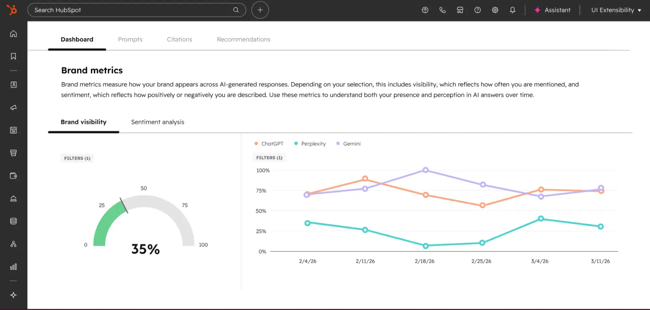
- HubSpot AEO (Standalone & in Marketing Hub): Provides a clear view of brand presence across answer engines like ChatGPT, Gemini, and Perplexity. It tracks SOV at the prompt level, offering prioritized recommendations to improve visibility based on CRM data and customer behavior, moving from insight to action seamlessly.
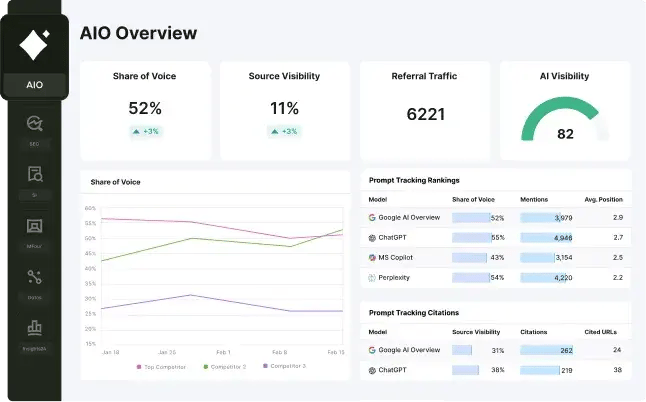
- Semrush AI Visibility (Enterprise AIO): Monitors brand presence across major AI models, includes SOV analysis, and provides "Prompt Volume" data to prioritize high-intent AI queries.
- Ahrefs Brand Radar: Tracks brand mentions in AI answers and connects them to backlink and authority signals, offering insights into why a brand is cited. Particularly strong for tracking unlinked mentions across platforms like Reddit and TikTok, which influence LLM training.
- Otterly.AI: A dedicated, purpose-built AI visibility platform for prompt-level benchmarking across various AI platforms, offering a free tier for getting started.
- Profound: An enterprise-grade platform with deep citation tracking, sentiment analysis, and crucial attribution from AI-generated traffic to the sales pipeline, ideal for demonstrating AI visibility ROI.
Social Media SOV Tools
These platforms specialize in monitoring brand mentions and conversation volume across social channels.

- Sprout Social: Offers social listening with SOV tracking, sentiment analysis, and influencer scoring. Strong for real-time campaign measurement and brand health monitoring.
- Brandwatch: Provides advanced social and traditional media SOV tracking with AI-powered insights and custom dashboards, suitable for cross-channel monitoring.
- Brand24: Real-time media monitoring across social, blogs, forums, and news, with sentiment analysis and automated SOV reports at a competitive price point.
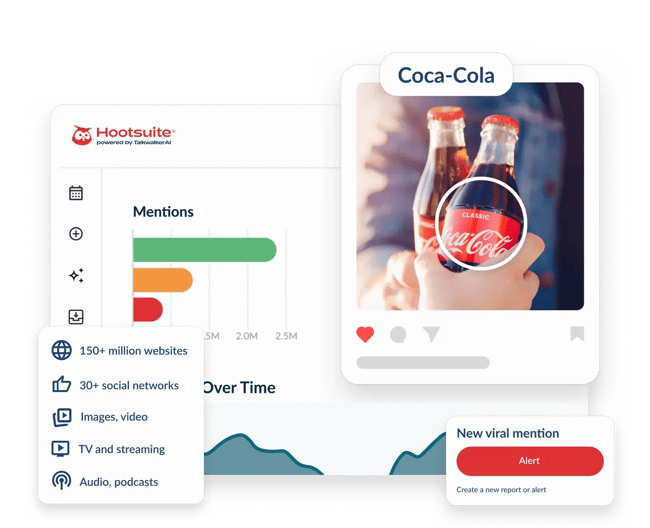
- Hootsuite Listening: Integrates social listening directly with publishing workflows, making it ideal for teams managing both execution and measurement within one platform.
PR/Media SOV Tools
These tools focus on earned media visibility and relationship management.
- Meltwater: A leading media intelligence platform offering SOV tracking by outlet, geography, and message, with features for journalist and outlet relationship management.
- Cision: Comprehensive PR monitoring, SOV tracking, and sentiment analysis across print, broadcast, and digital media, often favored by enterprise comms teams with regulatory requirements.
- Brand24: Extends beyond social to monitor news sites, blogs, and forums, providing a solid PR SOV use case for growing companies without requiring a full enterprise PR platform.
- Mention: Provides real-time media monitoring across the web and social, with SOV tracking and competitor benchmarking at a more accessible price point for startups and early-stage teams.
Tailoring Tools to Growth Stages
The ideal SOV tech stack evolves with a company’s growth:
- Startups: Focus on free or near-free tools to establish baselines and identify immediate gaps. A strong starting point would be HubSpot’s AEO Grader for AI SOV, Google Search Console for organic visibility, and perhaps a free social listening tool for basic brand mentions.
- Mid-market: As marketing complexity increases, add dedicated channel depth. This might involve investing in a comprehensive SEO platform like Semrush or Ahrefs, a dedicated social listening tool like Sprout Social, and potentially a cost-effective PR monitoring tool like Brand24.
- Enterprise: Priority shifts to platform consolidation, deep analytics, and robust revenue attribution. This often means leveraging integrated suites like HubSpot Marketing Hub for AEO and CRM integration, alongside enterprise-grade solutions like BrightEdge for SEO, Brandwatch for social/PR, or Profound for advanced AI SOV attribution. The goal is a unified view of visibility connected directly to the sales pipeline.
Practical Steps for Initiating and Enhancing SOV Strategies
Operationalizing SOV measurement doesn’t require an immediate overhaul; it can start with focused, manageable steps. If starting from scratch, avoid the temptation to implement a complex research program that could quickly become unsustainable.
Quick-Start SOV Checklist:
- Define Clear Goals: What do you hope to achieve with SOV? (e.g., increase brand awareness, gain market share, improve sentiment).
- Establish Your Competitive Arena: Consistently define your 3-5 primary competitors across all channels.
- Choose 1-2 Key Channels to Start: Don’t try to measure everything at once. Begin with the channel where you suspect the biggest competitive gap or the most immediate impact (e.g., SEO for long-term growth


 Nana
Nana
 Laily UPN