
 rifanmuazin
The global eCommerce landscape has reached a critical inflection point where the traditional levers of growth—increasing ad spend and aggressive influencer marketing—are yielding diminishing returns. As customer acquisition costs (CAC) continue to climb, businesses are discovering that the primary barrier to revenue growth is not a lack of traffic, but a fundamental failure in the user experience (UX). Despite investing thousands of dollars in high-end product photography and digital advertising, the average eCommerce store sees nearly 70% of its potential customers abandon their carts before completing a purchase. Historically, correcting these "experience gaps" required a significant investment in specialized UX consultants and weeks of manual data analysis. However, the emergence of Artificial Intelligence (AI) eCommerce optimization is fundamentally altering this dynamic, replacing human guesswork with scalable, data-driven intelligence.
The Economic Reality of Modern Digital Commerce
The shift toward AI-driven optimization comes at a time when the digital marketplace is more crowded than ever. According to recent industry data, the average conversion rate for eCommerce websites hovers between 2% and 3%. This means that for every 100 visitors a brand pays to attract, 97 to 98 leave without making a transaction. In the past, the standard response was to increase the top-of-funnel volume. However, with privacy changes impacting ad targeting and the cost-per-click on major platforms rising annually, this strategy is no longer sustainable for most mid-market and enterprise brands.
Optimization has transitioned from a discretionary "nice-to-have" to a core survival mechanism. The bottleneck is rarely the product itself; rather, it is the friction inherent in the digital journey—unclear calls-to-action (CTAs), confusing navigation, or a lack of psychological trust signals. AI optimization addresses these issues by analyzing behavioral signals at a speed and scale that human reviewers cannot match.
The Evolution of UX Auditing: From Static to Dynamic
To understand the impact of AI, one must look at the chronology of conversion rate optimization (CRO). In the early 2010s, UX audits were largely qualitative. A brand would hire an agency, wait four to six weeks, and receive a static PDF document containing generic "best practices." These recommendations were often based on the consultant’s personal experience rather than real-time data from the specific website in question.
By the mid-2010s, tools like heatmaps and session recordings became common, but they still required human experts to spend hundreds of hours watching videos to identify patterns. The current era, defined by AI eCommerce optimization, represents the third generation of this evolution. AI tools can now scan an entire website, analyze thousands of user sessions, and identify friction points in minutes. Unlike traditional audits, which represent a single moment in time, AI-driven systems provide continuous intelligence, adapting as traffic sources shift or as new seasonal products are introduced.
The Mechanics of AI-Driven Optimization
AI eCommerce optimization functions by integrating multiple data streams—including scroll depth, click patterns, form abandonment rates, and heatmap data—into a unified analysis engine. This process covers several critical dimensions of the online store:
- Behavioral Signal Analysis: AI identifies where users "rage click" (clicking a non-functional element repeatedly) or where they hesitate for an unusual amount of time, signaling confusion or technical errors.
- UX Pattern Recognition: The technology compares a site’s layout against vast databases of high-performing structures, flagging deviations that may be hurting conversion.
- Content Performance: AI evaluates whether product descriptions are answering the specific questions that lead to a purchase and whether the tone aligns with the target audience’s expectations.
- Predictive Testing: Modern AI tools can now predict the likely success of an A/B test before it is even launched, drawing on years of historical experimentation data.
This "intelligent loop" between data and action allows eCommerce teams to move from observation to implementation without the need for a full-time, in-house data science department.

Redefining Content and Trust Through Machine Learning
Content optimization in the AI era goes beyond simple spell-checking or SEO keyword stuffing. It focuses on the psychological impact of text and visual placement on the buyer’s journey. For instance, AI can determine if an "Add to Cart" button needs more contrast against the background or if a different label, such as "Get Yours Today," would better resonate with a specific demographic.
Furthermore, AI analyzes the placement of "trust signals"—such as reviews, money-back guarantees, and security badges. Placing these elements too early can clutter the interface, while placing them too late might result in the user leaving before they feel secure enough to buy. AI identifies the "moment of maximum friction" and suggests the insertion of trust signals at that exact point in the checkout flow.
Statements from the Field: The Shift in Strategy
Industry practitioners are already reporting significant shifts in productivity and outcomes due to these technologies. Anwar, a noted conversion strategist, highlights the shift in the workforce hierarchy. "Traditional CRO relied on manual depth, with slow, meticulous analysis by senior practitioners," Anwar noted. "AI-CRO, when done right, enables scalable depth, providing mid-level strategists with senior-level reach. It’s no longer about being a technical expert on every platform; it’s about having the right decision mindset."
This sentiment is echoed by Garret Cunningham, who emphasizes the predictive power of AI in experimentation. Cunningham noted that his team utilized an AI predictor trained on years of experimentation data to estimate the success of ideas before running them. In one instance, rather than just making a search bar more visible, the AI indicated that the real opportunity lay in motivating users to use the search function in the first place. This data-driven pivot helped double their "win rate" for A/B tests from 20% to over 40%.
Democratizing Optimization: The VWO AI Initiative
One of the significant barriers to entry for advanced optimization has been cost. Historically, the tools and talent required to run a sophisticated CRO program were reserved for the "Big Retail" players with seven-figure budgets. However, companies like VWO are moving to democratize this technology.
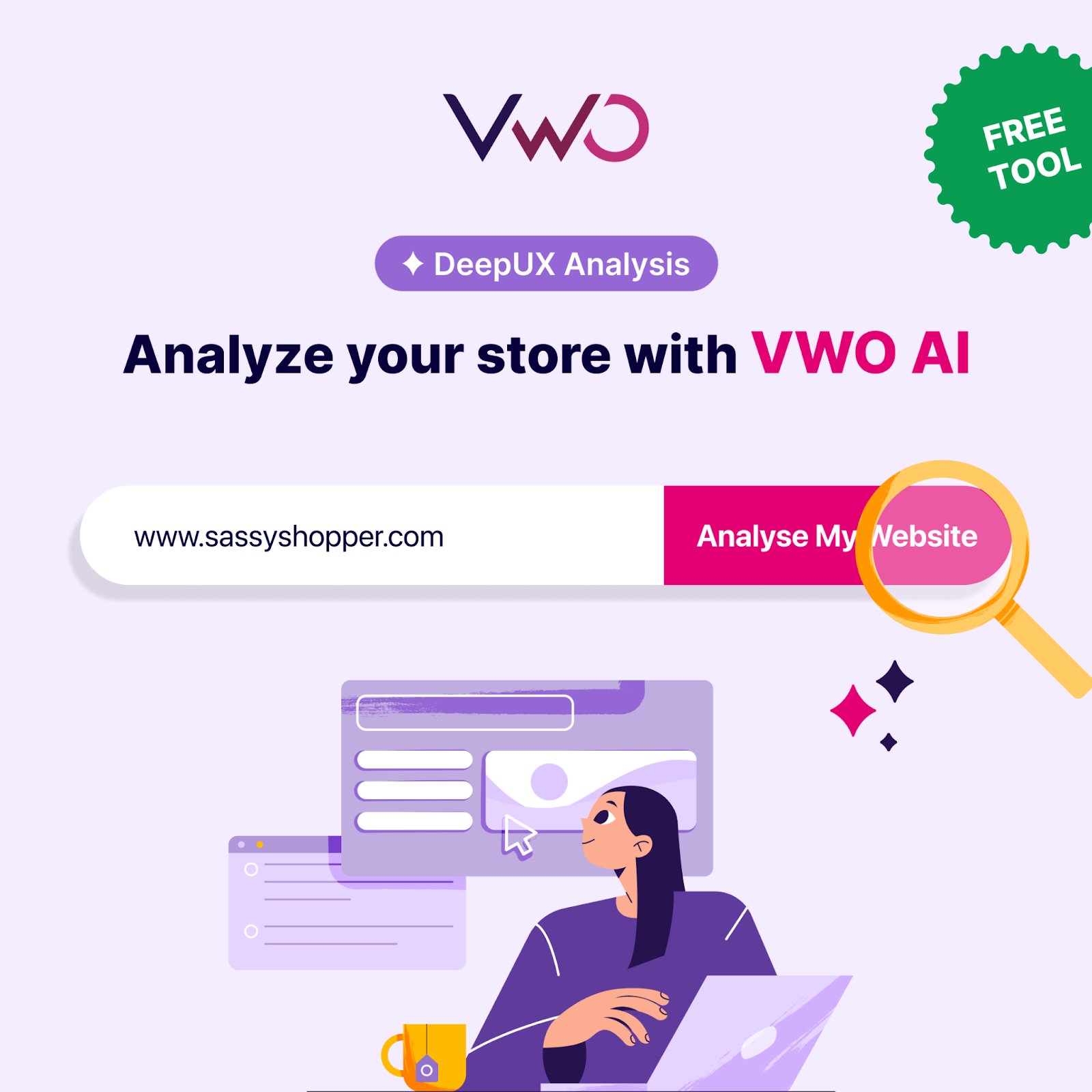
VWO has introduced a free AI-powered UX audit tool designed to give any eCommerce business—from a Shopify boutique to a large-scale enterprise—access to high-level intelligence. The process is streamlined: a user submits a URL, the AI scans the site for UX gaps and content friction, and a detailed, interactive report is delivered via email. This report uses a two-column format that pairs specific problems with actionable recommendations. By removing the technical and financial hurdles, such tools allow smaller players to compete with industry giants on the basis of user experience rather than just ad spend.
Broader Implications and Future Outlook
The integration of AI into eCommerce optimization has broader implications for the digital economy. First, it is likely to lead to a "standardization of excellence" in web design. As AI tools point all retailers toward the most efficient UX patterns, the baseline for what constitutes a "good" website will rise, forcing brands to differentiate themselves through product quality and brand storytelling rather than just having a functional site.
Second, the role of the UX designer and the digital marketer is evolving. Instead of spending time on rote analysis and manual auditing, these professionals are becoming "AI orchestrators." Their value will increasingly lie in their ability to interpret AI findings and integrate them into a broader brand strategy.

Finally, the move toward AI optimization signifies a shift toward a more ethical form of marketing. Instead of using "dark patterns" to trick users into buying, AI-driven optimization focuses on removing genuine obstacles and making the shopping experience more seamless. This alignment of business goals (revenue) with user goals (a fast, easy purchase) creates a more sustainable ecosystem for digital commerce.
Conclusion: The Bottom Line for Retailers
The "hype phase" of AI has passed, leaving behind practical tools that solve the most persistent problem in eCommerce: the conversion gap. For retailers operating in an environment of high competition and rising costs, the ability to identify and fix UX issues without the need for expensive consultants is a game-changer.
Whether a business is managing a small catalog or a massive enterprise storefront, the principle remains the same: the most efficient way to grow revenue is to stop guessing and start leveraging the predictive, analytical power of AI. With tools now available to provide instant, data-backed audits, the excuse for poor user experience is rapidly disappearing. The future of eCommerce belongs to those who can transform their raw data into a frictionless, high-converting journey for every visitor.








