
 rifanmuazin
The landscape of digital commerce has undergone a fundamental transformation as organizations increasingly prioritize conversion rate optimization over raw traffic acquisition. In an era where the cost per click across major advertising platforms continues to rise, the ability of a corporate website to function as an autonomous sales representative has become a critical determinant of market competitiveness. Industry analysts and marketing experts now emphasize that the traditional "digital brochure" model—a static, information-heavy website—is being systematically replaced by agile, data-driven landing experiences designed to facilitate immediate user action.
Recent market data suggests a growing trend of marketing departments reclaiming technical control from IT and development teams. By utilizing no-code environments and artificial intelligence, marketing professionals are now capable of deploying, testing, and iterating on lead-capture strategies in real-time. This shift is not merely a matter of convenience but a strategic necessity to maintain campaign momentum and maximize return on investment (ROI).
The Strategic Shift: From Generalism to Specificity
The primary obstacle to effective lead generation in the current digital climate is the "homepage trap." For decades, businesses directed all advertising traffic to their primary URL, a practice that frequently results in high bounce rates. A corporate homepage is designed to serve a multitude of stakeholders, including investors, current employees, and existing customers, which dilutes the messaging for a prospective lead.
In contrast, the implementation of dedicated landing pages for specific campaigns has emerged as a gold standard. Statistics from industry leaders indicate that landing pages focused on a single conversion goal significantly outperform multi-purpose websites. The rationale is rooted in "message match"—the alignment between the promise made in an advertisement and the reality of the destination page. When a visitor encounters a page that addresses their specific pain point without the distraction of site-wide navigation or unrelated company history, the psychological friction of conversion is drastically reduced.

Chronology of Lead Generation Evolution
The methodology of capturing digital leads has evolved through several distinct phases over the last two decades:
- The Static Era (2000–2010): Websites served as digital yellow pages. Lead generation was passive, consisting mostly of "Contact Us" forms buried in the footer.
- The Content Boom (2011–2018): The rise of inbound marketing led to the proliferation of gated content. "E-books" and "Whitepapers" became the primary currency for email acquisition, though quality varied wildly.
- The Optimization Era (2019–2023): Marketers began focusing on user experience (UX), site speed, and A/B testing. Tools allowed for the systematic testing of headlines and button colors to find incremental gains.
- The Intelligence Era (2024–Present): Current strategies leverage artificial intelligence and machine learning to personalize experiences in real-time. Lead generation is no longer a "one-size-fits-all" funnel but a dynamic path that adapts to user behavior, device type, and geographical location.
Data-Driven Optimization and the Impact of Incremental Changes
Empirical evidence highlights the profound impact that minor adjustments can have on a firm’s bottom line. A notable case study involves the travel deals entity Going.com, which conducted a rigorous A/B test on its primary call-to-action (CTA). By altering the phrasing from "Sign up for free" to "Trial for free," the company recorded a 104% increase in month-over-month conversions.
This doubling of results without an increase in advertising spend underscores the importance of linguistic precision in digital marketing. Experts suggest that high-impact elements for testing include:
- Headlines: Shifting focus from product features to user benefits.
- Visual Assets: Comparing the efficacy of professional photography versus authentic, user-generated content.
- Form Length: Balancing the need for data with the user’s desire for speed.
- Trust Signals: Testing the placement of client logos, security badges, and testimonials.
Technical Performance as a Conversion Catalyst
Site performance is no longer categorized strictly as a technical concern; it is a fundamental marketing metric. Data from Google and various web performance analysts indicate that 53% of mobile visitors will abandon a page if it takes longer than three seconds to load. Furthermore, every additional second of latency is correlated with a 4.42% drop in conversion rates.
The technical optimization of lead generation assets involves several critical steps:

- Image Compression: Reducing file sizes to ensure rapid rendering on mobile networks.
- Minimizing Redirects: Streamlining the path from the ad click to the content.
- Server-Side Improvements: Ensuring that the hosting infrastructure can handle traffic spikes during major campaigns.
In the contemporary market, a slow-loading page is viewed by the consumer as a sign of institutional inefficiency, leading to an immediate loss of brand trust.
The Rise of Artificial Intelligence in Traffic Management
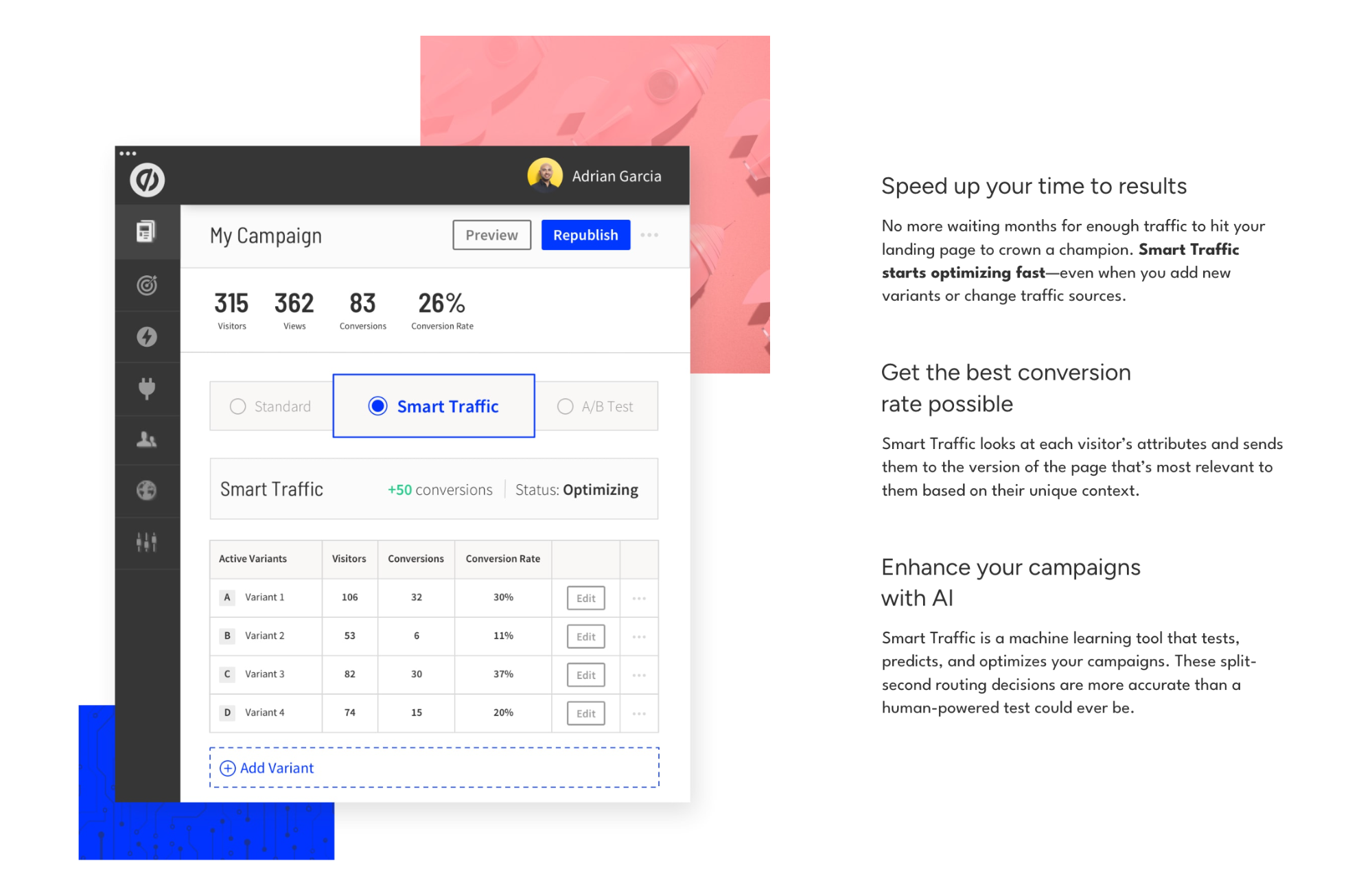
One of the most significant advancements in the "Intelligence Era" is the deployment of AI-powered traffic routing. Traditional A/B testing requires a period of "statistical significance," where traffic is split evenly between two versions until a winner is declared. This often results in "wasted" traffic being sent to the losing variant for weeks.
Newer technologies, such as "Smart Traffic" algorithms, analyze visitor characteristics—including location, device, and time of day—to route them to the page variant most likely to convert based on historical patterns. These systems begin optimizing after as few as 50 visits, allowing marketing teams to pivot quickly and maximize the utility of every visitor.
The Psychology of Value Exchange: Lead Magnets and Forms
As consumers become more protective of their personal data, the "value exchange" of lead generation has become more demanding. Industry veterans argue that generic "top 10" lists are no longer sufficient to secure an email address. Instead, high-performing lead magnets must solve an immediate, specific problem. Examples of high-value assets include:
- Interactive Tools: Calculators, audit templates, or assessment quizzes.
- Proprietary Data: Industry reports or original research.
- Direct Access: Free trials, consultations, or webinars with recognized experts.
The design of the lead capture form itself remains a point of contention between marketing and sales departments. While sales teams prefer comprehensive data (company size, job title, budget), marketing teams advocate for shorter forms to increase volume. The emergence of conditional logic forms—which display additional fields only based on previous answers—has provided a middle ground, allowing for lead qualification without overwhelming the user.
Organizational Alignment: The "Smarketing" Integration
A recurring theme in modern lead generation is the friction between marketing (the lead generators) and sales (the lead closers). A common complaint from sales departments is the "low quality" of marketing-generated leads. To address this, organizations are implementing sophisticated lead scoring systems.
Lead scoring categorizes prospects based on their behavior and demographic fit. A visitor who downloads a pricing guide is assigned a higher score than one who merely reads a blog post. By establishing a clear threshold for what constitutes a "Sales Qualified Lead" (SQL), companies ensure that their sales representatives focus their energy on prospects with the highest intent to purchase. This alignment, often referred to as "Smarketing," is essential for maintaining organizational morale and ensuring that marketing budgets are viewed as an investment rather than an expense.
Broader Impact and Future Implications
The shift toward highly optimized, autonomous lead generation has broader economic implications. Small and medium-sized enterprises (SMEs) can now compete with larger corporations by utilizing the same high-performance tools that were once reserved for firms with massive IT budgets. This democratization of technology has leveled the playing field, making the quality of the offer and the clarity of the message more important than the size of the technical team.
Furthermore, as privacy regulations like GDPR and CCPA become more stringent, the importance of "first-party data"—information collected directly from the customer with their consent—cannot be overstated. A robust website lead generation strategy is the most reliable way to build a sustainable database of prospects that is not dependent on third-party cookies or changing social media algorithms.
In conclusion, the transformation of the corporate website into a high-performance lead generation engine is a multifaceted endeavor. It requires a blend of psychological insight, technical rigor, and organizational alignment. As the digital marketplace continues to evolve, the organizations that succeed will be those that view their website not as a finished product, but as a dynamic laboratory for constant optimization and user-centric value delivery.








