rifanmuazin
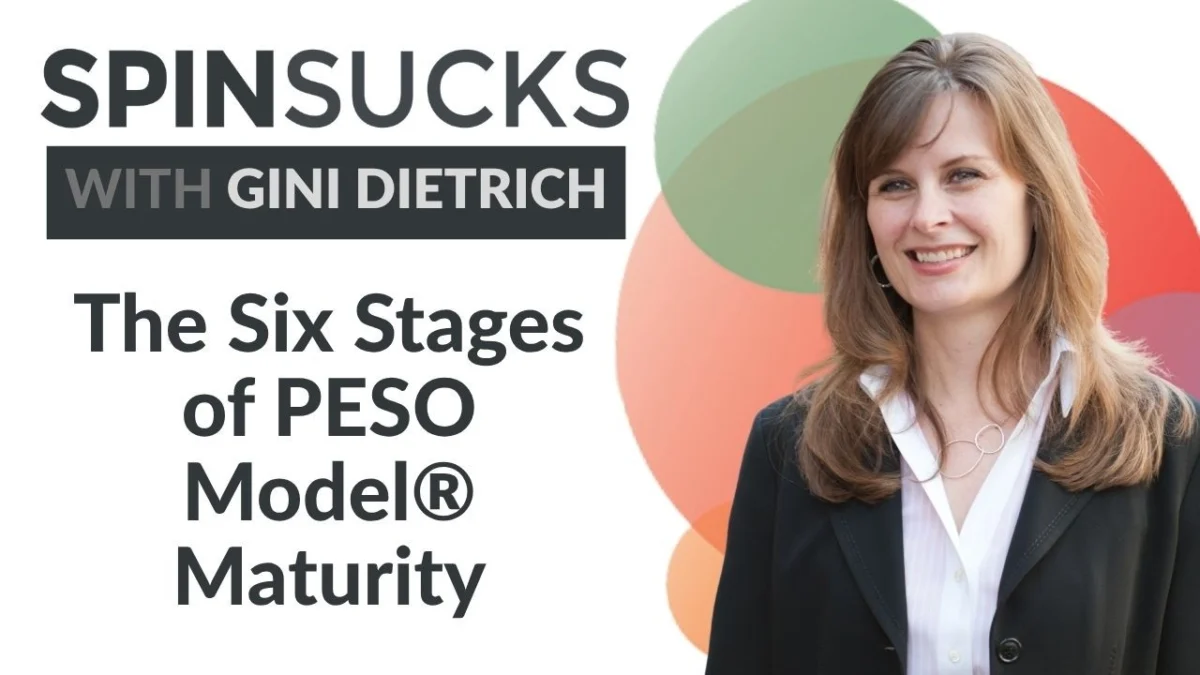
The professional communications landscape is undergoing a fundamental transformation as the industry moves away from conceptual frameworks toward integrated operating systems. At the forefront of this shift is the 2026 PESO Model Certification, a rigorous professional development program designed to transition practitioners from tactical execution to "Visibility Engineering." This evolution marks a significant departure from the original PESO Model introduced by Gini Dietrich in 2014, reflecting a modern media environment characterized by algorithmic volatility, the integration of artificial intelligence, and a heightened demand for measurable business outcomes.
The Historical Context of the PESO Model
The PESO Model—an acronym for Paid, Earned, Shared, and Owned media—was originally conceived to help public relations professionals understand that their work must extend beyond traditional media relations. For over a decade, it has served as a industry-standard framework for integrated communications. However, as digital ecosystems have become more complex, the mere categorization of media types has proven insufficient for driving sustainable growth.
In response to these changes, the 2026 iteration of the PESO Model has been re-architected. It is no longer presented as a static map but as a dynamic operating system (OS). This distinction is critical: while a framework provides a conceptual understanding of a problem, an operating system provides the functional infrastructure required to execute solutions consistently. The development of this new certification involved a year of architectural design, scriptwriting, and the creation of comprehensive pedagogical tools, including workbooks and AI-driven prompts, aimed at bridging the gap between theoretical knowledge and practical capability.
The Architecture of the 2026 Certification
The 2026 certification is structured to guide learners through the four pillars of the model, with an emphasis on the "messy middle" of skill acquisition. Industry experts who contributed to the curriculum development note that the program is designed to challenge even seasoned professionals who may have a conceptual grasp of the model but lack the technical "fluency" to implement it under pressure.
Owned Media: The Foundation of Authority
The certification begins with Owned Media, which serves as the anchor for all other activities. In the 2026 framework, owned media is defined not just as a blog or a website, but as a strategic asset that includes FAQs, social channels, and proprietary intellectual property. The goal is to create a "source of truth" that the brand controls entirely, mitigating the risks associated with changing third-party algorithms.
Earned Media: The Transition to Conscious Incompetence
A significant hurdle identified in the certification process is the Earned Media module. For many practitioners, this is the point of "Conscious Incompetence"—a psychological stage in adult learning where an individual realizes the extent of what they do not know. The 2026 model requires participants to move beyond simple pitching and into the realm of strategic positioning. This involves identifying specific media outlets, understanding audience demographics, and aligning earned coverage with broader business objectives.
Shared and Paid Media: Amplification and Validation
The latter half of the certification focuses on Shared Media (social engagement and community building) and Paid Media (sponsored content and lead generation). The 2026 curriculum emphasizes that these pillars must not exist in silos. Instead, they must be engineered to reinforce the authority established in the Owned and Earned phases.
The Rise of Visibility Engineering
A core component of the new certification is the concept of "Visibility Engineering." This discipline treats brand visibility not as a byproduct of luck or charisma, but as a result of intentional system design. In an era where organic reach is declining across almost all platforms, Visibility Engineering focuses on creating systems that make expertise visible, credible, and scalable.
According to the 2026 standards, Visibility Engineering is comprised of five essential elements:
- Consistent Processes: Standardized workflows that ensure output remains high-quality regardless of external variables.
- Intentional Practice: The move away from "posting for the sake of posting" toward data-driven content distribution.
- Strong Operating Systems: The underlying tech stack and procedural logic that run the communications department.
- Clarity of Purpose: Aligning every piece of content with a specific stage of the customer journey.
- Technical Fluency: The ability to use modern tools, including AI, to enhance rather than replace human strategy.
Adult Learning Theory and the Frustration Barrier
The design of the 2026 certification draws heavily on cognitive science and adult learning theory. One of the primary challenges in professional upskilling is the "frustration barrier," a term popularized by learning expert Scott H. Young. This barrier occurs when the difficulty of a new task exceeds the learner’s current skill level, often leading to abandonment.
To combat this, the PESO Model Certification utilizes a "layered" approach to learning. This methodology recognizes the "Forgetting Curve"—the hypothesis that humans forget approximately 70% of new information within 24 hours if it is not applied. By forcing participants to complete intensive exercises, such as building real-world media lists and drafting integrated campaign strategies, the certification ensures that knowledge is converted into "fluency."
The transition through the four stages of learning is a central theme of the program:
- Unconscious Incompetence: The learner does not know what they do not know.
- Conscious Incompetence: The learner recognizes their gaps in knowledge (the "frustration" phase).
- Conscious Competence: The learner can perform the task but requires heavy concentration.
- Unconscious Competence: The skills become second nature (the "operating system" phase).
The Role of AI and Process Automation
The 2026 PESO Model is the first iteration to fully integrate artificial intelligence as a core functional component. The "PESO OS AI" provides practitioners with prompts and logic models that assist in the discovery and execution phases of a campaign. However, the certification maintains a firm stance that AI is a tool for "engineering" rather than a replacement for "strategy."
The inclusion of AI is intended to handle the "unsung heroes" of any successful campaign: the processes. By automating tidy operating systems and branded workflows, communication professionals can free up cognitive bandwidth for high-level creative and strategic decision-making. As the curriculum suggests, processes do not restrict creativity; they support it by providing a safety net that reduces the fear of failure.
Broader Industry Implications
The shift toward a certification-based, "doing-centric" model has significant implications for the PR and marketing industry at large.
1. Standardization of Skills
As agencies and in-house departments struggle to quantify the value of PR, the 2026 PESO Model provides a standardized metric for capability. Organizations can now look for "Certified PESO Practitioners" as a shorthand for individuals who understand how to drive revenue, not just "likes" or "impressions."
2. Moving From Tactics to Strategy
The certification forces a move away from "random acts of marketing." By treating PESO as an operating system, businesses can ensure that their communications efforts are scalable and sustainable. This is particularly relevant for small to mid-sized enterprises (SMEs) that cannot afford to waste budget on uncoordinated tactics.
3. The Death of the Generalist?
The rigor of the 2026 certification suggests a trend toward specialization within the framework. While a leader must understand all four pillars, the depth required in the "Earned" and "Paid" modules suggests that future teams will be composed of "T-shaped" professionals—those with a broad understanding of the PESO OS but deep expertise in one specific pillar.
Analysis of the "Doing" Phase
The ultimate takeaway from the development and implementation of the 2026 PESO Model Certification is that true learning happens in the "messy middle." The transition from reading scripts to executing exercises is where the "transformation" occurs. Industry analysts suggest that this shift toward experiential learning will become the gold standard for professional development in the late 2020s.
Visibility is no longer a luxury or a stroke of fortune; it is a manufactured outcome. For the modern professional, the 2026 certification serves as a reminder that while frameworks are helpful for understanding the world, only operating systems are capable of changing it. The journey from "I’ve got this" to "I actually have to do this" is the defining challenge of the current era of strategic communications.
In conclusion, the 2026 PESO Model Certification represents more than just an update to a popular marketing acronym. It is a comprehensive response to the increased complexity of the digital age, prioritizing systems over checklists and capability over mere knowledge. As the industry continues to evolve, the ability to "engineer" visibility through a disciplined, integrated approach will likely be the primary differentiator between brands that thrive and those that fade into digital obscurity.