
 rifanmuazin
The landscape of e-commerce is poised for significant transformation in 2026, driven by the accelerating integration of artificial intelligence, evolving global trade policies, and a widening economic divide. This year’s predictions from industry veterans Bill D’Alessandro and a co-author of the eComFuel blog offer a stark, data-informed outlook on the challenges and opportunities awaiting online retailers. Their assessment, which will be fact-checked by advanced AI models at the close of the year, highlights key areas that will shape the future of digital commerce, from hyper-personalized advertising to the viability of emerging brand archetypes.
The Pervasive Influence of Artificial Intelligence
A central theme emerging from the 2026 e-commerce forecast is the unprecedented influence of artificial intelligence. One prediction posits that OpenAI’s eventual foray into advertising will redefine precision targeting. Unlike current ad platforms that rely on aggregated user interests and behavioral patterns, AI-powered advertising is expected to achieve a level of personalization that feels almost telepathic. This capability stems from AI’s advanced analytical power, capable of discerning nuanced emotional states and personal anxieties, as demonstrated by the hypothetical example of an AI understanding a user’s concerns about business partnerships and burnout. The implication for early adopters is a substantial competitive advantage, allowing them to connect with consumers on a deeply personal level.

This AI-driven advertising revolution is not confined to a single platform. Bill D’Alessandro predicts that AI will "completely take over Meta ads content." He points to proof-of-concept pipelines already capable of generating hundreds of novel advertisements daily. These systems analyze customer reviews, leverage existing brand assets, and are increasingly capable of producing both static images and video content. The ability to directly launch these AI-generated creatives via API integration suggests a future where ad campaign creation and deployment are significantly streamlined and automated. This advancement could drastically lower the barrier to entry for sophisticated ad campaigns, while simultaneously increasing the pressure on businesses that rely on manual content creation.
Beyond advertising, AI’s impact on content creation itself is projected to be profound. The prediction that video and audio editing will become largely automated at a "7 out of 10 quality" level suggests a democratization of professional-grade content production. Tools are already emerging that can take raw footage and, with minimal human input, produce polished edits. This will empower smaller businesses and independent entrepreneurs to create high-quality marketing materials that previously required dedicated production teams and significant budgets. The potential for scrappy founders to produce compelling content at a fraction of the current cost could level the playing field in certain market segments.
However, the proliferation of AI-generated content also raises concerns about authenticity and trust. One forecast anticipates that major social media platforms will begin testing "verified human content" badges. The observation that a significant portion of content on platforms like X (formerly Twitter) now appears AI-generated underscores the erosion of trust. In response, platforms may implement systems to certify content as originating from human creators, aiming to restore user confidence and differentiate genuine human expression from machine-generated output. This development could lead to a tiered content ecosystem, where human-verified content commands a premium in terms of audience engagement and credibility.
Shifting Economic Tides and Tariffs

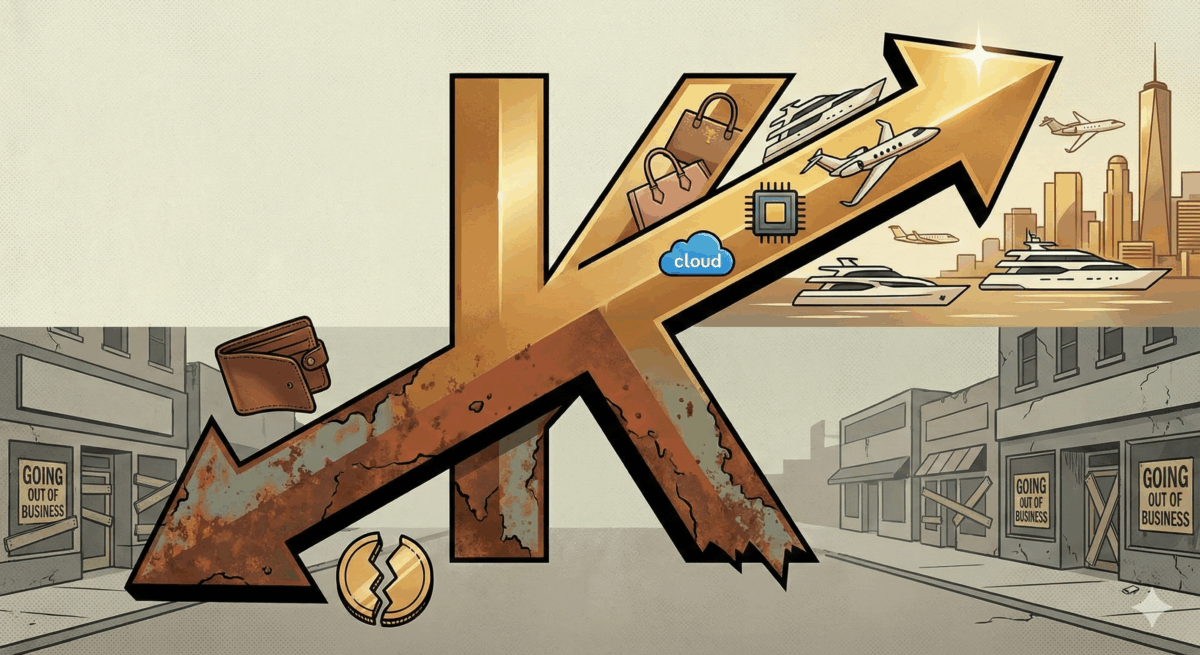
The economic outlook for 2026 presents a complex picture, characterized by diverging trends and persistent inflationary pressures. Bill D’Alessandro forecasts a "K-shaped economy," where the performance of large technology companies and major market players (like the "Mag 7") continues to surge, potentially by an additional 20% or more. In stark contrast, the broader economy and the average consumer are expected to experience continued struggles. This divergence has significant implications for e-commerce businesses, suggesting a bifurcation of consumer spending. The advice offered is to either target affluent consumers with premium offerings or focus on essential goods with highly competitive pricing. The "middle ground" is identified as a particularly precarious position for businesses to occupy.
Inflation is another key economic factor expected to persist. D’Alessandro predicts that inflation will remain above 3% in 2026, attributing this to a lack of political will to curb government spending, leading to continued deficit spending. This is viewed not as a short-term anomaly but as a trend likely to persist for the next decade. Businesses and investors are advised to position themselves strategically for a sustained inflationary environment, which could impact cost of goods, pricing strategies, and investment decisions.
In terms of international trade, predictions suggest a recalibration of tariffs on goods from China. One forecast anticipates that these tariffs will stabilize within the 30-50% range, rather than escalating further. This projection is based on the understanding that market responses to economic slowdowns can influence policy. When bond markets exhibit volatility and economic growth appears fragile, as observed in the current climate, trade policies may be adjusted to avoid further destabilization. The implication is that while trade tensions may persist, a complete rupture or extreme tariff escalation might be avoided to protect a vulnerable economy.
The Evolving Nature of Brands and Marketplaces

The very definition of a successful e-commerce brand is under scrutiny. One prediction boldly declares, "The lifestyle brand is dead." This assertion is particularly directed at e-commerce businesses with annual revenues in the single-digit millions, unless they possess strong intellectual property protection or are among the top 5-10% of brands in their category. The reasoning is that larger, more sophisticated players, armed with AI-powered operational efficiencies and the ability to tolerate higher customer acquisition costs, will increasingly dominate the market. This suggests a consolidation trend where only the most robust or uniquely positioned brands will thrive.
This trend is further supported by predictions regarding mergers and acquisitions (M&A). D’Alessandro anticipates a bifurcated M&A landscape, with robust activity at the high end of the market and stagnation at the lower end. Data indicates a significant increase in deals exceeding $1 billion, while transactions in the small and mid-size segments have declined. This suggests that top-tier e-commerce businesses will continue to command premium valuations, while smaller or mid-sized companies may struggle to find buyers or achieve favorable deal terms.
The prediction that the "AI bubble won’t pop in 2026" offers a counterpoint to prevailing market anxieties. While the NASDAQ’s current forward price-to-earnings ratio is cited as a point of concern, it is significantly lower than the multiples seen during the dot-com bubble of the early 2000s. Furthermore, current government investment in AI, adjusted for inflation, is substantially higher than tech spending in 2000. This analysis suggests that the current AI boom is underpinned by more sustainable fundamentals, indicating continued growth and innovation in the sector.
Finally, in the realm of digital assets, Bitcoin is predicted to experience volatility in the first half of 2026, potentially dipping below $70,000. However, it is expected to rebound and finish the year above $100,000. This forecast is driven by competing forces: a struggling consumer economy could diminish Bitcoin’s appeal as a speculative asset, while persistent inflation could bolster its role as a hedge against currency devaluation, often referred to as "digital gold."
The confluence of these predictions paints a picture of a dynamic and challenging future for e-commerce. Businesses that can adapt to the AI revolution, navigate economic uncertainties, and strategically position themselves within a bifurcated market are most likely to succeed. The emphasis on advanced analytics, hyper-personalization, and efficient content creation will be paramount, while the very nature of brand building and market positioning will undergo significant evolution. The upcoming year promises to be a critical juncture, separating those who embrace innovation from those who are left behind.









