rifanmuazin
The landscape of Business-to-Business (B2B) marketing is undergoing a profound transformation, driven by the rapid integration of Artificial Intelligence (AI) into buyer journeys. As AI systems become increasingly sophisticated tools for research and solution evaluation, B2B marketers face a critical challenge: ensuring their brands and offerings are not only discoverable but also comprehensible to these emerging digital gatekeepers. The traditional emphasis on search engine optimization (SEO) focused on keyword rankings and traffic is rapidly becoming insufficient. The new imperative, according to industry experts, is AI visibility – the ability of AI systems to accurately understand and interpret a brand’s value proposition. Failure to achieve this can lead to a brand being overlooked entirely in the early stages of the buyer decision-making process, even before a human prospect engages with marketing materials.
This seismic shift is highlighted in recent analyses, including "The 2026 State of B2B AI Visibility" report, which indicates a significant move by buyers to delegate initial research to AI platforms. These platforms are designed to synthesize information and provide direct answers rather than simply presenting a list of links. Consequently, B2B companies are no longer primarily competing for a high ranking on a search results page. Instead, they are in a battle to be included, or at least not excluded, from the AI’s generated responses. This presents a fundamental challenge for many organizations, as their current content strategies are often built for human readers, not for machine interpretation.
From Search Engines to Answer Engines: A Paradigm Shift
For years, B2B marketing efforts have been meticulously optimized for human search behavior. The focus was on keywords, search engine rankings, driving website traffic, and guiding users through conversion funnels. This approach was predicated on the assumption that buyers actively searched for solutions and navigated through organic search results. However, the advent and widespread adoption of AI tools have fundamentally altered this dynamic. Buyers are now increasingly "asking" AI systems for information, effectively delegating the initial phases of their research to sophisticated algorithms.
These AI tools are being employed for a multitude of tasks, including:
- Summarizing complex topics
- Identifying potential solutions to specific business problems
- Comparing different vendors and their offerings
- Generating initial drafts of research reports or proposals
In this new paradigm, the ability of content to simply "rank" is no longer enough. The critical requirement has emerged: content must be understood by AI. This means that the mechanics of discovery have changed from helping humans find you to helping machines interpret you. The implications of this shift are substantial, as a brand’s visibility is now determined not just by its online presence but by its ability to be accurately parsed and represented by AI.
The Narrative Disconnect: Human Storytelling vs. Machine Extraction
The core of the problem lies in the inherent difference between how humans consume information and how AI systems process it. Much of today’s B2B marketing content is crafted with persuasion and emotional connection in mind. It tells stories, builds narratives, and aims to create a resonant experience for human readers. While these elements remain vital for deeper engagement, AI systems do not process content in the same way. They are designed to extract factual information, identify key entities, and understand relationships between concepts.
AI systems look for:
- Structured data and clear definitions
- Specific features and benefits
- Quantifiable outcomes and proof points
- Authoritative sources and verifiable claims
The "AI Visibility" report terms this a "narrative disconnect." Companies are meticulously writing for human readers, while AI systems are attempting to extract objective facts. This disconnect can lead to several detrimental outcomes:
- Inaccurate Summaries: AI might misinterpret the core value proposition or focus on tangential information.
- Exclusion from Answers: If the content is too narrative-driven and lacks clear, extractable data, AI might simply omit the brand from its responses.
- Misrepresentation of Capabilities: AI could incorrectly characterize a company’s offerings based on an incomplete or misinterpreted understanding of its content.
A significant concern is that most B2B organizations are currently unprepared for this challenge. They are not actively optimizing their content for AI interpretation, and traditional analytics dashboards do not capture these AI-driven "exclusion events." This means that a substantial portion of potential leads might be lost before a company is even aware of the issue.
The Authority Trap and the Erosion of Inertial Visibility
A particularly insightful finding from the AI Visibility research is the concept of the "authority trap." Well-established brands often continue to appear in AI-generated answers, not because they have specifically optimized for AI, but because they were included in the vast datasets used to train these AI models. This creates a misleading sense of security, as it appears as visibility. However, it is not controlled visibility; it is a residual benefit from past dominance.
As AI systems evolve to incorporate real-time data retrieval and more sophisticated agent-based workflows, this inherited advantage will inevitably erode. The true differentiator will become the extent to which a company’s content is:
- Machine-Readable: Easily processed and understood by AI algorithms.
- Factually Accurate: Containing verifiable and precise information.
- Contextually Rich: Providing sufficient background and nuance for AI to grasp the full scope of offerings.
- Structured for Extraction: Organized in a way that allows AI to pull out key data points efficiently.
The research indicates that a significant gap exists here, with most B2B organizations lagging in their preparedness for this AI-driven future.
The Hidden Barrier: Websites as AI Roadblocks
Many B2B websites, while optimized for human conversion, may inadvertently be hindering AI systems from accessing and comprehending their content. Several common issues contribute to this problem:
- JavaScript-Heavy Rendering: Content that relies heavily on JavaScript to load can be difficult for AI crawlers to interpret.
- Complex Navigation: Intricate site structures and user interfaces can pose challenges for AI agents trying to navigate and understand the site’s architecture.
- Robots.txt Misconfigurations: Incorrectly configured
robots.txtfiles can block AI crawlers from accessing important pages or content. - Paywall or Login Requirements: Content locked behind authentication or paywalls is generally inaccessible to AI systems.
- Lack of Structured Data: Absence of schema markup or other structured data formats makes it harder for AI to identify and extract key information.
The AI Visibility study found that while approximately 90% of websites are optimized for human conversion, such as encouraging "Contact Sales" inquiries, they often create "agent blockades." These blockades prevent AI systems from progressing through the buyer journey, leading to a new form of funnel leak – one that occurs not at the point of conversion or engagement, but at the crucial stage of interpretation.
Context is the New Differentiator in the AI Age
The challenge of AI visibility transcends mere content creation; it delves into the fundamental aspects of data and architecture. As highlighted in analyses like "Martech for 2026," the future of marketing technology emphasizes that "AI is a commodity. Context is differentiation." While many organizations are still viewing AI as the primary competitive advantage, the reality is that AI capabilities are becoming increasingly democratized. Competitors, buyers, and partners all have access to AI. Therefore, the critical question shifts from "Do you have AI?" to "What does your AI actually know, and how effectively can it act upon that knowledge?"
Companies will differentiate themselves by providing:
- High-Quality, Verified Data: Ensuring the information AI systems access is accurate, up-to-date, and reliable.
- Well-Defined Ontologies and Taxonomies: Establishing clear structures for understanding concepts and their relationships within a specific domain.
- Granular Attribute Tagging: Precisely labeling content and data points with relevant attributes that AI can easily parse.
- Contextual Metadata: Providing rich metadata that helps AI understand the purpose, audience, and nuances of the content.
Furthermore, reports like "The New Martech Stack for the AI Age" underscore the necessity of a unified data foundation and a composable architecture to support AI-driven experiences. Currently, a significant majority of organizations are still in the experimental phase with AI agents, with only a small percentage having them in full production. Poor data quality is consistently cited as a major impediment to AI success. This challenge is equally pertinent to external visibility as it is to internal operations. If a company’s systems and content fail to provide clean, usable context, AI will be unable to represent the brand accurately.
Strategic Imperatives for B2B Teams Navigating AI Visibility
Addressing the evolving demands of AI-driven buyer journeys requires a proactive and strategic approach. This is not about abandoning established SEO practices but rather expanding the definition of online visibility to encompass AI interpretation. B2B teams should consider the following practical steps:
Audit How AI Describes Your Brand
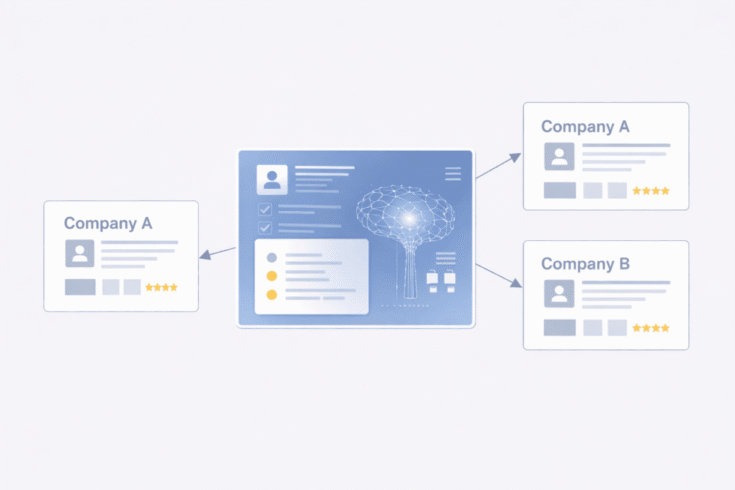
Begin by actively querying AI tools like ChatGPT, Bard, or Claude about your company, its offerings, and its market position. Ask questions such as:
- "Explain [Your Company Name] in one sentence."
- "What are the primary products/services offered by [Your Company Name]?"
- "Who are the main competitors of [Your Company Name]?"
- "What are the key benefits of using [Your Company Name]’s solutions?"
Pay close attention to:
- Accuracy of Information: Are the details provided correct?
- Completeness of Scope: Does the AI grasp the full breadth of your offerings?
- Tone and Nuance: Is the description aligned with your brand voice?
- Omissions: What critical information is missing from the AI’s response?
Enhance Content Extractability
Shift the mindset from being solely a storyteller to acting as a system designer for AI. Prioritize making content easily extractable by structuring it logically and using clear language. Key areas to focus on include:
- Structured Content Formats: Utilizing headings, subheadings, bullet points, and numbered lists effectively.
- Clear Definitions and Glossary Terms: Defining industry jargon and product-specific terms explicitly.
- Data-Rich Case Studies: Featuring quantifiable results, metrics, and specific use-case details.
- FAQs and Knowledge Bases: Providing direct answers to common questions in a readily accessible format.
Reduce Friction for Machine Access
Ensure that AI agents can navigate and process your website without encountering technical barriers. Evaluate:
- Website Accessibility: Confirm that
robots.txtfiles and sitemaps are correctly configured to allow AI crawlers access. - Page Load Speed: Optimize website performance to ensure quick loading times for AI bots.
- Clear Site Architecture: Implement intuitive navigation and internal linking to facilitate AI understanding of site structure.
- Use of Schema Markup: Employ structured data to help AI understand the context and entities on your pages.
Align Messaging Across All Channels
AI systems synthesize information from a multitude of sources. Therefore, consistency in messaging is paramount. If your:
- Website copy
- Marketing collateral
- Sales enablement materials
- Social media profiles
- Third-party listings
present inconsistent positioning or information, your brand’s overall narrative will suffer from a lack of coherence. This misalignment can confuse AI systems and lead to inaccurate representations.
Treat AI Visibility as a Strategic Function
Recognize that AI visibility is not solely an SEO or content marketing task. It sits at the critical intersection of:
- Content Strategy: Ensuring content is both human-readable and machine-interpretable.
- Data Management: Maintaining clean, accurate, and structured data.
- Technical SEO and Website Architecture: Optimizing for AI crawlability and understanding.
- Go-to-Market (GTM) Execution: Aligning messaging and product positioning across all touchpoints.
This requires orchestration, not just isolated optimization efforts. It demands a coordinated approach that brings together various marketing and technical functions.
The Evolving Role of the Marketer: Influencing Systems, Not Just People
The fundamental shift in B2B marketing is that organizations are no longer solely marketing to human buyers. They are now also influencing the AI systems that those buyers rely upon for decision-making. These systems, unlike human buyers, do not respond to compelling narratives if they cannot first understand them. The ultimate test for B2B marketers in this new era is a direct one: If an AI were tasked with explaining your company in a single sentence, would it accurately capture your essence and value proposition? Increasingly, this AI-generated summary will be the initial impression many potential buyers receive.
For B2B teams beginning to recognize that this challenge extends beyond content to encompass coordination, data integrity, and GTM orchestration, seeking expert guidance is a prudent step. Companies like Heinz Marketing are actively assisting B2B organizations in aligning messaging, data, and go-to-market execution. Their approach focuses on ensuring that a company’s strategy is clearly communicated and understood by both human buyers and the AI systems that are increasingly guiding their decisions. The future of B2B marketing success hinges on mastering this new frontier of AI visibility.