rifanmuazin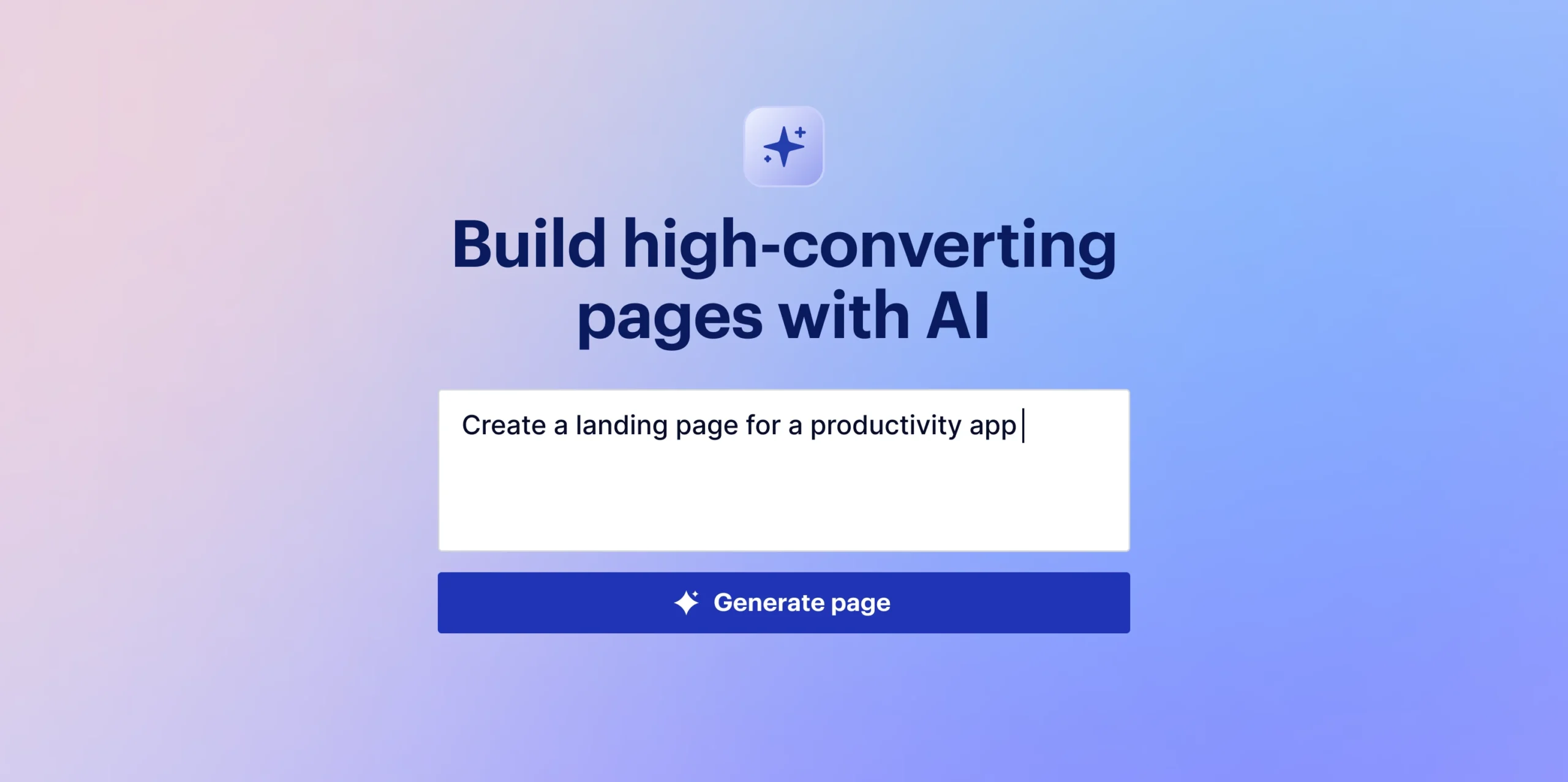
Instapage, a long-standing leader in the digital marketing technology sector, has officially announced the transformation of its service architecture into a fully integrated, end-to-end AI-powered marketing platform. This strategic evolution marks a significant departure from the company’s origins as a specialized landing page builder, signaling a broader industry shift toward consolidated, artificial intelligence-driven ecosystems. Since its inception in 2012, Instapage has focused on enhancing the efficiency of the post-click experience; however, this latest release introduces a suite of tools—including AI page generation, AI email generation, and AI Collections—designed to eliminate the fragmentation typically found in the modern marketing stack.
The transition comes at a critical juncture for the marketing technology (MarTech) industry. As organizations face tightening budgets and leaner team structures, the demand for "all-in-one" solutions that reduce the need for manual tool integration has reached an all-time high. By embedding AI across the entire creation, testing, and optimization lifecycle, Instapage aims to provide a unified environment where users can move from conceptualization to lead nurturing without the friction of platform switching.
The Evolution of Instapage: From Builder to Ecosystem
The journey of Instapage reflects the broader history of the World Wide Web’s commercial evolution. When the company launched in 2012, the primary challenge for marketers was the technical barrier to entry for creating high-quality landing pages. At that time, launching a campaign often required a developer, a designer, and a copywriter, creating a bottleneck that slowed speed-to-market. Instapage’s original value proposition was the democratization of page building through a simplified interface.
Over the subsequent decade, the company expanded its scope to include conversion rate optimization (CRO) features such as heatmaps, A/B testing, and dynamic text replacement for personalization. By 2020, the platform had evolved into a marketing suite that covered experimentation and analytics. The current 2024-2026 roadmap, however, represents the most significant leap in the company’s history. The integration of generative AI is not merely a "bolt-on" feature but a fundamental re-engineering of the workflow. The objective is to move from a "do-it-yourself" model to a "co-pilot" model, where the platform assists in the heavy lifting of design and communication.
Addressing the "Blank Page" Problem with AI Page Generation
One of the primary features of the new release is the AI Page Generator. In the traditional creative process, the "blank page" represents a significant psychological and operational hurdle. Marketers often have a clear strategic vision but struggle with the tactical execution of layout, messaging, and design hierarchy.
Instapage’s AI Page Generation allows users to describe their goals, target audience, and desired outcomes through natural language prompts. The system then generates a complete, conversion-optimized page in a matter of seconds. Unlike many standalone AI generators that produce static images or rigid code, Instapage’s system integrates directly with its "pixel-perfect" drag-and-drop builder. This allows for granular refinement after the initial generation.
Industry analysts note that this approach solves a common frustration with generative design: the "token cost" and "regeneration loop." In many AI tools, if a user wishes to move a single section or change a specific layout element, the entire page must be regenerated, often resulting in a loss of the original’s successful elements. By combining generative AI with a visual editor, Instapage provides a hybrid workflow where the AI handles the foundation and the human marketer maintains creative control over the nuances.
Closing the Loop: AI-Powered Email and Lead Nurturing
The expansion into AI-powered email generation addresses the "speed-to-lead" gap that often plagues digital campaigns. Data from various sales studies indicates that responding to a lead within five minutes increases the likelihood of conversion by nearly nine times compared to a 30-minute delay. Despite this, many marketing teams struggle to maintain instant, relevant communication across multiple campaigns.
The new Instapage AI email generator allows for the immediate creation of tailored follow-up sequences. Because the email tool is housed within the same platform as the landing pages, the AI has access to the context of the lead’s interaction. It can generate messaging that reflects the specific value proposition the user engaged with on the page. Users can define the tone, length, and goal of the communication—whether it is a whitepaper delivery, a demo request confirmation, or a promotional offer—and the system automates the delivery. This integration eliminates the need for manual lead exports and the "stitching together" of disparate email service providers (ESPs) and CRM systems for initial touchpoints.

Market Context and Supporting Data
The shift toward AI-driven consolidation is supported by current market trends. According to a 2023 Gartner report on marketing technology, CMOs are increasingly prioritizing "platform consolidation" to reduce the complexity of their stacks. The report found that marketing teams, on average, use only 42% of the capabilities available in their tech stacks, largely due to the difficulty of integrating various point solutions.
Furthermore, the "State of Marketing" report by Salesforce indicates that 68% of marketing leaders say their strategy is now "AI-first." The move by Instapage to provide an end-to-end solution aligns with these findings. By offering page generation, experimentation, and email in a single environment, the platform addresses the "lost time" cost. Internal data from Instapage suggests that users leveraging AI features can reduce the time spent on page creation by up to 80%, allowing for a higher volume of testing and, consequently, a higher probability of finding high-converting variations.
Analysis of Implications for Marketing Teams
The implications of an end-to-end AI platform are profound for both small businesses and enterprise-level teams. For small businesses, the primary benefit is the "headcount multiplier" effect. A single marketer can now perform the tasks previously assigned to a designer and a copywriter, allowing small firms to compete with larger organizations in terms of digital presence and professional output.
For enterprise teams, the benefit lies in scalability and consistency. Large organizations often struggle with brand consistency across hundreds of localized or campaign-specific pages. AI Collections and global blocks allow these teams to update brand assets across an entire library of pages simultaneously. The addition of AI ensures that even as the volume of pages grows, the quality of messaging remains aligned with the core brand strategy.
However, the rise of AI-generated content also brings challenges. The market is likely to see an influx of content, which may lead to "content fatigue" among consumers. The competitive advantage will therefore shift from the ability to create content to the ability to optimize and personalize it. Instapage’s focus on CRO (Conversion Rate Optimization) ensures that its AI tools are not just generating content for the sake of volume, but are doing so with a focus on measurable performance metrics.
Official Positioning and Future Outlook
While official statements from the company emphasize the continuity of their mission, the underlying message is one of radical efficiency. The company posits that in the current economic climate, where budgets are scrutinized and ROI is paramount, the traditional method of "patching together" tools is no longer viable.
"Instapage is now your end-to-end, AI-powered marketing platform," the company stated in its release, highlighting that AI is now "built into every part of your marketing." This positioning suggests that Instapage views itself no longer as a utility for designers, but as a strategic engine for revenue growth.
Looking forward, the trajectory of Instapage suggests a move toward predictive optimization. As the AI gathers more data on how different audiences interact with generated pages and emails, the next logical step is a system that can predict which layouts or subject lines will perform best before they are even published. For now, the focus remains on the "creation-to-conversion" pipeline, providing a streamlined workflow that promises to save weeks of development time.
The release of these AI features marks the beginning of a new chapter for Instapage. By addressing the gaps between page building, lead generation, and follow-up, the platform is attempting to redefine the standard for what a marketing suite should provide. As AI continues to permeate the industry, the success of such platforms will likely depend on their ability to balance automation with the human intuition required for high-level strategy. Instapage’s current offering, which pairs automated generation with a high-precision editor, appears to be a calculated step toward that balance.