rifanmuazin
The intricate machinery of marketing workflows, much like any complex operational system, is prone to inefficiencies and bottlenecks. Tom Swanson, Senior Engagement Manager at Heinz Marketing, argues that the most effective path to improving these workflows lies not in tackling symptoms, but in systematically addressing foundational issues. This approach, rooted in identifying and resolving problems sequentially from the workflow’s inception, offers a more robust and sustainable solution than addressing downstream issues in isolation. Swanson emphasizes that many apparent problems later in a process are often cascading effects of issues originating at the outset. This principle is critical, especially as organizations consider integrating artificial intelligence into their marketing operations, as AI solutions are most effective when applied to well-defined and properly functioning underlying processes.
The Cascade of Inefficiency: Understanding Workflow Dynamics
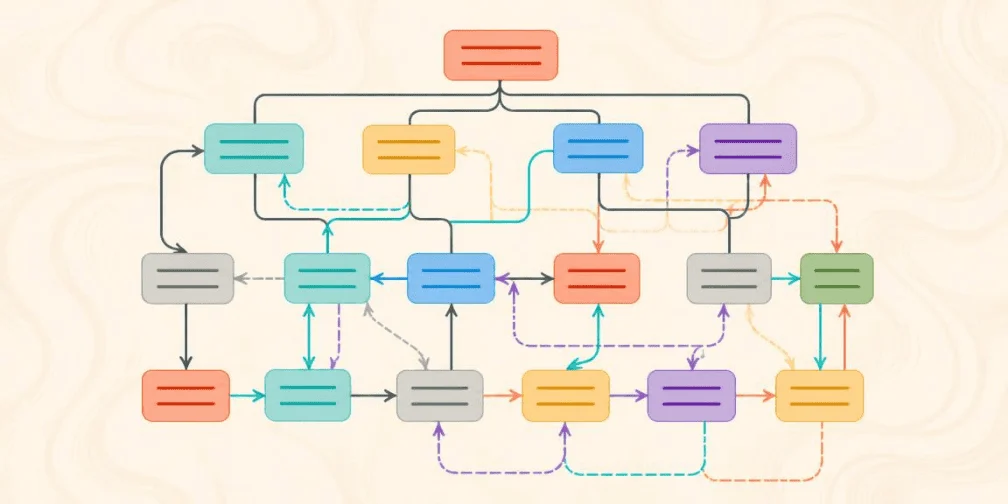
Marketing workflows are typically designed as a series of interconnected steps, where the output of one stage serves as the input for the next. This linear progression, while logical, makes it challenging to pinpoint the exact source of errors when problems arise. A single flawed output can propagate through the system, creating a series of subsequent errors and masking the original root cause. Over time, teams develop workarounds and habits to compensate for these persistent issues. These emergent habits, while intended to facilitate progress, can become deeply ingrained, further obscuring the initial problem and making it significantly harder to diagnose and rectify. Swanson likens this phenomenon to a "flowery way of saying that underlying issues + habits create bad workflows," highlighting the compounding effect of initial errors and subsequent adaptations.
This phenomenon is not unique to marketing. In project management, for instance, a poorly defined initial scope or a lack of clear requirements at the project’s outset can lead to scope creep, budget overruns, and missed deadlines. A 2023 study by the Project Management Institute found that 11.4% of organizational project management initiatives fail due to poor communication, and 9.1% due to poorly defined objectives, both of which can be traced back to upstream issues. Similarly, in software development, a bug introduced early in the coding process can necessitate extensive debugging and rework later, significantly increasing development time and cost. The principle of addressing problems at their source, therefore, has broad applicability across various operational domains.
Navigating Change Fatigue: The Crucial First Step
Before embarking on any workflow improvement initiative, a critical assessment of the team’s current state is paramount. Swanson advises asking fundamental questions: "What is going on right now? Can your team even absorb another change? Is there appetite for a fix to a workflow?" This initial diagnostic phase is designed to gauge the team’s capacity for change and identify potential resistance or burnout.
Marketing teams, in particular, often operate in a dynamic environment characterized by constant shifts in market trends, platform algorithms, and campaign objectives. This inherent fluidity can lead to "change fatigue," a state where individuals become overwhelmed and desensitized to ongoing modifications, making them less receptive to further improvements. A 2022 survey by Gartner indicated that employee burnout is at an all-time high, with a significant portion attributed to organizational change initiatives. For teams that serve as central hubs for other departments, such as creative teams supporting marketing and corporate communications, the impact of change fatigue can be amplified by competing stakeholder demands and shifting priorities.
If a team has recently undergone significant structural or procedural changes, it may be more prudent to allow for a period of stabilization before implementing further workflow enhancements. This "patience" phase, perhaps lasting a quarter, allows teams to adapt to new processes, establish routines, and regain their operational rhythm. Forcing additional changes onto an already stressed team can exacerbate existing problems and undermine the intended improvements.
The Fallacy of Impact-Driven Prioritization
A common pitfall in workflow optimization is the tendency to prioritize problems based on the magnitude of their perceived impact. While intuitive, this approach often leads to addressing symptoms rather than root causes. Swanson uses the analogy of a headache: a team might focus on alleviating the immediate pain (the headache) without addressing the underlying issue, such as poor posture, which is the true source of the recurring discomfort.

In a marketing workflow, this might manifest as teams constantly fixing issues related to campaign reporting delays (the headache) while overlooking a fundamental problem in data collection or integration at the intake stage (the bad posture). While treating the symptom provides temporary relief, the underlying issue persists, leading to a continuous cycle of reactive problem-solving. The long-term consequence is a system that is perpetually struggling to function optimally, akin to the individual with chronic poor posture facing permanent physical ailments.
The role of workflow analysts and managers, therefore, is to adopt a diagnostic mindset, similar to that of a physician. They must view the most prominent pain points as indicators of deeper, systemic issues. This requires looking beyond the immediate distress to identify the foundational elements that, when misaligned, generate widespread problems. A 2021 report by McKinsey & Company on operational excellence highlighted that organizations that effectively link frontline operational issues to strategic objectives are more likely to achieve sustainable performance improvements. This linkage is often achieved by shifting focus from immediate, high-impact problems to the underlying causes that generate them.
The Power of Sequential Problem-Solving: Starting at Intake
The most effective strategy for improving marketing workflows, according to Swanson, is to begin at the point of "fewest assumptions," which typically corresponds to the initial stage of the workflow – the intake process. This approach leverages the principle of Occam’s Razor, a problem-solving heuristic that advocates for the simplest explanation being the most likely.
In the context of a workflow, the intake stage is where information, requests, and requirements are first received. By focusing on this entry point, teams can minimize the number of variables and assumptions they need to contend with. When examining problems further down the line, numerous assumptions are inherently made about the quality and completeness of information passed from previous stages. For example, downstream teams might assume that the initial briefing was comprehensive, that all necessary approvals were secured, and that the data provided is accurate.
However, the most critical assumption that must be challenged is: "Any issue that comes up is NOT the result of incomplete information or poor communication at intake." Until this assumption is thoroughly investigated and, if necessary, corrected, any subsequent diagnosis or solution applied to downstream problems may be fundamentally flawed. It is akin to trying to build a stable structure on an unstable foundation; no matter how well-constructed the upper levels are, the entire edifice is at risk of collapse.
The "Garbage-In, Garbage-Out" Principle in Action
The "garbage-in, garbage-out" (GIGO) principle is a fundamental concept in computing and information management that holds true for operational workflows. If the initial input is flawed, the output will inevitably be flawed, regardless of the processing power or efficiency of the system. In marketing workflows, a poorly defined brief, incomplete campaign parameters, or inaccurate customer data entering the system at intake will cascade through every subsequent stage.
Consider a campaign launch where the initial target audience parameters are vague or misaligned with the overall marketing strategy. This ambiguity can lead to inaccurate segmentation, misdirected advertising spend, and content that fails to resonate with the intended recipients. The creative team might produce content based on flawed assumptions, the media buyers might target the wrong demographics, and the analytics team might report on metrics that do not reflect true campaign success. Each of these downstream issues, while appearing as separate problems, can be traced back to the initial vagueness at intake.
By prioritizing the improvement of the intake process, organizations can establish a robust foundation for their marketing operations. This involves clearly defining intake requirements, implementing standardized request forms, establishing validation checks, and fostering clear communication channels between requesters and the teams responsible for processing these requests. For instance, a marketing department might implement a mandatory campaign brief template that requires specific details on objectives, target audience, budget, and key performance indicators (KPIs). This structured approach ensures that all necessary information is captured upfront, minimizing the risk of downstream errors.

The Role of AI in Workflow Optimization: A Complementary Tool
The increasing integration of artificial intelligence into marketing workflows presents a powerful opportunity for enhancement. However, as Swanson points out, AI is not a panacea for poorly designed processes. AI tools can automate tasks, analyze vast datasets, and personalize customer interactions, but their effectiveness is directly proportional to the quality of the data and the clarity of the processes they are applied to.
If an AI model is trained on incomplete or inaccurate data due to a flawed intake process, its outputs will be similarly flawed. For example, an AI-powered content generation tool might produce irrelevant or nonsensical content if the initial prompts are ambiguous or lack context. Similarly, an AI-driven personalization engine might deliver inappropriate recommendations if the underlying customer data is incomplete or inaccurate.
Therefore, organizations seeking to leverage AI for workflow improvement must first ensure that their foundational processes are sound. Investing in AI solutions without addressing upstream issues is akin to installing advanced navigation systems in vehicles with faulty engines – the technology is sophisticated, but its potential is severely limited by underlying deficiencies. The sequential problem-solving approach, starting with intake, provides the necessary groundwork for AI to deliver its full value, transforming it from a potential source of further complexity into a genuine accelerator of efficiency and effectiveness.
Conclusion: A Framework for Sustainable Improvement
The path to optimizing marketing workflows is not paved with quick fixes but with a systematic and foundational approach. By adopting a sequential problem-solving methodology, starting at the point of fewest assumptions – typically the workflow’s intake – organizations can effectively diagnose and resolve the root causes of inefficiencies. This strategy mitigates the risk of change fatigue by ensuring that improvements are implemented in a structured and manageable manner. It also moves beyond the often misleading prioritization of problems based solely on their immediate impact, focusing instead on addressing systemic issues that generate widespread problems.
This rigorous examination of assumptions, particularly concerning the completeness and accuracy of initial inputs, is crucial for preventing the "garbage-in, garbage-out" cycle. As marketing operations continue to evolve, embracing this methodical approach will not only enhance current workflows but also lay a robust foundation for the successful integration of advanced technologies like artificial intelligence. Ultimately, by committing to a process of continuous, sequential improvement, marketing teams can build more resilient, efficient, and effective operational frameworks that drive sustainable success.
For organizations struggling to identify and address these upstream workflow challenges, expert consultation can provide valuable insights and structured methodologies. Addressing the fundamental intake and sequential processing of marketing requests is not merely an operational adjustment; it is a strategic imperative for achieving long-term efficiency and maximizing the impact of marketing initiatives.