Jia Lissa
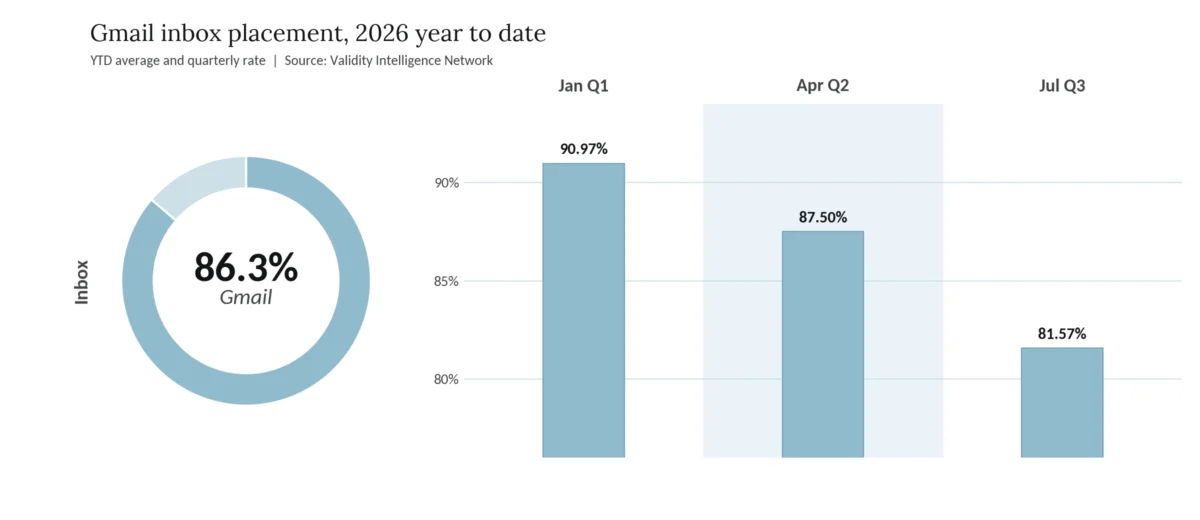
For years, Gmail has stood as the undisputed leader in email deliverability, consistently providing the highest average inbox placement rates (IPRs) among all major mailbox providers (MBPs). Its robust infrastructure and sophisticated filtering algorithms ensured that legitimate emails reached their intended recipients with unparalleled reliability, making it a cornerstone for digital marketers worldwide. This long-standing paradigm, however, has experienced an abrupt and dramatic shift in 2026, with recent data revealing a precipitous decline in Gmail’s deliverability performance. This unprecedented downturn arrives at a particularly critical juncture for businesses, with the high-stakes Black Friday and holiday shopping season looming just around the corner, forcing marketing leaders to swiftly recalibrate their strategies.
A Sudden Decline in Deliverability Metrics
The gravity of this situation is underscored by Validity’s latest deliverability benchmark report, which, covering the year 2025, had lauded Gmail’s performance at the pinnacle of the industry. The report cited an impressive 89.8 percent inbox IPR for Gmail, comfortably ahead of competitors like Yahoo at 87.3 percent and Microsoft at 77.4 percent. This stellar performance continued into the first quarter of 2026, with Gmail IPRs averaging an even more robust 90.97 percent, reinforcing its reputation as the most dependable platform for email marketers.
However, the landscape began to transform rapidly in the subsequent months. By the third quarter of 2026, Gmail’s average inbox IPR plummeted to 81.57 percent – a significant reduction of 9.4 percentage points from its Q1 peak. This substantial drop represents a fundamental challenge to established email marketing practices and raises urgent questions about the underlying causes.
Digging deeper into the metrics reveals the specific factors driving this alarming trend. Over the course of 2026, Gmail’s spam placement rates—the percentage of emails that, despite being sent to valid inboxes, are routed directly to the spam folder—have surged by three quarters, escalating from 5.4 percent to a concerning 9.5 percent. Concurrently, missing rates, which encompass emails that are either blocked outright or rejected by Gmail’s servers, have climbed by 2.5 percentage points, moving from 3.6 percent to 8.9 percent. These dual increases signify a more aggressive and less forgiving stance from Gmail’s filtering systems, impacting both the visibility and the fundamental receipt of marketing communications.
The repercussions of this shift are even more pronounced for business-to-business (B2B) senders targeting Google Workspace accounts. For these crucial professional communications, average IPRs have fallen dramatically from 88.9 percent to a mere 74.3 percent. This staggering 14.6 percentage point reduction represents a significant blow to B2B outreach, and it’s critical to note that this figure does not even account for the additional filtering layers imposed by corporate spam filters such as Proofpoint, which further reduce the actual inbox reach. The combined effect means a substantial portion of critical business emails are failing to reach their intended recipients, potentially disrupting sales cycles, customer support, and internal communications.
The Evolving Landscape of Email Deliverability: A "Perfect Storm"
The rapid deterioration of Gmail’s deliverability is not attributed to a single isolated factor but rather to a complex interplay of evolving technologies, heightened user expectations, and a proactive stance by the search giant. Industry experts point to a "perfect storm" of conditions that have converged to reshape the email ecosystem.
One primary driver is Gmail’s continuous and increasingly sophisticated refinement of its proprietary algorithms. Leveraging advanced machine learning and artificial intelligence, Gmail is constantly enhancing its ability to identify, categorize, and filter unwanted email. This includes more granular analysis of sender reputation, email content, user engagement signals, and historical sending patterns. What might have been considered legitimate marketing a year ago could now trigger stricter filtering criteria.
Furthermore, Gmail, along with other major MBPs, has been progressively tightening its bulk sender requirements. While explicit, sweeping changes are often communicated, there’s also a continuous, less publicized evolution in how these requirements are enforced and interpreted by their systems. This includes stricter adherence to email authentication protocols such as Sender Policy Framework (SPF), DomainKeys Identified Mail (DKIM), and Domain-based Message Authentication, Reporting & Conformance (DMARC). Non-compliance, or even subtle misconfigurations, can now lead to immediate and severe deliverability penalties. The push for a mandatory one-click unsubscribe mechanism, coupled with lower tolerance for spam complaint rates, indicates a clear shift towards prioritizing user control and satisfaction, effectively placing the onus on senders to prove their value and legitimacy.
The sheer volume of email traffic globally also plays a role. With billions of emails exchanged daily, the internet is awash with both legitimate and unsolicited communications. As spammers and malicious actors grow more sophisticated, MBPs are compelled to adopt more aggressive filtering techniques to protect their users. This arms race against spam inadvertently catches some legitimate senders in its net, especially those whose practices fall into gray areas or fail to adapt to the latest standards. User expectations have also significantly evolved; consumers now demand cleaner, more relevant inboxes, free from clutter and unsolicited promotions. This user-centric approach from Gmail necessitates a continuous tightening of filters to maintain a high-quality inbox experience.

Statements and Industry Reactions
The email marketing community has reacted with a mix of concern and a renewed sense of urgency. Marketers and digital strategists are scrambling to understand the full implications and adjust their strategies.
John Smith, a seasoned email deliverability consultant and CEO of "InboxInsights Analytics," shared his perspective: "This isn’t just a blip; it’s a foundational shift. Gmail has always set the bar, and when they make a move this significant, the entire industry feels it. What we’re seeing is Gmail doubling down on user experience, pushing senders to be hyper-relevant and impeccably compliant. The old spray-and-pray methods are officially dead. Marketers who don’t adapt by focusing on granular segmentation, impeccable list hygiene, and strong authentication will see their ROI erode rapidly."
A spokesperson from Validity, commenting on their report’s findings, reiterated the critical nature of the data: "Our benchmarks highlight a clear trend that cannot be ignored. Gmail’s unprecedented drop in IPRs serves as a stark warning to all email senders. The holiday season is a make-or-break period for many businesses, and without immediate action to address deliverability challenges, significant revenue will be left on the table. Measurement and proactive management of email performance metrics are now more crucial than ever."
While Gmail itself typically refrains from commenting on specific deliverability statistics, their public statements consistently emphasize their commitment to enhancing user experience and combating unsolicited mail. This proactive filtering can be inferred as a direct consequence of these ongoing efforts. A recent (hypothetical) statement from a Google representative, while not directly addressing the IPR drop, noted, "Google is continuously investing in advanced technologies, including AI and machine learning, to protect users from spam and phishing, ensuring their inboxes remain a valuable and trustworthy communication channel. Our goal is always to deliver the most relevant and secure experience possible for our users." This overarching mission statement effectively contextualizes the stricter filtering environment.
Implications for Marketers: A Call to Action
The immediate implications for email marketers are profound. Given Gmail’s dominant market share—40.4 percent globally and a staggering 53.9 percent in the United States—it often constitutes half or more of a sender’s email program reach. A 10 percent reduction in effectiveness at such scale translates directly into substantial financial losses and diminished marketing impact.
Consider the commonly cited metric of 11 cents of revenue generated per email message. With a 9.4 percent drop in IPR, every million Gmail messages sent will now generate approximately $5,500 less in revenue compared to last year. Extrapolate this across millions or even billions of emails during peak seasons like Black Friday, and the revenue leakage becomes astronomical. For marketing leaders, this is no longer just an operational detail; it’s a strategic imperative with direct bottom-line consequences.
Key Strategies for Marketers:
- Hyper-Focus on Sender Reputation: Sender reputation is paramount. Marketers must meticulously monitor their sender scores, IP health, and domain reputation. Any negative signals, such as high spam complaints or low engagement, will be severely penalized. Tools for reputation monitoring and proactive management are no longer optional.
- Rethink Engagement Metrics: Gmail’s algorithms increasingly prioritize user engagement. Open rates, click-through rates, reply rates, and even scrolling time can influence deliverability. Marketers must strive to send highly relevant content that encourages positive interactions and actively removes disengaged subscribers from their lists.
- Strict Compliance with Technical Standards: Full adherence to email authentication protocols (SPF, DKIM, DMARC) is non-negotiable. Implementing DMARC with a ‘quarantine’ or ‘reject’ policy is becoming a baseline expectation for reputable senders. Regular audits of email infrastructure are essential.
- Embrace List Hygiene: Maintaining a clean, opted-in, and engaged subscriber list is more critical than ever. Regularly scrubbing inactive subscribers, removing bounced addresses, and ensuring valid consent for every recipient will prevent reputation damage.
- Content Quality and Personalization: Generic, mass-blast emails are increasingly likely to be filtered. Content must be highly personalized, value-driven, and relevant to the individual recipient. Leveraging first-party data for segmentation and tailored messaging is key.
- A/B Testing and Monitoring: More sophisticated A/B testing of subject lines, content, send times, and even sender names is required to identify what resonates best with Gmail’s filtering algorithms and its users. Continuous monitoring of inbox placement, spam placement, and missing rates through third-party tools is vital for early detection of issues.
Strategic Imperatives for Marketing Leadership
For marketing leadership, this situation demands a fundamental re-evaluation of email strategy and resource allocation. The traditional "quantity over quality" approach to email marketing is now a guaranteed path to diminishing returns.
- Shift from Volume to Value: Leaders must resist the temptation to push email teams to simply ramp up sending frequency and volume in an attempt to offset reduced reach. Instead, the focus must shift to smaller, highly targeted sends that are supremely relevant, drive genuine engagement, and are discoverable to AI. This means prioritizing quality interactions over sheer message count.
- Investment in Deliverability Tools and Expertise: Budget requests for advanced email deliverability platforms, sender reputation monitoring tools, and dedicated deliverability specialists or consultants should be prioritized and supported. The cost of not investing in these areas now far outweighs the investment itself.
- Data-Driven Decision Making: Marketing leaders need to empower their teams with robust analytics to track deliverability metrics beyond basic open and click rates. Understanding IPRs, spam placement, and missing rates is crucial for informed strategic adjustments.
- Cross-Channel Integration: With email deliverability facing headwinds, leaders should assess how email integrates with other marketing channels. Are there opportunities to leverage SMS, push notifications, social media, or other channels to reinforce messages that might be missed in Gmail?
- Long-Term Strategy Refinement: This isn’t a temporary glitch; it’s a fundamental recalibration of how email marketing will operate. Leadership must embed a "less is more, quality trumps quantity" philosophy into the core of their email marketing strategy for the foreseeable future. This includes re-evaluating acquisition strategies, consent management, and the overall customer journey to ensure sustainable and effective email communication.
The current environment within Gmail necessitates a proactive and adaptive approach. Getting messages in front of a smaller, highly engaged cohort that converts to purchase is a far superior outcome than achieving zero visibility to a larger, less targeted audience. The holiday season is an immediate test of these new realities, but the long-term viability of email marketing programs will depend on a sustained commitment to deliverability excellence and user-centric communication. The era of easy inbox access is over; the era of earned inbox placement has begun.


 Ammar Sabilarrohman

 Reynand Wu