Pevita Pearce
As the critical seasonal rush approaches for online businesses worldwide, Yoast has rolled out significant updates to its flagship SEO plugins, Yoast SEO 28.9 and Yoast WooCommerce SEO 17.1. These releases introduce a suite of enhancements designed to bolster website accessibility, streamline SEO processes through advanced AI integration, and fortify site security. The comprehensive update underscores Yoast’s commitment to providing robust tools that empower businesses to thrive in an increasingly competitive digital landscape, particularly as e-commerce activity is projected to surge during the upcoming holiday shopping period.
Elevating Accessibility Through Advanced Alt Text Assessments
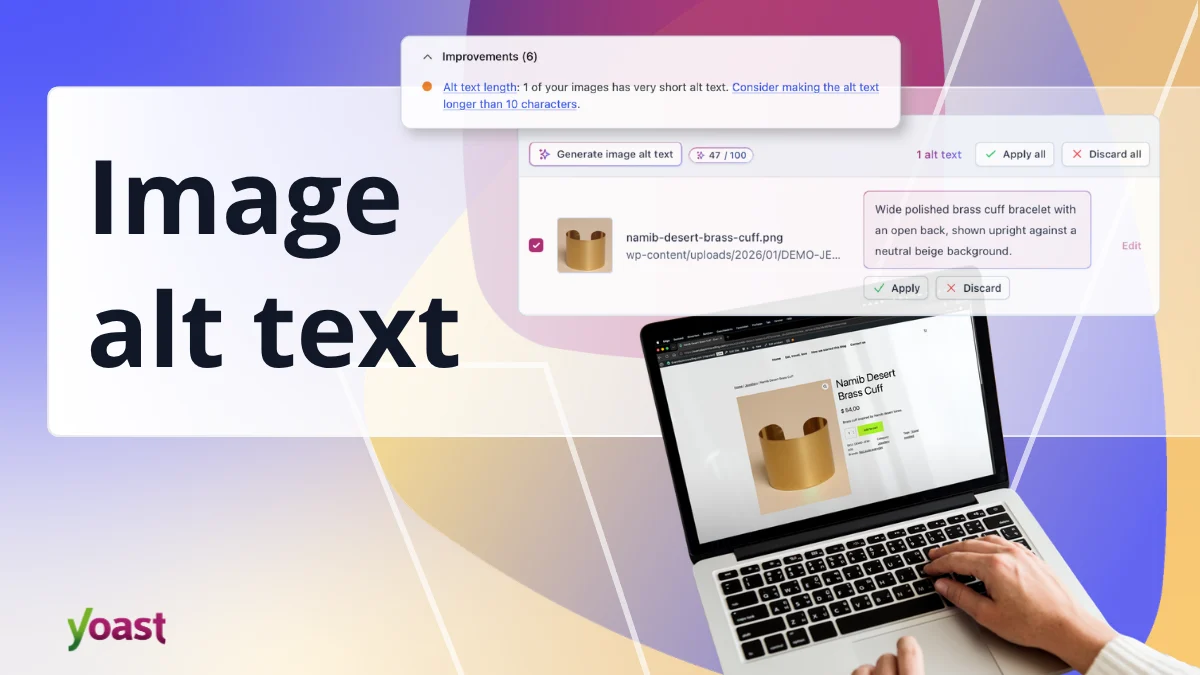
A cornerstone of the Yoast SEO 28.9 release is the introduction of five new assessments specifically targeting image alt text. Alt text, a concise written description of an image, plays a dual critical role in web accessibility and search engine optimization. For users with visual impairments, screen readers rely on accurate alt text to convey the visual content of an image, making websites navigable and informative. From an SEO perspective, search engines leverage alt text to understand image context, which contributes to better image search rankings and overall page relevance.
The new assessments are engineered to identify common pitfalls that hinder effective alt text. These include:
- Missing Alt Text: Flagging images that completely lack descriptions, a fundamental accessibility barrier.
- Generic Alt Text: Identifying descriptions like "image" or "picture," which offer no meaningful information.
- Long Alt Text: Highlighting descriptions that exceed recommended lengths, potentially overwhelming screen reader users.
- Keyword Stuffing in Alt Text: Detecting instances where alt text is unnaturally overloaded with keywords, a practice detrimental to user experience and potentially penalized by search engines.
- Alt Text Duplication: Pinpointing identical alt text used for different images, suggesting a lack of specific descriptions.
These new assessments are integrated directly into the Yoast SEO analysis, providing real-time feedback on posts, pages, and products. Crucially, they operate on existing content, allowing site administrators to retroactively identify and rectify accessibility issues across their entire digital footprint. The shift in focus from merely including a keyphrase in alt text to ensuring the description accurately reflects the image’s content aligns with industry best practices and WCAG (Web Content Accessibility Guidelines) standards, which emphasize user-centric design. Studies consistently show that accessible websites not only cater to a broader audience but also often experience improved SEO performance due to better user engagement signals and adherence to technical best practices. For instance, according to the World Health Organization, over 2.2 billion people globally have a vision impairment, highlighting the vast audience impacted by accessible web design. The new assessments replace the previous "Keyphrase in image alt attributes" assessment, signaling a more holistic approach to image optimization that prioritizes user experience over keyword manipulation.
Revolutionizing E-commerce SEO with AI-Powered Alt Text Generation
For online retailers, the challenge of managing product images and their corresponding alt text can be immense. Product galleries often contain hundreds, if not thousands, of images, each requiring precise and descriptive alt text. Yoast WooCommerce SEO 17.1 directly addresses this by integrating an AI-powered "Fix with AI" feature for every new alt text assessment. This innovation allows e-commerce managers to generate accurate and contextually relevant alt text for their product images directly within the WooCommerce interface.
When an alt text issue is flagged by the new assessments, users are presented with an option to "Fix with AI." This feature leverages artificial intelligence to analyze the image and its associated product data, then proposes a suitable alt text description. A critical component of this feature is the user review step, ensuring that every AI-generated suggestion is manually approved before being saved. This human-in-the-loop approach combines the efficiency of AI with the nuanced understanding and brand voice that only human oversight can provide.
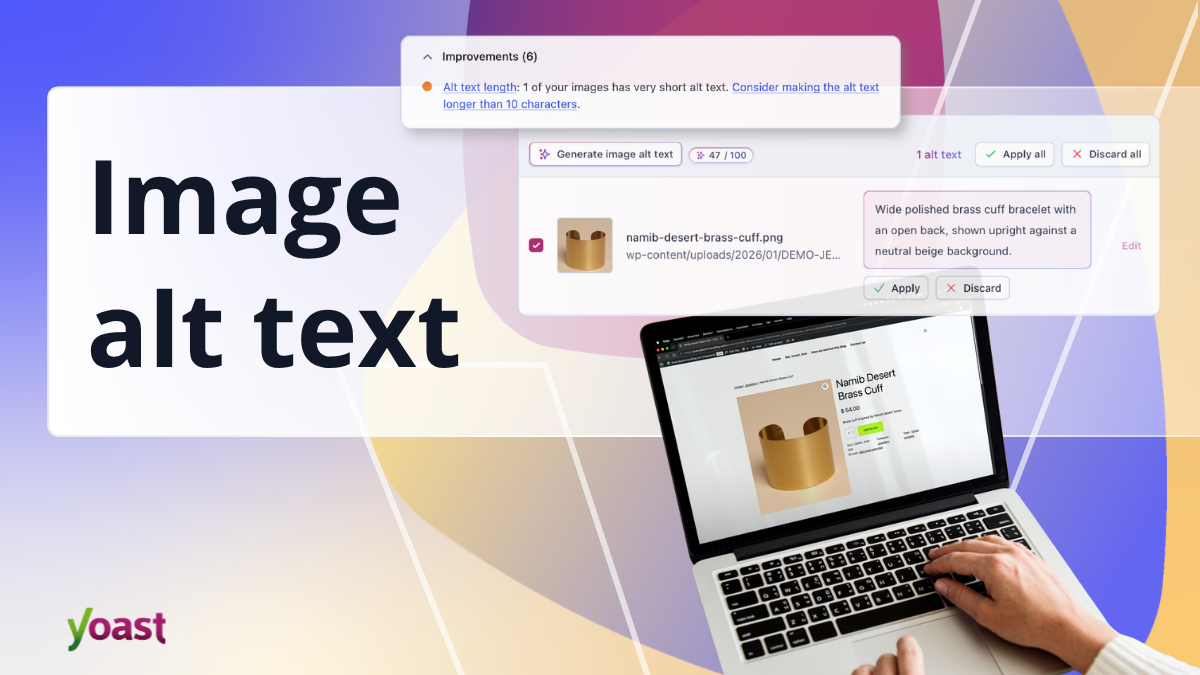
The implications for e-commerce businesses are substantial. According to Statista, global e-commerce sales are projected to reach over $8 trillion by 2027. In such a rapidly expanding market, optimizing every aspect of a product page, including image alt text, can significantly impact discoverability and conversion rates. The "Fix with AI" functionality in Yoast WooCommerce SEO 17.1, available to users of Yoast WooCommerce SEO and Yoast SEO AI+, offers a powerful solution to a historically time-consuming task, enabling store owners to prepare their vast product catalogs for the peak shopping season with unprecedented efficiency. This feature not only saves time but also helps maintain consistency and quality across a large volume of product images, enhancing both SEO and accessibility.
Expanding AI Integration for Holistic SEO Management
Beyond alt text generation, Yoast SEO 28.9 significantly expands the capabilities of Yoast SEO Abilities, allowing for deeper integration of external AI tools into a website’s SEO management. Previously, AI tools could read and update some SEO data; now, their functionality has been broadened to include:
- Generating SEO titles and meta descriptions: AI can now draft these crucial elements based on page content, saving time for content creators.
- Suggesting internal links: AI can analyze content and propose relevant internal links to improve site structure and user navigation.
- Optimizing readability scores: AI can analyze text for readability and suggest improvements to enhance user engagement.
These expanded abilities mean that users can leverage their existing AI subscriptions (such as OpenAI’s GPT models or similar services) to automate and refine a broader spectrum of SEO tasks. Importantly, Yoast maintains strict security protocols, ensuring that AI tools operate within the confines of WordPress user permissions. This safeguards against unauthorized access or modifications to critical SEO data. The bug fix addressing the inability of Yoast SEO Abilities for posts to find a static homepage by its URL further refines the system’s accuracy and reliability. This development positions Yoast at the forefront of AI-driven SEO, aligning with the broader industry trend of integrating artificial intelligence to enhance efficiency and effectiveness in digital marketing.
Critical Security Update: Safeguarding User Data
A crucial component of the Yoast SEO 28.9 release is a vital security fix addressing a vulnerability in the get_head REST endpoint. This endpoint, often utilized by headless WordPress installations and other third-party tools to fetch SEO metadata, was found to potentially leak auto-generated social descriptions of private and protected posts and pages. This meant that visitors without proper authorization could access sensitive content, posing a significant data privacy risk.
The prompt resolution of this bug underscores Yoast’s commitment to user data security and privacy. In an era where data breaches are increasingly common and regulations like GDPR and CCPA impose strict requirements on data handling, such vulnerabilities can have severe consequences for businesses, ranging from reputational damage to substantial financial penalties. Yoast strongly recommends that all users update to Yoast SEO 28.9 immediately to patch this vulnerability and ensure the privacy of their content. This proactive approach to security is paramount, particularly for websites handling sensitive information or operating under strict compliance frameworks.
Adapting to Browser Changes: XML Sitemap Display Evolution
In response to evolving web standards and browser technology, Yoast SEO 28.9 introduces a change in how XML sitemaps are displayed in web browsers. Browsers are progressively deprecating XSLT (Extensible Stylesheet Language Transformations), an older technology responsible for rendering XML sitemaps into human-readable tables. Google Chrome, for instance, has already begun issuing warnings when sitemaps still rely on XSLT.
To preempt these changes and ensure future compatibility, Yoast SEO no longer utilizes XSLT for sitemap display. Consequently, when users open their XML sitemap in a browser, they will now see the raw XML code that search engines read, rather than a formatted table. It is crucial for users to understand that this change is purely cosmetic and affects only the browser’s visual representation of the sitemap. The underlying XML structure, which search engines like Google, Bing, and others crawl to discover website pages, remains entirely unaffected. This ensures that search engines continue to find and index content exactly as before, requiring no action from website administrators. This adjustment reflects a proactive measure to adapt to browser technology advancements, maintaining the integrity of search engine communication while streamlining the technical overhead.
Performance and User Experience Enhancements Across the Ecosystem
Beyond the core SEO and security updates, Yoast has also focused on enhancing performance and user experience across its product ecosystem:
- Yoast SEO for Shopify: With the impending busy season, optimizing site speed is paramount for e-commerce success. Yoast SEO for Shopify has received significant speed improvements, ensuring faster loading times for Shopify stores. Additionally, the content lists within the Shopify plugin now retain user-defined filters, search queries, and sort orders when navigating between items, streamlining workflow and improving efficiency for store managers. These optimizations are critical for maintaining user engagement and conversion rates, as studies indicate that even a one-second delay in page load time can lead to a 7% reduction in conversions.
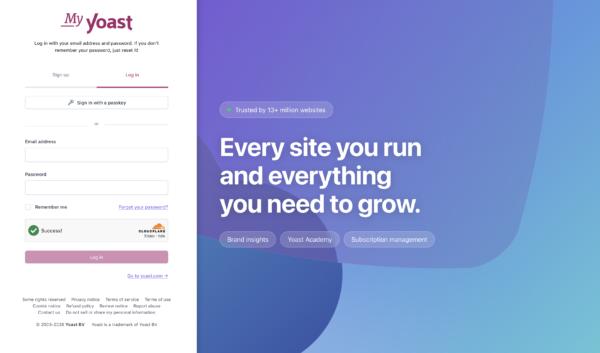
- MyYoast Redesign: The MyYoast platform, the central hub for managing Yoast licenses, websites, and accessing Yoast SEO Academy courses, has received a visual refresh. The login screen and overall interface have been updated with a new, modern look. This redesign aims to enhance user experience and simplify navigation within the platform, which also hosts advanced features like Yoast AI Brand Insights, allowing users to understand how AI systems perceive and describe their brand.
Strategic Implications and Industry Outlook
The comprehensive nature of Yoast SEO 28.9 and Yoast WooCommerce SEO 17.1 signifies a strategic pivot towards a more integrated, intelligent, and secure SEO future. By prioritizing accessibility, Yoast reinforces its commitment to inclusive web design, which is becoming increasingly critical for legal compliance and market reach. The deep integration of AI capabilities, particularly for tasks like alt text generation and content optimization, positions Yoast as a leader in leveraging artificial intelligence to automate and refine SEO workflows. This aligns with broader industry trends where AI is transforming various aspects of digital marketing, from content creation to predictive analytics.
The emphasis on security, highlighted by the swift resolution of the REST endpoint vulnerability, underscores the growing importance of data privacy and integrity in the digital realm. As websites become more complex and interconnected, robust security measures are non-negotiable for maintaining user trust and operational continuity. The adjustments to XML sitemap display and performance enhancements for platforms like Shopify demonstrate Yoast’s continuous effort to adapt to technological shifts and optimize for diverse user environments.
These updates are not merely incremental improvements but represent a concerted effort to arm businesses with the tools needed to navigate the complexities of modern SEO. In a landscape increasingly influenced by AI, user experience signals, and stringent security requirements, Yoast’s latest releases offer a compelling solution for businesses aiming to enhance their online visibility, reach a broader audience, and protect their digital assets.
Conclusion
The release of Yoast SEO 28.9 and Yoast WooCommerce SEO 17.1 marks a significant milestone in the evolution of SEO tools. With advanced alt text assessments, AI-powered generation capabilities, critical security fixes, and broader system enhancements, Yoast continues to empower website owners and e-commerce businesses to optimize their digital presence effectively. Users are strongly encouraged to update their plugins immediately to leverage these new features, ensure compliance, and secure their websites, especially as they brace for the heightened activity of the upcoming seasonal rush. By embracing these updates, businesses can ensure their sites are accessible, performant, secure, and strategically positioned for success in the competitive online marketplace.


 Jia Lissa