Evan Lee Salim
Your Google Ads report tells you how well your campaigns are performing, but what if it’s taking credit for customers you already had? This critical question lies at the heart of a widespread issue in digital advertising: the obfuscation of genuine new customer acquisition by the significant influence of branded searches. While branded campaigns serve a vital role in brand protection and visibility, their performance metrics are often blended with non-branded efforts, creating a misleading picture of campaign efficiency and potentially leading to flawed strategic decisions. This article delves into the mechanics of this phenomenon, supported by data from recent audits, and offers a roadmap for advertisers to gain a clearer understanding of their true customer acquisition costs.
The allure of a seemingly low Cost Per Acquisition (CPA) or a high Return on Ad Spend (ROAS) can be deeply misleading when the impact of branded searches is not properly isolated. These searches, initiated by individuals already familiar with a brand – whether by direct name recognition, prior product exposure, or an intention to visit a specific website – represent a segment of traffic that requires a distinct analytical approach. Their inherent tendency to convert at higher rates can artificially inflate the perceived success of broader, non-branded campaigns, which are designed to attract entirely new audiences. This blend of performance data, while not inherently detrimental to brand campaigns themselves, creates a significant challenge when evaluating the overall effectiveness of an advertising strategy and allocating future budgets.
A significant portion of traffic driven by paid search campaigns may not be entirely new customer acquisition. Consumers might be typing a company’s exact name into search engines, seeking a product they’ve previously encountered, or simply navigating to a familiar website. These are classified as branded searches, and their contribution to campaign performance can disproportionately skew overall results. The danger arises when these metrics are aggregated, presenting a unified performance figure that fails to differentiate between capturing existing demand and generating new demand. This blended outcome can directly impact crucial business decisions, including budget allocation, agency performance evaluations, and the optimization targets set for automated bidding strategies like Smart Bidding. Without a clear distinction, advertisers risk investing more in channels that are not effectively reaching and converting new, untapped customer bases.
Analyzing the Discrepancy: Two Case Studies
To illustrate the magnitude of this issue, a detailed analysis of two distinct e-commerce accounts was conducted over a 90-day period. The accounts belonged to a US-based collectibles retailer and a European direct-to-consumer watch brand. The examination of search term data across both platforms revealed a consistent pattern: branded searches, while consuming a substantial portion of ad spend, were disproportionately responsible for a larger share of conversions.
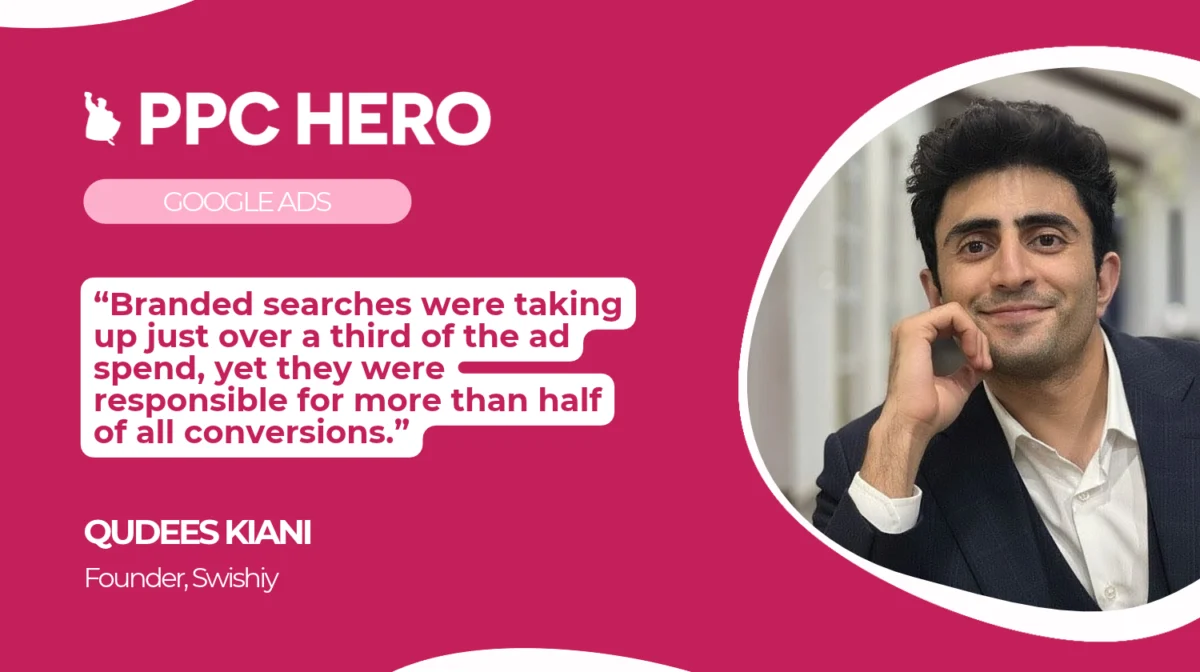
In the case of the US collectibles retailer, branded searches accounted for approximately 38% of the total ad spend. However, these same searches were linked to a remarkable 67% of all conversions. Similarly, the European watch brand saw branded searches represent 34% of its ad spend, yet they generated 58% of its conversions. This significant overrepresentation of branded conversions highlights a critical disconnect between investment and the acquisition of genuinely new customers.
The disparity becomes even more pronounced when examining the Cost Per Acquisition (CPA). By indexing the blended CPA for each account to 100, a stark contrast emerged. For the collectibles retailer, branded searches exhibited a CPA index of 57, indicating a significantly lower cost to acquire a customer through branded terms. In contrast, non-brand searches presented a much higher CPA index of 209. This suggests that acquiring a customer through non-branded search terms was more than twice as expensive as what the blended account figure might have initially suggested. The European watch brand showed a similar trend, with a branded CPA index of 59 compared to a non-brand index of 149, meaning non-brand customer acquisition was roughly 50% more costly than the blended average indicated.
Return on Ad Spend (ROAS) further elucidated this issue. In the watch account, the overall blended ROAS appeared satisfactory. However, upon disaggregation, it was found that branded searches were yielding more than three times the return of non-brand searches. This inflated the blended ROAS by nearly 50% above the actual performance of non-brand traffic. Consequently, any decisions to increase generic campaign budgets based on this blended ROAS would be predicated on a return that non-brand traffic was demonstrably not delivering. It is important to note that neither of these accounts were considered poorly managed; both had dedicated campaigns for brand protection. The issue lay in the aggregation of data.

The Elusive Nature of Branded Traffic in Campaign Reports
A significant challenge in accurately assessing campaign performance stems from the way branded searches can become obscured within campaign-level reports. Simply examining the performance of a dedicated "brand campaign" does not provide a comprehensive view. Branded search queries can infiltrate and be attributed to campaigns that are ostensibly designed for non-branded or generic traffic.
In the collectibles retailer account, for instance, the exact brand name was appearing in search term data across six different campaigns. This included campaigns specifically built to target competitors and others explicitly labeled as "non-brand." Variations like "[brand name] + product type" were being matched within a product-specific campaign. Furthermore, queries for the brand name coupled with terms like "discount code" were being captured by Performance Max campaigns. If one were to solely compare campaign totals, this branded activity would remain invisible, as each of these campaigns would be reported under their respective non-brand designations.
A review of a recent search terms report from this account revealed two instances of branded variations, one a misspelling and another including a specific product, being matched within a campaign intended for generic searches. This underscores the difficulty of isolating branded traffic when it is not explicitly filtered out.
Performance Max campaigns, in particular, are prone to this issue. Without implementing brand exclusions, these automated campaigns can actively bid on searches for a company’s own brand name. Given that branded searches typically exhibit high conversion rates, this can lead to Performance Max appearing as a more potent prospecting channel than it actually is. In a third account audited recently, Performance Max had incurred a significant five-figure expenditure on branded searches within a single month. A substantial portion of this spend was directed towards individuals who were already aware of the business and were actively searching for it by name.
The sophisticated algorithms powering AI Max for Search and broad match functionalities can capture branded searches through close variants and misspellings. These matches are easily overlooked, especially if the analysis is limited to exact brand name searches. In the collectibles account, a single omitted letter in a brand name resulted in hundreds of dollars in ad spend, a cost that would have evaded any filter based solely on campaign names.
The problem is further complicated when brand names overlap with common product terms. For example, a company named "Garden Tools Co." might find searches for "garden tools" ambiguous. Such searches could indicate a user looking for the brand or a general search for gardening equipment. A manual review of these queries is essential to determine the user’s intent before categorizing them for filtering.
Implementing Effective Segmentation: A Strategic Imperative

To accurately gauge campaign performance and make informed decisions, a systematic approach to segmenting branded and non-branded traffic is paramount. The initial step involves consolidating all available search term data. A recommended practice is to extract at least 90 days of data from Search, Shopping, Performance Max, and AI Max campaigns into a unified spreadsheet. This aggregated data should then be meticulously classified into branded, non-brand, and competitor traffic categories. This granular classification allows for a direct comparison of performance metrics without the distortion of blended figures.
For Performance Max campaigns, leveraging the search term insights provided within Google Ads is crucial for identifying branded activity. It is advisable to keep the "Other" category of search terms separate from non-brand classifications, as this segment can often contain traffic that is difficult to categorize and might include branded elements.
The construction of a brand filter should extend beyond the exact company name. It must encompass common misspellings, variations in spacing, abbreviations, and even the company’s website domain. This comprehensive approach ensures that branded searches do not inadvertently fall into the non-brand bucket. A secondary filter for competitor brands is also essential. In the case of the collectibles account, competitor terms exhibited the poorest CPA, exceeding the blended figure by more than threefold. The implementation of such filters can be achieved through regular expressions (regex) in spreadsheets or by utilizing scripting tools.
Once the search terms have been accurately grouped, the next step is to calculate spend, conversions, CPA, and ROAS for each category independently. While the blended figure can remain on the dashboard for historical reference, it should not be the primary metric for setting performance targets. This detailed breakdown provides a much clearer and more reliable basis for strategic budget allocation. Tools such as Swishiy’s free Google Ads auditor can automate this segmentation process, offering a significant time-saving advantage for advertisers.
Finally, addressing the identified "leaks" is crucial. If a Search campaign is already effectively capturing brand demand, implementing a brand exclusion within Performance Max campaigns is advisable. Similarly, adding brand terms as negative keywords to non-brand campaigns, where appropriate, can prevent wasted spend. Ensuring that the dedicated brand campaign has adequate budget and impression share to capture its intended searches is also vital. Failing to do so can result in this traffic being diverted to potentially more expensive and less efficient campaigns.
The Question of Brand Spend: Necessity vs. Recapture
Beyond understanding the efficiency of branded searches, a pertinent question arises: is paid advertising for brand terms truly necessary, or is it merely recapturing demand that would have materialized organically? A brand CPA that appears significantly lower than the account average might seem attractive, but it’s essential to consider whether these customers would have found the brand through organic search listings anyway.
The most effective method to ascertain this is through controlled testing. Pausing brand search campaigns in specific regions or for a defined period allows for a direct comparison of total orders in those areas, not just paid conversions. If total orders remain relatively stable, it suggests that a substantial portion of the spend was likely acquiring clicks that would have occurred organically. Conversely, if orders decline significantly, especially in markets where competitors are actively bidding on the brand name, the ad spend may indeed be serving a crucial role in protecting revenue and market share.

Analyzing the ratio of new versus returning customers provides another layer of insight. In the collectibles account, periodic pauses in advertising due to unrelated factors provided a natural control group. During periods when ads were running, the retailer observed approximately a 50% increase in new customer acquisition per day compared to days when ads were paused. This type of evidence strongly justifies ad spend. Without proper segmentation, such critical distinctions between first-time buyers and returning customers can be obscured within blended ROAS calculations.
Judgement Day: Treating Brand and Non-Brand as Separate Entities
Brand and non-brand search queries serve fundamentally different strategic purposes. Brand search captures existing demand, demand that has been cultivated through a company’s overall marketing efforts, product quality, and customer service. Non-brand search, on the other hand, is designed to proactively seek out and engage individuals who may have no prior awareness of the brand. Compiling these distinct objectives into a single performance metric renders it exceedingly difficult to accurately assess the effectiveness of either strategy.
This analysis is not an indictment of brand spend. In both audited accounts, brand campaigns demonstrably represented the most efficient segment of the advertising budget. However, the critical shift occurred in the nature of the conversations surrounding performance. Instead of broadly questioning why the overall account CPA fluctuated, the focus could be precisely directed. The questions became: "Is our non-brand strategy becoming more effective at acquiring new customers?" and "Is our brand campaign primarily protecting existing revenue, or is it genuinely recapturing demand that would have otherwise been lost?"
The essential first step for any advertiser is to retrieve and meticulously analyze their search terms report. Proper tagging of branded traffic and a dedicated focus on non-brand CPA in isolation are crucial. The realization that non-brand CPA may be higher than the blended figure suggests is not a cause for alarm, but rather a foundation for informed decision-making. This clarity is invaluable before committing to budget increases based on performance data that has been artificially bolstered by the efficient capture of existing demand. By treating brand and non-brand as distinct business units within the advertising ecosystem, businesses can unlock a more nuanced and accurate understanding of their marketing ROI, leading to more strategic and ultimately more profitable campaigns.


 Siti Muinah
 Ali Ikhwan