Sagoh

Two prominent figures in the e-commerce landscape, Bill D’Alessandro and [Author’s Name, if available, otherwise use a placeholder like ‘a leading e-commerce analyst’], have jointly released their comprehensive predictions for the trajectory of online retail in 2026. The duo’s annual forecast, now in its [Number, infer from context] year, delves into critical areas including the pervasive influence of artificial intelligence on advertising, evolving global trade policies, and the shifting dynamics of lifestyle e-commerce brands. This year’s predictions are notable for the introduction of an AI-driven arbitration system to settle disagreements, adding a novel layer to the assessment of their foresight.
The stakes for this year’s predictions have been heightened. Following constructive criticism regarding the leniency of past self-assessments, the authors have committed to a rigorous, AI-powered evaluation. At the close of 2026, transcripts of their predictions will be fed into advanced AI models, specifically Claude and Grok, to objectively determine the more accurate forecaster. The loser faces the public humiliation of buying the winner a steak dinner and, in a dramatic twist, feeding them the first bite, underscoring the competitive and high-stakes nature of their prognostication.
The AI Revolution in Advertising and Content Creation

One of the most significant themes emerging from the predictions is the transformative impact of artificial intelligence across various facets of e-commerce. [Author’s Name]’s first prediction posits that the advent of advertising platforms powered by AI, particularly from entities like OpenAI, will usher in an era of "telepathic" targeting. This goes beyond current sophisticated algorithms, suggesting an AI’s ability to infer consumer intent and psychological states with uncanny accuracy. The prediction highlights that platforms like Meta already possess extensive data on user interests. However, the integration of advanced AI, capable of discerning subtle cues like personal anxieties or business concerns gleaned from search histories and online behavior, will elevate ad targeting to an unprecedented level of personalization. Early adopters of these AI-driven advertising tools are predicted to gain a substantial competitive advantage.
This sentiment is echoed by Bill D’Alessandro’s third prediction, which asserts that AI will "completely take over Meta ads content." He points to early-stage proof-of-concept initiatives by major brands that are already utilizing AI to generate a high volume of novel ad creatives daily. These AI systems are reportedly capable of analyzing customer reviews, extracting brand assets, and producing both static images and, increasingly, video content. The seamless integration of these AI-generated assets directly into advertising pipelines via APIs suggests a future where ad creation and deployment are largely automated, driving efficiency and scalability for businesses. The prediction that 2026 will be the year this technology moves into the mainstream suggests a significant shift in digital marketing strategies.
Furthermore, [Author’s Name]’s fifth prediction forecasts that video and audio editing will become "largely automated at 7/10 quality." Tools like Descript are already demonstrating this capability, and by the end of 2026, it is anticipated that users will be able to submit raw footage to an AI and receive a polished edit based on specified parameters. This democratization of high-quality content creation is expected to empower smaller businesses and individual entrepreneurs, enabling them to produce professional-grade content that previously required dedicated production teams and significant budgets.
Geopolitical and Economic Undercurrents Shaping E-commerce

Beyond the technological advancements, the predictions also address the complex interplay of global economics and trade policies. [Author’s Name]’s second prediction focuses on tariffs, forecasting that "tariffs on China will settle between 30-50%, not higher." This projection is grounded in an analysis of current economic conditions, noting rising inflation and sluggish economic growth. The prediction suggests that political leaders, responsive to market fluctuations, are likely to temper aggressive trade policies when faced with a fragile economy. The precedent of tariffs being rapidly adjusted in response to market downturns earlier in the year is cited as evidence for this forecast. The implication for e-commerce businesses is a need for strategic supply chain adjustments and contingency planning for ongoing, albeit perhaps moderated, trade tensions.
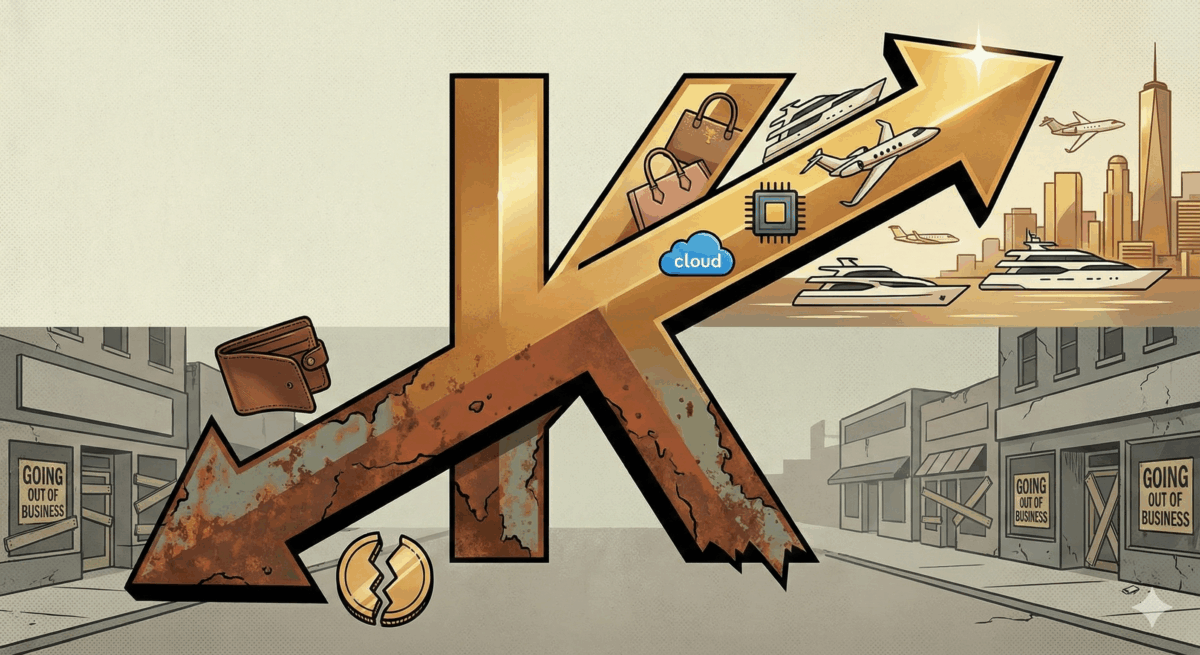
Bill D’Alessandro’s first prediction introduces the concept of a "K-shaped economy" for 2026. This economic model suggests a widening divergence in economic outcomes, with large technology companies and leading market players continuing to experience significant growth, potentially increasing by 20% or more. Conversely, the broader economy and the average consumer are expected to face ongoing challenges. For the e-commerce sector, this bifurcation implies a strategic imperative: businesses will need to either focus on serving affluent consumers through premium offerings or compete on price for essential goods. The "middle ground" is identified as a particularly precarious position for e-commerce businesses.
Adding to the economic outlook, Bill D’Alessandro predicts that inflation will remain "north of 3% in 2026." This forecast is attributed to a perceived lack of political will to curb government spending, leading to sustained deficit spending and, consequently, persistent inflation. This inflationary trend is expected to be a long-term phenomenon, impacting the economy for the next decade. Businesses are advised to position their operations and investment portfolios to account for this sustained inflationary environment.
The Evolving Digital Landscape and Consumer Trust

The increasing prevalence of AI-generated content also raises concerns about authenticity and trust in the digital space. [Author’s Name]’s fourth prediction suggests that "major platforms will start testing ‘verified human’ content badges." The author cites personal experience on social media platforms, where a significant portion of observed video content appeared to be AI-generated, leading to an erosion of trust. The introduction of verification mechanisms aims to address this by clearly distinguishing human-created content from AI-generated material, a move that could significantly impact content moderation and user engagement strategies.
Mergers, Acquisitions, and Digital Assets
The landscape of business transactions within e-commerce is also expected to see a divergence. Bill D’Alessandro’s fifth prediction anticipates a robust market for mergers and acquisitions (M&A) at the "high end" of the market, while activity will be "anemic at the low end." Data indicating a 19% year-over-year increase in deals exceeding $1 billion, contrasted with an 18% drop in small and mid-sized transactions, supports this forecast. Top-tier e-commerce businesses are expected to command premium valuations, while smaller or average-performing brands may face significant challenges in finding buyers or achieving favorable deal terms.
Finally, Bill D’Alessandro offers a prediction on the cryptocurrency market, specifically Bitcoin. He forecasts that Bitcoin will experience a dip below $70,000 in the first half of 2026 but will ultimately finish the year above $100,000. This prediction is based on competing economic forces: a struggling consumer economy may reduce Bitcoin’s appeal as a risk asset, while persistent inflation could bolster its status as a "digital gold" hedge. The anticipated volatility in the first half of the year is seen as a precursor to a recovery driven by the inflation narrative.
The authors emphasize that while predictions offer a glimpse into potential futures, proactive engagement with the evolving e-commerce ecosystem is paramount. They advocate for continuous learning and adaptation, suggesting that participation in communities of experienced entrepreneurs provides invaluable real-time insights into market trends and effective strategies. The eComFuel community is presented as a platform for such knowledge exchange, enabling store owners to navigate the complexities of the coming years by learning from peers who are actively engaged in the "trenches" of online retail.
The full discussion of these predictions and their underlying analyses can be accessed through a dedicated podcast episode. This initiative underscores the ongoing effort within the e-commerce sector to anticipate and adapt to the rapid technological and economic shifts that are redefining the industry.


 Raul Delapena Setiawan

 Muslim