Nana
The rapid evolution of generative artificial intelligence has transitioned from simple conversational interfaces to sophisticated agentic systems capable of executing complex, multi-step tasks with minimal human intervention. While building an individual AI agent has become relatively straightforward due to the proliferation of Large Language Model (LLM) APIs, the challenge for modern enterprises lies in scaling these capabilities across entire organizations. The primary hurdle is no longer just the intelligence of the model, but the infrastructure surrounding it—shared access, permission hierarchies, tool integrations, and reusable workflows. These elements determine whether an AI agent remains a siloed experiment or becomes a foundational team resource that drives operational efficiency.
As organizations move beyond the initial "chat" phase of AI adoption, the demand for Agentic AI collaboration platforms has surged. These platforms provide the necessary environment where teams can build, manage, and coordinate fleets of AI agents without the need to recreate configurations for every new user. By offering shared environments, these tools allow team members to assign tasks to digital entities, connect internal knowledge bases, and monitor agent activity through centralized dashboards. The shift represents a fundamental change in how software is consumed, moving from static tools to dynamic, autonomous "digital employees."
The Evolution of the AI Agentic Landscape
The transition to agentic workflows follows a clear chronology in the AI industry. In 2022, the focus was primarily on Large Language Model (LLM) accessibility through interfaces like ChatGPT. By 2023, the concept of "Autonomous Agents" gained traction with experimental projects like AutoGPT and BabyAGI, which demonstrated that LLMs could loop through tasks. However, these early iterations often suffered from "hallucination loops" and lacked enterprise-grade security.
Entering 2024 and 2025, the focus shifted toward "Human-in-the-loop" (HITL) orchestration and collaborative platforms. Industry data from Gartner suggests that by 2028, at least 33% of enterprise software applications will include agentic AI, up from less than 1% in 2023. This growth is driven by the need for ROI; enterprises are no longer satisfied with simple text generation and are seeking agents that can "do"—file tickets, update CRMs, conduct research, and coordinate with other agents.
Leading Platforms for AI Agent Collaboration
Different platforms approach the problem of collaboration through various architectural philosophies. Some prioritize deep integration with existing productivity suites, while others focus on specialized, high-autonomy workflows.
1. Microsoft Copilot Studio: The Enterprise Orchestrator
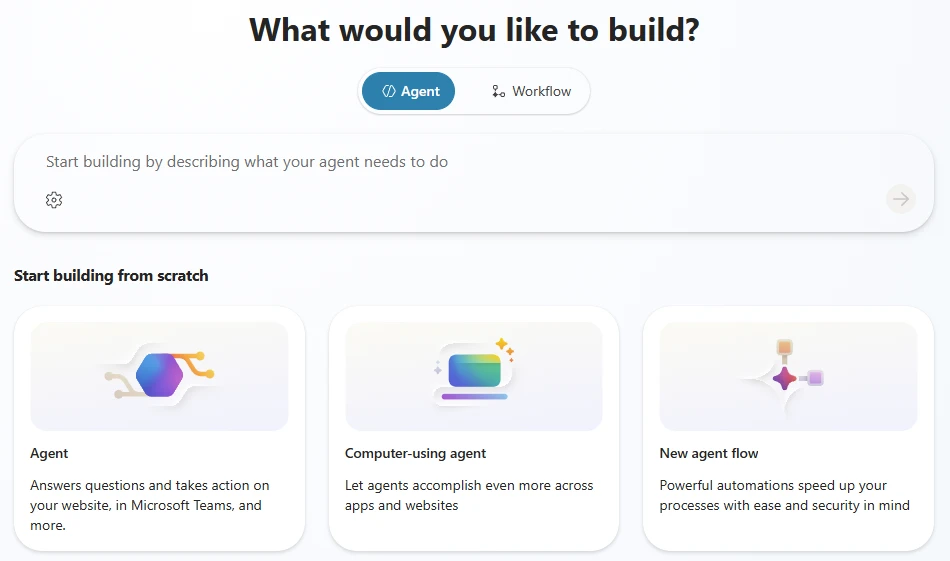
Microsoft Copilot Studio represents the enterprise-tier approach to agentic AI, built directly into the Microsoft 365 ecosystem. It allows organizations to configure agents with specific instructions, internal knowledge, and a suite of "connectors" to tools like SharePoint and Dynamics 365.
The collaborative strength of Copilot Studio lies in its integration with Microsoft Teams. Once an agent is published, it becomes a shared resource within the Teams environment, accessible to authorized personnel. This eliminates the "silo effect" where one employee has a highly tuned assistant that others cannot use. For complex designs, Copilot Studio supports "child agents"—specialized sub-agents that handle specific parts of a workflow, coordinated by a lead agent. However, enterprise adoption requires careful navigation of tenant approvals and licensing, as a working preview does not always guarantee organization-wide deployment.
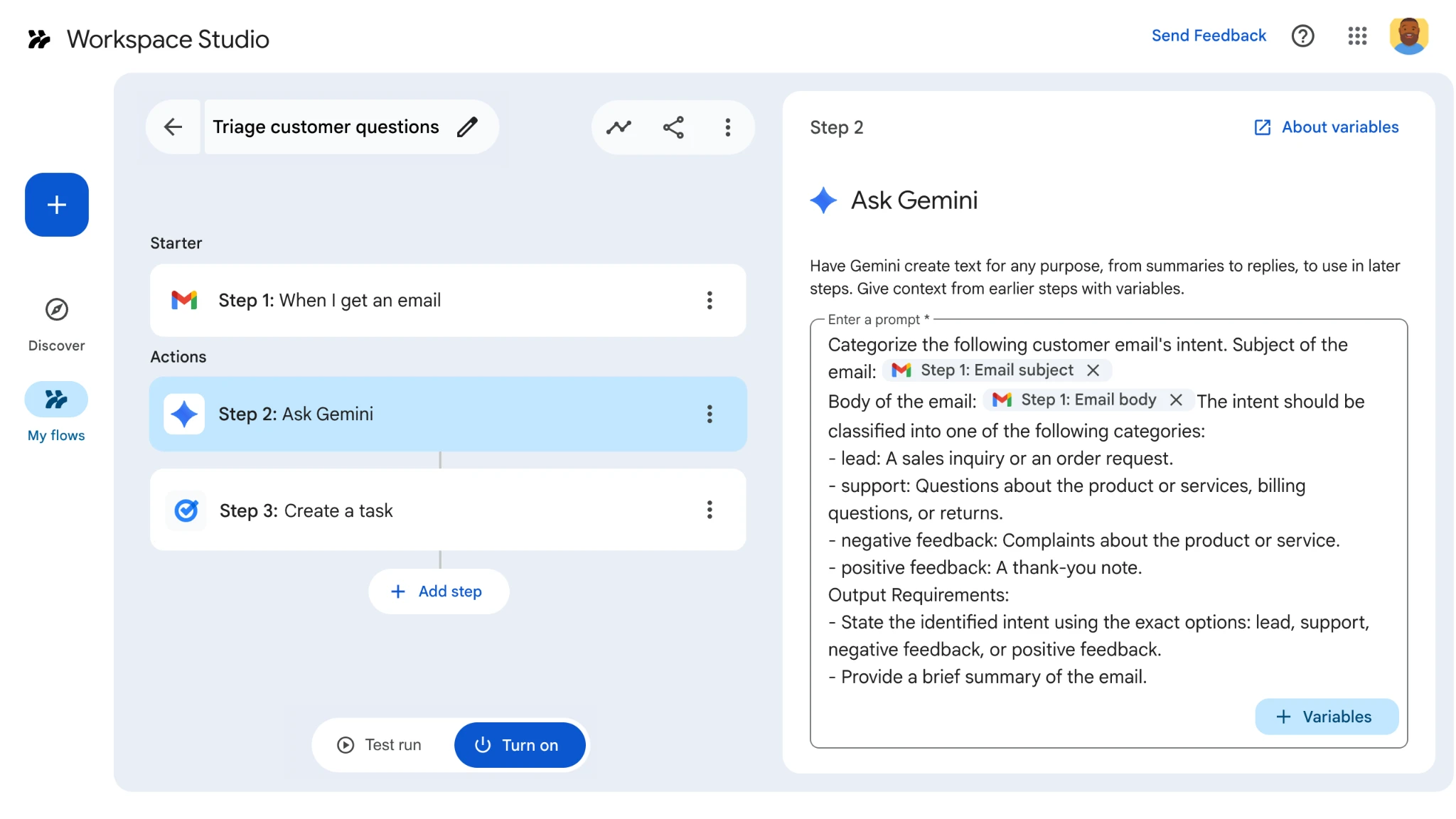
2. Google Workspace Studio: Workflow Distribution
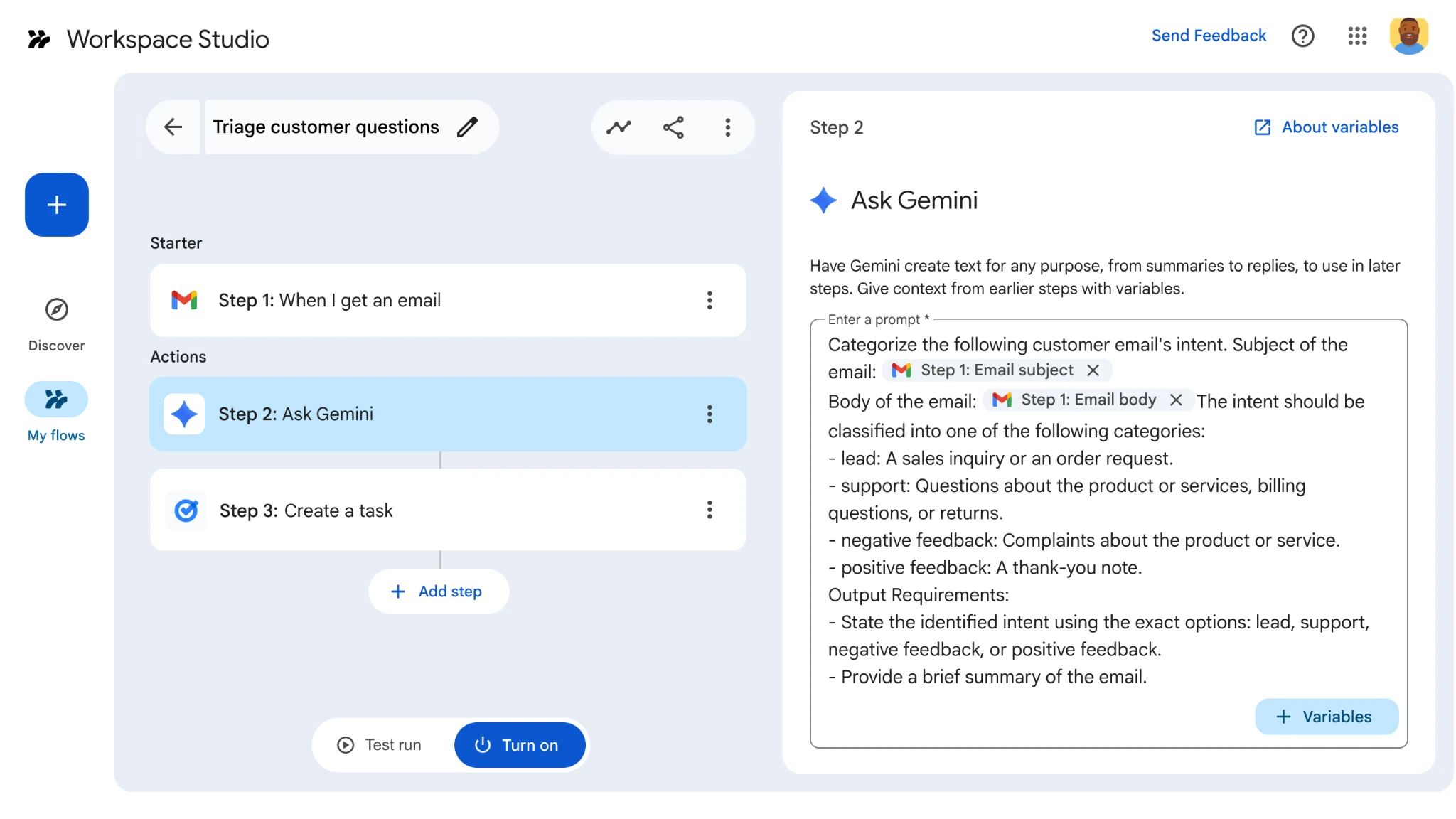
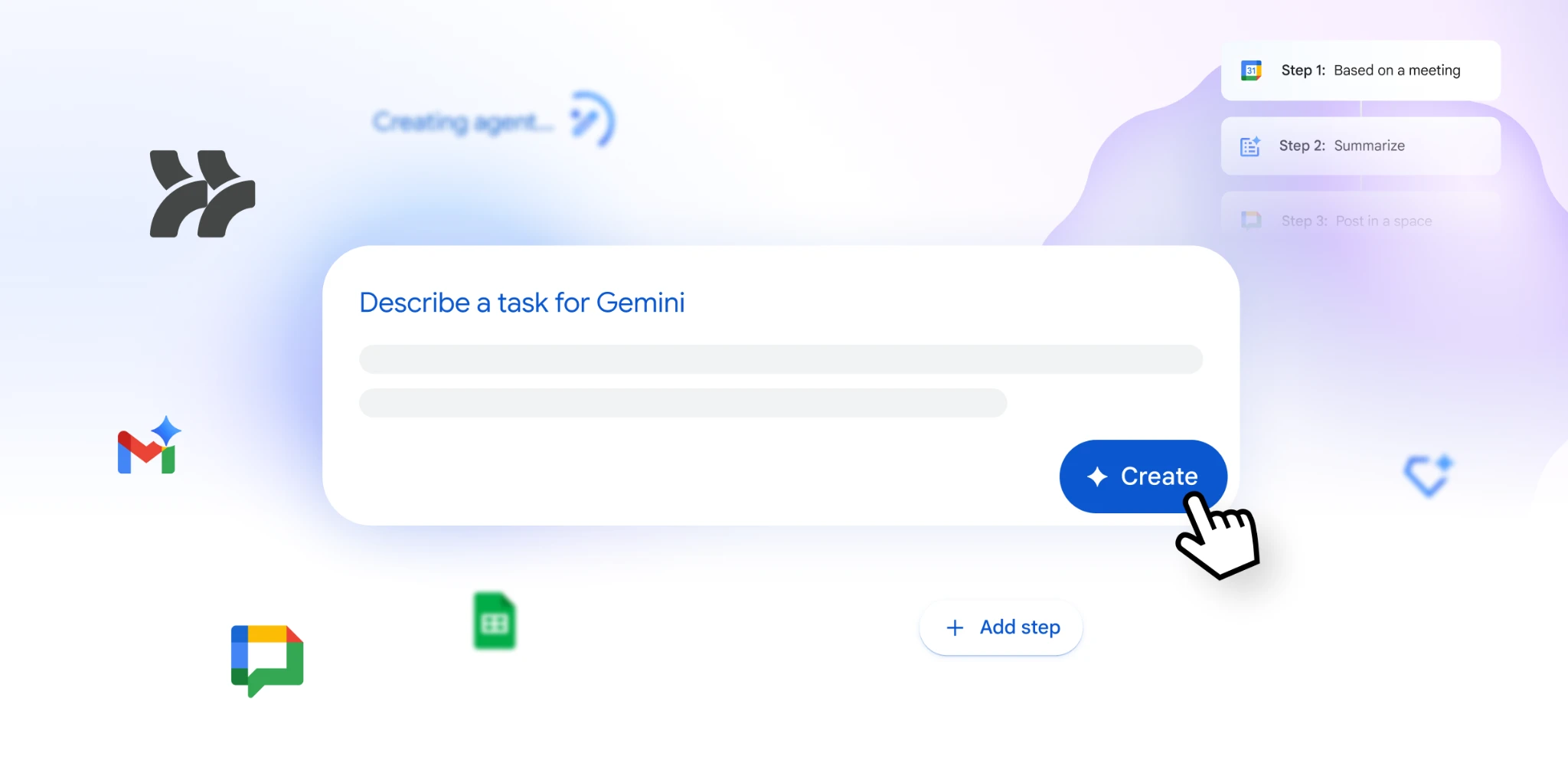
Google’s approach focuses on the ubiquity of its Workspace apps. Google Workspace Studio allows users to build automated flows across Gmail, Drive, and Docs using natural language instructions. For example, a team can create a scheduled flow that triages unread emails in a shared inbox and posts a summary to a Google Chat room.
Unlike Microsoft’s centralized agent model, Google Workspace Studio often operates on a "recipe" distribution model. Sharing a flow typically creates an independent copy for the recipient. This ensures that while the logic is shared, the data context remains secure and specific to the user running the flow. This platform is ideal for teams that rely heavily on recurring administrative tasks within the G-Suite ecosystem.
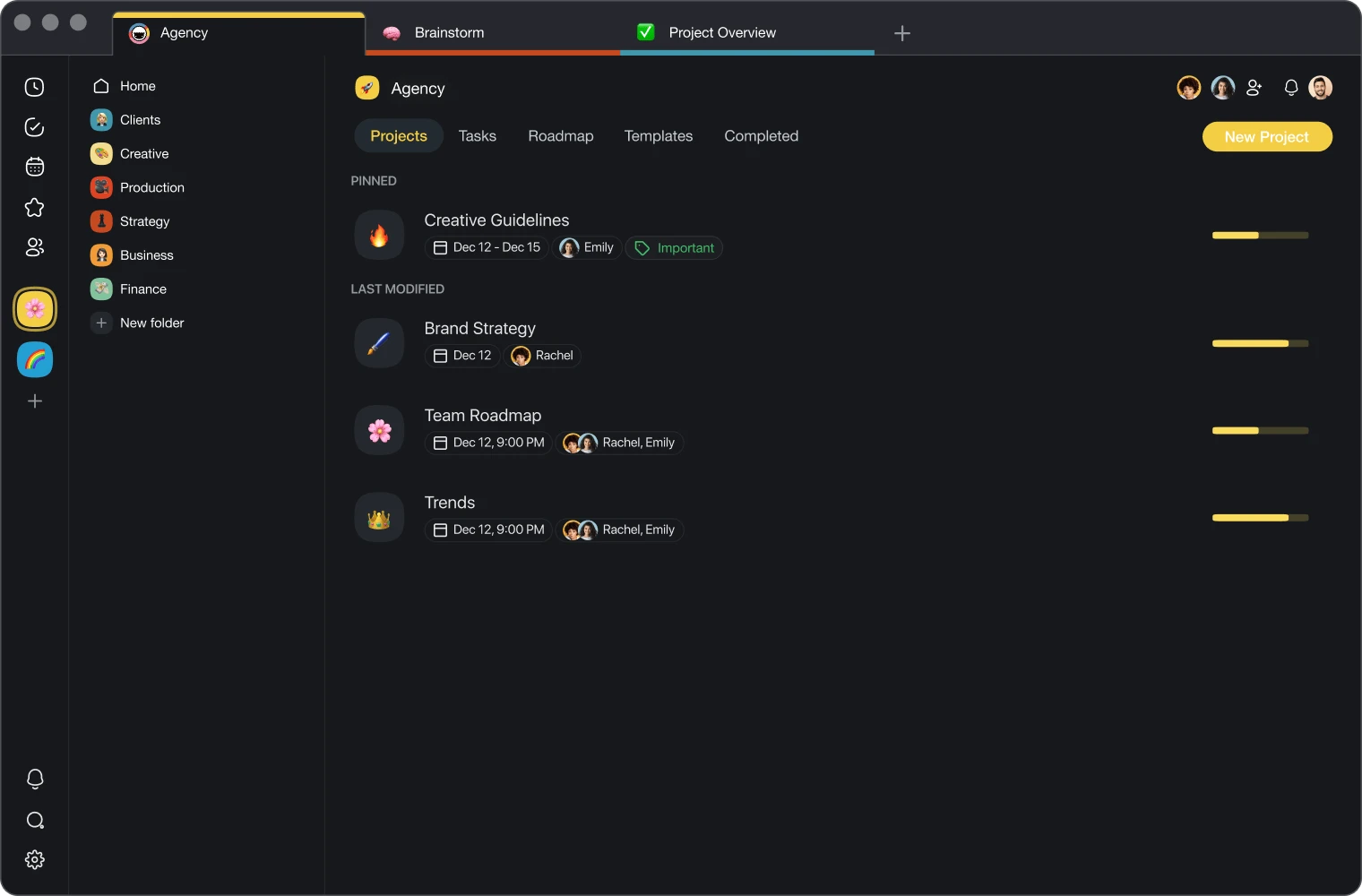
3. Taskade: Integrated Project Management
Taskade has evolved from a simple productivity tool into a comprehensive "AI Team" environment. It combines traditional project management—tasks, folders, and calendars—with custom AI agents. The platform’s unique selling point is its ability to route requests to an orchestrated team of agents.
In a Taskade workflow, a user might prompt an "AI Team" to handle a product launch. One agent might handle the SEO research, another the social media copy, and a third the project timeline. This multi-agent coordination is integrated into the recurring automation steps of the project, making the agents persistent members of the workspace. Taskade’s credit-based system requires teams to be strategic about agent calls, as high-frequency orchestration can quickly consume resources.
4. Oasis: The Collaborative Human-Agent Room
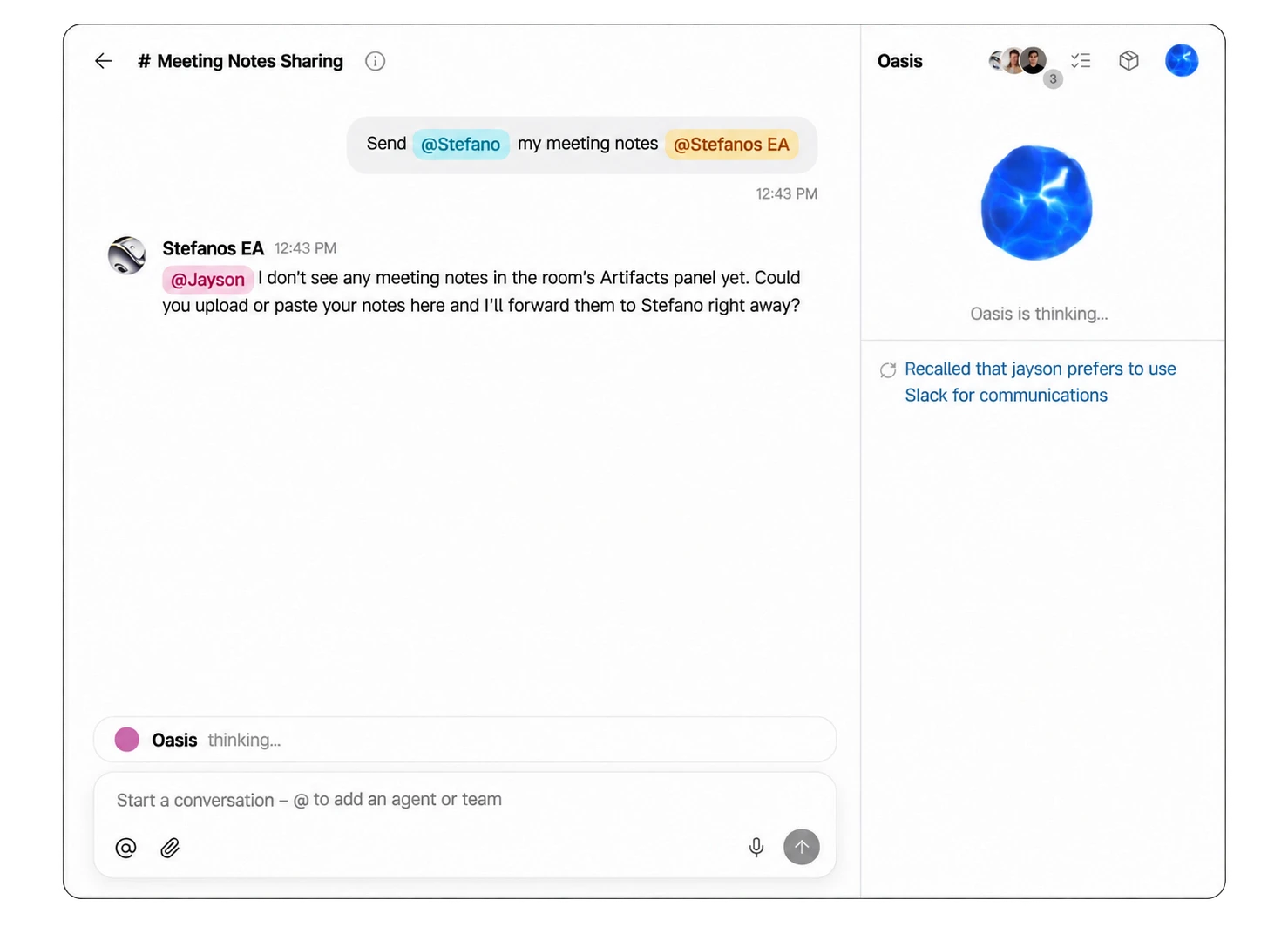
Oasis introduces a "spatial" concept to agent collaboration. It places humans and agents in shared digital "rooms." This mimics a real-world war room where colleagues can discuss a task, direct an agent to perform research, and watch the agent hand off the results to another agent or human.
This model is particularly effective for research-intensive teams. By keeping the discussion, the source material, and the agent’s output in one shared context, Oasis prevents the loss of information that often occurs when switching between chat apps and AI tools. It prioritizes the "Human-in-the-loop" philosophy, ensuring that agents are steered by real-time human feedback.
5. Dust: Internal Knowledge Management
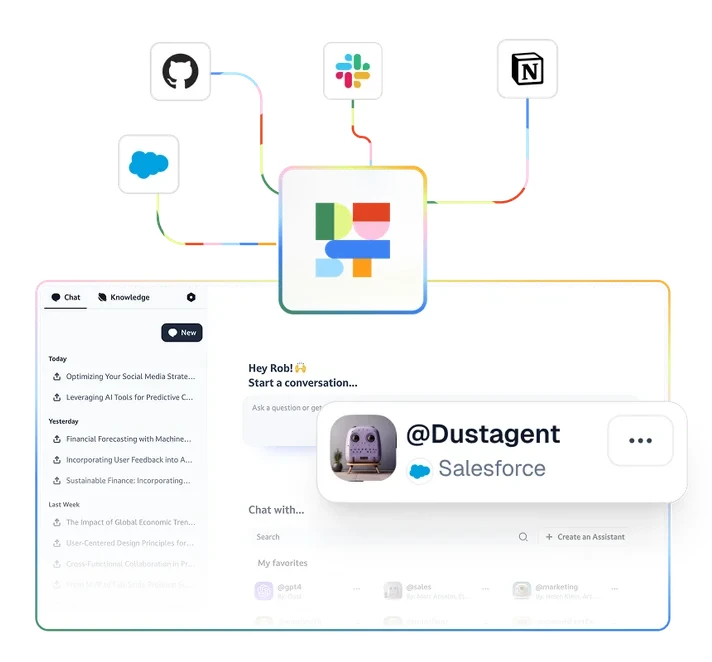
Dust is designed for organizations that need agents grounded in proprietary data. It connects reusable agents to company knowledge bases, such as Notion, Slack, and GitHub. A common use case is a support agent grounded in technical documentation that provides consistent answers to the entire customer success team.
The platform emphasizes administrative control. Administrators can manage which agents have access to which data sources, ensuring that a "General" agent doesn’t accidentally leak sensitive HR information. Dust’s effectiveness is highly dependent on the quality of the connected documentation; it serves as a powerful reminder that agentic AI is only as good as the data it can access.
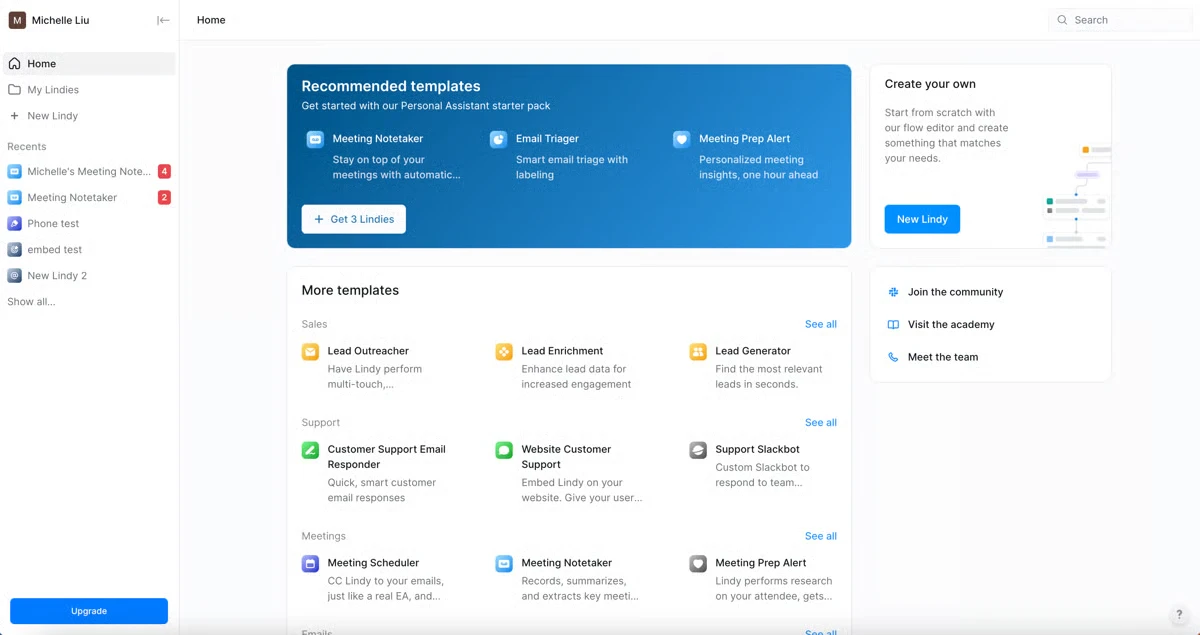
6. Lindy: The "AI Employee" Concept
Lindy positions its agents as "AI Employees" capable of working across business tools like calendars and email. It is built for coordination work that doesn’t necessarily require complex multi-agent handoffs but does require high reliability in task execution.
Lindy is best suited for automating the "connective tissue" of a business—following up on meetings, scheduling appointments, and managing basic outreach. For teams, a shared Lindy assistant can act as a departmental coordinator, ensuring that no balls are dropped in routine workflows.
7. Relevance AI: The Workforce Builder
Relevance AI provides a "Workforce" builder that allows teams to connect specialized agents into a strictly defined process. This is the most "architectural" approach to agentic AI, where handoffs between agents can be made mandatory or left to the AI’s discretion.
In a sales operations context, one Relevance agent might research a list of companies, while a second agent evaluates those companies against an Ideal Customer Profile (ICP), and a third agent drafts personalized emails. The platform’s strength is its directional flow; users can visualize exactly how information moves from one agent to the next, making it easier to debug complex automated workforces.
Market Implications and Productivity Data
The shift toward these platforms is backed by significant productivity metrics. According to a study by the Nielsen Norman Group, the use of generative AI in workplace tasks improved employee performance by 66%. However, when agents are coordinated through shared platforms rather than used individually, the "compounding effect" of AI becomes evident. Teams avoid "prompt duplication"—the waste of time spent by multiple employees trying to engineer the same result from an LLM.
Industry analysts suggest that the rise of these platforms will lead to a new category of enterprise spending: "Agentic OpEx." Instead of paying for software seats, companies will increasingly pay for "task completion" or "agent credits." This moves AI from a fixed software cost to a variable operational cost tied directly to output.
Security, Governance, and the "Shadow AI" Risk
A critical driver for adopting formal agent collaboration platforms is the mitigation of "Shadow AI." When employees use personal ChatGPT or Claude accounts to process company data, they create significant security vulnerabilities. Collaboration platforms provide IT departments with the governance tools needed to monitor what data is being fed into models and which agents are performing which actions.
Most enterprise-grade platforms now offer features such as:
- Audit Logs: Tracking every prompt and agent action.
- PII Masking: Automatically scrubbing personally identifiable information before it reaches the LLM.
- Data Residency: Ensuring that the data used by agents remains within specific geographic or organizational boundaries.
Strategic Recommendations for Organizations
Choosing the right platform depends on the existing digital infrastructure of the team. Organizations heavily invested in the Microsoft or Google ecosystems should naturally begin their agentic journey within those respective "Studios" to leverage existing permissions and data integrations.
For teams requiring more specialized or autonomous workflows that cross platform boundaries, tools like Relevance AI or Dust offer more flexibility. The transition to an agentic workforce should be iterative. Experts recommend testing one specific workflow—such as "Inbound Lead Triage" or "Weekly Research Digest"—from trigger to output before scaling to more complex multi-agent systems.
The ultimate goal of these platforms is to transform AI from a novelty into a utility. As these systems become more integrated and their handoffs more seamless, the distinction between "human work" and "agent work" will continue to blur, leading to a new era of collaborative intelligence where the primary skill of a manager is no longer just managing people, but managing a hybrid workforce of humans and autonomous agents.

 Asep Darmawan
 Muslim