Asro
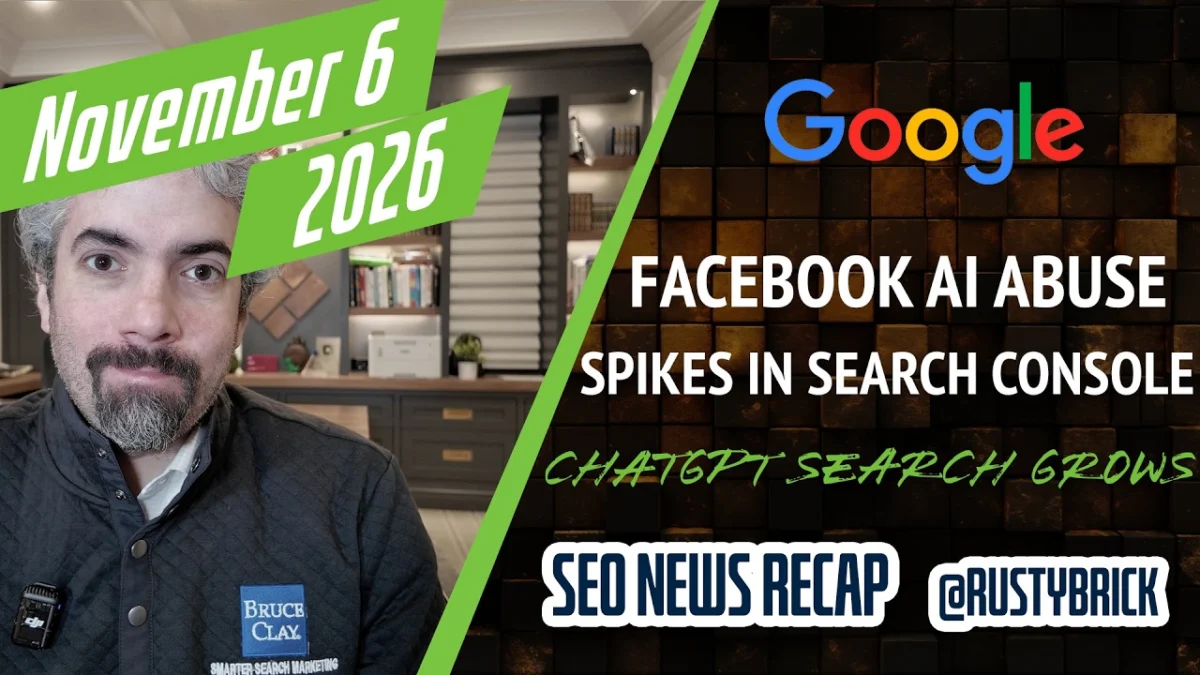
The digital landscape of search and content creation is undergoing a profound transformation, as evidenced by a series of significant developments reported this week. Google has signaled an intensified crackdown on what it terms "scaled content abuse," a policy poised to impact major platforms like Facebook and its burgeoning AI-generated content strategies. Concurrently, OpenAI’s ChatGPT has made a bold claim, asserting that it now commands a remarkable 20% of the search volume traditionally dominated by Google, signaling a seismic shift in how users seek information. These pivotal announcements are complemented by a host of updates across SEO, PPC, and local search, underscoring a dynamic period of innovation and regulatory adjustment within the industry.
Google Intensifies Crackdown on Scaled Content Abuse, Threatens "AI-Slop"
Google’s ongoing commitment to combating low-quality and unoriginal content reached a new zenith with the explicit mention of its "scaled content abuse policy" potentially targeting platforms like Facebook. This policy, a critical component of Google’s broader efforts to maintain search quality, is designed to de-rank or even remove content generated primarily for ranking purposes rather than for providing genuine value to users. The term "AI-slop" has emerged as a colloquial descriptor for vast quantities of AI-generated text that lacks originality, depth, or authoritative insight, often created cheaply and at scale.
-
The Looming Impact on Facebook and AI-Generated Content: Facebook’s reported "latest AI-slop strategy" suggests an increasing reliance on artificial intelligence to generate content, potentially to fill feeds, enhance engagement, or even for commercial purposes. Should this strategy fall afoul of Google’s policy, it could lead to significant visibility reductions for Facebook-hosted content within Google Search results. This carries substantial implications for referral traffic, user acquisition, and overall digital presence for Facebook and its publishers. Google’s previous updates, such as the Helpful Content System introduced in August 2022 and subsequent core updates, have consistently targeted content that feels unhelpful, unoriginal, or produced primarily for search engines. This latest signal against "AI-slop" is a direct extension of these efforts, emphasizing Google’s resolve to prioritize human-centric, high-quality information. The potential action against Facebook serves as a stark warning to all content creators and platforms experimenting with large-scale AI content generation without stringent quality controls.
-
Evolving Indexing Rules: 400 Status Codes and Homepage Quality: Further elaborating on its indexing mechanisms, Google clarified that important URLs could, for a period, continue to appear in search results even after returning a 400-level status code (e.g., 404 Not Found, 403 Forbidden). This temporary grace period aims to prevent immediate removal of valuable content due to transient server errors or recent deletions, allowing webmasters time to rectify issues without an instant loss of visibility. However, Google also indicated that a homepage dropping out of the index is a strong signal of underlying "quality issues." This could encompass a range of problems, including technical errors, severe content quality deficiencies, security vulnerabilities, or violations of Google’s Webmaster Guidelines. A homepage’s de-indexing is a critical event, as it represents the primary entry point for many users and signifies a fundamental trust issue from Google’s perspective. The search giant additionally updated its documentation regarding the "crawled – currently not indexed" status in Search Console, providing more clarity on why certain pages, despite being discovered, might not be deemed worthy of inclusion in the main index. Common reasons often include duplicate content, low perceived value, or canonicalization issues.
-
Site Reputation Abuse Policy and EEA Focus: Google has begun notifying select websites about impending changes related to its site reputation abuse policy, particularly concerning the European Economic Area (EEA). This policy aims to curb the practice of "parasitic SEO," where low-quality content is published on highly reputable domains (e.g., major news outlets, universities) solely to leverage their authority and rank for competitive keywords. This practice often involves third-party content that doesn’t align with the host site’s primary purpose or editorial standards. The specific focus on the EEA suggests a potential alignment with stricter digital regulations in the region, such as the Digital Markets Act (DMA), which emphasizes fair competition and transparency. These notifications indicate Google’s proactive approach to enforce cleaner search results, penalizing sites that allow their reputation to be exploited for manipulative SEO tactics.
The Shifting Landscape of Search Engine Performance and Data
The week’s developments also brought to light peculiar data anomalies and significant market reactions tied to search engine performance. These incidents underscore the critical dependence of online businesses on Google’s algorithms and the intricate nature of digital analytics.
-
Anomalies in Search Console Data and Reddit’s Traffic Woes: Google Search Console, the indispensable tool for webmasters to monitor site performance, reported a "weird spike in clicks" within its performance report. Such anomalies can stem from various factors, including internal data processing glitches, changes in how Google categorizes or attributes clicks, or even a sudden, albeit temporary, surge in visibility due to an algorithm tweak. While the exact cause was not immediately detailed, such spikes often warrant close investigation by site owners to differentiate between genuine traffic shifts and reporting inaccuracies.
-
Reddit’s Stock Plunge Linked to Google Search Traffic Decline: In a more dramatic turn, Reddit’s stock price experienced a substantial drop following the company’s complaints about a significant decrease in Google Search traffic. This incident highlights the immense leverage Google holds over online platforms, even those as prominent as Reddit. For many websites, Google Search remains the primary driver of organic traffic, directly impacting advertising revenue, user engagement, and overall business valuation. A decline in search traffic for Reddit could be attributed to several factors:
- Algorithm Updates: Google’s continuous algorithm refinements might have re-evaluated Reddit content, leading to lower rankings for certain queries.
- Direct Answers and AI Overviews: As Google increasingly provides direct answers within its search results or leverages its AI Overviews, users may find the information they need without clicking through to external sites like Reddit.
- Content Freshness and Quality: Google might be prioritizing newer or more authoritative content, potentially impacting older Reddit threads or less moderated sections.
- Competition: Increased competition from other forums, social media platforms, or specialized content sites could also draw traffic away.
The stock market’s swift reaction to Reddit’s traffic concerns underscores the direct correlation between search visibility and financial performance in the digital economy. This event also raises questions about Reddit’s long-term strategy to diversify its traffic sources and potentially its relationship with Google, especially given recent reports of Reddit licensing its data to AI companies, including Google, for model training.
The Ascent of AI in Search and Advertising
Artificial intelligence continues its pervasive integration into Google’s core search and advertising products, reshaping user experiences and presenting new challenges and opportunities for brands.
-
Google’s AI Mode and AI Overviews: Reshaping User Experience: Google’s experimental "AI Mode," now widely known as AI Overviews (formerly Search Generative Experience or SGE), is rapidly evolving. Initially rolled out as an opt-in feature, AI Overviews are becoming more deeply embedded within mainstream search results. This week saw several key updates:
- Home Services Booking Integration: AI Mode is now integrating home services booking functionalities, allowing users to potentially complete tasks like scheduling appointments directly from search results. This move positions Google as an intermediary, potentially disrupting traditional lead generation for service providers.
- Dynamic UI Adjustments: Google is reportedly testing the removal of AI Mode buttons from its search interface, suggesting a move towards a more seamless, integrated experience where AI-generated content is presented more naturally.
- Brand Placement and Monetization: AI Overviews for brands are now positioned to the right of the page, indicating a dedicated space for promotional content within the AI-generated summaries. Crucially, AI Mode can now display up to four ads, signaling Google’s clear intent to monetize this new search paradigm. This expansion of ad placements within AI Overviews represents a significant shift, as it places commercial content directly within the generative AI response, potentially blurring the lines between organic information and paid promotion.
-
Google Ads Adapts to the AI Era: The advertising arm of Google is also undergoing significant AI-driven changes. Google Ads has expanded its AI-content disclosure requirements to more regions, emphasizing transparency regarding the use of AI in ad copy and creatives. This is likely a response to growing regulatory pressure and user demand for clarity on AI-generated content. Furthermore, Google Ads assets scheduling now features "day grouping," offering advertisers more granular control over when their ad creatives and assets are displayed, optimizing for specific days of the week when target audiences are most receptive. Google Business Profiles, essential for local businesses, introduced new inventory options for car dealerships, allowing them to showcase specific vehicle stock directly within their profiles, enhancing local search capabilities.
-
A Controversial Shift for K-12 Schools: AI Integration in Search: A particularly notable and potentially controversial policy change involves Google’s search offerings for K-12 schools. Google will now default to turning off traditional Search for these educational institutions. While administrators can opt to turn it back on, the ability to disable AI features within search will be removed. This move signals Google’s push for widespread AI adoption even in sensitive educational environments. It raises significant questions regarding student data privacy, the appropriateness of AI-generated content for young learners, the potential for misinformation, and the ethical implications of exposing children to AI models without clear opt-out mechanisms. Educators and parents will undoubtedly scrutinize this change closely.
The OpenAI Challenge: ChatGPT’s Growing Footprint
Perhaps the most startling revelation of the week came from OpenAI, which asserted that its conversational AI, ChatGPT, now accounts for 20% of the search volume that Google typically handles. This claim, if substantiated and measured accurately, represents an unprecedented challenge to Google’s long-standing dominance in information retrieval.
-
ChatGPT’s Bold Claim: Capturing 20% of Google’s Search Volume: OpenAI’s statement indicates a significant migration of user queries from traditional web search engines to conversational AI interfaces. This "search volume" likely encompasses direct questions, content generation requests, coding assistance, research summaries, and other tasks users now perform on ChatGPT instead of initiating a web search. While Google still holds the lion’s share of the global search market (often cited at over 90%), a 20% encroachment by a single AI entity is a formidable figure, underscoring a fundamental shift in user behavior and expectations. Users are increasingly seeking direct, synthesized answers rather than lists of links to sift through.
-
Redefining "Search Volume": A New Paradigm: The definition of "search volume" itself is evolving. For ChatGPT, it’s not just about retrieving existing web pages but also about generating novel content, summarizing complex topics, and engaging in multi-turn conversations. This capability directly competes with Google’s core offering, particularly with the rise of AI Overviews, which attempt to provide similar direct answers within Google Search. The competition between Google and OpenAI is intensifying, not just in terms of technology but also in user mindshare and the fundamental approach to information access.
-
OpenAI’s Monetization Strategy: Expanding ChatGPT Ads: To capitalize on its growing user base and challenge Google’s advertising empire, OpenAI is also rapidly expanding its monetization strategies for ChatGPT. The platform is now rolling out wider and multi-image ads, providing more immersive and visually rich advertising experiences. Furthermore, significant changes are slated for ChatGPT Ads bidding options, with adjustments to Max Bid and Max CPC taking effect on November 9th. These updates suggest a maturing ad platform, directly competing with established players like Google Ads by offering new avenues for advertisers to reach an engaged audience within a conversational AI environment.
Broader Industry Innovations and Analytics
Beyond the Google-OpenAI rivalry, other players in the digital analytics space are also pushing the boundaries of innovation.
- Microsoft Clarity Embraces Agentic Analytics for Deeper Insights: Microsoft Clarity, a free web analytics tool offering session recordings and heatmaps, is now integrating "agentic analytics." This advancement allows users to "ask Clarity" natural language questions, enabling the AI to proactively identify patterns, generate reports, and provide actionable insights without requiring manual configuration or deep analytical expertise. This "agentic" approach aims to democratize data analysis, making it more accessible to marketers and webmasters who may not have specialized data science skills. It represents a significant step towards more intelligent, intuitive analytics platforms that can interpret data and proactively deliver insights, rather than merely presenting raw figures.
Industry Reactions and the Road Ahead for SEO and Digital Marketing
The rapid pace of change articulated this week signals a crucial juncture for the SEO and digital marketing industries. The intensified focus on content quality, the rise of AI in search results, and the emergence of conversational AI as a direct competitor to traditional search engines demand adaptability and strategic foresight.
-
The Role of SEO in an AI-Dominated Landscape: For SEO professionals, these developments underscore the diminishing returns of purely technical or manipulative SEO tactics. The emphasis is squarely shifting towards creating genuinely helpful, authoritative, and human-centric content that AI models can leverage and users can trust. Understanding how AI Overviews function, how to optimize for direct answers, and how to differentiate content from AI-generated "slop" will be paramount. The rise of new ad formats within AI interfaces also creates new opportunities for paid search specialists.
-
Calls for Transparency and Ethical AI Deployment: The Google Search changes for K-12 schools and the general expansion of AI in search and advertising also intensify calls for greater transparency and ethical considerations. Users, educators, and regulators are increasingly demanding clarity on how AI models are trained, what biases they might contain, and how personal data is handled. The industry is moving towards a future where responsible AI deployment is not just a regulatory requirement but a fundamental expectation from users.
This week’s news encapsulates a period of profound redefinition in the search ecosystem. From Google’s assertive stance against low-quality AI content to ChatGPT’s audacious claim of significant search market penetration, the digital world is witnessing a dramatic evolution in how information is accessed, consumed, and monetized. Businesses and content creators must adapt to these shifting tides, prioritizing genuine value, ethical practices, and an agile approach to navigating the increasingly AI-driven landscape of online visibility.
Sponsor Spotlight: This comprehensive overview of search news is brought to you with support from Bruce Clay, a foundational figure in the SEO space, having pioneered search marketing optimization since 1996. Bruce Clay is renowned for its extensive SEO training programs, available at seotraining.com, offering invaluable insights into effective search strategies. Explore their services and expertise at bruceclay.com. Additionally, discover their innovative new product, Prewriter.ai, a tool designed to empower writers to enhance efficiency and quality in their content creation. Bruce Clay is actively seeking new AI-SEO-savvy recruits for staff positions and potential business partners to help expand the Bruce Clay global brand.
For continuous updates and in-depth discussions on these critical developments, make sure to subscribe to our video feed or subscribe directly on iTunes, Apple Podcasts, Spotify, Google Podcasts, or your favorite podcast player. You can also find the YouTube version of the feed for visual insights.


 Lina Hope

 Raul Delapena Setiawan