Azzam Bilal Chamdy
The allure of immediate efficiency is a powerful siren song in the fast-evolving landscape of artificial intelligence. Social media feeds, once replete with bold pronouncements of saving "20 hours a week" through downloadable prompt libraries, have seen a noticeable shift. This trend, characterized by calls to action like "Comment ‘save time’ and I’ll send it in DMs," has prompted a critical examination of the promises surrounding AI adoption. While the potential for AI to streamline workflows is undeniable, a deeper dive reveals a more nuanced reality: genuine, sustainable productivity gains often require significant upfront investment in learning and adaptation, rather than a simple download.
This article explores the multifaceted journey of AI integration, moving beyond the superficial promises to address the underlying complexities, risks, and the essential commitment required for meaningful transformation. Drawing on personal experience and expert insights, it highlights that true AI mastery is not a passive acquisition but an active, iterative process of understanding, experimentation, and refinement.
The Siren Song of Instant Gratification
The proliferation of "comment-bait" posts, offering seemingly effortless solutions to complex AI challenges, has created a misleading narrative. These digital breadcrumbs, designed to generate engagement and lead generation, often imply that a vast army of automated agents is already working behind the scenes for the most successful adopters. This perception can be particularly disheartening for individuals and organizations already feeling overwhelmed by the pace of technological change.
Richard Van der Blom, a prominent figure in the AI space, alluded to this shift during a June 2026 "AI for Non Techies" LinkedIn webinar. While specific details of his commentary from that event are not fully preserved, the underlying sentiment shared by many practitioners is that the initial surge of simplistic "download and save time" offers has given way to a more realistic understanding of AI implementation. The initial excitement, fueled by readily available prompts and templates, has been tempered by the practical challenges of integrating these tools effectively into existing business processes.
The core issue with these instant gratification promises lies in what they omit. They rarely address the inherent risks associated with deploying third-party code or pre-built solutions without a thorough understanding of their permissions, potential vulnerabilities, and error-handling mechanisms. When an AI system malfunctions, the ability to diagnose, troubleshoot, and rectify the issue becomes paramount. Without this foundational knowledge, users are left vulnerable to unforeseen consequences, unable to ascertain the root cause of a problem or implement necessary fixes. This lack of transparency and control can undermine trust and hinder long-term adoption.
The Hidden Costs of "Free" Solutions: Unpacking the Risks
The "download and save time" paradigm often glosses over a critical aspect: the inherent risks involved. When users are encouraged to implement external prompt libraries or pre-configured AI agents, a series of questions arise that demand careful consideration:
- Permissions and Access: What level of access are these prompts or agents requesting? Do they have the ability to read, write, or modify sensitive data? Understanding the scope of permissions is crucial to prevent unintentional data breaches or unauthorized modifications.
- Security Vulnerabilities: Is the code robust and secure? Are there known exploits or backdoors that could be leveraged by malicious actors? The rapid development of AI tools means that security best practices can sometimes lag behind innovation.
- Error Handling and Debugging: What happens when the AI system produces erroneous outputs or fails to execute as intended? Without a deep understanding of the underlying logic, diagnosing and rectifying these errors can be a formidable challenge. The ability to trace the flow of data, identify bottlenecks, and interpret error messages is essential for maintaining operational integrity.
- Accountability and Liability: In the event of a significant system failure or data loss caused by an AI tool, who is accountable? The lack of clarity on these issues can leave individuals and businesses exposed.
These risks are not theoretical; they represent tangible threats to operational continuity and data security. The perceived time savings of a quick download can quickly evaporate when confronted with a system failure that requires extensive investigation and remediation, often by external, costly experts.
The Investment Required: From Input to Output
The assertion that "good AI systems can absolutely save time, but usually not without an investment first" is a foundational principle for sustainable AI adoption. This investment is not solely financial; it is primarily an investment of time, effort, and intellectual capital. The development of effective AI outputs is intrinsically linked to the quality of the inputs provided. This means:
- Defining Processes: Before any AI can automate a task, the underlying process must be clearly defined, understood, and documented. This involves breaking down complex workflows into discrete steps, identifying key decision points, and specifying desired outcomes.
- Providing Context: AI models require rich, relevant context to generate accurate and useful responses. This includes historical data, business rules, brand guidelines, and specific project requirements. The more detailed and precise the context, the better the AI can align its outputs with organizational goals.
- Testing and Iteration: The initial output from an AI system is rarely perfect. It is crucial to establish rigorous testing protocols to evaluate the AI’s performance against predefined metrics. This involves comparing AI-generated results with human-generated benchmarks, identifying discrepancies, and pinpointing areas for improvement.
- Refinement and Expert Alignment: The process of refinement is ongoing. It involves feeding back performance data to the AI, adjusting prompts, and retraining models to improve accuracy and efficiency. This iterative loop is essential for ensuring that the AI behaves as an intelligent assistant, mirroring the expertise of a human professional.
A Personal Journey: From Bafflement to Proficiency
The author’s own experience serves as a compelling illustration of this learning curve. In 2025, initial attempts to leverage AI, specifically with tools like Claude Code within the Cursor environment, proved to be a bewildering experience. This initial phase was likened to the early days of learning complex spreadsheet software, highlighting a steep learning curve and a lack of immediate intuitive understanding. The user interface and underlying functionalities were not immediately apparent, leading to frustration and a sense of being technologically outmaneuvered.
The turning point arrived with an investment in a build-along workshop offered by Annica Digital. This practical, hands-on approach focused on using n8n, an AI agent assistant tool. Described as more advanced than Zapier but more visually accessible than Claude Code, n8n provided a tangible pathway to understanding workflow automation. The workshop’s structure, where participants actively built social media content generation and scheduling systems, proved to be a revelation. This immersive experience fostered a deep understanding of how these tools function, transforming abstract concepts into concrete applications.

The Reality of Workflow Automation: A Sunday Well Spent, But Flawed
The newfound enthusiasm led to an ambitious personal project: automating invoice processing. The goal was to create an n8n workflow that would extract invoice attachments from emails and correctly categorize them within the FreeAgent accounting software. This endeavor consumed an entire Sunday afternoon, a sacrifice of personal time with the explicit intention of offloading a recurring, mentally taxing task. The prospect of eliminating the weekly bookkeeping chore and reducing mental load was a powerful motivator, leading to a sense of accomplishment before bed.
However, the following day revealed a critical flaw: the workflow faltered when encountering invoices not denominated in Sterling. This common real-world scenario, where currency variations are a frequent occurrence, exposed the limitations of the initial build. The "instant" solution, while conceptually sound, lacked the robustness to handle the complexities of actual business operations. This setback underscored the reality that even seemingly straightforward automation can encounter unforeseen obstacles.
The Power of Collaboration and Iterative Refinement
Fortuitously, a shared experience with a colleague provided a breakthrough. Upon learning of the Sterling-specific limitation, the colleague suggested utilizing the n8n-as-code extension within Cursor. Despite initial reservations and limited prior experience with Cursor, the author decided to experiment. Within a mere 10 minutes, the original workflow was replicated, this time with the added capability of handling non-Sterling currencies.
This seemingly simple resolution triggered a complex emotional response. Instead of unadulterated joy, there was frustration at the realization that a greater proficiency in Cursor the previous day could have saved hours of effort. More profoundly, the hands-on building process with n8n had fundamentally improved the author’s understanding of workflow mechanics. This deeper insight enabled the creation of more effective prompts for rebuilding the workflow, highlighting the synergistic relationship between practical application and intelligent prompting. The core takeaway was unequivocal: even with advanced tools, the time invested in training prompts to be more precise and contextually aware was indispensable.
Evolving Towards AI Fluency: A New Trajectory
Three months after this pivotal experience, the author found themselves on an unexpected but fulfilling trajectory. The initial apprehension had been replaced by a growing confidence in connecting to APIs and utilizing Claude Code within the Terminal. The focus shifted from replicating generic solutions to building bespoke "skills" – automated processes tailored to personal workflows and habits. This period of continuous building, marked by a lack of concern about falling behind, represented a significant shift in perspective. The journey was no longer about catching up but about forging a unique path of AI integration.
The Long Road to AI Proficiency: Embracing the Journey
The overarching conclusion is that learning AI is inherently a long-term endeavor, and this is entirely acceptable. The process extends far beyond merely building an agent, automating a task, or connecting two disparate tools. It encompasses a multifaceted education in:
- APIs (Application Programming Interfaces): Understanding how different software systems communicate and exchange data.
- OAuth Credentials: Managing secure authorization for third-party applications to access user data.
- Permissions: Delineating the specific access rights granted to AI tools and understanding their implications.
- Prompt Engineering: Crafting effective instructions to guide AI models towards desired outputs.
- Workflows: Designing and implementing sequences of automated tasks.
- Error Flagging and Debugging: Identifying, diagnosing, and resolving issues within AI systems.
- Understanding Volatility: Recognizing that AI systems can behave unpredictably, with solutions that worked perfectly yesterday potentially failing today due to underlying model updates or data shifts.
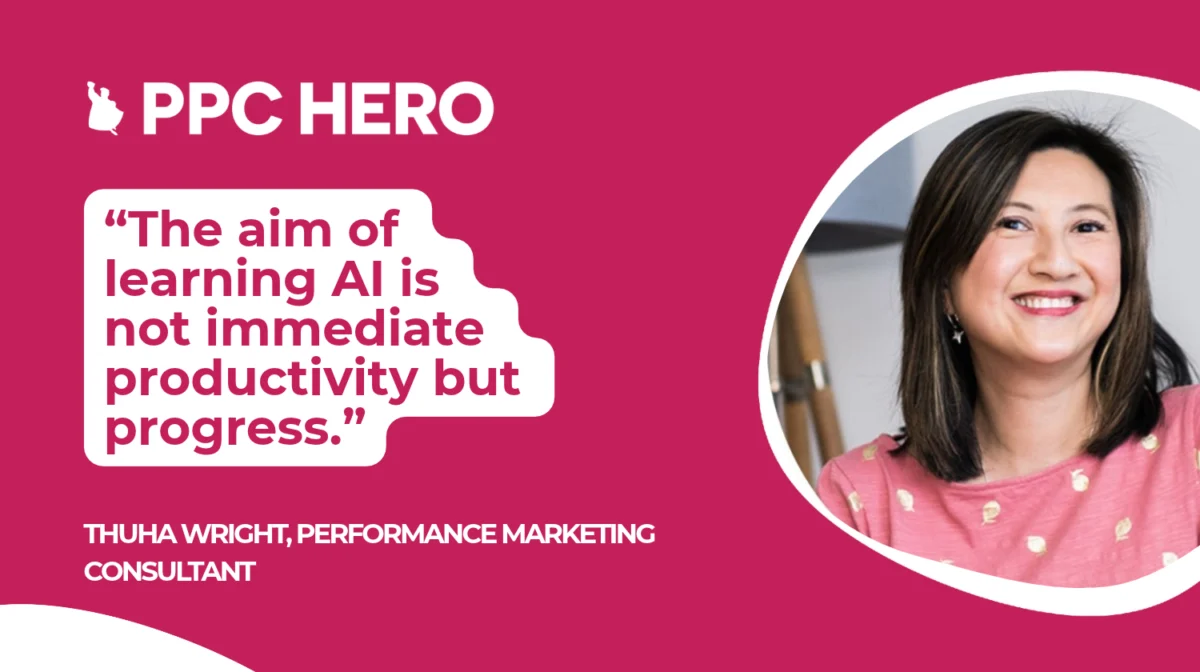
Each problem encountered and solved becomes a reusable learning experience. This builds a deeper understanding of the terminology, refines the ability to ask pertinent questions, and accelerates the development of subsequent workflows. The ultimate aim of AI learning is not immediate, superficial productivity, but sustained, progressive improvement.
The author acknowledges and empathizes with those who are dedicating late nights to AI learning, rigorously testing, refining, and seeking knowledge from peers. This arduous, investigative approach is not a detour but the very essence of the AI mastery journey. AI is now an integral part of our professional and personal lives. Investing the time to grasp its fundamental principles and establish a robust understanding will yield significant time and effort savings in the long run. While a pre-made prompt or a ready-made Claude skill might offer temporary relief, its long-term efficacy is not guaranteed.
The sentiment echoes Winston Churchill’s famous declaration: "Victory, however long and hard the road may be." While the context is vastly different, the underlying principle of perseverance through challenges resonates deeply with the AI learning journey.
Charting the Path Forward: Resources and Community
The author extends an invitation to connect on LinkedIn to share experiences and resources related to AI learning. This collaborative spirit is vital in navigating the complexities of AI adoption. To further support this journey, several valuable resources have been identified:
- Thursday AI Club: A bi-weekly community initiative offering share-and-learn sessions. The author actively participates as a member and an Ambassador, championing diversity within the group. This platform fosters peer-to-peer learning and knowledge exchange.
- AdstoAI: A community dedicated to AI-curious business owners and marketers, focused on building solutions and exploring the future of work. This group provides a space for shared discovery and practical application of AI.
- PPC Mastery: While not explicitly detailed, this resource likely offers specialized insights into AI applications within the realm of pay-per-click advertising, a field where AI is rapidly transforming strategies and execution.
The ongoing evolution of AI necessitates a commitment to continuous learning and adaptation. The promises of instant productivity, while appealing, often mask the deeper investment required for genuine, sustainable transformation. By embracing the learning curve, understanding the inherent risks, and engaging with supportive communities, individuals and organizations can navigate the complex landscape of AI and unlock its true potential for efficiency and innovation.


 Laily UPN

 Dwi Wanna