Ammar Sabilarrohman

The rapid proliferation of generative artificial intelligence (AI) has ushered in a new era of content creation, offering unprecedented possibilities for digital expression. However, this technological advancement also presents significant challenges, particularly concerning authenticity and transparency on social media platforms. In response to these evolving dynamics, Instagram has implemented a mandatory AI disclosure policy, requiring creators and brands to label content that features realistic AI-generated video or audio, as well as profiles showcasing AI-generated individuals. This policy is a critical step towards maintaining user trust, ensuring fair content discovery, and mitigating the risks associated with synthetic media. For any entity leveraging AI in their Instagram strategy, understanding and adhering to these guidelines is no longer optional but a fundamental requirement for responsible digital engagement.
The Rise of Synthetic Media and the Imperative for Transparency
The past few years have witnessed an explosion in the capabilities and accessibility of generative AI tools. From sophisticated image generators to advanced voice cloning and video manipulation software, AI can now produce highly convincing synthetic media that is increasingly difficult for the average user to distinguish from authentic content. While these tools empower creators with new artistic avenues and efficiency gains, they also raise serious ethical concerns. The potential for deepfakes, misinformation campaigns, and deceptive advertising has prompted calls from governments, consumer advocacy groups, and the public for greater transparency.
Meta, Instagram’s parent company, has been at the forefront of this discussion. In February 2024, Meta announced a broader cross-platform policy for AI-generated content across Facebook, Instagram, and Threads, building upon existing rules. This move was a direct acknowledgment of the growing need to address content created or altered by AI, especially when it could mislead users. The company has emphasized its commitment to transparency, recognizing that maintaining user trust is paramount in the age of synthetic media. This policy aligns with broader industry efforts, including collaboration with organizations like the Coalition for Content Provenance and Authenticity (C2PA), which aims to develop technical standards for content authenticity. The goal is not to stifle innovation but to foster a responsible AI ecosystem where users are empowered with information about the content they consume.

Instagram’s AI Disclosure Policy: Key Distinctions
Instagram’s policy centers on the principle that users should be aware when content they perceive as real has, in fact, been created or significantly altered by AI. The platform distinguishes between two primary types of AI disclosure labels: the "AI info" label for individual pieces of content and the "AI-generated profile" label for entire accounts.
The "AI info" Label: For Posts, Reels, and Stories
This label is applied to specific pieces of content where AI has been used to generate or significantly modify realistic-looking video or realistic-sounding audio. The key criterion is "realism." If the AI-generated element could plausibly be mistaken for authentic footage or sound, it requires disclosure.
- Content Requiring an "AI info" Label:
- AI-generated videos that look real: This includes entirely synthetic video footage, such as a fictional person delivering a message or an event that never occurred.
- Real videos modified with AI: Examples include swapping faces (deepfakes), adding AI-generated characters or objects to live footage, or altering existing scenery to appear dramatically different and realistic.
- Songs or audio with AI-generated vocals: If AI is used to create or mimic a human singing voice.
- Reels with realistic AI voiceovers: Voice cloning or synthetic voices that are indistinguishable from a human speaker.
- Content That Does NOT Require an "AI info" Label (but Instagram May Auto-Label):
- AI-written captions or scripts: While AI assists in creation, the output itself is text and doesn’t inherently mislead about visual or auditory reality.
- AI-generated or AI-edited images: Instagram currently does not mandate creators to label still images. However, the platform’s detection systems are designed to identify AI-generated images, particularly those embedded with C2PA metadata, and may automatically add an "AI info" label. This distinction highlights a current area of nuance, as the visual manipulation of images can also be highly deceptive.
- Unrealistic or Stylized AI content: Content that is clearly fantastical, animated, or stylized in a way that no reasonable person would mistake for reality typically does not require a label. The focus is on content that blurs the lines of perception.
The "AI info" label appears directly on the post or, if AI was used for minor edits, within the post’s menu, ensuring users can easily identify synthetic elements.

The "AI-generated profile" Label: For Entire Accounts
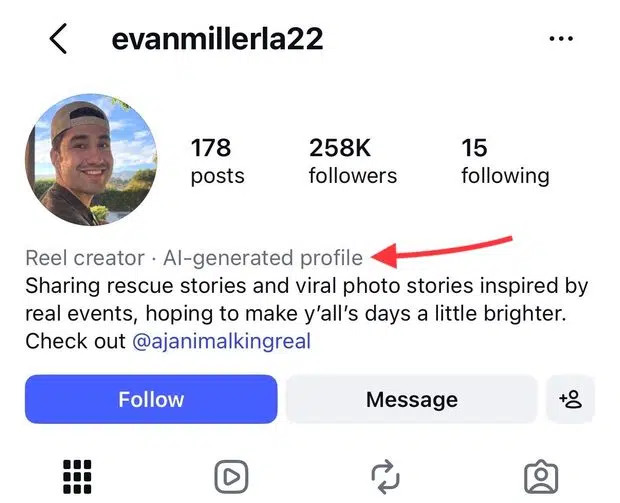
This label is specifically for profiles that feature an AI-generated person as their primary identity or spokesperson. This applies to virtual influencers, AI-driven personas, or any account where the central figure is not a real human.
- Application: Creators must enable this label in their profile settings.
- Visibility: Once activated, the "AI-generated profile" label is prominently displayed on the account’s profile page and may also appear next to posts from that account that do not already have their own "AI info" label, as well as next to comments and messages made by the profile. This ensures consistent transparency regarding the nature of the account itself.
Why Instagram’s AI Disclosure Policy Matters for Brands and Creators
The implications of Instagram’s AI disclosure policy extend far beyond simple technical compliance; they touch upon fundamental aspects of brand reputation, audience engagement, and legal accountability. Adhering to these guidelines is crucial for several reasons:
-
Maintaining Audience Trust: In an increasingly skeptical digital landscape, transparency is a cornerstone of brand loyalty. A 2023 survey by Edelman found that 61% of consumers believe that AI will make it harder to tell what is true, underscoring a pervasive anxiety about synthetic media. When brands are transparent about their use of AI, they signal respect for their audience, fostering a deeper sense of trust. Ambreen Sharif, Creative Director of Ambreen Sharif Creative, articulates this precisely: "When audiences find out after the fact that something was AI-generated, they start questioning the whole company, not just that one post… Disclosing AI use signals that you respect your audience enough to let them decide how they feel about it, and that kind of respect builds loyalty." This proactive honesty can differentiate brands in a crowded and potentially deceptive content ecosystem.
-
Ensuring Content Discovery and Reach: Instagram’s algorithms prioritize content that adheres to its community guidelines. For AI-generated profiles, a missing label can severely impact content discoverability. Unlabeled AI-generated profiles may be excluded from Instagram’s recommendation systems, such as the Explore page and Reels feed, which are vital channels for reaching new audiences. This directly translates to reduced organic reach, fewer impressions, and diminished brand visibility – a significant blow for any brand relying on platform growth.
-
Preserving Influencer Partnerships and Brand Reputation: Influencer marketing is a powerful tool, but it introduces an additional layer of complexity regarding AI disclosure. If an influencer working with a brand uses AI to create content for a campaign and fails to apply the necessary label, the brand’s reputation is directly at risk. The brand, not just the influencer, could face public backlash, damage to trust, and potential penalties from Instagram. This necessitates clear contractual agreements and rigorous review processes for all influencer-generated content.
-
Mitigating Compliance and Legal Risks: For brands operating in regulated industries, such as financial services, healthcare, or consumer goods, AI disclosure is not merely a matter of platform policy but a critical legal and compliance concern. Regulatory bodies like the Federal Trade Commission (FTC) have strict guidelines against deceptive practices, including the use of fake reviews or testimonials that claim to originate from non-existent individuals. The FTC’s endorsement guides explicitly address transparency in advertising, and synthetic media falls squarely within this purview. Failure to disclose AI use in such contexts could lead to substantial fines, legal action, and severe reputational damage. As Sharif notes, "getting this wrong can also create compliance exposure on top of the reputational hit." Brands must engage their legal and compliance teams proactively to navigate these evolving regulations.
How to Label AI Content on Instagram: A Practical Guide
Applying AI labels on Instagram is a straightforward process, but it requires diligent attention before publishing.

Adding an "AI info" Label to a Post, Reel, or Story:
- For a Post or Reel:
- Create your post or Reel as usual.
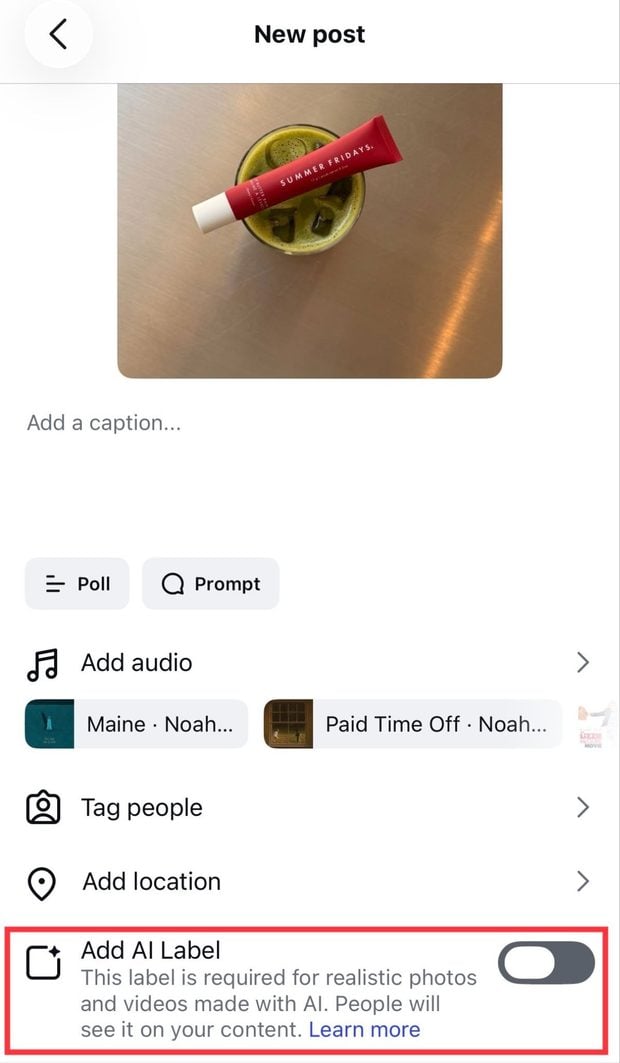
- Before tapping "Share," scroll down and tap "Advanced settings."
- Find the "Add AI label" toggle and turn it on.
- Tap "Share" to publish your content with the AI label.
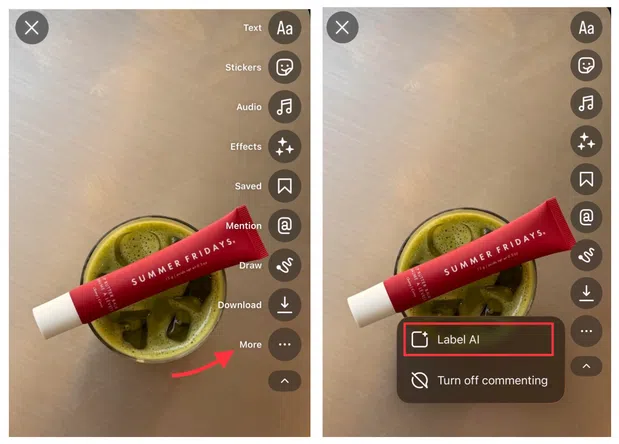
- For a Story:
- Create your Story.
- Before tapping "Your Story" or "Close Friends," tap the three dots icon (More).
- Select "Add AI label."
- Confirm by tapping "Add AI label."
- Share your Story.
Adding the "AI-generated profile" Label:
If your account represents a virtual influencer or an AI-generated persona:
- Go to your Instagram profile.
- Tap the menu icon (three horizontal lines) in the top right corner.
- Select "Settings and privacy."
- Tap "Account type and tools."
- Select "AI-generated profile."
- Turn on the "AI-generated profile" toggle.
For advertisements, Meta’s systems are designed to automatically detect and label AI-generated content. However, for ads related to social issues, elections, or politics, advertisers are required to manually disclose AI use during the ad setup process, reflecting the heightened sensitivity around such content.
Consequences of Non-Compliance
Instagram’s policy explicitly warns of penalties for failing to disclose AI-generated content appropriately. These consequences are designed to ensure transparency and maintain the integrity of the platform:
- Automatic Labeling by Instagram: If Instagram’s systems detect realistic AI-generated video or audio that has not been labeled, the platform may automatically add an "AI info" label to the content. This serves as a public correction and signals to users that the content contains synthetic elements.
- Limited Reach and Discoverability: For AI-generated profiles that fail to disclose their nature, Instagram may significantly reduce their reach. This means the profile’s content will be less likely to appear in recommendation feeds, such as Explore, Reels, or suggested posts, severely hindering audience growth and engagement.
- Other Penalties: Meta has stated that continued non-compliance may lead to other unspecified penalties. These could range from temporary content suppression to account warnings, demonetization, or, in severe and repeated cases, even account suspension or removal. The platform’s stance is clear: transparency is a non-negotiable aspect of using AI.
Managing AI Disclosures for Teams: A Strategic Approach
For brands and agencies, managing AI disclosures effectively requires a structured, systematic approach integrated into existing content workflows.
-
Conduct an Internal AI Content Audit: Begin by mapping out all instances where AI is currently used or planned for use in your Instagram content creation process. This includes identifying AI tools used for writing captions, generating product images, creating voiceovers for Reels, or modifying video footage. Categorize each use case based on whether it requires a mandatory Instagram label. This clarity is the first step towards consistent compliance.
-
Review Profile Label Necessity: Perform a one-time check of your brand’s Instagram accounts. If any account features a virtual influencer, spokesperson, or persona that is entirely AI-generated, immediately activate the "AI-generated profile" label. This critical step prevents potential limitations on reach and maintains transparency from the outset.
-
Integrate AI Disclosure into Influencer Briefs and Contracts: When collaborating with influencers, explicitly include clauses in your contracts and detailed instructions in your creative briefs regarding AI content disclosure. Outline Instagram’s requirements for labeling realistic AI video and audio, and mandate that influencers flag any such content for review before publication. This proactive measure protects your brand from reputational and compliance risks stemming from third-party content. Remember, Instagram’s AI labels are separate from required disclosures for paid partnerships (e.g., #ad, #sponsored), which must also comply with FTC guidelines.
-
Establish a Robust Approval Workflow with AI Checks: Make AI disclosure a mandatory checkpoint in your content approval process. Before any Instagram post, Reel, or Story goes live, a designated team member should verify whether it contains AI-generated elements that require a label. This includes confirming that the "Add AI label" toggle is activated if needed. Tools that facilitate customizable approval workflows can be invaluable here, ensuring that every piece of content receives the necessary scrutiny before publication, minimizing human error and reducing the risk of non-compliance.
Hootsuite’s Role in Streamlining AI Compliance
In an era where social media compliance is increasingly complex, integrated platforms like Hootsuite offer solutions to embed AI disclosure seamlessly into existing social media management practices. Hootsuite’s ecosystem, including tools like Perch, Vigil, and Lumen, empowers teams to manage their content lifecycle with compliance and transparency in mind.
-
Perch: Building Disclosure Checks into Approvals: Managing a high volume of Instagram content can make it easy for disclosure requirements to be overlooked. Perch, Hootsuite’s content planning and publishing app, addresses this by allowing teams to:

- Create custom approval workflows: Configure stages for legal review, brand approval, and specific AI disclosure checks.
- Assign clear responsibilities: Ensure that specific team members are tasked with verifying AI labels before content moves to the next stage or is published.
- Maintain a centralized content calendar: Provides a holistic view of all scheduled content, allowing for easy identification and review of AI-containing posts.
-
Vigil: Ensuring Governed Workflows and Permissions: For large organizations and those in regulated industries, strict governance over social media publishing is non-negotiable. Vigil, the governance layer within Hootsuite Social OS, helps teams:
- Manage user permissions: Control who can create, edit, approve, and publish content, ensuring only authorized personnel can finalize posts with AI labels.
- Enforce approval hierarchies: Mandate sign-offs from legal or compliance teams before any AI-generated content goes live, reducing the risk of unauthorized or non-compliant publications.
-
Lumen: Monitoring Sentiment and Informing Strategy: Beyond compliance, understanding audience reaction to AI content is crucial for refining brand strategy. Lumen, Hootsuite’s social listening tool, enables brands to:
- Track conversations and sentiment: Monitor how audiences discuss AI-generated content, your brand’s use of AI, and the effectiveness of your disclosure.
- Identify emerging trends: Leverage insights from 150 million+ sources to understand public perception and adapt your content strategy accordingly. This feedback loop ensures that your AI use not only complies with policies but also resonates positively with your audience.
Conclusion: Navigating the Future of Digital Trust
Instagram’s AI disclosure policy represents a pivotal moment in the evolution of social media content. It underscores a growing global consensus that transparency is fundamental to maintaining trust in the digital realm. For brands and creators, embracing these policies is not just about avoiding penalties; it’s about building a reputation for authenticity, fostering deeper connections with audiences, and navigating the ethical complexities of generative AI responsibly. By integrating AI disclosure into their core content strategies and leveraging robust management tools, organizations can confidently harness the power of AI while upholding the trust that defines their success in the ever-changing landscape of social media. The future of digital content demands a commitment to honesty, and Instagram’s policy is a clear call to action for everyone operating within its vast ecosystem.


 Nana

 Iffa Jayyana