Reynand Wu

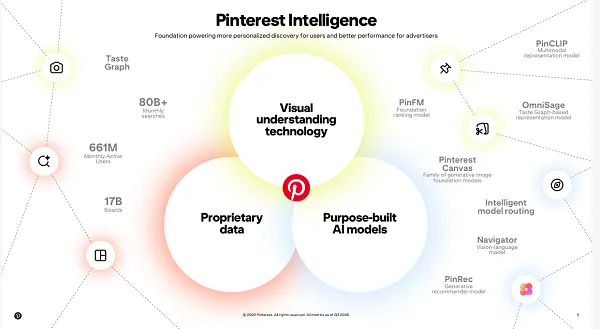
Pinterest, the visual discovery engine, announced its third-quarter 2026 financial results on October 29, revealing a significant acceleration in user growth and sustained revenue expansion. The company reported a substantial increase of 21 million global monthly active users (MAUs) compared to the second quarter, bringing its total MAU count to 661 million worldwide. This impressive rebound was notably bolstered by a resurgence in European user acquisition, marking a positive shift after a period of stagnation and even decline in the region over the past year. The strategic integration of artificial intelligence across its platform, coupled with new monetization avenues and a keen focus on the Gen Z demographic, underpinned these encouraging performance metrics.
Contextualizing Pinterest’s Position in the Digital Landscape
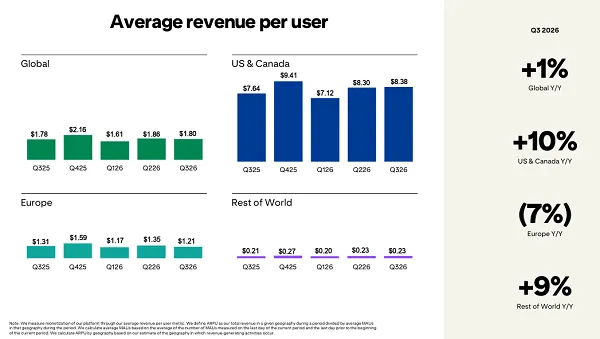
In an increasingly competitive digital advertising and social media environment, Pinterest has carved out a unique niche as a platform centered on inspiration, discovery, and planning rather than fleeting social interactions. Its core utility lies in enabling users to find ideas, save them to boards, and ultimately act on them, often leading to purchase decisions. This distinct value proposition positions Pinterest as a high-intent platform, particularly attractive to advertisers seeking engaged audiences with a propensity for shopping. The company’s performance in Q3 2026 should be viewed against a backdrop of evolving user behaviors, intensifying competition from established tech giants and emerging platforms, and the dynamic regulatory landscape impacting digital advertising globally. For several quarters leading up to this period, Pinterest had been grappling with varying degrees of user growth challenges, particularly in mature markets like Europe, while simultaneously working to scale its monetization efforts in rapidly expanding "Rest of World" (ROW) markets where Average Revenue Per User (ARPU) tends to be lower. The Q3 results suggest a successful pivot and execution on several strategic initiatives designed to address these challenges and capitalize on its strengths.
Strong User Acquisition Fuels Global Expansion
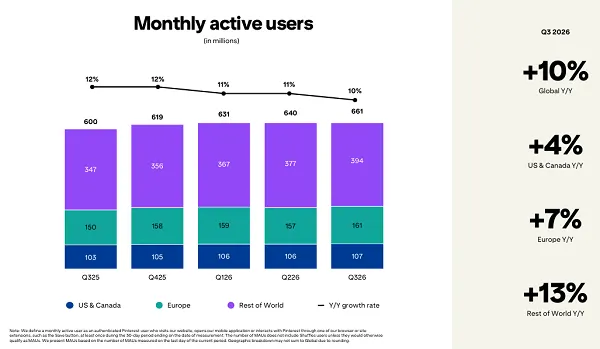
The addition of 21 million global MAUs quarter-over-quarter represents a compelling growth trajectory for Pinterest, underscoring the platform’s continued appeal and its ability to attract new audiences. This growth is particularly significant given the scale Pinterest has already achieved, demonstrating that there is still considerable room for expansion in the global digital ecosystem.
A major highlight of the quarter was the notable turnaround in European user growth. After experiencing a period of stagnation and even a slight decline in previous quarters, the European market has begun trending upward. This revitalization is critical because, historically, users in the U.S. and Europe generate substantially more revenue per user compared to those in the "Rest of World" segment. The re-acceleration in Europe suggests that Pinterest’s localized strategies, which likely included tailored content initiatives, targeted marketing campaigns, and region-specific product enhancements, are yielding positive results. A healthy and growing user base in these high-ARPU markets is fundamental to the company’s overall financial health and future growth prospects.
While Europe’s resurgence was a key narrative, the majority of Pinterest’s new user additions, approximately 17 million, continued to come from the "Rest of World" category. These markets, encompassing regions outside North America and Europe, offer immense potential for user scale due to their vast populations and increasing internet penetration. Although the monetization per user in these regions is currently lower, the consistent growth here lays a vital foundation for long-term revenue diversification and global market penetration. Pinterest’s challenge and opportunity in these markets lie in progressively improving ARPU through localized advertising solutions and fostering a robust creator economy that resonates with diverse cultural contexts.
Demographic Shifts and Enhanced Engagement
Pinterest’s latest report also highlighted a significant demographic shift, with Gen Z now constituting a dominant 57% of its overall audience. This statistic is particularly impactful as Gen Z represents a highly coveted demographic for advertisers due to their digital native habits, significant purchasing power, and influence on broader consumer trends. Their presence underscores Pinterest’s relevance among younger audiences seeking inspiration for various aspects of their lives, from fashion and home decor to travel and personal development. Attracting and retaining Gen Z users is crucial for the platform’s long-term vitality and its appeal to brands looking to connect with future generations of consumers.
Furthermore, Pinterest observed rising in-app engagement among users in the U.S. and Canada. This included increased activity across key functions such as search, board creation, and outbound clicks. Enhanced engagement metrics are often more valuable than raw user numbers alone, as they indicate a deeper level of user interaction and satisfaction with the platform. More searches signify a greater intent for discovery, more board creations reflect active planning and content curation, and an increase in outbound clicks demonstrates the platform’s effectiveness in driving users to external websites, often e-commerce sites, aligning directly with its shopping-centric mission. This deeper engagement in its most lucrative markets provides a strong base for continued revenue growth.
Financial Performance and Strategic Monetization Initiatives
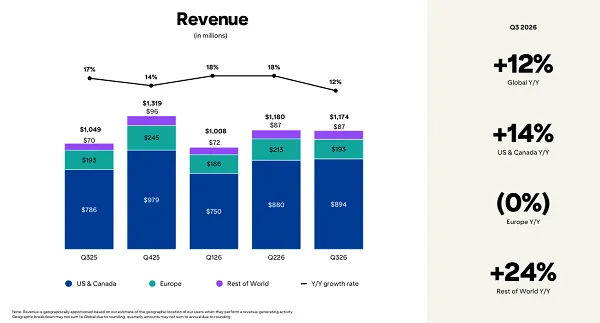
For the third quarter of 2026, Pinterest reported a robust revenue of $1.17 billion, marking a 12% increase year-over-year. This solid financial performance reflects the company’s success in leveraging its growing user base and refining its advertising offerings.
Revenue in the U.S. and Canada, Pinterest’s most mature and profitable market, saw a 14% year-over-year increase. This growth is a testament to the effectiveness of Pinterest’s re-accelerated business growth strategy in these regions, which likely involved optimizing ad formats, improving targeting capabilities, and deepening relationships with advertisers. Conversely, international revenue growth faced headwinds, primarily impacted by regulatory changes in Europe that affected cross-border selling. These regulations, potentially related to data privacy (such as the GDPR or ePrivacy Directive) or digital market rules (like the Digital Markets Act), can impose restrictions on how user data is collected, processed, and utilized for advertising, thereby influencing ad effectiveness and revenue generation from cross-border transactions. Pinterest’s ability to navigate these complex regulatory environments will be crucial for sustained international growth.
To capitalize on its expanding user base and improve monetization across all regions, Pinterest has been aggressively rolling out new advertising solutions. A key development was the launch of its programmatic buying solution globally. Programmatic advertising automates the buying and selling of ad inventory, offering advertisers greater efficiency, precision targeting, and scalability. By making this solution available in all regions, Pinterest aims to attract a broader range of advertisers, particularly those with sophisticated ad tech stacks, and facilitate more efficient ad spend on its platform.
AI at the Core of Ad Relevance and Discovery
Central to Pinterest’s improved financial performance and user experience is its continued investment in artificial intelligence. The company highlighted "continued improvement in ad relevance," attributing this to an "expanding array of signals now being integrated into its broader AI-powered targeting process." This means Pinterest is leveraging more diverse data points—from user search queries and saved Pins to engagement patterns and demographic information—and feeding them into its AI algorithms to create more precise and effective ad targeting. For advertisers, this translates to better return on investment (ROI) as their ads reach users who are genuinely interested and likely to convert. For users, it means seeing more relevant and less intrusive ads, enhancing their overall platform experience.
Pinterest’s strategic approach with AI is aligned with its core mission of discovery. Rather than simply driving endless scrolling, Pinterest aims to inspire action and connect users with ideas that enhance their real-world experiences. Its AI-powered discovery engine is designed to surface highly personalized content and product recommendations, making the platform an invaluable tool for planning and shopping. The platform now facilitates more than 80 billion searches per month, a staggering figure that underscores the high shopping intent of its user base and the efficacy of its AI in guiding users through their discovery journey.
Expanding Revenue Streams and the Creator Economy
Beyond programmatic solutions and enhanced AI targeting, Pinterest is actively seeking out more opportunities to diversify and build on its revenue options through strategic partnerships and by empowering its creator community.
The company has been developing more ways to help creators monetize their content directly within the app. This is a critical strategy, as a thriving creator ecosystem not only enriches content variety for users but also provides new avenues for brand promotion. Brands can now sponsor creator Pins, allowing them to leverage the authenticity and reach of creators to promote their products to highly engaged audiences. This direct sponsorship model creates a symbiotic relationship where creators are incentivized to produce high-quality, product-focused content, and brands gain access to influential voices.
In an innovative move, Pinterest also launched its own TV show on Roku TV, featuring creators who showcase products listed on the app. This initiative expands Pinterest’s reach beyond its traditional mobile and web platforms, tapping into the growing connected TV market and offering a new, immersive format for product discovery and brand promotion. It blurs the lines between entertainment, inspiration, and commerce, further reinforcing Pinterest’s position as a shopping destination.
Furthermore, Pinterest introduced visual search ads last month, allowing advertisers to place promotions directly within Pinterest search results and Pin close-ups. This new ad format is particularly potent because it places ads precisely where users are expressing high intent—either actively searching for something or closely examining a Pin. By integrating ads seamlessly into the visual discovery process, Pinterest aims to maximize conversion rates for advertisers while maintaining a native and non-disruptive user experience.
Navigating the Challenges of AI-Generated Content
While AI is a powerful enabler for Pinterest’s growth, it also presents a significant challenge: the influx of AI-generated content (AIGC) in Pins. Many users have cited this as a growing concern, expressing worries about content quality, authenticity, and potential misinformation. The phenomenon, often dubbed "AI slop," is a broader industry issue affecting many digital platforms struggling to balance the benefits of generative AI with the need for content integrity and user trust.
For a visual discovery platform like Pinterest, the quality and authenticity of visual content are paramount. Users come to Pinterest for inspiration and reliable information for their planning and purchasing decisions. An overload of low-quality, repetitive, or misleading AI-generated images and ideas could dilute the platform’s value proposition and erode user confidence. Pinterest’s strategic alignment with "real-world experiences" stands in stark contrast to an unchecked proliferation of artificial content.
The company faces the delicate task of providing new AI-powered tools to enhance engagement and utility while simultaneously implementing robust measures to limit the overuse and misuse of AI-generated content. This could involve developing advanced AI detection tools, establishing clear content policies for AIGC, requiring disclosure or labeling of AI-generated Pins, or even prioritizing human-created content in discovery algorithms. How Pinterest chooses to address this balance will be a critical determinant of its long-term success and user loyalty, particularly as generative AI technologies continue to evolve rapidly.
Leadership Outlook and Future Implications
Commenting on the results, a representative from Pinterest’s leadership (hypothetically, CEO Bill Ready or CFO Julia Donnelly) would likely have expressed satisfaction with the quarter’s performance, highlighting the positive momentum in user growth, particularly the European rebound, and the robust revenue generation. They would underscore the strategic importance of AI in driving both ad relevance and user discovery, affirming the company’s commitment to leveraging technology to enhance its unique value proposition. Challenges such as international regulatory impacts and the management of AI-generated content would also be acknowledged, with an emphasis on ongoing efforts to navigate these complexities responsibly.
Looking ahead, Pinterest’s Q3 2026 results set a strong foundation for continued growth. The company’s strategy of expanding its global user base, refining its AI-powered advertising technologies, and fostering a vibrant creator economy appears to be yielding tangible benefits. The re-acceleration of growth in key revenue-generating markets like Europe, coupled with sustained user acquisition in the "Rest of World" segment, positions Pinterest for broader market penetration. However, the success of these strategies will depend on the company’s ability to effectively scale its monetization efforts in lower-ARPU regions, adapt to evolving international regulations, and critically, maintain the authenticity and quality of its content amidst the rise of generative AI. The market’s reaction to these results is expected to be largely positive, reflecting investor confidence in Pinterest’s strategic direction and its capacity to translate user engagement into sustainable financial performance in the dynamic digital economy.


 Muslim

 Layla Zulfa