Nana Muazin
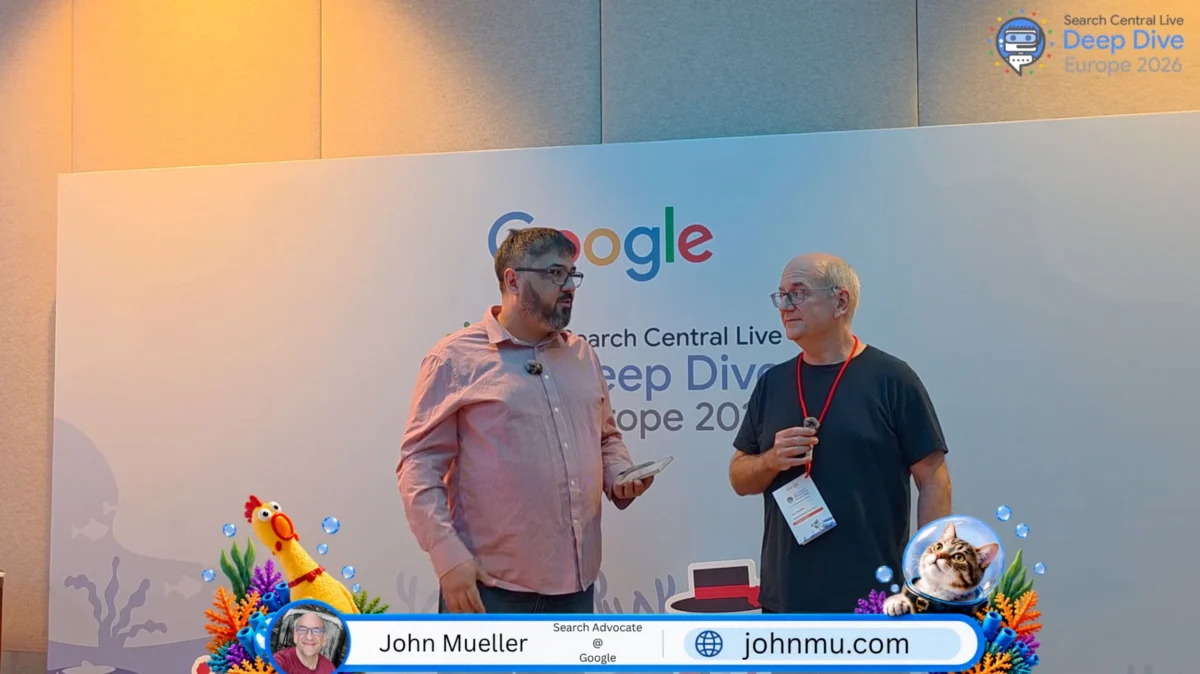
Google’s Search Advocate, John Mueller, issued a definitive warning to webmasters and SEO professionals during a recent extensive interview with David Iwanow, asserting that Google’s sophisticated systems are poised to eventually detect and neutralize AI-generated spam and manipulative content tactics, rendering short-term gains futile. Mueller’s remarks, captured in a comprehensive discussion spanning topics from AI-generated content to the nuances of technical SEO, underscored Google’s unwavering commitment to quality and user experience, cautioning against the allure of "cheap, easy, and fast tactics" that may offer fleeting success.
The interview, a pivotal moment for those navigating the rapidly evolving landscape of search engine optimization, delved into the strategic implications of artificial intelligence in content creation. Mueller directly addressed questions regarding tactics like the mass production of listicles, often perceived as an easy route to ranking in AI Search. While acknowledging that listicles themselves are not inherently spam, he stressed that adopting a content strategy solely reliant on generating thousands of such articles poses significant risks. He elucidated a common pattern in the cat-and-mouse game between search engines and those attempting to manipulate them: tactics that initially seem effective are ultimately recognized and devalued by search systems once they proliferate and become synonymous with spam. Publishers, Mueller advised, should instead focus on constructing a robust, enduring foundation that both traditional search engines and emerging AI systems will genuinely want to surface for the long term, rather than seeking transient shortcuts.
The Inevitable Catch-Up: A Historical Perspective
Mueller’s assertion that "at some point the systems catch" these manipulative efforts echoes a consistent theme in Google’s history of combating web spam. He drew direct parallels between the current wave of AI-scaled content and older, now-obsolete black-hat SEO techniques, such as keyword stuffing and using white text on a white background to hide keywords from users while exposing them to search crawlers. These historical tactics, while yielding temporary boosts in rankings for some, invariably led to severe penalties and de-indexing once Google’s algorithms evolved to identify and penalize them.
This ongoing struggle dates back to the early days of search. In the late 1990s and early 2000s, search engine optimization was often characterized by rudimentary attempts to game algorithms through brute-force methods. Keyword stuffing, where webmasters crammed irrelevant keywords into content, meta tags, and even URLs, was rampant. Hidden text, cloaking (showing different content to users and search engines), and link farms (networks of sites designed solely to artificially inflate PageRank) were common practices. Google’s response has been a continuous evolution of its ranking algorithms, marked by significant updates designed to promote quality and relevance.
Key milestones in this algorithmic evolution include:
- Panda (2011): This update specifically targeted "thin," low-quality content, duplicate content, and content farms. It was a major step towards penalizing sites that prioritized quantity over quality, laying groundwork for future AI-driven content evaluations.
- Penguin (2012): Focused on combating web spam related to manipulative link schemes, such as unnatural backlinks and spammy link building. This demonstrated Google’s ability to analyze patterns of manipulation across the web.
- Hummingbird (2013): A foundational change that allowed Google to better understand the meaning behind search queries, moving beyond individual keywords to semantic search. This made it harder for sites to rank simply by keyword matching without providing truly relevant answers.
- RankBrain (2015): Google’s first significant public acknowledgment of using artificial intelligence and machine learning to process search queries, particularly ambiguous ones. This marked a new era where algorithms could learn and adapt to identify patterns of quality and spam more effectively.
- BERT (2019) and MUM (2021): Further advancements in natural language processing (NLP) that enhanced Google’s ability to understand the nuances of language in both queries and content, making it increasingly difficult for poorly written or contextually irrelevant AI-generated content to pass muster.
Mueller’s perspective is rooted in this history, emphasizing that "none of this is new." The cycle of discovering a "trick," its widespread adoption, and Google’s eventual systemic response has been a constant. The implication is clear: while AI provides new tools for content generation, the fundamental principles of quality, helpfulness, and genuine value remain paramount, and Google’s systems are perpetually learning to distinguish these from mere algorithmic exploitation.
The Allure and Peril of AI in Content Generation
The advent of sophisticated large language models (LLMs) like GPT-3, GPT-4, and their successors has undeniably revolutionized content creation. These tools can generate vast amounts of text quickly, efficiently, and at a fraction of the cost of human writers. This capability presents both immense opportunities for legitimate content scaling and significant temptations for misuse.
For publishers and SEOs, the promise of AI-generated content includes:
- Speed: Producing articles, product descriptions, or blog posts in minutes rather than hours or days.
- Scalability: Generating thousands of pieces of content on various topics, potentially covering a broader range of keywords.
- Cost-Efficiency: Reducing expenditures on human writers, editors, and content strategists.
However, the rapid proliferation of AI-generated content also introduces challenges. While AI can produce grammatically correct and coherent text, the quality, depth, and originality often fall short of human-created content, especially when deployed without careful oversight. The risk lies in the mass production of "thin" content—articles that lack unique insights, authoritative sourcing, or genuine value for the reader. These articles often rehash existing information, provide superficial answers, or are simply designed to target keywords without addressing true user intent.
Mueller’s comments align with Google’s broader stance on AI-generated content, which has evolved to emphasize the intent and quality of the content rather than the method of its creation. Google’s official guidance, particularly reinforced by the "Helpful Content System" updates, focuses on "people-first content." This means content should be created primarily to benefit people, not to manipulate search engine rankings. If AI is used to produce helpful, relevant, and original content that meets Google’s E-E-A-T (Experience, Expertise, Authoritativeness, Trustworthiness) guidelines, it can be acceptable. However, if AI is employed to generate unhelpful, low-quality, or spammy content at scale, it is at high risk of being penalized.
The challenge for Google’s systems is not merely detecting if content was AI-generated, but understanding the quality and purpose behind it. Mueller’s comparison to keyword stuffing highlights this: it’s not the tool itself (AI vs. manual typing) but the misuse of the tool to create manipulative, low-value content that Google targets. The implication is that Google’s AI-powered algorithms are becoming increasingly adept at identifying patterns characteristic of unhelpful, machine-generated spam, regardless of how sophisticated the text itself might appear.
Implications for SEO Professionals and Publishers
Mueller’s warning carries significant implications for SEO professionals, content creators, and businesses relying on organic search visibility. The core message is a reinforcement of long-term, ethical SEO practices over short-sighted tactics.
-
Focus on E-E-A-T: The emphasis on Experience, Expertise, Authoritativeness, and Trustworthiness becomes even more critical. AI can help with drafting, but human oversight, unique insights, original research, and verifiable expertise are essential to meet Google’s quality standards. Publishers must ensure that content, regardless of its generation method, is factually accurate, well-researched, and demonstrates genuine authority.
-
User-Centric Content: The "people-first" approach championed by Google dictates that content should solve user problems, answer their questions comprehensively, and provide a genuinely positive experience. Content created solely for search engine bots, even if technically flawless, will eventually be identified as unhelpful.
-
Risk of Penalties: Relying on mass-produced, low-quality AI content carries the significant risk of algorithmic demotions or even manual penalties. Such penalties can devastate organic traffic, lead to a loss of search visibility, and damage a brand’s reputation, ultimately costing more in recovery efforts than was saved in content creation. Mueller explicitly advises questioning consultants who promise extraordinary, rapid results, urging webmasters to understand the underlying methods.
-
Sustainable Growth: True, sustainable SEO growth is built on consistently delivering high-quality, valuable content that earns links, shares, and user engagement naturally. This approach fosters brand loyalty and positions a website as a trusted resource, aligning with Google’s long-term goals for search.
-
Human Oversight and Editing: While AI can assist, human editors and content strategists remain indispensable. They provide the critical layer of review, fact-checking, contextual understanding, and brand voice that AI currently struggles to replicate consistently. The future of content creation likely involves a synergistic approach where AI augments human creativity and efficiency, rather than replacing it entirely.
Beyond AI Content: Other Key Insights from the Interview
Mueller’s conversation with David Iwanow was not limited to AI content; it also touched upon several other crucial aspects of SEO and webmaster best practices. These points further underscore Google’s continuous refinement of how it evaluates and ranks websites.
-
Technical SEO: Mueller highlighted the importance of technical foundations. Discussions around the Crawl Stats Report emphasize its utility for webmasters to understand how Googlebot interacts with their site, identify potential crawl budget issues, and ensure important pages are discovered and indexed. Redirect chains were also a point of concern, as excessive or improperly implemented redirects can lead to a loss of link equity, slow down crawling, and negatively impact user experience. Proper redirect management is a fundamental aspect of maintaining site health.
-
E-commerce Product Data: For online retailers, Mueller stressed the critical role of high-quality e-commerce product data. This includes accurate product descriptions, specifications, pricing, availability, and rich structured data markup (like Schema.org for products). Well-structured product data not only helps Google understand offerings better but also qualifies sites for rich results in search, Google Shopping listings, and other prominent display formats, directly impacting conversion rates.
-
Mobile-First Indexing: While not a new topic, its continued mention reinforces that mobile-first indexing remains the standard. Websites must ensure their mobile versions are fully functional, provide a complete user experience, and contain all content and structured data present on their desktop counterparts.
-
AI-Specific Versions of a Website: The idea of creating AI-specific versions of a website or content for AI systems was touched upon. This concept raises questions about the future of content delivery as AI models become more prevalent, though the current emphasis remains on creating content for human users first.
-
Future Search Central Events and Lighter Notes: The interview also included mentions of upcoming Search Central events, which serve as vital channels for Google to communicate updates and guidance to the SEO community. On a lighter note, the discussion even veered into whether John Mueller would eat AI-generated cheese, adding a human touch to the technical discourse. The subsequent forum discussion on Bluesky further indicates the engagement and interest these insights generated within the SEO community.
Conclusion: The Enduring Value of Authenticity and Quality
John Mueller’s interview serves as a timely reminder that while technology evolves, the fundamental principles of sustainable search engine optimization remain constant. Google’s algorithms, increasingly powered by sophisticated AI and machine learning, are continuously improving their ability to discern valuable, helpful content from manipulative spam. The cat-and-mouse game between SEOs and Google is a testament to this ongoing evolution, but Mueller’s message is clear: the systems are getting smarter, and temporary "tricks" will eventually be caught and penalized.
For webmasters and publishers, the takeaway is unequivocal: invest in creating genuine, high-quality content that provides real value to users. Focus on building a strong, trustworthy online presence that demonstrates expertise and authority. While AI tools can undoubtedly enhance efficiency, they must be wielded responsibly, with human oversight and an unwavering commitment to the "people-first" approach. In the long run, authenticity, helpfulness, and a solid foundation will always triumph over fleeting tactics, ensuring enduring visibility and success in the ever-evolving landscape of search.


 Asep Darmawan

 Dwi Wanna