rifanmuazin
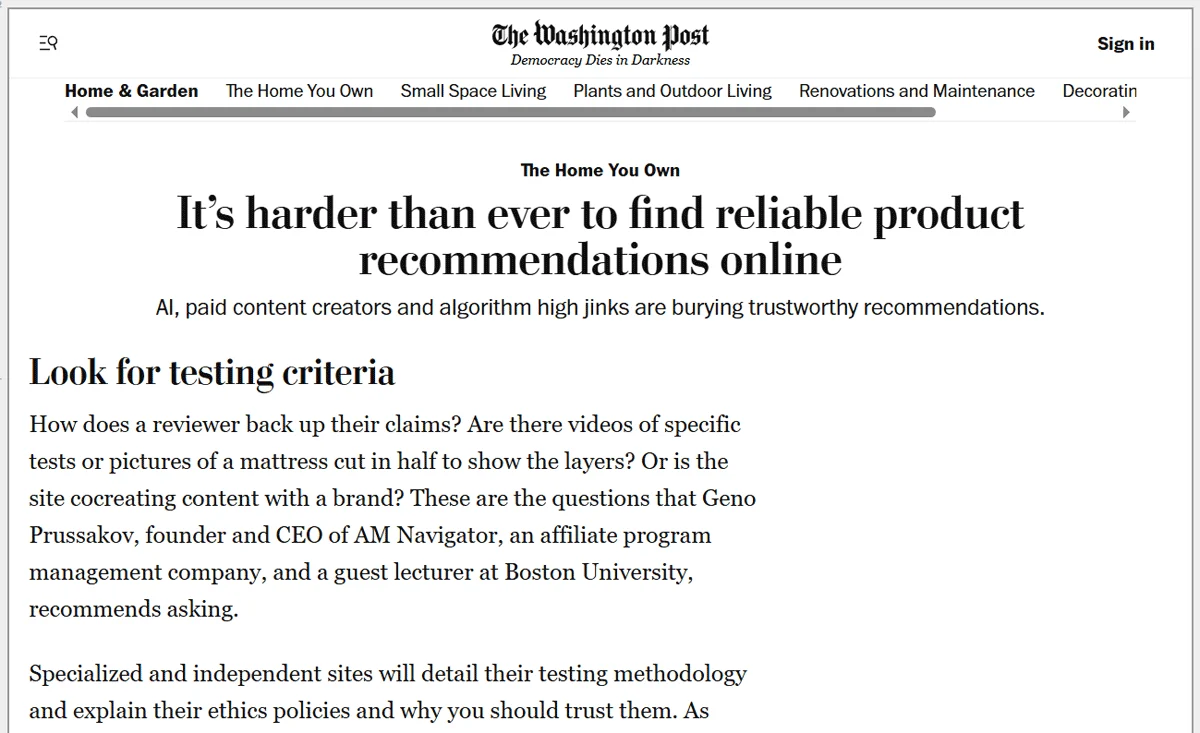
In early 2025, the intersection of editorial integrity and digital commerce became a focal point of public discourse following an investigative analysis into how major media conglomerates curate their product recommendation lists. As traditional advertising revenues continue to fluctuate, high-authority publications have increasingly turned to affiliate marketing—a performance-based revenue model—to sustain their operations. This shift has raised significant questions regarding the objectivity of online reviews and the mechanisms through which "Best Of" lists are compiled. The discussion gained significant traction following a January 13, 2025, report by The Washington Post, which examined the growing reliance on commerce-driven content among legacy media brands.
The Evolution of Media Monetization and Brand Authority
For decades, the primary revenue streams for news organizations were subscriptions and display advertising. However, the digital transformation of the 2010s decimated the traditional classifieds market and shifted display ad budgets toward social media platforms and search engines. In response, media houses began to leverage their "search engine authority"—a metric of trust and relevance assigned by algorithms—to enter the product recommendation space.
By positioning themselves as curators, these outlets began to monetize the intent of consumers who use search engines to find the "best" products in various categories. This practice, often referred to as "commerce content," involves embedding affiliate links within articles. When a reader clicks a link and makes a purchase, the publisher receives a commission. While this provides a vital lifeline for journalism, it creates a potential conflict of interest where the financial incentives of the publication may not always align with the best interests of the consumer.
A Chronological Shift in Digital Journalism
The trajectory of this industry shift can be traced through several key milestones over the last fifteen years:
- 2011–2016: The Rise of the Professional Review Site. The acquisition of The Wirecutter by The New York Times Company in 2016 for approximately $30 million marked a turning point. It signaled to the industry that high-quality, service-oriented journalism could be a major profit center.
- 2017–2020: The Expansion of Commerce Teams. Major publishers began establishing dedicated "commerce teams" that operated alongside, but theoretically independent of, their traditional newsrooms. During this period, outlets like Vox Media, Condé Nast, and Hearst aggressively expanded their product roundup sections.
- 2021–2024: The Saturation of Search Results. As more legacy brands entered the space, search engine results pages (SERPs) became dominated by "Best Product" lists from major media names, often pushing smaller, independent review sites further down the rankings.
- 2025: The Transparency Crisis. By early 2025, consumer skepticism reached a peak, prompting major outlets like The Washington Post to investigate the behind-the-scenes financial arrangements that influence these rankings.
The Operational Mechanics of Commerce Content
Contrary to the perception that all recommendations are "pay-to-play," many reputable media organizations maintain rigorous standards to protect their brand equity. Industry experts, including those who manage affiliate programs for global merchants, note that big media publishers typically employ a multi-layered approach to vetting products:
- Editorial Independence: Many outlets maintain a "church and state" separation where editors select products based on merit, while a separate business team handles the affiliate partnerships.
- In-House Testing: Larger organizations invest in dedicated testing facilities or "labs" where products are benchmarked against specific criteria, ranging from durability to ease of use.
- Expert Consultation: Journalists often interview subject matter experts, engineers, or medical professionals to validate the claims made by manufacturers.
- Data-Driven Selection: Publishers analyze return rates and consumer feedback data. If a recommended product is frequently returned, it reflects poorly on the publication and results in lost commissions, incentivizing the recommendation of high-quality goods.
However, the influence of financial arrangements cannot be entirely discounted. Placement fees (direct payments for a spot on a list), inflated commission rates, and Earnings Per Click (EPC) guarantees are common industry practices. These incentives can, in some instances, influence the order in which products appear or determine which brands are included in a roundup.
Supporting Data: The Growth of the Affiliate Market
The scale of this industry is substantial. According to market research, the global affiliate marketing industry was valued at approximately $17 billion in 2023 and is projected to grow at a compound annual growth rate (CAGR) of 10% through 2030. In the United States alone, affiliate marketing spending reached an estimated $8.2 billion in 2022.

For media publishers, commerce content can account for anywhere from 15% to 40% of total digital revenue. This reliance makes the "Best Of" list a high-stakes endeavor. Data suggests that consumers are 70% more likely to purchase a product when it is recommended by a brand they already trust for news and information. This "halo effect" is exactly what media companies are monetizing.
Official Responses and Industry Standards
In response to growing scrutiny, several industry bodies and regulatory agencies have updated their guidelines. The Federal Trade Commission (FTC) in the United States has tightened its requirements for "clear and conspicuous" disclosures. As of late 2024, it is no longer sufficient to have a generic disclaimer at the bottom of a page; publishers must ensure that consumers understand that a financial relationship exists before they click a link.
Industry leaders argue that the affiliate model is actually more transparent than traditional advertising. "In a traditional ad model, the brand pays regardless of whether the product is good," noted one digital publishing executive during a 2025 industry summit. "In affiliate marketing, the publisher only gets paid if the consumer keeps the product. This creates a natural alignment toward quality."
Consumer Verification Strategies
As the line between editorial content and advertising continues to blur, consumers must adopt a more critical eye when navigating online recommendations. Experts suggest a four-step verification process for any high-value purchase:
- Cross-Referencing Sources: Compare recommendations across multiple platforms. If a product appears on a legacy media list, a niche enthusiast blog, and a dedicated YouTube review channel, its quality is more likely to be legitimate.
- Scrutinizing Disclosures: Look for specific language regarding how products were tested. Did the publication purchase the product, or was it a free sample provided by the manufacturer?
- Analyzing the "Why": A trustworthy review should provide both pros and cons. If a recommendation list is entirely positive with no mention of drawbacks, it may be a marketing-heavy piece rather than an objective evaluation.
- Checking Independent Forums: Platforms like Reddit or specialized forums often provide "unfiltered" user experiences that are not tied to affiliate commissions. These can serve as a vital counterpoint to professional media lists.
Broader Impact and Future Implications
The trend of monetizing authority has broader implications for the digital ecosystem. As big media outlets dominate search results for commercial queries, smaller, independent reviewers often struggle to survive. This can lead to a homogenization of recommendations, where only the largest brands with the biggest affiliate budgets receive coverage.
Furthermore, the "authority" of these media brands is a finite resource. If consumers feel misled by a recommendation that was clearly influenced by a placement fee, the long-term damage to the publication’s journalistic credibility may far outweigh the short-term financial gain.
Looking ahead, the integration of Artificial Intelligence (AI) in search and content creation poses a new challenge. AI-generated summaries of "Best Of" lists may further distance the consumer from the original source of the recommendation, making transparency even more difficult to maintain.
In conclusion, while the monetization of brand authority through product recommendations is a logical evolution for the media industry, it requires a delicate balance. For the model to remain sustainable, media outlets must prioritize editorial rigor and transparent disclosure. For consumers, the burden of due diligence has increased, requiring a more sophisticated approach to interpreting the "Best" lists that populate the modern web. The dialogue sparked by recent reports serves as a necessary reminder that in the digital age, trust is the most valuable—and most easily squandered—commodity.


 Siti Muinah

 Basiran