Social customer relationship management (Social CRM) represents a strategic approach to leverage social media data for a deeper, more nuanced understanding of customers, prospects, and leads. This paradigm shift moves beyond traditional metrics like follower counts, integrating a rich tapestry of social interactions including comments, direct messages, brand mentions, sentiment signals, and broader conversations identified through advanced social listening tools. By seamlessly integrating this real-time social data into conventional CRM systems, organizations empower their customer-facing teams with critical context, enabling more effective and personalized engagement precisely when it is needed most. This integration allows brands to foster stronger relationships, enhance customer satisfaction, streamline sales processes, and refine marketing strategies, ultimately driving measurable business outcomes.

The Evolution of Customer Relationship Management
Traditional CRM systems have historically focused on structured data derived from past customer actions such as email communications, purchase histories, and support tickets. While invaluable, this approach often presents a retrospective view. Social CRM, however, introduces a dynamic, real-time dimension by incorporating ongoing conversations and interactions from social platforms. This convergence creates a holistic customer profile, offering a comprehensive 360-degree view that traditional methods alone cannot achieve. The fundamental distinction lies in their primary focus: traditional CRM is often reactive, centered on historical structured data, and managed by specific teams, primarily utilizing email and phone channels. In contrast, Social CRM is inherently proactive, relationship-focused, tracks both structured and unstructured data, is shared across marketing, sales, and support, and prioritizes social platforms for real-time engagement. This shift reflects the evolving landscape of customer communication, where social channels have become pivotal touchpoints.

The implementation of Social CRM can manifest in several forms, each designed to integrate social insights into customer data. Built-in options, for instance, embed social tools directly within an existing CRM, maintaining a single system but potentially offering less specialized social functionality. Standalone social CRM platforms, such as Hootsuite, excel in comprehensive social media management, subsequently syncing critical data back to the primary CRM via robust integrations. This approach provides specialized social capabilities while keeping customer records updated. A burgeoning third category is the hybrid social operating system, exemplified by Hootsuite Social OS. These systems natively manage listening, publishing, and engagement, layering AI-powered insights, and then feeding this intelligence into connected CRM platforms like Salesforce or Microsoft Dynamics 365. This increasingly blurs the lines between social tools and CRM, offering enhanced synergy for businesses.
The Imperative of Social CRM in the Modern Business Landscape
The relevance of Social CRM is increasingly pronounced as social platforms solidify their position as primary, rather than secondary, contact points for consumers. Customers actively seek information, voice concerns, compare brands, and make purchasing decisions within comments and direct messages, expecting brands to be readily available and responsive. This burgeoning expectation gap, as highlighted by Forrester’s Global Customer Experience Index, which found a widening disparity between intended and actual customer experience, often becomes publicly visible on social media.
Responsiveness is a critical factor in shaping customer perception. Data from Hootsuite’s Social Media Consumer Report indicates that a significant 53 percent of respondents value a brand’s quick response to direct questions and comments as the most appealing social media interaction. Conversely, silence carries a considerable cost, with 32 percent of consumers willing to unfollow a brand that fails to engage with its community. The sheer volume of social interactions today also renders manual data transcription into CRM systems impractical and inefficient. Automated integration of social data with customer records is no longer a luxury but a necessity for scalability and usability.
Transforming Customer Relationships: Key Benefits and Practical Applications
Social CRM tools consolidate customer conversations, enabling marketing, sales, and customer service teams to operate with unified context, ensure consistent responses, and prevent redundant efforts. This consolidation translates directly into improved speed, which is crucial given that 37 percent of consumers expect a response within the same day. Providing teams with instant context is frequently the deciding factor between resolving an issue and losing a customer.
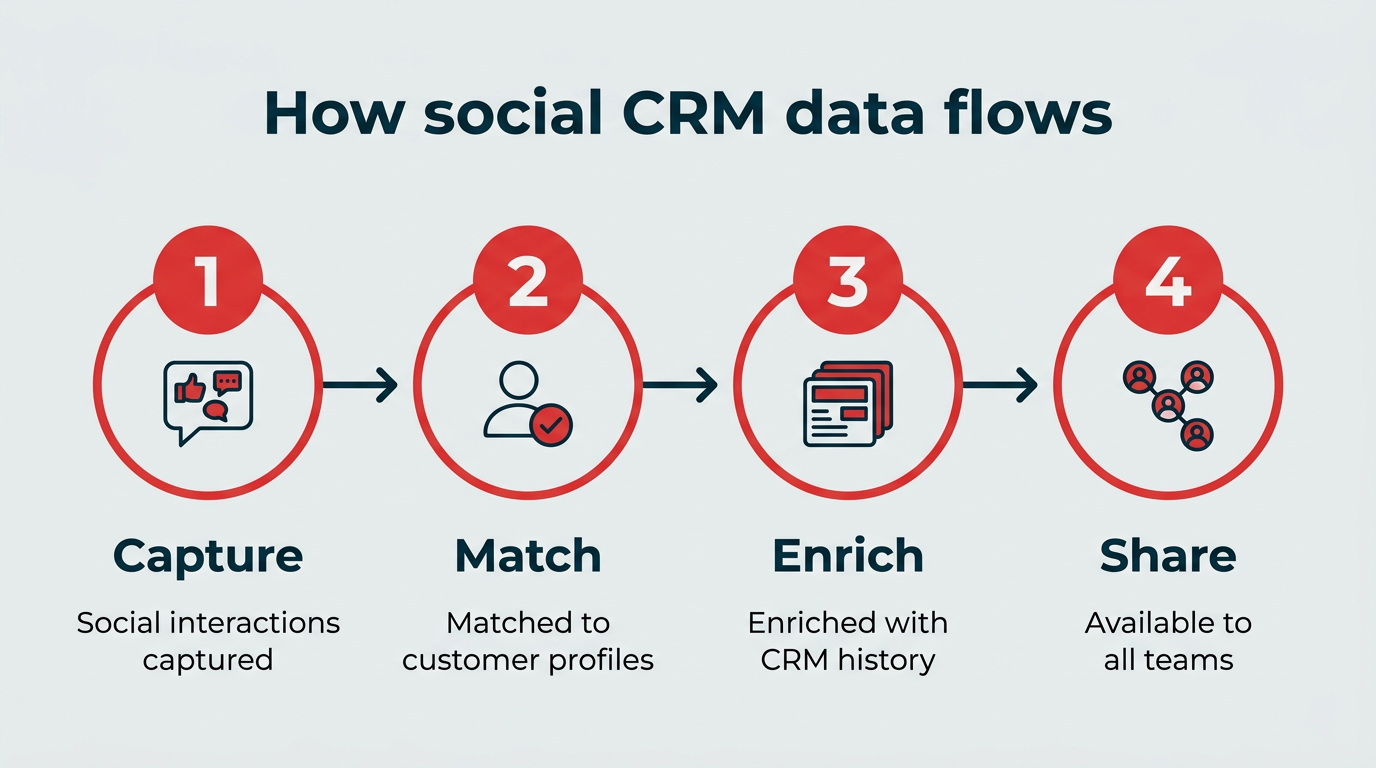
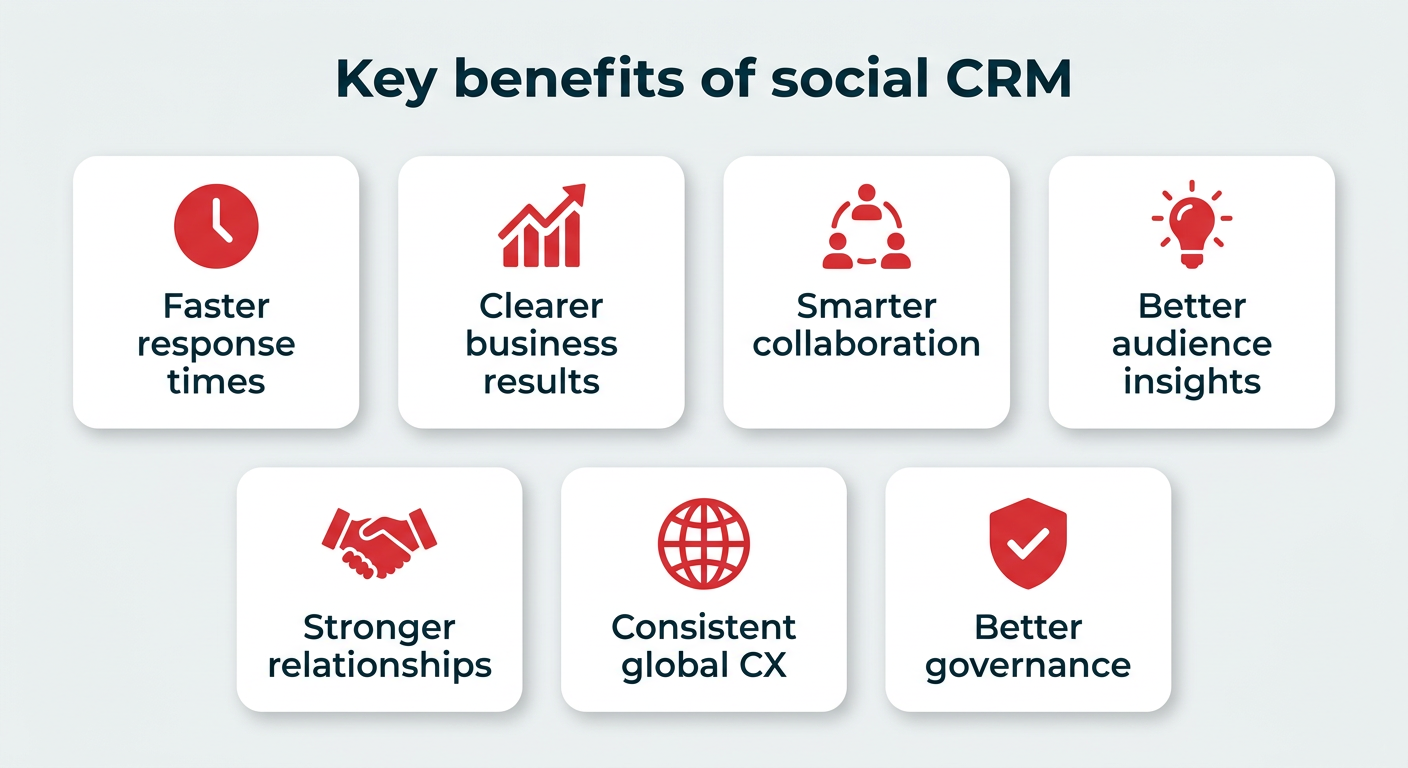
The practical benefits of Social CRM are multifaceted:
- Faster Response Times: Centralized social interactions mean quicker access to customer history and current queries, facilitating rapid, informed responses.
- Clearer Business Results: By linking social activity to CRM data, businesses can directly attribute social efforts to sales, leads, and customer retention, proving ROI.
- Smarter Collaboration: Marketing, sales, and service teams share a unified customer view, reducing silos and fostering cohesive engagement strategies.
- Better Audience Insights: Comprehensive social listening integrated with CRM provides deeper understanding of customer needs, preferences, and market trends.
- Stronger Relationships: Personalized and timely interactions, informed by complete customer context, build trust and loyalty.
- Consistent Global Customer Experience (CX): Standardized workflows and shared data ensure a uniform customer experience across different regions and teams.
- Improved Governance: Centralized management of social interactions allows for better compliance, brand consistency, and risk mitigation.
Navigating the Challenges of Social CRM Implementation
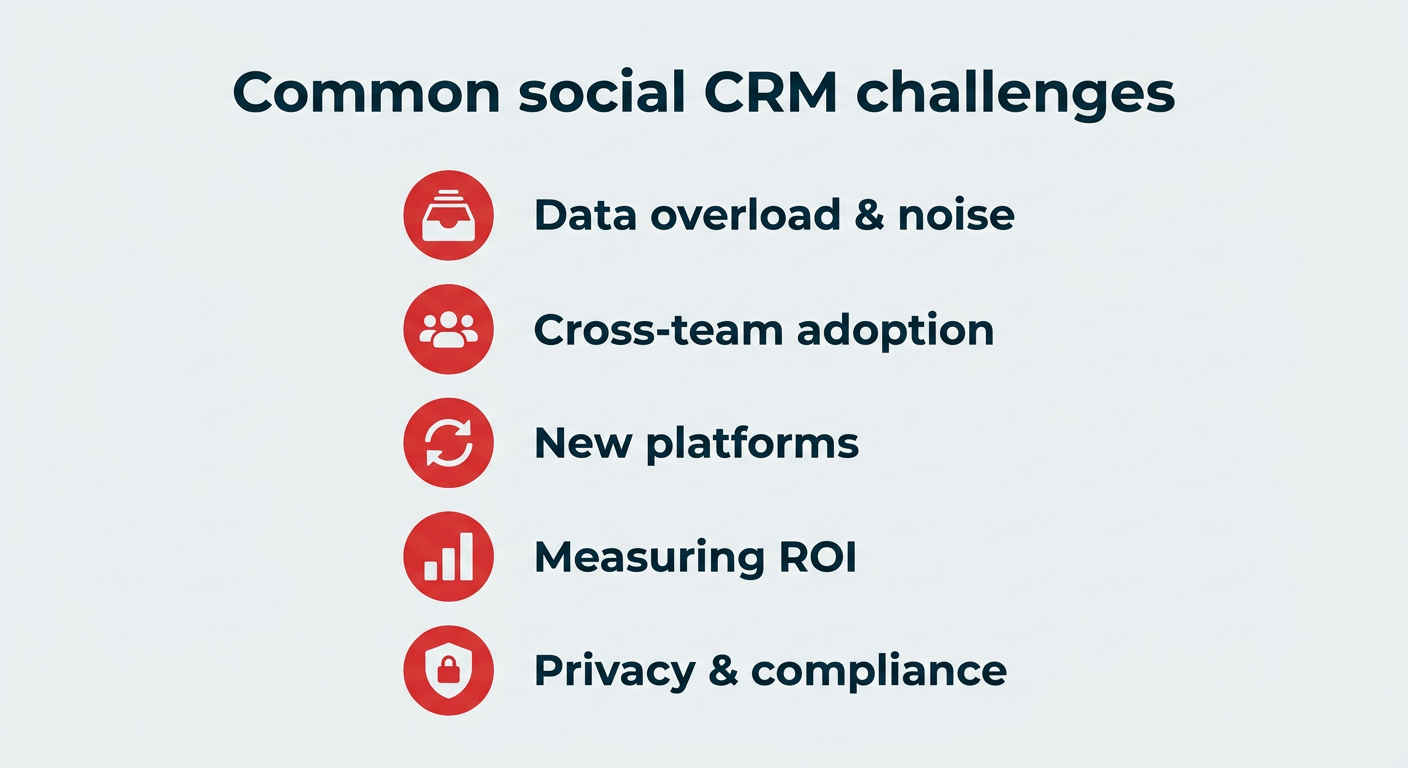
While the benefits are substantial, implementing Social CRM is not without its challenges. The primary obstacles often revolve around managing the immense volume of data, achieving cross-team alignment, and keeping pace with the rapid evolution of social platforms. Other common challenges include:
- Data Volume and Quality: The sheer quantity of unstructured social data can be overwhelming, requiring sophisticated tools for filtering, analysis, and ensuring data accuracy.
- Integration Complexity: Seamless integration with existing CRM systems and other enterprise tools can be technically demanding.
- Team Adoption and Training: Ensuring that all relevant teams (marketing, sales, customer service) understand and consistently utilize the new workflows and tools requires comprehensive training and change management.
- Data Privacy and Compliance: Handling sensitive customer data from social media necessitates strict adherence to privacy regulations (e.g., GDPR, CCPA).
- Measuring ROI: Quantifying the direct financial return on social CRM investment can be complex, requiring robust attribution models.
- Platform Changes: Social media platforms frequently update their APIs and policies, requiring continuous adaptation of integration strategies.
Despite these hurdles, the right tools and a well-defined strategy can mitigate these challenges, enabling organizations to unlock the full potential of Social CRM.

The AI Revolution in Social CRM: Real-time Intelligence and Automation
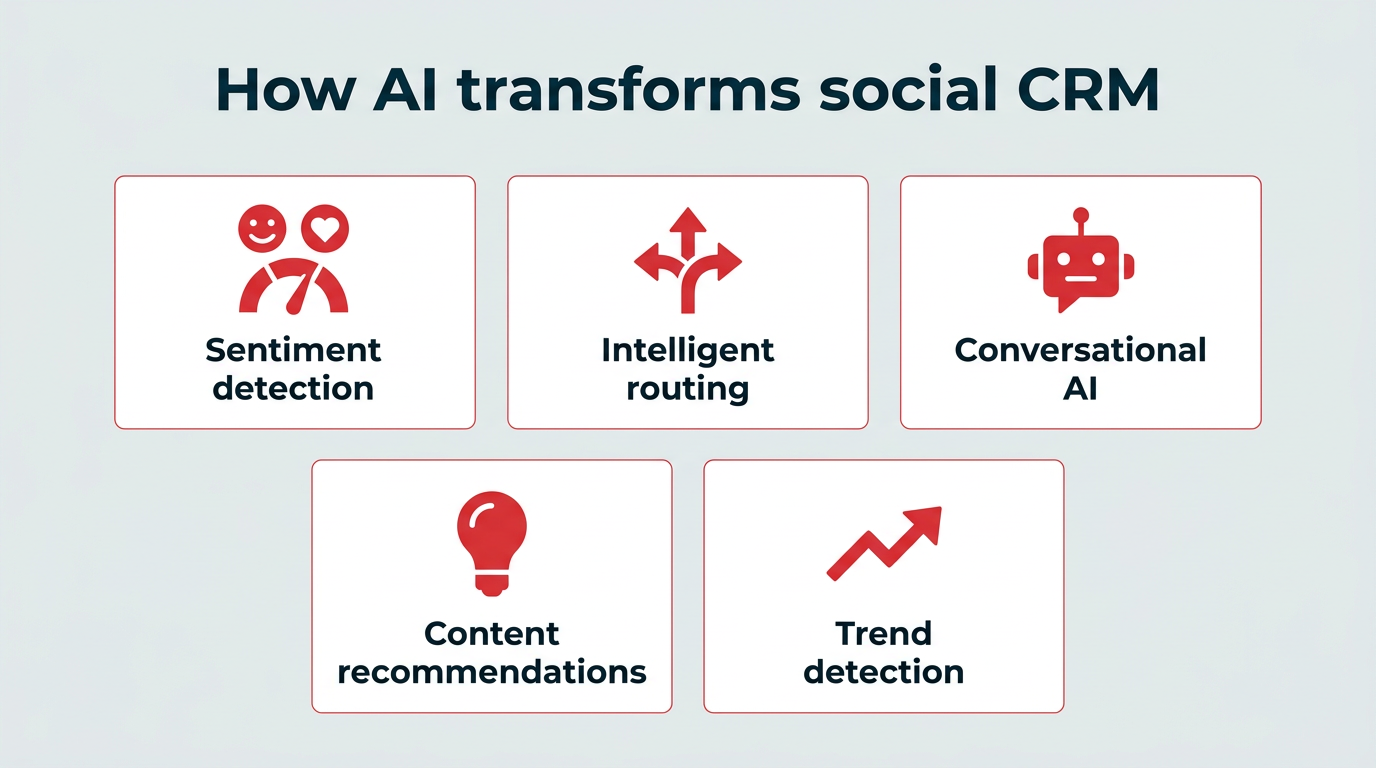
Artificial intelligence (AI) is fundamentally reshaping Social CRM by automating and enhancing processes that previously consumed significant human effort, such as sorting, analyzing, and prioritizing social interactions. Gartner now defines CRM sales platforms as "AI-driven systems," underscoring this transformative shift. AI’s core contribution is making vast customer data actionable in real-time, rather than merely reportable post-factum.
AI’s most significant practical impacts include:
- Automated Sentiment Analysis: AI can instantly gauge the emotional tone of social interactions, identifying positive, neutral, or negative sentiment without manual review.
- Intelligent Message Routing: Based on keywords, sentiment, or historical data, AI can automatically direct social messages to the most appropriate team or agent.
- Predictive Analytics: AI algorithms can analyze engagement patterns to predict customer behavior, identify potential churn risks, or flag high-value leads.
- Automated Responses and FAQs: For common queries, AI chatbots can provide instant, accurate responses, freeing human agents for more complex issues.
- Real-time Insights and Trends: AI-powered social listening tools can identify emerging topics, trending discussions, and shifts in public opinion across diverse languages and markets.
This transforms workflows, moving from an agent manually sifting through hundreds of unsorted messages to a pre-triaged queue where urgent complaints are at the top, known customers are flagged with their complete CRM history, and routine questions are already addressed. Platforms like Hootsuite Social OS exemplify this, with Lumen providing intelligence and listening, Nest centralizing conversations, and Wisdom (the AI agent layer) connecting these signals to subsequent actions across integrated systems. The goal is not to replace human interaction entirely, but to equip human agents with comprehensive context, thereby enhancing efficiency and personalization. Forrester predicts that 30% of firms might damage CX growth in 2026 by poorly implementing AI self-service, emphasizing the need for a balanced approach.

AI-powered social listening, in particular, profoundly strengthens Social CRM by converting unstructured social conversations into actionable signals for the CRM. Unlike manual monitoring, which often captures only direct searches, AI models detect subtle nuances like sentiment, sarcasm, emotional drivers, and topic clusters across multiple languages simultaneously. For instance, Hootsuite’s Lumen analyzes conversations in various languages, allowing teams to detect a frustration trend in one market before it escalates into a global issue. These insights enrich customer records and audience segments, enabling proactive engagement—flagging a customer with shifting negative sentiment before renewal, or identifying a trending topic for content creation among a target audience.
Impact Across Business Functions
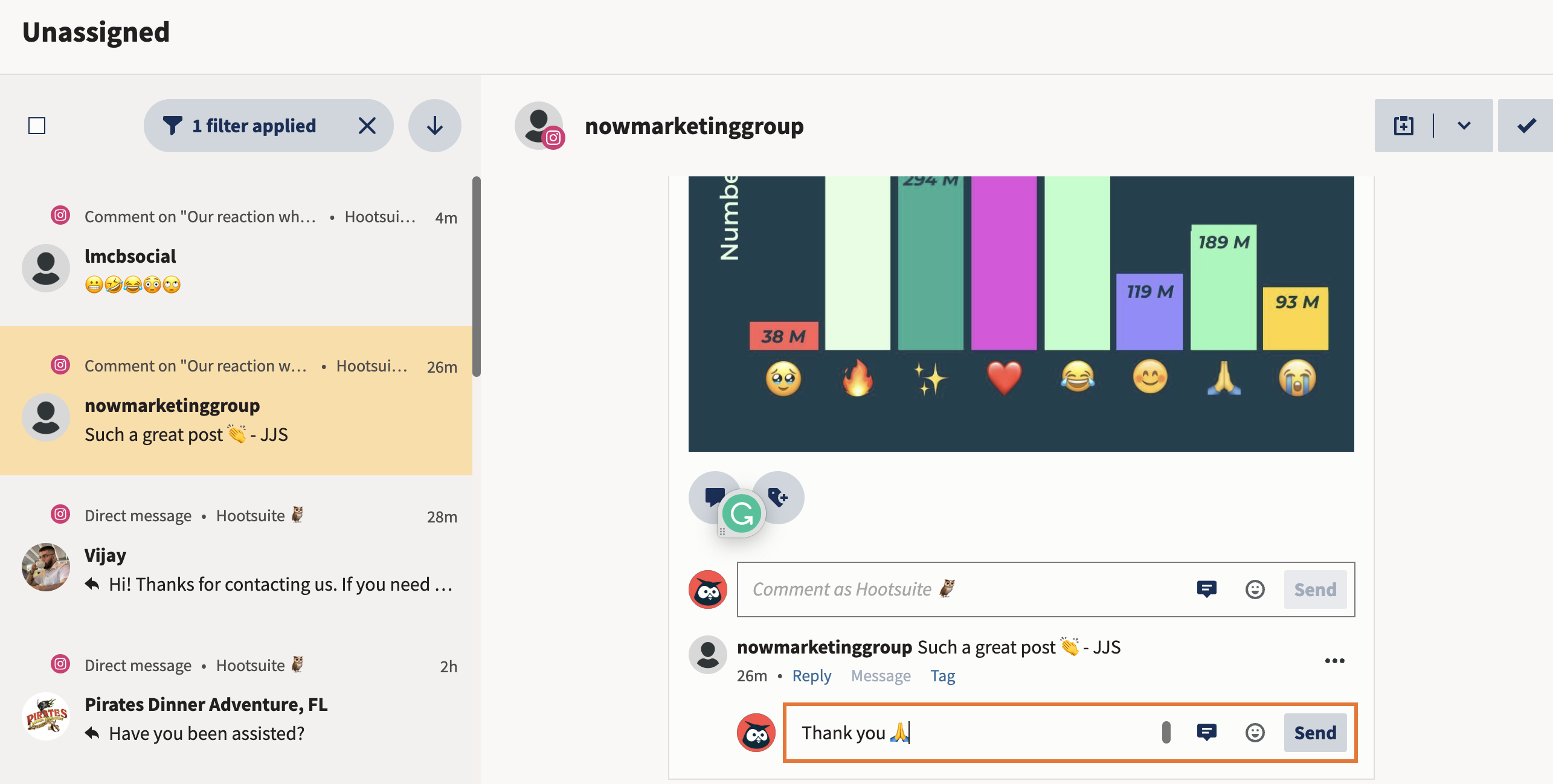
Social CRM software empowers customer service teams with a more meaningful and personalized approach to customer conversations across various platforms. Recent research underscores that utilizing social media for CRM significantly improves customer relationship quality, largely due to enabling more personal and timely brand responses. Responsiveness is a two-way street: 28% of Hootsuite Consumer Report respondents unfollow brands that ignore negative comments, and 32% unfollow those that fail to interact with their community. Brands like Starbucks exemplify effective Social CRM by swiftly responding to negative feedback on platforms like Instagram, offering immediate assistance or moving sensitive conversations to direct messages for private resolution.
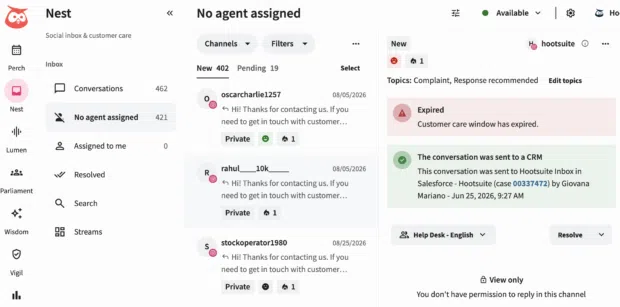
Social CRM also enables faster and smarter responses by connecting social messages to individual customer profiles, providing a comprehensive history in a single view. This context allows teams to deliver consistent, personalized replies without repetitive questioning or duplicated efforts. Incoming contacts can be automatically routed to the most suitable team member based on topic, sentiment, and account history, as seen in Hootsuite’s Nest care inbox, ensuring urgent issues are addressed promptly.
For sales teams, Social CRM acts as a powerful signal generator. A prospect interacting with multiple product posts, saving comparative content, and direct messaging with pricing inquiries provides invaluable intent data that a mere contact list cannot. Integrating these signals with CRM records allows sales representatives to prioritize outreach based on demonstrated interest rather than alphabetical order. Social CRM helps fill the sales funnel by fostering relationships over time, moving towards a sale through authentic engagement, as demonstrated by KiwiCo’s success with Instagram Reels ads tailored to audience needs. It enriches lead profiles with social activity, providing immediate context for sales teams, while AI further refines lead scoring based on engagement patterns. Nurturing remains crucial, with opt-in newsletters and helpful resources maintaining warm relationships. Measuring the true value of social leads involves tagging them within the CRM to integrate into standard pipeline reporting, allowing for analysis of win rates, deal sizes, and sales cycle duration alongside other lead sources.
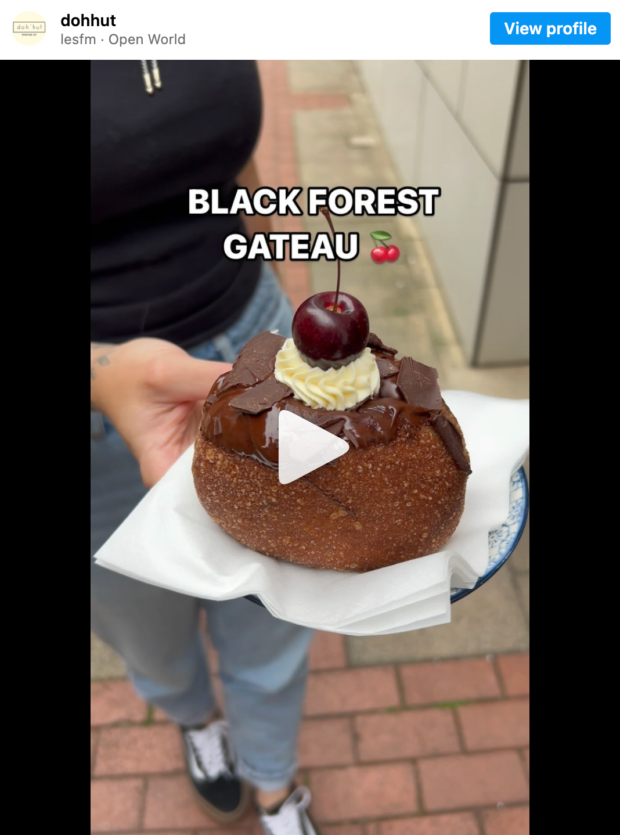
Marketing teams benefit significantly from the comprehensive customer picture provided by Social CRM. This data informs targeted content creation, moving beyond guesswork to address the specific needs and interests expressed by the target audience. The Hootsuite Consumer Report notes that 40% of respondents unfollow brands that post unappealing content; Social CRM helps marketers understand what content resonates, retaining valuable followers. Dohhut’s Instagram Reels, featuring doughnuts being torn open to reveal fillings, illustrate how content aligned with audience interest can drive substantial engagement. Social listening tools, integrated with Social CRM, provide a broader understanding of public sentiment, brand perception, competitor activities, and emerging trends, moving beyond direct engagements. Hootsuite’s Lumen, for example, delivers AI-powered insights on shifting topics and sentiment across markets, informing smarter content calendars and stronger messaging. Finally, Social CRM directly connects social marketing efforts to business results, addressing the 33% of respondents in Hootsuite’s 2024 Social Trends Report who found an unsatisfactory link between social and business metrics. By tying social actions to outcomes like purchases or subscriptions, businesses can effectively prove and optimize their social ROI.
Developing a Robust Social CRM Strategy
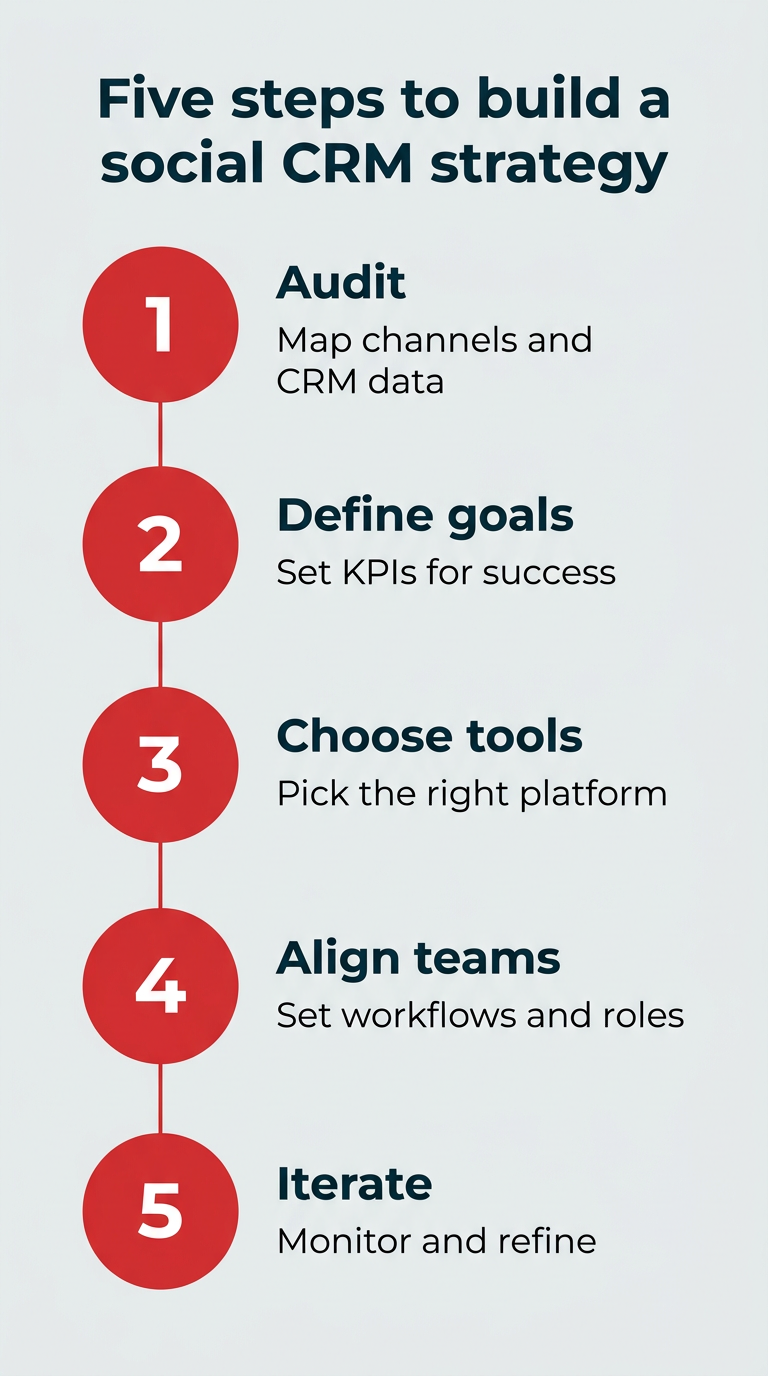
A successful Social CRM strategy begins with an assessment of existing resources and clear goal definition. The following framework outlines key steps:
- Audit Current Setup: Map existing social channels and CRM data to identify gaps and areas where social data can add the most value.
- Define Goals and KPIs: Establish clear objectives for success, whether it’s faster support, increased leads, or improved content, and select appropriate metrics.
- Choose Tools and Integrations: Select platforms that minimize manual work by connecting social conversations directly to your CRM, such as Hootsuite with its integrations for Salesforce and Microsoft Dynamics 365.
- Align Teams on Workflows: Establish clear routing rules and response guidelines across marketing, sales, and support to ensure seamless collaboration.
- Monitor, Measure, and Iterate: Regularly review KPIs and adapt strategies based on insights, leveraging AI-driven analytics to identify shifts rapidly.
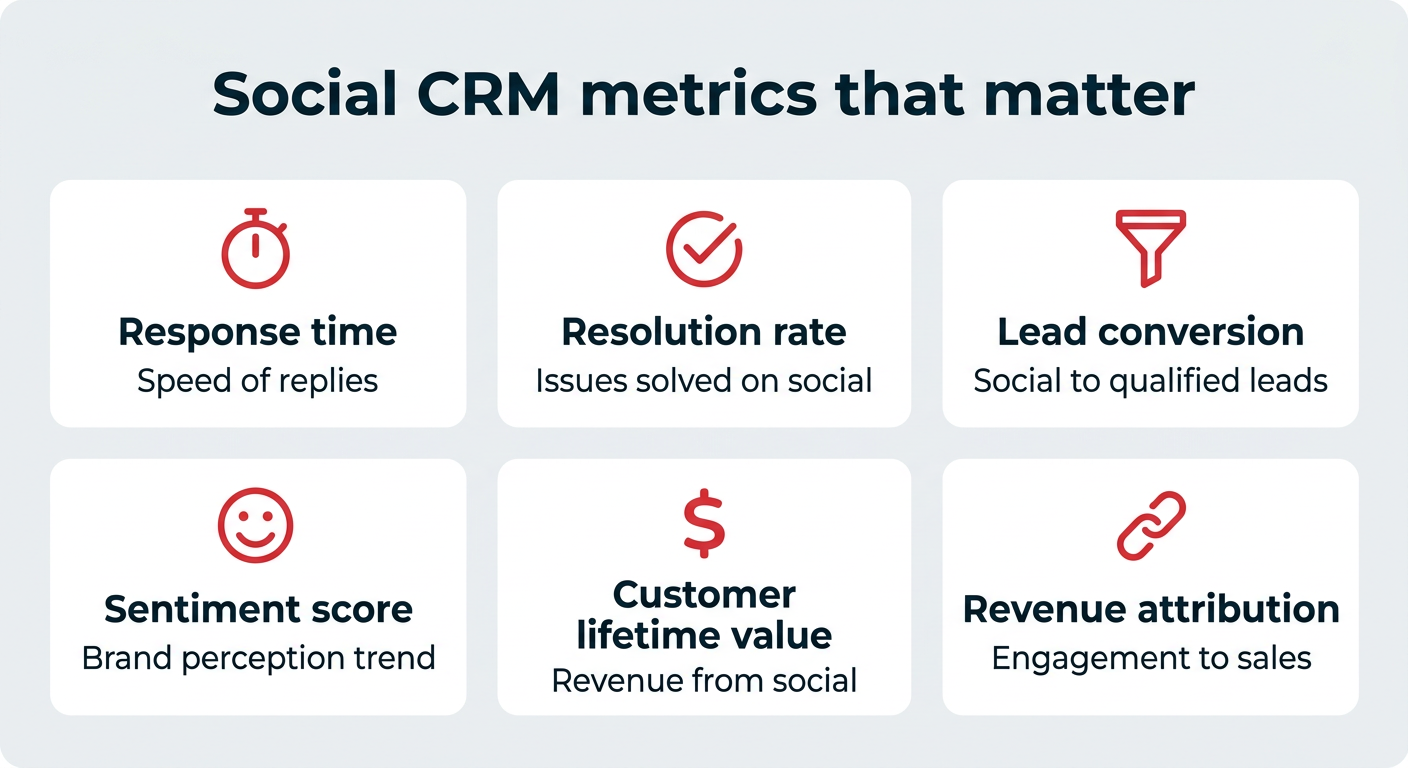
Key metrics to track include:
- Response Time: Average time taken to respond to social inquiries.
- Resolution Rate: Percentage of social issues resolved.
- Lead Conversion Rate: Percentage of social leads that convert to sales.
- Sentiment Score: Overall positive, neutral, or negative sentiment towards the brand.
- Customer Lifetime Value (CLV): The total revenue a business expects from a customer over their relationship.
- Revenue Attribution: Direct revenue generated from social media interactions.
Integrating Social CRM with an existing tech stack is crucial. This typically involves native connectors (pre-built integrations), APIs (custom development), or third-party integrations (specialized tools). The goal is to ensure social data flows automatically into existing systems, eliminating manual data entry and providing a unified view for teams.
Leading Social CRM Tools and Platforms
The market offers a variety of robust Social CRM tools, each with distinct strengths. The best tools enable businesses to listen to social conversations, engage with audiences, manage content, centralize communications, analyze performance, and integrate with existing CRMs.

-
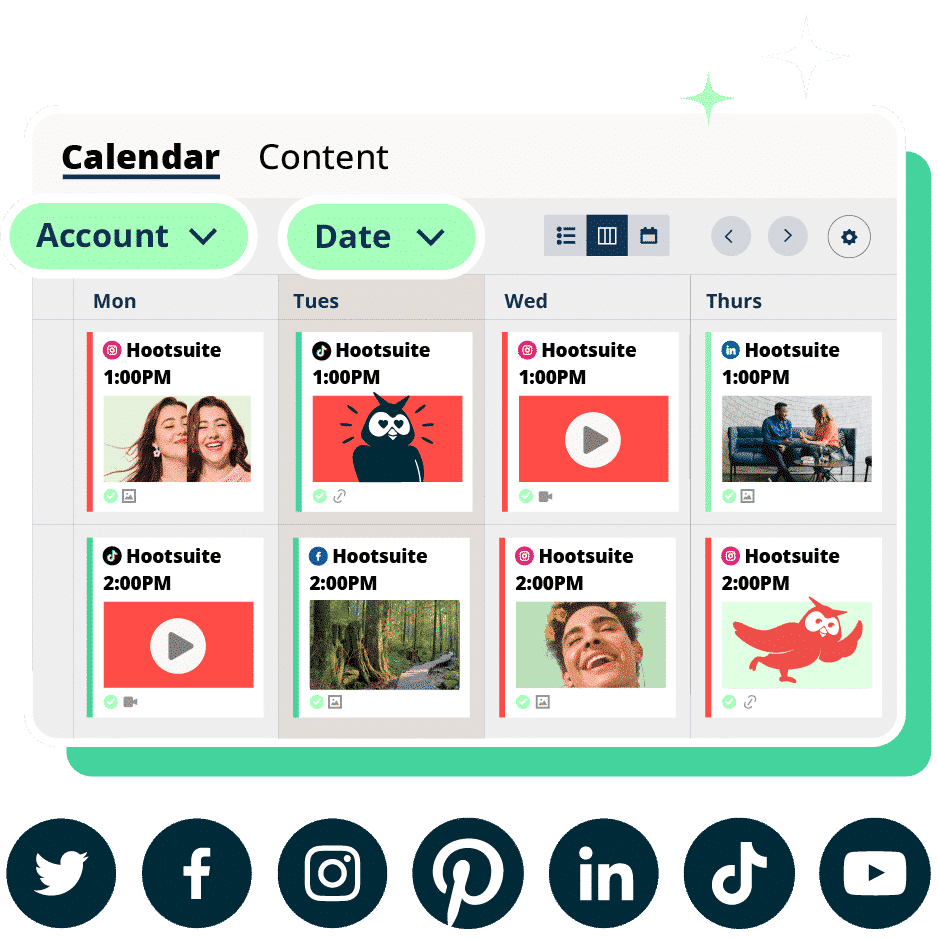
Hootsuite: An all-in-one social media management platform, Hootsuite Social OS centralizes social conversations, allowing brands to monitor, engage, and analyze results. Its components (Lumen for listening, Nest for unified inbox, Perch for content, Wisdom for AI agent layer) work synergistically and integrate with leading CRMs like Salesforce. Key benefits include comprehensive social listening, unified social inbox, AI-powered insights, robust analytics, and scalable team workflows. Pricing starts at $99/user/month.
-
HubSpot: A comprehensive CRM platform managing contacts across the pipeline, HubSpot integrates marketing, sales, and customer service functions. It offers dedicated "hubs" for each function, all connected to a Smart CRM. Benefits include a free basic CRM, comprehensive marketing and sales tools, strong automation, and a user-friendly interface. Pricing starts at $20/month per seat for Starter plans.

-
Salesforce: An enterprise-grade CRM leveraging AI to guide sales processes and provide insights into deals. Built on a proprietary platform, it includes a conversational AI assistant. Key benefits are powerful sales automation, extensive customization, robust analytics, comprehensive ecosystem, and strong AI capabilities. Pricing for basic small business plans starts at $25/user/month.
-
Microsoft Dynamics 365: Offers customizable CRM systems to unify teams and provide a holistic customer view. It utilizes AI for predictive analytics on customer intent and audience recommendations. Benefits include modular design, deep integration with Microsoft ecosystem, AI-powered insights, scalability, and robust security. Individual CRM components start at $65 per user per month.

-
SugarCRM: A flexible, customizable CRM platform allowing businesses to tailor its focus to specific team needs. Its strengths include high customization, open-source flexibility, strong reporting, marketing automation, and multi-channel support. Pricing starts at $19/user/month for Essentials tier.
Ultimately, the choice of a Social CRM tool depends on specific business needs, existing infrastructure, and scalability requirements. Many enterprises opt for a combination of specialized social management tools and core CRM platforms to achieve the most comprehensive and effective integration of social data into their customer relationship strategies. The ongoing evolution of AI and social media platforms ensures that Social CRM will remain a critical, dynamic field for businesses seeking a competitive edge in customer engagement.