The global Software-as-a-Service (SaaS) market, currently valued at over $270 billion and projected to grow significantly through 2030, is facing a critical juncture where traditional growth levers are losing their efficacy. As customer acquisition costs (CAC) continue to rise, industry experts are signaling that the most overlooked lever for sustainable revenue is not more marketing, but more disciplined pricing strategy. However, recent audits of subscription-based applications and enterprise SaaS companies reveal a systemic flaw: most organizations are testing their pricing in the reverse order of importance, focusing on cosmetic adjustments while the foundational elements of their revenue models remain fractured.
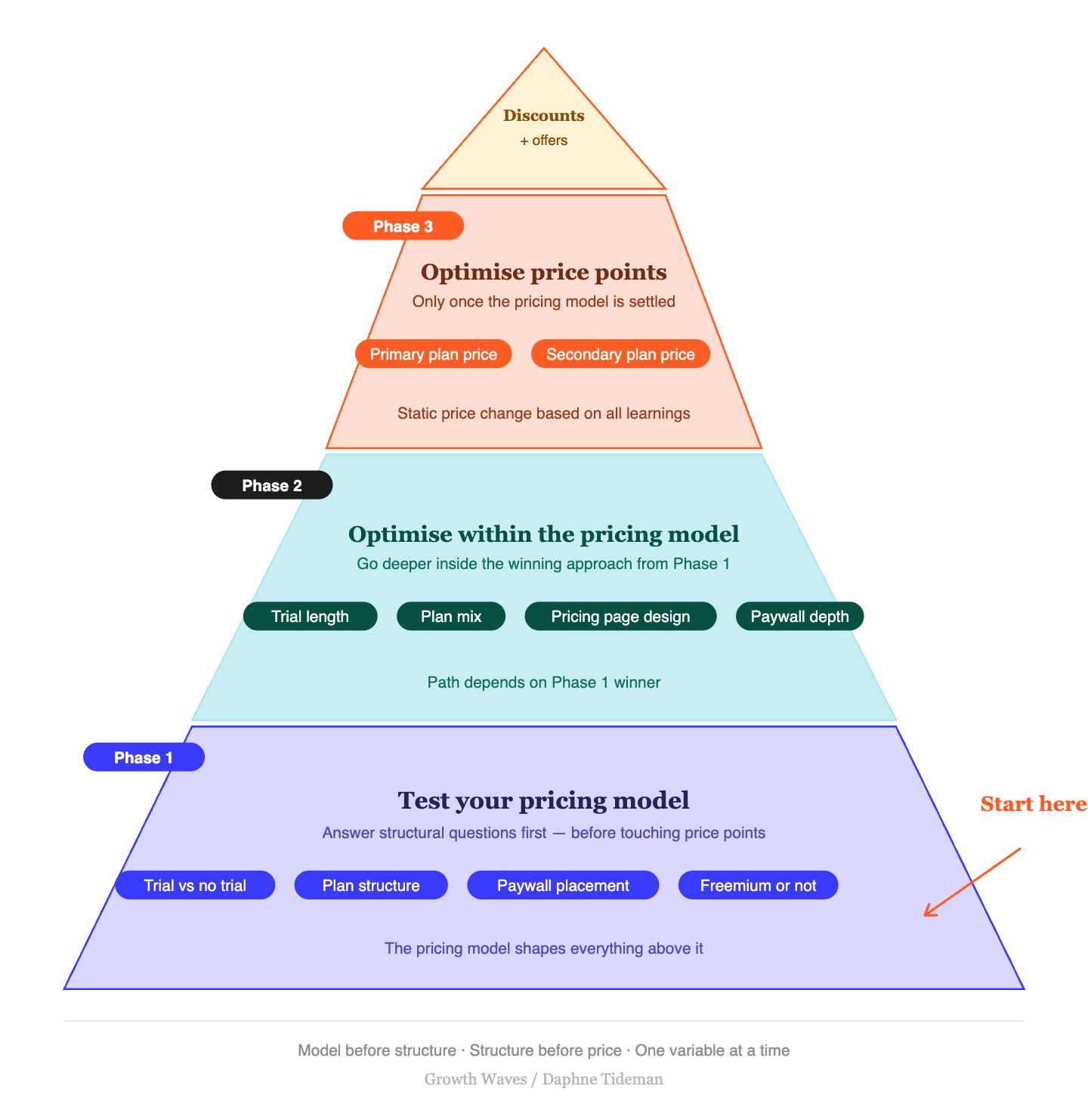
According to growth strategist Daphne Tideman, pricing decisions must be viewed as a structural hierarchy, or a "pricing pyramid," consisting of four distinct layers: the value metric, packaging, the price point, and tactical optimization. When companies skip the foundational layers to test top-level tactics like discount framing or urgency markers, they often encounter "flat" test results. This leads to the erroneous conclusion that pricing is not the primary driver of their growth issues, when in fact, the experiment was built on a broken foundation.

The Evolution of Subscription Pricing Models
To understand the necessity of the Four-Layer Pricing Test Model, one must look at the chronology of software monetization. In the early 2000s, the industry moved from perpetual licensing to "flat-rate" subscriptions. By the mid-2010s, "tiered pricing" became the gold standard, popularized by companies like Salesforce and HubSpot. Today, the market has entered the era of "Value-Based" and "Usage-Based" pricing, driven largely by the high compute costs associated with Artificial Intelligence (AI) and the consumer demand for transparency.
Data from ProfitWell indicates that companies that update their pricing at least once every six months see nearly double the average revenue per user (ARPU) growth compared to those that only update pricing once a year or less. Despite this, the majority of SaaS firms struggle with the execution of these updates, often fearing customer churn. The pyramid model provides a diagnostic sequence to mitigate this risk, ensuring that the most impactful changes are addressed first.
Layer 1: The Value Metric as the Bedrock
The foundation of the pyramid is the value metric—the specific unit that determines how much a customer pays. Common examples include "per user," "per gigabyte," or "per message sent." This is arguably the single most important decision a subscription company can make, as it dictates whether the customer perceives the cost as fair relative to the utility they derive.

In the current landscape, many AI-driven apps have defaulted to usage-based pricing to cover their API and compute overhead. While this appears logical on a balance sheet, qualitative research often reveals a "penalty effect." When a value metric punishes a user for increased engagement, it creates a moment of friction precisely when the user is most active. Industry analysts note that this misalignment is a primary driver of churn. If a user feels "nickeled-and-dimed" for every interaction, they will eventually seek workarounds or switch to a competitor with a more predictable "value-aligned" metric.
Experts suggest that testing at this layer should focus on whether the price scales with the customer’s success. For instance, a marketing platform might test shifting from "number of emails sent" (a cost-based metric) to "number of active subscribers" (a value-based metric). If the foundation is misaligned, no amount of discount testing at the higher levels of the pyramid will yield a sustainable revenue lift.
Layer 2: Structural Packaging and the Paradox of Choice
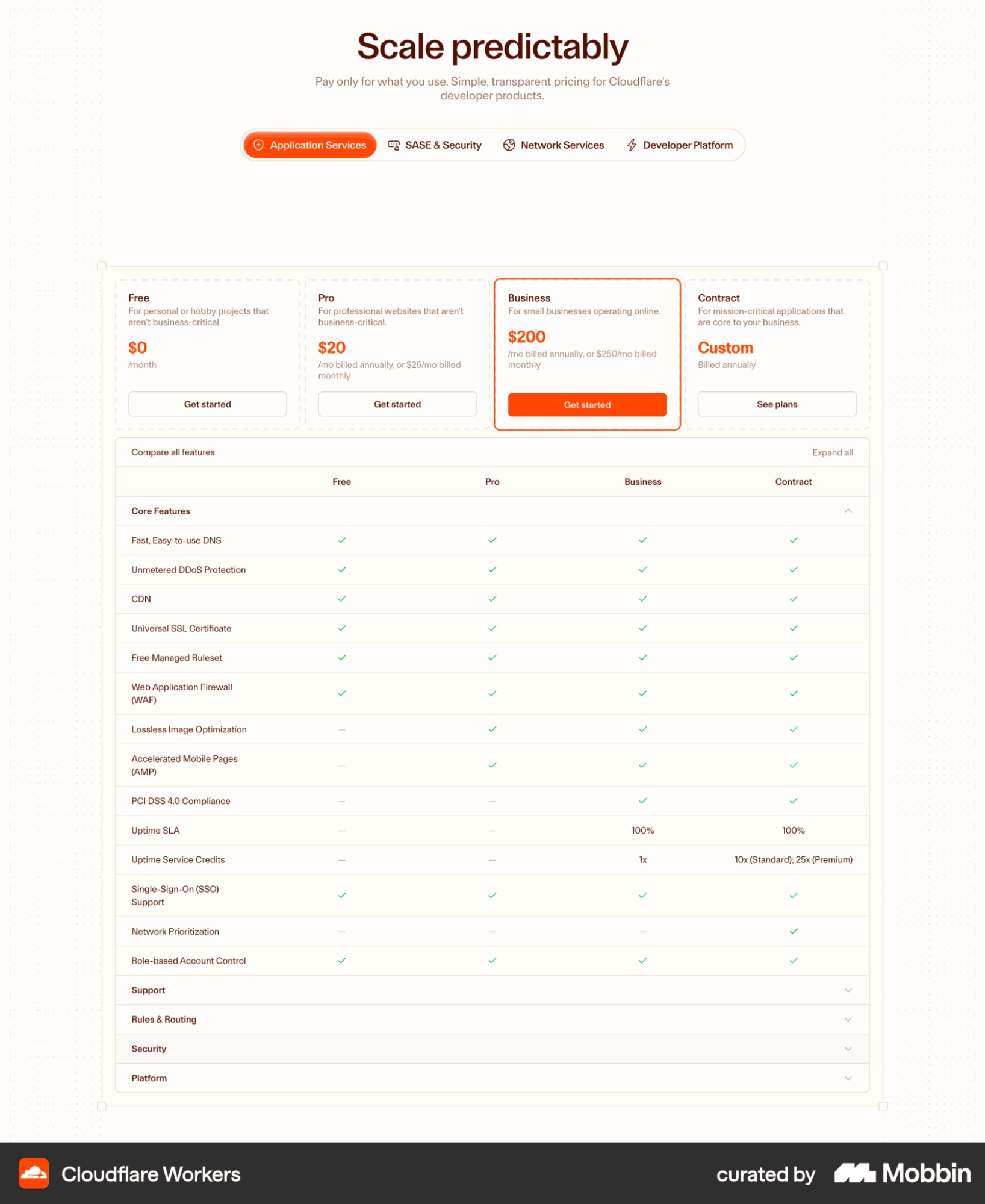
Once the value metric is established, the second layer involves packaging—how features and limits are grouped into tiers. This is where complexity often becomes a silent killer of conversion. A common pitfall in the SaaS industry is the "feature-rich" pricing page that offers too many permutations of monthly and annual plans across multiple tiers.
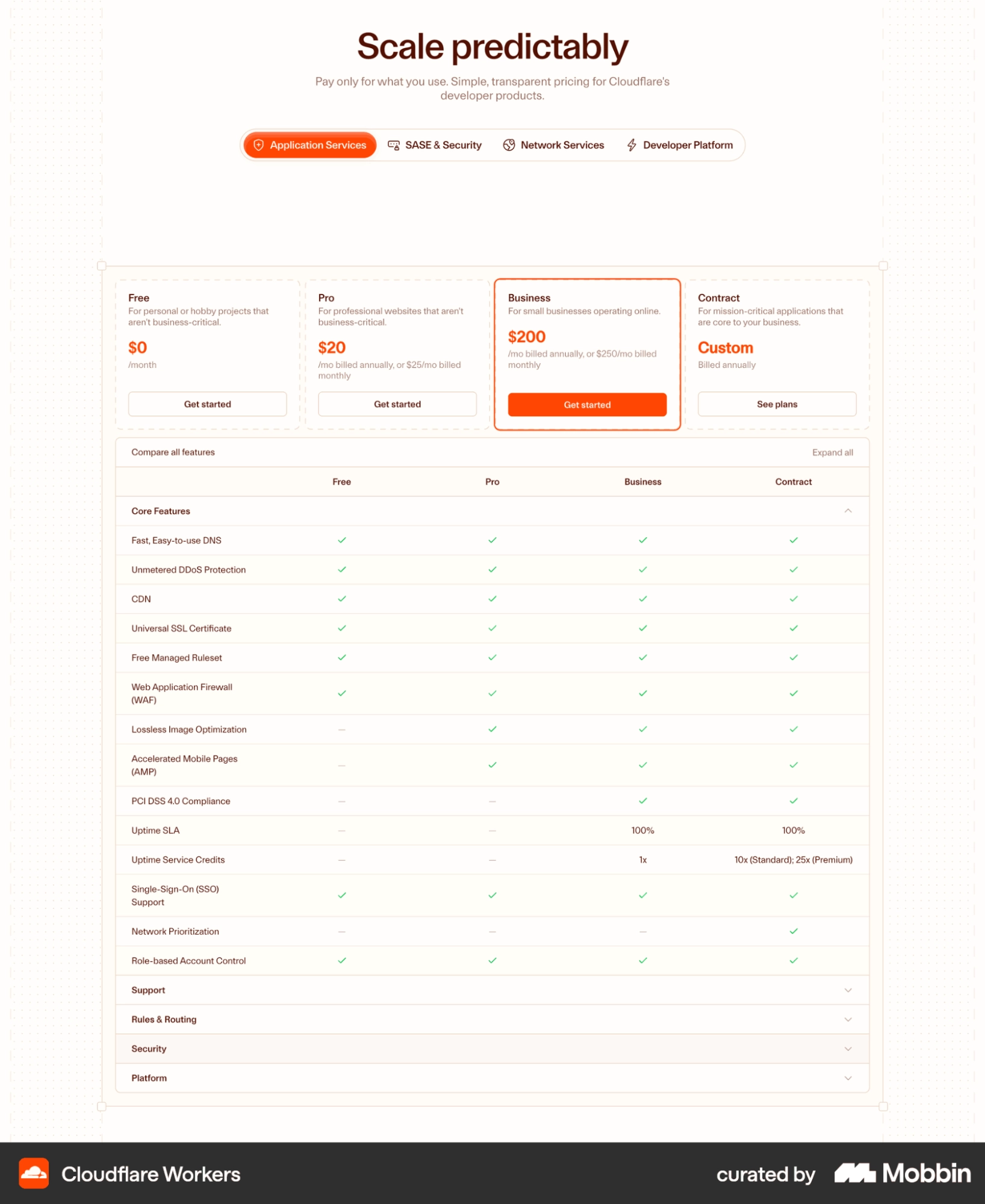
Case studies of enterprise tools, such as Cloudflare Workers, highlight the risks of high cognitive load. When a pricing page presents dozens of features across multiple toggles, it shifts the burden of decision-making onto the customer. If a potential buyer has to predict their future usage patterns just to select a plan, the friction often leads to abandonment.
At this stage, companies are encouraged to test plan simplicity. This includes experimenting with the "Good-Better-Best" three-tier structure, which has been shown to anchor users toward a middle "Pro" tier effectively. The goal of packaging tests is to ensure that every option earns its place and that the path to purchase is intuitive rather than investigative.
Layer 3: Determining the Price Point and Willingness to Pay
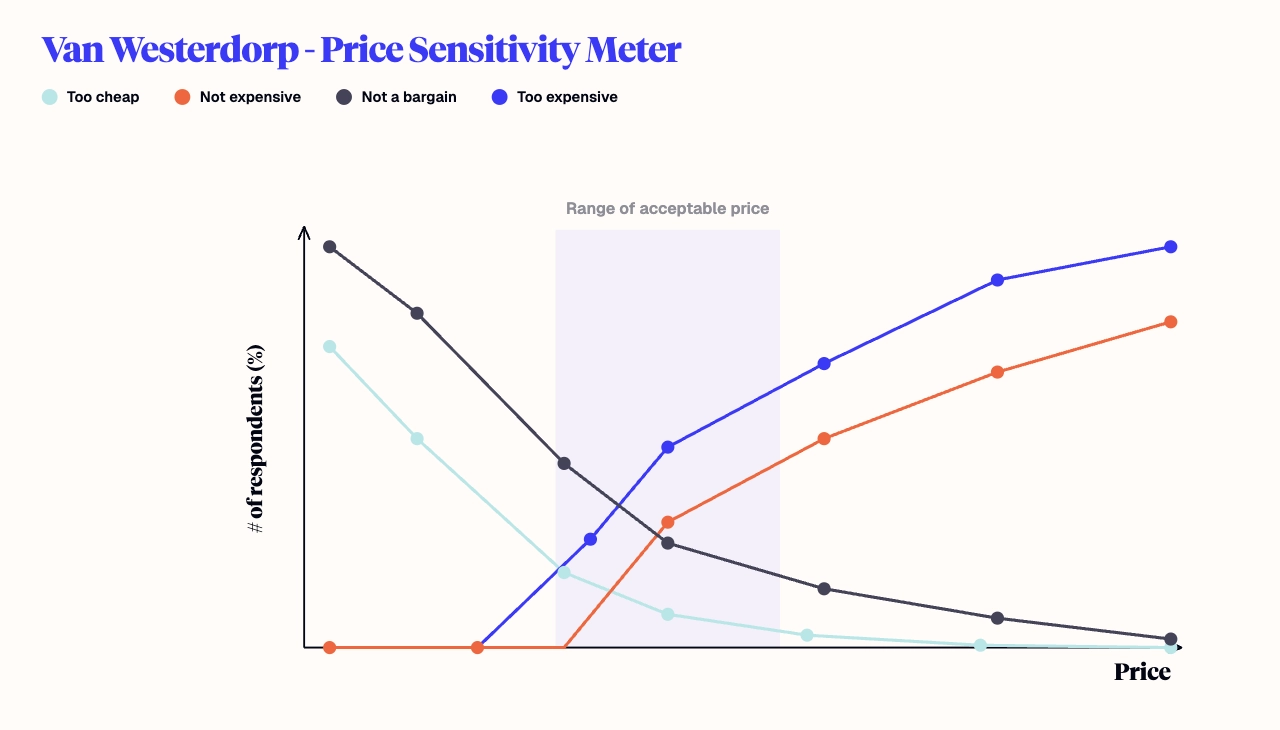
Only after the metric and packaging are stabilized should a company focus on the actual numerical price point. At this third layer, the industry is moving away from "gut-feeling" adjustments toward rigorous research methodologies. The Van Westendorp Price Sensitivity Meter and MaxDiff analysis have become essential tools for modern growth teams.
The Van Westendorp model involves asking potential customers four specific questions to identify a "range of acceptable prices," a "point of marginal cheapness," and a "point of marginal expensiveness." This data-driven approach allows companies to understand their brand’s perceived value in the market before committing to an A/B test.
A significant risk at this level is the "contaminated test," where teams change both the price and the trial duration simultaneously. Journalistic analysis of SaaS growth experiments suggests that such multi-variable tests are often uninterpretable. If a test succeeds, the team cannot discern if the win was due to the price drop or the extended trial, making it impossible to build a repeatable growth playbook.
Layer 4: Tactical Optimization and the "Top of the Pyramid"
The apex of the pyramid consists of optimization tactics: paywall design, price anchoring, urgency triggers, and discount framing. While these are the most frequently run tests in the industry because they are easy to implement, they generally offer the lowest incremental revenue lift compared to foundational changes.
Tactical optimization is about refinement. It involves testing whether a "save 20% on annual" badge performs better than "2 months free," or whether placing the most expensive plan on the left creates a stronger anchor for the middle tier. While these adjustments can improve conversion rates by a few percentage points, they cannot compensate for a value metric that customers find inherently unfair or a packaging structure that is too confusing to navigate.
The Diagnostic Sequence: Troubleshooting Revenue Plateaus
The pyramid model serves as a diagnostic tool for companies experiencing stagnant revenue. Instead of defaulting to a 10% discount or a redesigned paywall, management teams are advised to work from the bottom up:
- Audit the Value Metric: Is the current charging unit aligned with the value the customer receives? Does the customer feel rewarded or punished for using the product?
- Analyze Packaging: Is the plan structure creating unnecessary cognitive load? Are there "dead" features in tiers that no one is buying?
- Validate Price Points: Does the current price reflect the market’s willingness to pay? Is there a gap between the perceived value and the actual cost?
- Optimize the UI: Once the first three are settled, how can the presentation of these facts be improved to reduce friction?
Broader Impact and Industry Implications
The shift toward a hierarchical approach to pricing reflects a broader trend in the technology sector: the move from "growth at all costs" to "efficient growth." In an era of high interest rates and tighter venture capital, SaaS companies can no longer afford to ignore the math of their monetization models.

Market analysts suggest that as AI continues to commoditize software features, the "Value Metric" (Layer 1) will become the primary battleground for competition. Companies that can successfully transition from charging for "seats" to charging for "outcomes" or "work completed" will likely dominate the next decade of the subscription economy.
Furthermore, the focus on psychological transparency in pricing is becoming a regulatory concern. In various jurisdictions, including the European Union and parts of the United States, there is increasing scrutiny on "dark patterns" in subscription billing and deceptive discount framing. By focusing on the bottom layers of the pyramid—Value and Packaging—companies not only drive better revenue but also build a more ethical and sustainable relationship with their user base.
In conclusion, the Four-Layer Pricing Test Model challenges the prevailing "tinker-at-the-top" mentality that dominates many growth departments. By treating pricing as a structural engineering problem rather than a graphic design problem, subscription businesses can ensure that their revenue models are as robust as the software they build. The evidence suggests that the most successful companies are not those with the flashiest paywalls, but those that have aligned their very existence with the value they provide to the end user.