By Lisa Heay, Vice President of Business Operations at Heinz Marketing
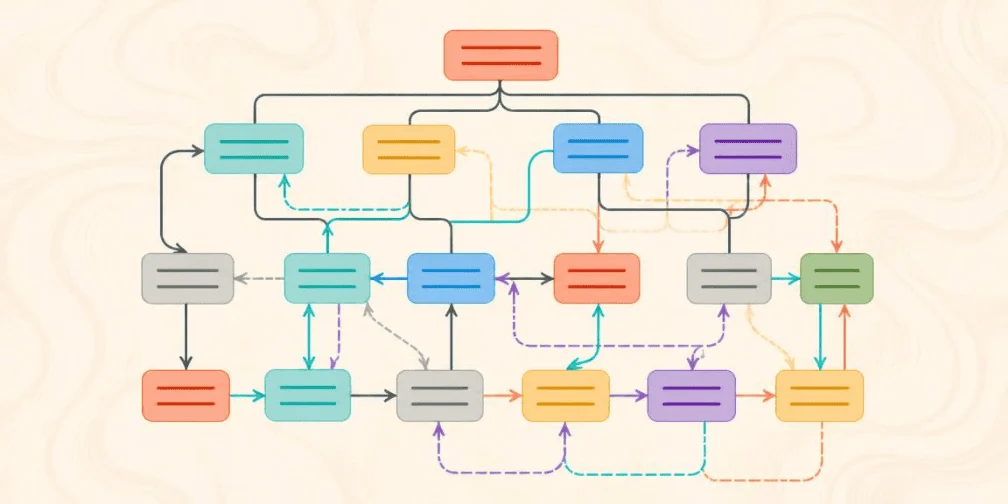
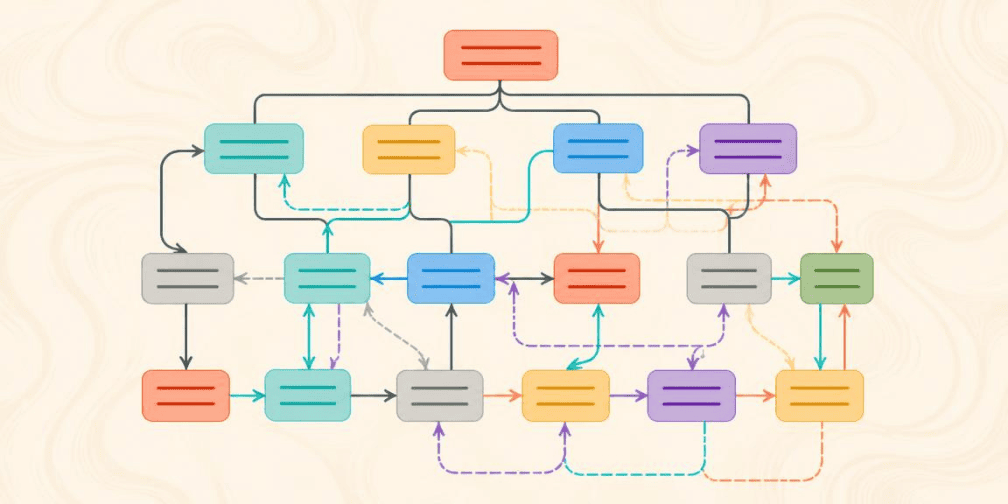
Organizational charts, the visual blueprints of company structures, are rarely the product of deliberate strategic design. Instead, they are frequently the cumulative result of reactive decisions, inherited from past circumstances, and allowed to evolve organically rather than being intentionally architected. This pervasive phenomenon, where structures drift away from their original purpose and the actual flow of work, can lead to significant inefficiencies, including duplicated efforts, stalled decision-making processes, and broken handoff points between teams. This analysis delves into the root causes of this structural drift, its most detrimental impacts, and offers actionable questions for leadership to bridge the gap between the organizational chart they possess and the one they truly need.
The Genesis of Inherited Structures
When questioned about the rationale behind their team’s configuration, leaders and employees often recount historical narratives rather than strategic justifications. These stories frequently involve a series of pragmatic, yet unexamined, adjustments made over time. For instance, a team might absorb the responsibilities of a departed colleague because there was no immediate capacity to redefine reporting lines. A new role might emerge organically when an individual demonstrates exceptional aptitude in a specific area, leading to a reporting structure that only loosely aligns with the evolving functional needs of the organization. Similarly, entire teams may persist long after the products or projects they were initially designed to support have been discontinued.
"Each individual call along the way probably made sense in the moment," explains Lisa Heay, Vice President of Business Operations at Heinz Marketing. "A fast hire during a crunch; a quick fix when someone left; a new function added to solve one specific problem. None of those decisions were wrong on their own, but nobody ever went back and asked whether the sum of all of them still held together." This incremental approach, while often addressing immediate challenges, can lead to an organizational chart that ceases to reflect the dynamic realities of how work is actually performed. The structure grows laterally, an accretion of expedient solutions, rather than being periodically re-evaluated and redesigned for optimal function.
The "Job Description Problem," Magnified
This issue can be viewed as an organizational-level manifestation of a problem often observed at the individual level: the drift of job descriptions. Just as an employee’s responsibilities can evolve beyond the formal parameters of their job description, especially with the advent of new technologies like AI that automate certain tasks, organizational structures can similarly deviate from their intended design. Reporting lines can become misaligned with the actual flow of information and collaboration required for tasks. This disconnect creates friction, where individuals who need to collaborate closely are not strategically positioned to do so, or where decision-making authority rests with individuals who may no longer possess the most relevant contextual understanding. The problem, when viewed at the organizational level, is essentially the same as the individual job description drift, but scaled across an entire enterprise.
Manifestations of Structural Friction
The consequences of this structural drift are rarely overtly announced. Instead, they manifest as subtle, yet significant, inefficiencies:
- Duplicated Work: Overlapping responsibilities can emerge when team boundaries are unclear. Two teams might invest resources in similar tasks because the delineation of their respective domains has become ambiguous. This redundancy represents a direct waste of human capital and financial resources.
- Stalled Decision-Making: Critical decisions can languish for extended periods when the individual with the formal authority to approve them is no longer the primary stakeholder or lacks the up-to-date context. This often occurs after reorganizations that fail to fully redefine roles and responsibilities, leaving decision-making power disconnected from operational reality. Data from various business efficiency studies consistently indicates that prolonged decision cycles can cost companies significant revenue and market agility. For instance, a study by the Harvard Business Review found that companies with faster decision-making processes are more likely to outperform their peers financially.
- Broken Handoffs: Processes that were once seamless can become convoluted. Tasks that previously involved a single, clear transition may now require routing through multiple individuals, each inheriting a portion of a responsibility that was once consolidated. This fragmentation increases the potential for errors, delays, and miscommunication. Research by the Project Management Institute highlights that inefficient handoffs are a significant contributor to project failures and cost overruns.
An Illustrative Scenario
Consider a demand generation function that initially comprised a single individual responsible for email campaigns and website form management. Over several years, this role expanded organically. The individual began managing lead scoring, then took on event follow-up, and eventually contributed to sales enablement content creation due to a lack of dedicated resources elsewhere. Crucially, none of these additions were accompanied by a strategic discussion about whether demand generation was the most appropriate home for these expanding responsibilities. They were absorbed because a competent individual was available.
The situation is further complicated when this demand generation function reports to a director hired for brand management, not lifecycle marketing. Consequently, a significant portion of the team’s key stakeholders reside within sales operations, a department with which they have no formal reporting relationship. This misalignment means that quarterly work prioritization can become subject to the loudest voice in the room, rather than being driven by the strategic imperative of pipeline generation. "Nobody planned any of it," Heay observes. "It’s just what happens when growth outpaces anyone’s willingness to stop and redraw the boundaries."
The Accelerating Impact of AI
The integration of AI tools, while promising significant advancements in efficiency, can paradoxically exacerbate the problems stemming from misaligned organizational structures. AI can rapidly accelerate tasks such as drafting initial content or generating preliminary analyses. However, if the approval pathways remain anchored to an outdated organizational chart, these accelerated inputs will simply encounter the same pre-existing bottlenecks. "Speed doesn’t fix a structure that was never designed for the work it’s doing now," Heay points out. Faster input without structural clarity can lead to an overwhelming accumulation of unfinished tasks at the points where the organizational friction is most pronounced.
A More Strategic Starting Point
To effectively address this drift, leadership must shift from reactive questioning to proactive analysis. Instead of asking, "Who currently owns this task or function?", a more insightful approach involves posing a strategic question: "If we were building this function from scratch today, with our current understanding of the work and its requirements, would we design it this way?" In most instances, the candid answer is likely to be no. The discrepancy between this honest assessment and the existing organizational chart represents the core problem that warrants resolution.
The path forward involves reorienting the focus from individuals and reporting lines to the actual outcomes each team is responsible for delivering. By mapping strategic objectives to team responsibilities, the ideal structural configuration for achieving those objectives becomes much clearer. This process naturally highlights where the current organizational design falls short.
Moving Beyond Blame
It is crucial to understand that structural drift is not a reflection of individual failure or incompetence. Businesses are dynamic entities, and rapid growth and change are often the norm. The tendency for structures to evolve organically arises because the urgent demands of daily operations frequently overshadow the less immediate, but critically important, task of periodically reassessing and refining organizational design. There are, by necessity, higher priorities that capture management’s attention.
Furthermore, rectifying these structural misalignments does not always necessitate a sweeping organizational overhaul. Often, the solution involves addressing specific points of friction, such as a particularly inefficient handoff between two teams or a function that has outgrown its original designated box. Regardless of the scale of the adjustment, an honest evaluation of the current structure’s alignment with ongoing work is essential before introducing new initiatives, especially those leveraging advanced technologies like AI.
A Practical Framework for Re-evaluation
To initiate this process of re-evaluation, organizations can begin by identifying a single function that currently presents the most significant operational entanglement. Once identified, leadership can pose three critical questions:
- What are the core outcomes this function is intended to drive? This question focuses on the desired results and strategic impact, moving beyond task-oriented descriptions.
- Who are the primary internal and external stakeholders who rely on the outputs of this function, and how do they currently interact with it? This helps to understand the flow of value and identify potential points of disconnect or inefficiency in communication and collaboration.
- If this function were to be redesigned today to best achieve its core outcomes, what would its reporting structure and key interdependencies look like? This prompts a forward-looking, strategic design approach, free from the constraints of historical precedent.
These questions are designed to consistently surface a recurring pattern: work that has expanded beyond the initial boundaries established at a time when different problems were being addressed. This recognition serves as the true starting point for improvement—not necessarily a complete restructuring of the entire organization, but a clear-eyed assessment of where the current organizational shape no longer aligns with the evolving nature of the work being performed.
For organizations experiencing a sense that their team structures are more a product of historical accident than deliberate design, seeking external guidance can be invaluable. A thorough and objective examination of existing structures can identify areas of misalignment and inform strategic adjustments. By engaging with experts who specialize in operational efficiency and organizational design, companies can proactively address the friction points that hinder productivity and innovation, ensuring their organizational chart serves as a powerful tool for achieving strategic goals, rather than a legacy artifact of past decisions. This proactive approach is particularly vital in today’s rapidly evolving business landscape, where agility and efficiency are paramount for sustained success.